Subaru Telescope uncovers “fossil” from the early days of our solar system
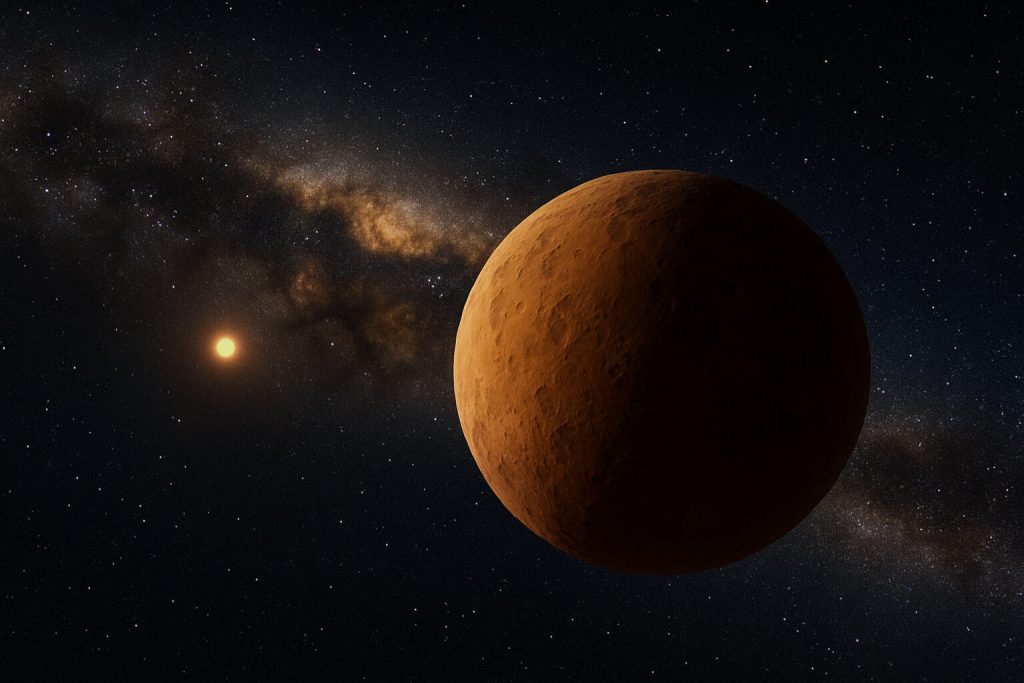
Scientists using the Subaru Telescope on Maunakea have discovered a new celestial object that could provide groundbreaking insight into the earliest days of our Solar System. The object, officially named 2023 KQ14 and affectionately nicknamed “Ammonite” by the research team, is believed to be a preserved relic—or “fossil”—from the Solar System’s infancy.
The discovery was made as part of the FOSSIL project (Formation of the Outer Solar System: An Icy Legacy), an international effort led by researchers in Japan and Taiwan. Using Subaru Telescope’s powerful wide-field Hyper Suprime-Cam, the team identified Ammonite in a distant, stable orbit far beyond Neptune—an area that has remained largely untouched since the Solar System’s formation over 4.5 billion years ago.
“This find pushes the boundaries of what we know about the outer Solar System,” said Dr. Fumi Yoshida, principal investigator of the FOSSIL project. “Ammonite’s orbit and location suggest something extraordinary occurred in our cosmic past, and we’re just beginning to piece the story together.”
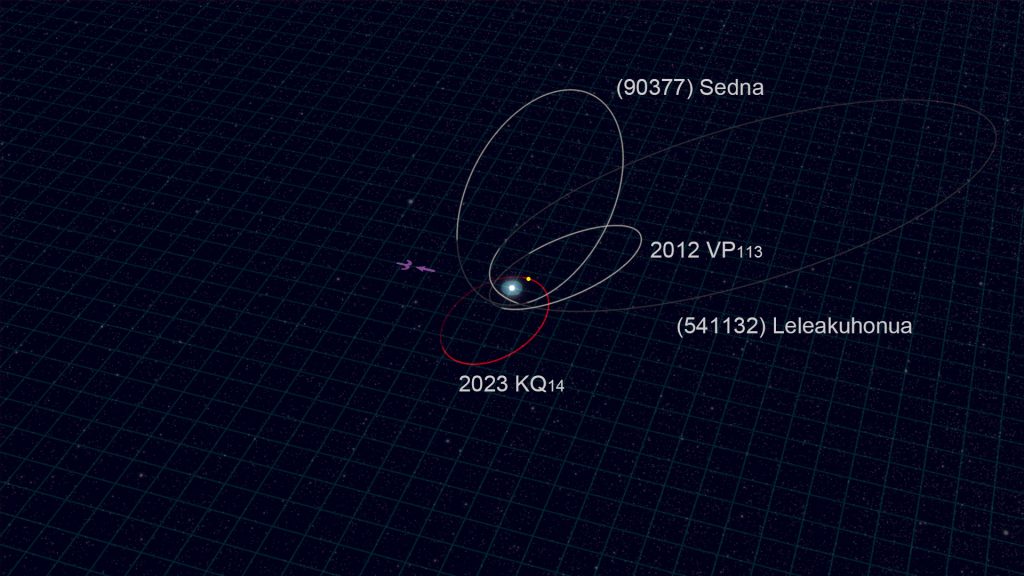
Follow-up observations using the Canada-France-Hawaiʻi Telescope (CFHT), also located on Maunakea, confirmed the object’s unusual orbit. Archival data from telescopes in Chile and Arizona helped track Ammonite’s motion across nearly two decades, revealing a remarkably stable path that makes it distinct from other known distant objects like Sedna.
What makes this discovery especially exciting is its implications for the still-unproven Planet Nine theory—a hypothesized large planet far beyond Pluto. Ammonite’s differing orbit challenges existing models and may force scientists to rethink their understanding of the Solar System’s outermost reaches.
“This kind of discovery shows just how important Hawaiʻi’s telescopes are to global science,” said Dr. Kumiko Usuda-Sato, outreach specialist of Subaru Telescope based in Hawaiʻi. “We mahalo the community for allowing us to continue exploring the cosmos from Maunakea, a place of deep cultural and natural significance.”
The full results of the study appear in the journal Nature Astronomy (Ying-Tung Chen et al., July 14, 2025).
Sponsored Content