



 Hawai'i Journalism Initiative
Army Corps of Engineers expect to restore temporary disposal site of Lahaina fire debris in Olowalu by end of year
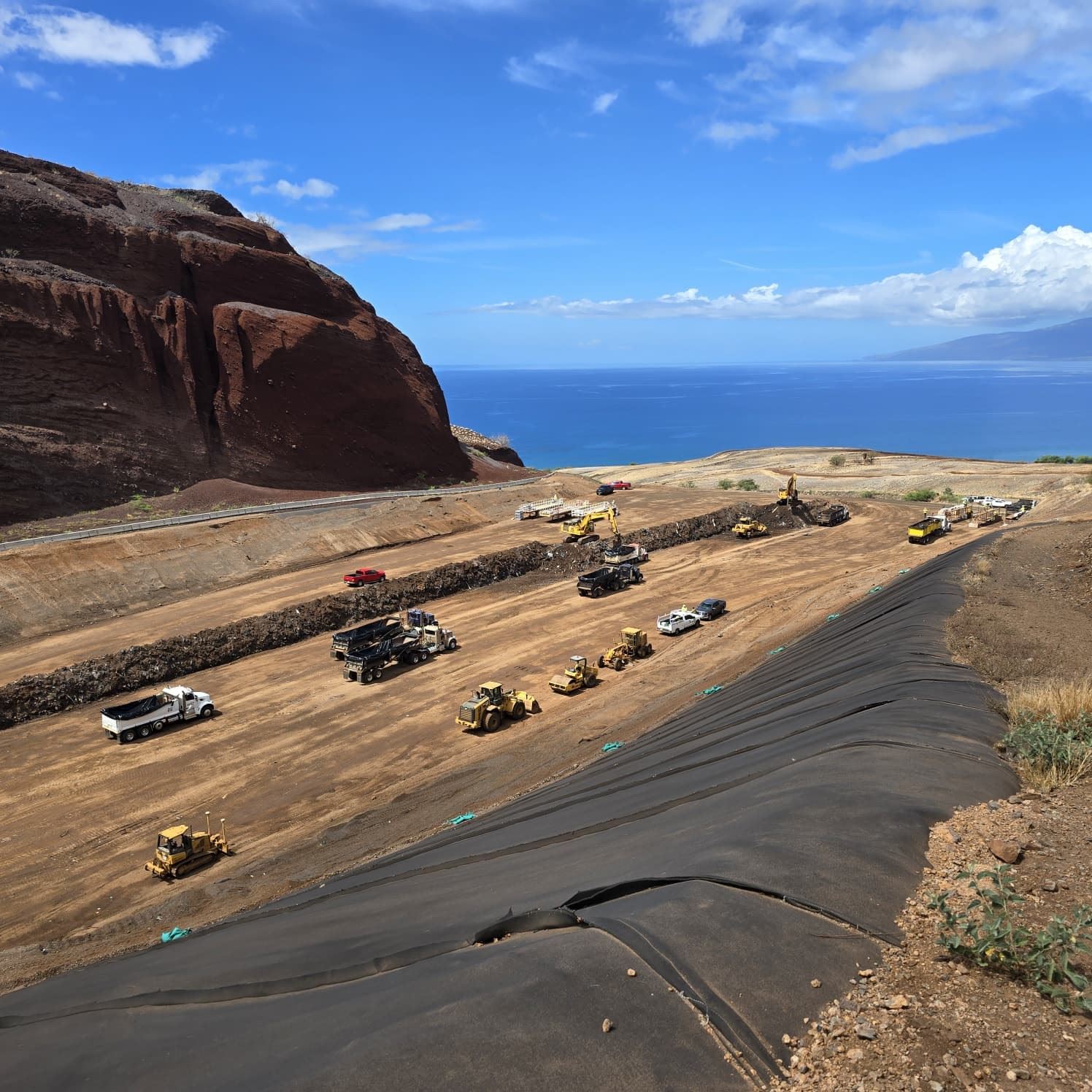
Two years after the August 2023 Lahaina fire destroyed more than 2,220 structures, the transportation of 400,000 tons of mostly non-hazardous ash and debris is nearing completion — after first being taken to a controversial temporary site in Olowalu near the ocean and now to its final location on land purchased next to the Central Maui Landfill.
By November, and ahead of schedule, the debris that was estimated to fill five football fields five stories high will be all gone from Olowalu, the U.S. Army Corps of Engineers said in an email to the Hawaiʻi Journalism Initiative.
HJI Weekly Newsletter
Get more stories like these delivered straight to your inbox. Sign up for the Hawai‘i Journalism Initiative's weekly newsletter:
Already, the federal agency said it is making preparations to restore the land used for the temporary dump, and expects by the end of the year that project will be finished.
“We will keep in a few features that the county has requested,” which include access roads and some stormwater controls, said Adrian Biggerstaff, the Honolulu District Commander of the Army Corps of Engineers, during a public meeting on Saturday at the Lahaina Resource Center.
Biggerstaff added the Army Corps will “just make sure the site is as we found it or better in improved condition.”
Shayne Agawa, the Maui County director of environmental management and an Olowalu resident since 2009, said at the meeting: “Knowing that the Army Corps is dedicated to restoring the Olowalu site back to where it was, or as close as possible, is reassuring, mainly for my neighbors who have ancestral lineage in Olowalu.”
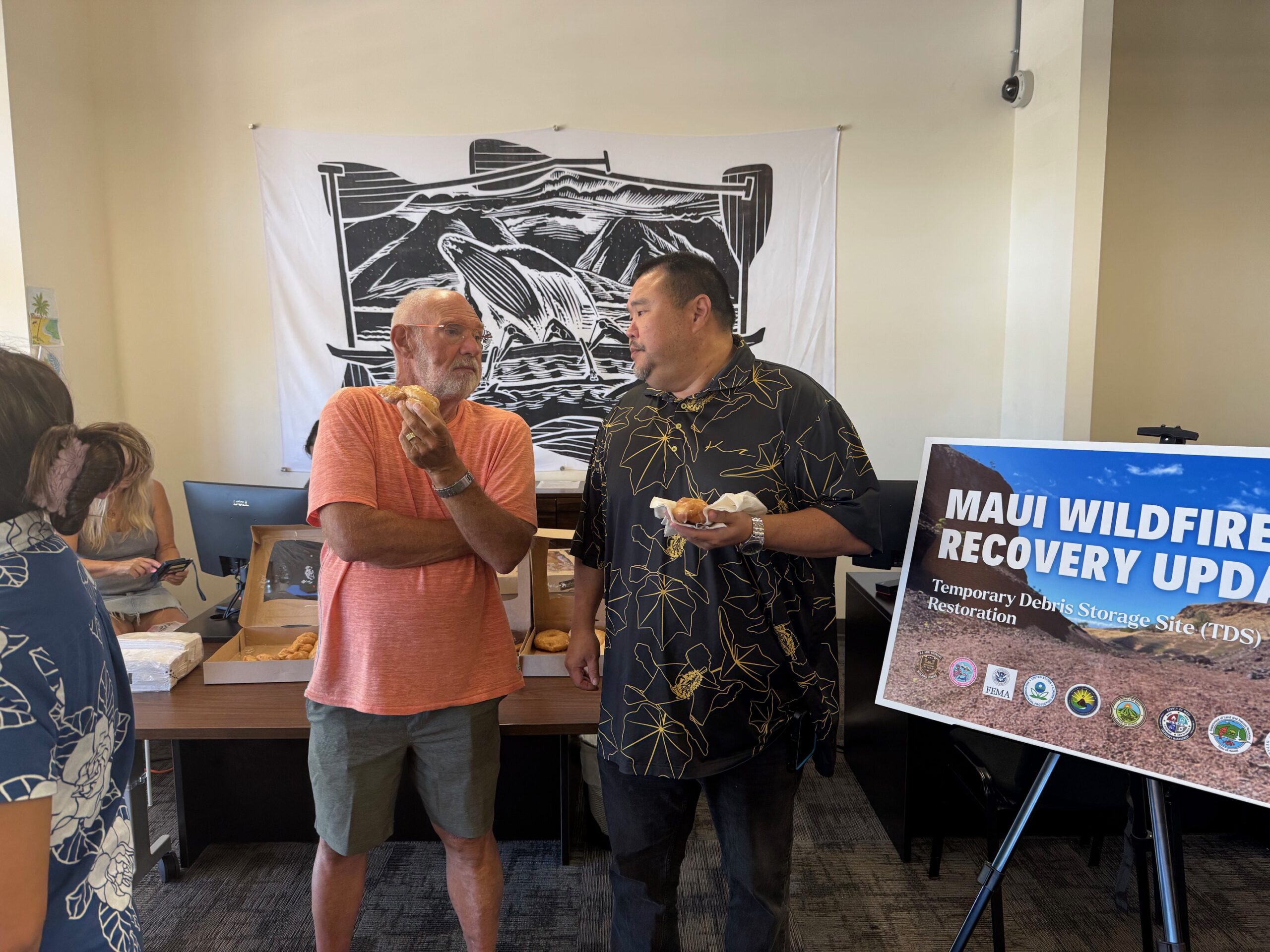
The Army Corps of Engineers’ has hired Environmental Chemical Corporation as the contractor on its restoration work. The company, which also was the contractor on the debris transportation, will use local subcontractors for some aspects of the project..
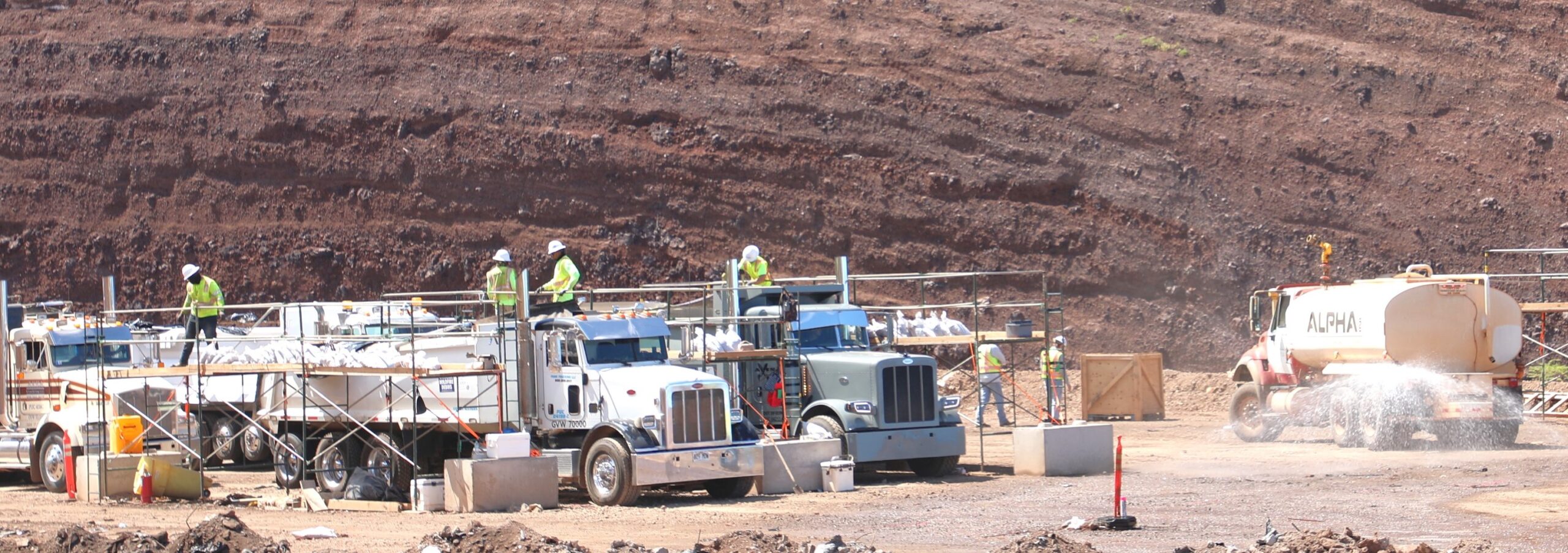
When the last of the debris is out of Olowalu, it now is about 85% gone, Environmental Chemical Corporation will deconstruct the temporary disposal site of its various layers, liner and leachate pond. Construction will be done to stabilize and support stormwater management.
“Once we’ve removed all that material and lining, we’ll then test the soil and remove any material that needs to be out of there based on testing,” Biggerstaff said.
“After we’ve confirmed that there’s been no spillage or any contaminants that has gotten below the layers (into the soil or groundwater), we will then remove the monitoring well system.”
Months after the Lahaina fire, Olowalu originally was selected by Maui County as the permanent site for the debris. But after public outcry, and a survey with public input, it was determined that Olowalu would be the best site for temporary disposal, while a permanent location was nailed down.

There was public concern that contaminated runoff from the Olowalu site would reach the ocean and its coral reef nearby.
Biggerstaff said on Saturday: “All the monitoring that we have done, we can be very confident there’s been no runoff to the ocean. The place where any runoff would be collected is a leachate pond. And even testing the leachate that’s collected from the disposal site, the levels are coming in much lower than would bring a concern anyway for any of the contaminants.”
Agawa added that the residents in Olowalu have been keeping up to date on the progress of the movement of the debris at meetings like Saturday.
“It is not only in me reassuring them verbally, but in them seeing the results of the data we’ve collected along the way,” Agawa said. “We’ve reported it out quarterly, the environmental data that Army Corps is doing, monitoring the temporary debris site. There hasn’t been any levels of concern, nothing with the groundwater, nothing with the air, nothing with the nearshore waters. So what they did to get that site ready is working.”
Maui County Mayor Richard Bissen said the controversial decision to use Olowalu as a temporary site resulted in the debris being moved out of the burn zone much faster than it could have begun if it waited for a permanent site. This allowed for the rebuilding of Lahaina to begin much sooner.
“It was urgent,” Bissen said.
Bissen said the temporary site was “close in proximity. The natural contours were perfect. And all the experts from EPA to Army Corps and our own engineers all agreed it was the perfect site.”
The Army Corps of Engineers added last week in an email to the Hawaiʻi Journalism Initiative: “Protecting public health and safety while ensuring the safe transport and disposal of fire-related debris remains our top priority throughout this process,”
Agawa said while he looked at the debris being located in Olowalu differently than some of his neighbors “because I have awareness of how suitable the facility that we created was, meaning protection for the environment,” he understood his neighbors concerns and ultimately is happy the debris will not be in Olowalu permanently.
But it has been an expensive ordeal. It also has caused traffic headaches and been time-consuming, despite the quicker-than-expected original timeline to transport the debris.
Maui County officials said during County Council meetings in 2024 that the cost of transport of the fire debris from Olowalu to the permanent site could run $60 million, although the U.S. Army Corps of Engineers said Friday “the total cost will be finalized once the contract is complete and closed out.”
The debris transportation and restoration of the temporary site is funded through a cost share between the Federal Emergency Management Agency and the State of Hawai’i, according to the U.S. Army Corps of Engineers.
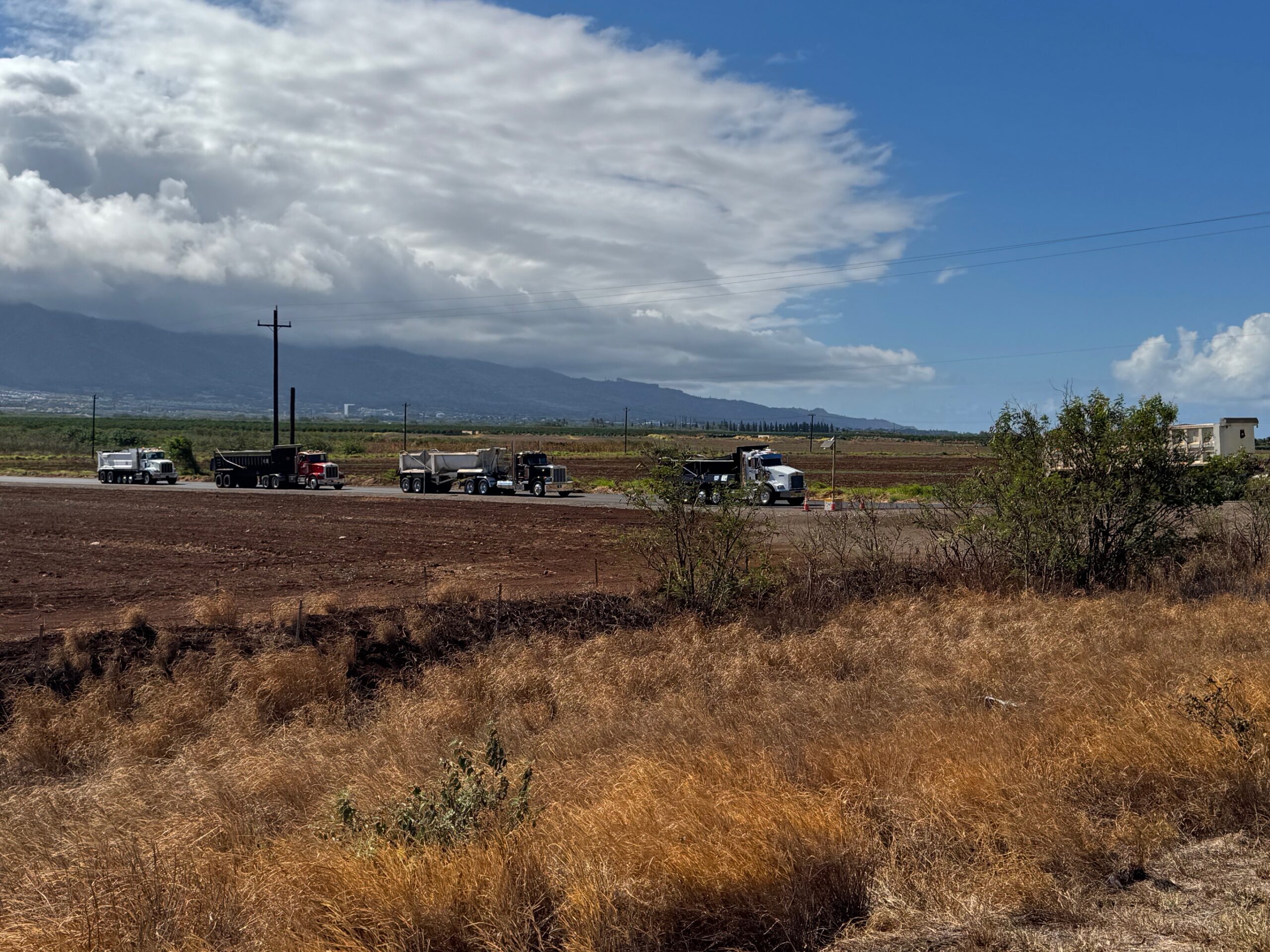
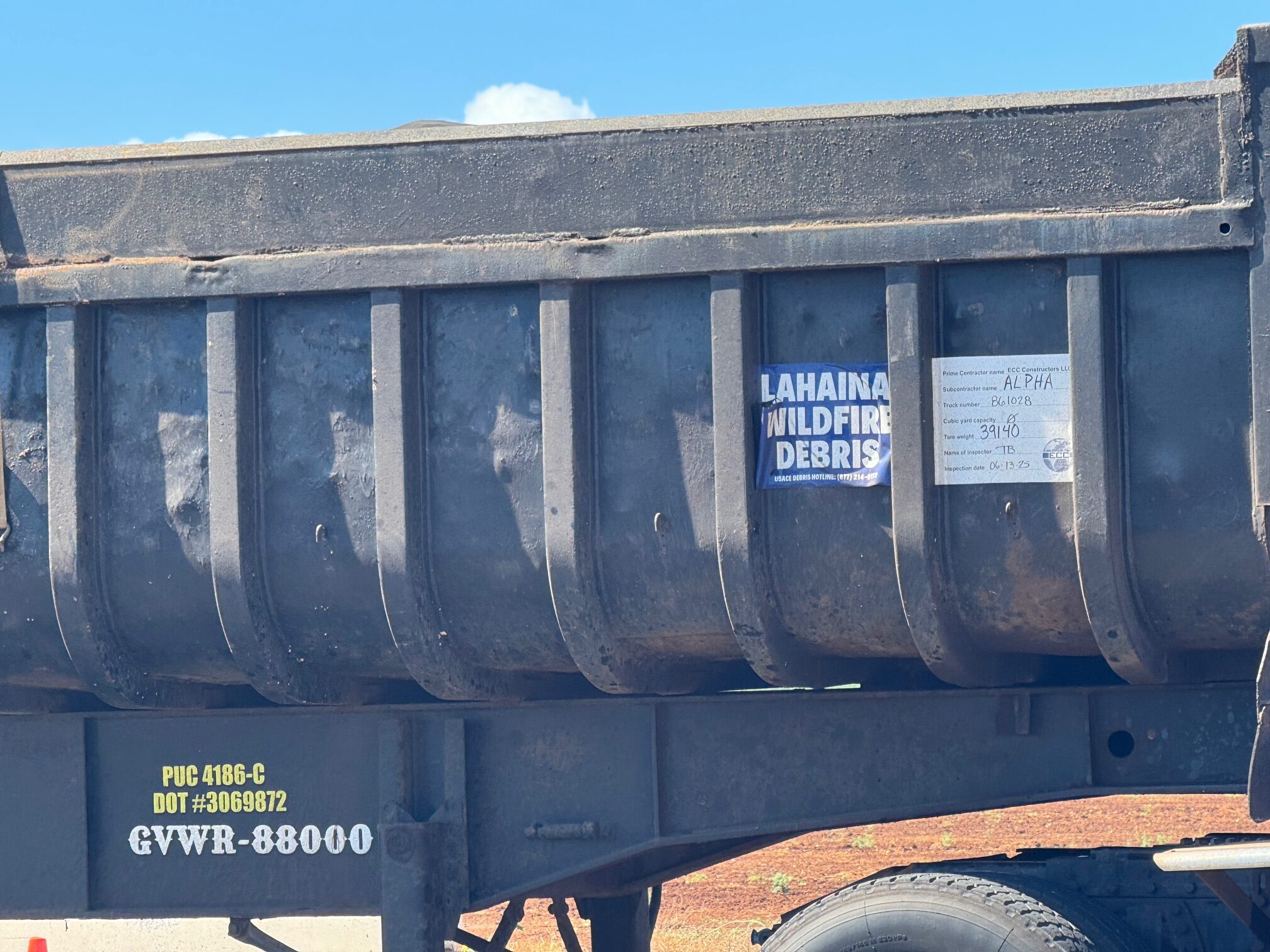
The debris movement project is way ahead of the original estimate of up to 18 months, and ahead of the five months it was expected to take when it was unveiled in February and began in mid-June.
That original estimate was reduced when the county acquired in late 2024 a 79-acre parcel next to the existing Central Maui Landfill that is now being used as the permanent debris site.
“Favorable weather, efficient planning, and close coordination with our federal, state, county, and community partners have helped prevent major delays,” the Army Corps of Engineers said. “We’re grateful for the patience and understanding of the people of Maui while this critical work continues.”
But while most of the project has gone smoothly, the U.S. Army Corps of Engineers acknowledged “one of the ongoing challenges has been minimizing impacts to traffic along the haul route.”
The 20-mile route starts at the temporary site in Olowalu, winds along the Pali coast to Māʻalaea and goes through Kahului to the permanent site at the Central Maui Landfill.
Biggerstaff spent much of the two-hour open house on Saturday talking with the few community members who showed up for the opportunity to learn about the progress of the project.
Malihini Keahi-Heath, a 68-year-old who works in guest relations at Ka’anapali Beach Hotel, said that she has mixed emotions about the money spent on the debris movement. Keahi-Heath attended Lahainaluna High School, but currently lives in Pukalani.
“I think they did a great job, considering everything that everyone lost,” Keahi-Heath said. “I’m not happy that it had to leave Lahaina. … The money could be used in other ways to help families get home, but it’s done already. … They did it in such a short time with no accidents on the highway. It’s a fine line.”
Biggerstaff said as the remaining debris grows smaller in Olowalu, the need and space for trucks will decrease. He added that some of the burden for commuters was lessened and safety was increased because the 50 or so trucks used for the transport were Maui companies.
“So these trucks are very familiar with the roads, the traffic patterns with the behaviors of the drivers getting on and off beaches,” Biggerstaff said. “So they’re attuned to the environment in which they’re working. They know every curve on the road.”
Bissen said the use of cane haul roads on Mahi Pono land also improved traffic flow, allowing the trucks to go from Waiko Road in Kahului all the way to the Central Maui Landfill without being on major roads.
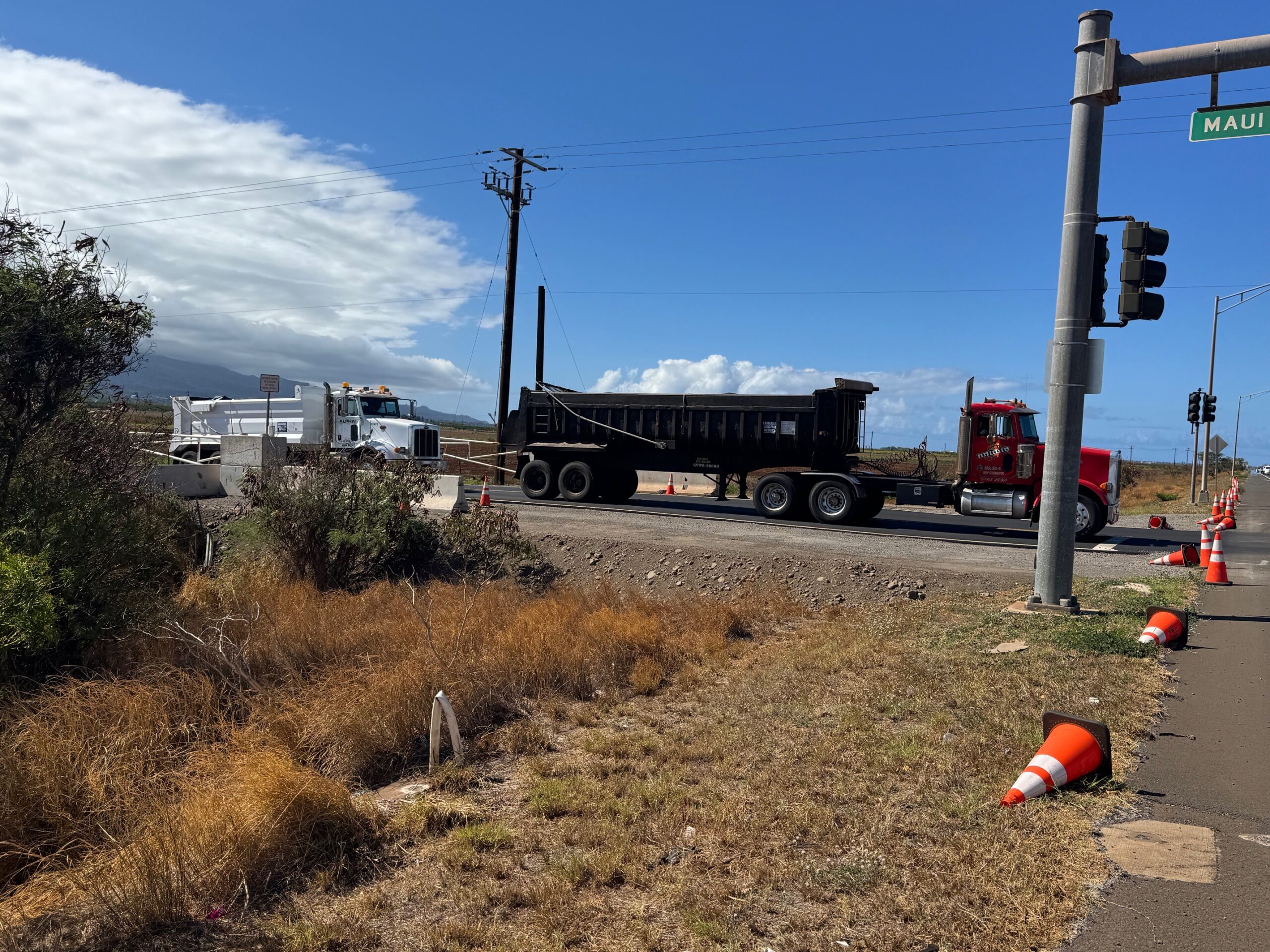
The cane haul roads also were used for evacuations on July 29 when a tsunami warning was issued, prompting people in coastal communities to flee.
“When we had the tsunami warning, of course we shut down the truck operation, the debris hauling within a half hour, an hour from getting the notification,” Bissen said.
At the open house on Saturday, 83-year-old Lahaina resident Chuck Clarke said: “I think they’re doing really well. They paid a lot of attention to all of this.”