

UH Mānoa earns National Science Foundation grant to tackle beach water contamination
The University of Hawai‘i at Mānoa has secured a three-year, $549,960 grant from the National Science Foundation to study how fecal contamination travels through Hawai‘i’s coastal beaches and what that means for public health and marine environments.
As proposed, the project plans to study water at beaches on O‘ahu. However, researchers told Maui Now that they might see if they have the capacity in the future to extend their research to Maui, where fecal contamination of nearshore waters has been an ongoing concern for years.
In the generations since the original inhabitants of the islands, beaches have been woven into the fabric of life in Hawai‘i, supporting recreation, culture and the local economy. However, they face growing modern-day threats from pollution — particularly fecal bacteria — which can enter beach environments through sources like wastewater, stormwater runoff and animal waste. Once in the sand and shallow groundwater, these bacteria don’t just stay put: tides and waves can transport them into coastal waters, raising health concerns for residents and visitors, and creating risks for sensitive marine ecosystems.
The primary focus for the research team, led by Xiaolong “Leo” Geng, assistant professor in UH Mānoa’s Water Resources Research Center and Department of Earth Sciences, is on these fecal indicator bacteria, or FIB.
FIB are organisms used by scientists to detect and assess levels of fecal contamination in environmental waters. Their presence signals potential contamination by human or animal waste, which can carry disease-causing pathogens. High concentrations of FIB can indicate unsafe water for swimming, fishing, or other recreation, even if the water looks clean.
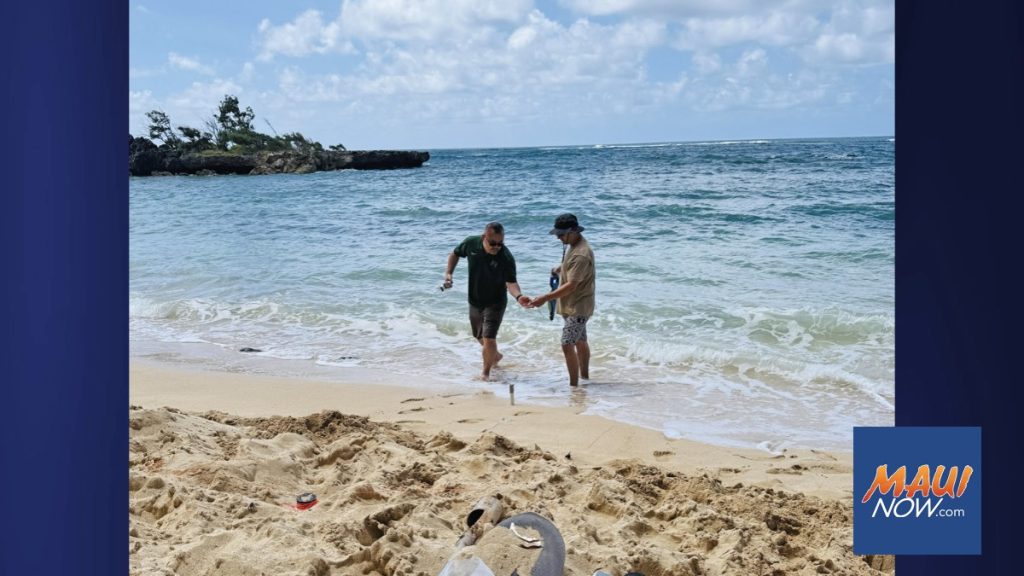
To better understand how FIB move beneath the surface, Geng and co-principal investigator Tao Yan, director of the Water Resources Research Center, will carry out fieldwork and groundwater sampling at two beaches in Hawai‘i known for fecal contamination (though the specific locations were not named). The team will also use advanced computer models to simulate how bacteria migrate through beach sands, aiming to improve the state’s ability to predict and manage water quality risks.
“Beaches are at the heart of Hawai‘i’s culture, economy, and ecosystems, yet they are increasingly vulnerable to fecal contamination,” Geng said. “Our research will shed light on how bacteria move through sand and groundwater, helping to safeguard public health and marine environments. Just as importantly, we hope to inspire the next generation of scientists and strengthen community stewardship of our coastal waters.”
Education and outreach are also a big part of the project. Two graduate students will receive hands-on training, and undergraduate students will be involved through UH Mānoa’s Undergraduate Research Opportunities Program. The team will connect with local communities statewide, offering educational outreach and citizen science activities to promote lasting care and stewardship of Hawai‘i’s beaches.
Sponsored Content