 Hawai'i Journalism Initiative
Hundreds more ‘paper leases’ for Hawaiian home lands are being awarded on Maui. Now the state must deliver
A few years ago, Kainoa MacDonald took her children for a walk up in Honokōwai to look at land where she hoped to one day grow ‘ulu, plumeria and other crops in the rich soil.
For now, it’s just a dream — after two decades on the Hawaiʻi Department of Hawaiian Home Lands’ waiting list for a residential or agricultural homestead, MacDonald has only reached No. 3,128, near the bottom of the Maui list. Statewide, she’s one of over 29,000 people waiting for their chance at a homestead.
But now, driven by a historic $600 million allocation from the State Legislature and an urgent need for housing after the 2023 Maui wildfires, the department is making a big push to award more than 2,600 leases statewide this year, including more than 1,200 on Maui.
HJI Weekly Newsletter
Get more stories like these delivered straight to your inbox. Sign up for the Hawai‘i Journalism Initiative's weekly newsletter:
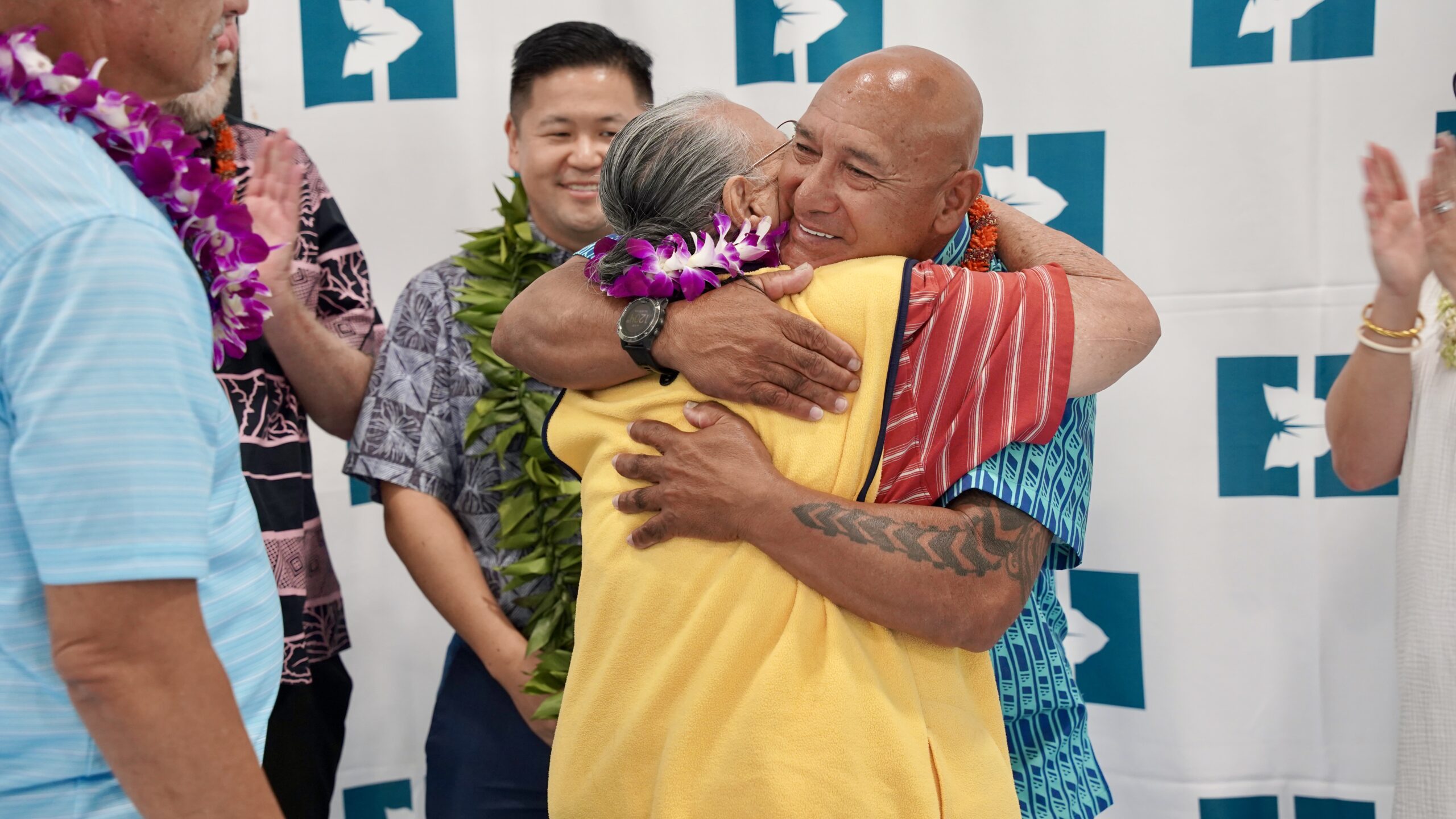
In April, the department awarded leases for 91 turnkey homes at Pu‘uhona, its first residential project on Maui in nearly 20 years. In September, it awarded 105 agricultural lots on Maui, the first agricultural leases given out since the early 2000s. And in November and December, it plans to hand out 1,100 leases for four housing projects across the island.
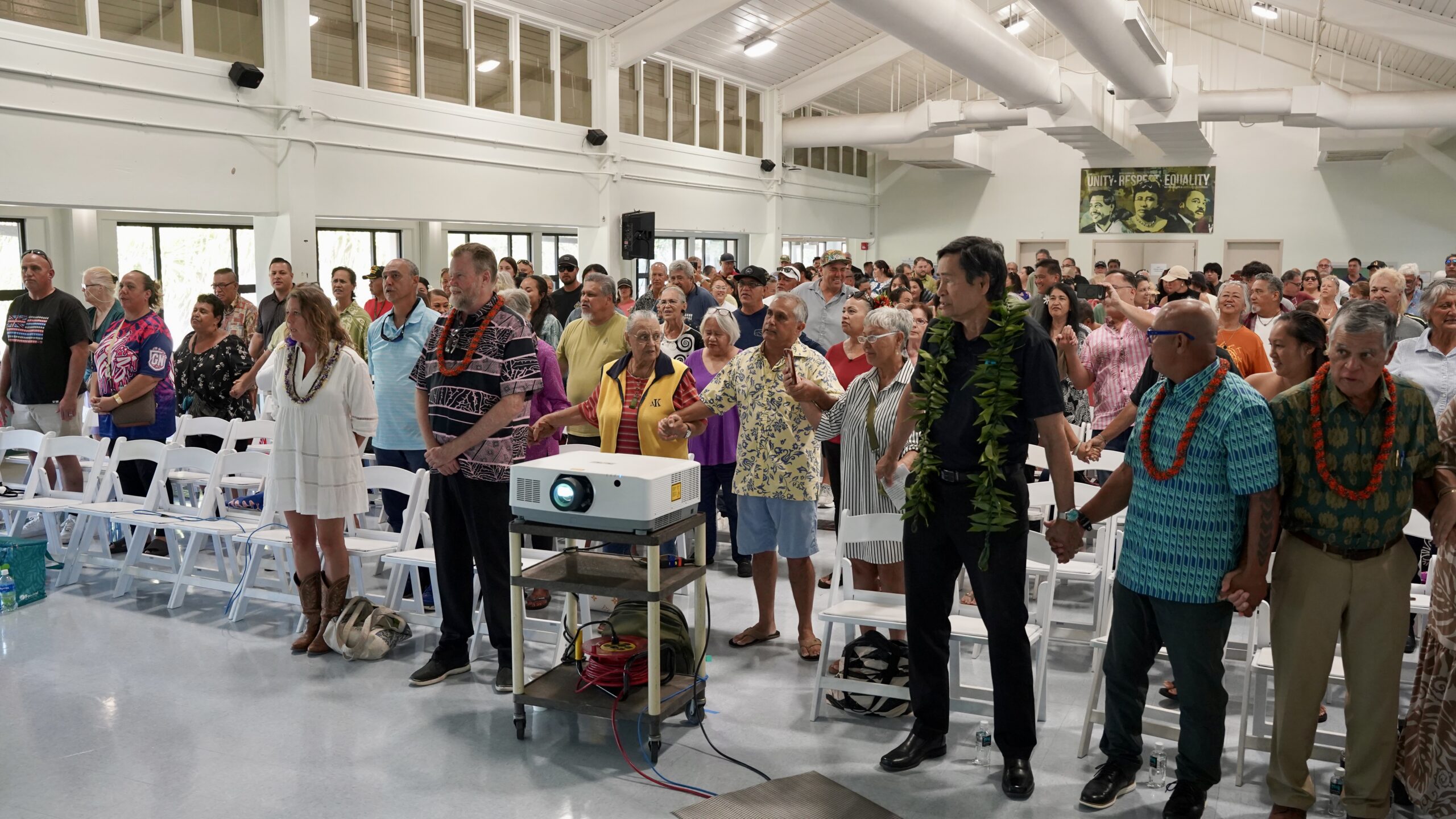
“The combination of new lands and the awarding of project leases will help our families move off the waitlist and into homes more expeditiously,” Kali Watson, DHHL director and chairman of the Hawaiian Homes Commission, said last month.
But many of the leases come with a promise that the department has to deliver. The four projects set to be awarded to beneficiaries in the next two months have yet to start construction, and the first homes won’t be ready until 2028.
“The last thing that we want to do is give out these paper leases, and then they wait a really long time before we actually give them real leases,” Central Maui state Sen. Troy Hashimoto said.
PROMISES ON PAPER
Puamana Crabbe’s mother wanted her children to join the Hawaiian homes waiting list as soon as they turned 18. Crabbe, the oldest of seven, landed a spot on the Maui list in 1980, and one by one her siblings got on, too. While Crabbe grew up on O‘ahu, where she graduated from Kamehameha Schools Kapālama, her great-grandmother was from Kipahulu, “so I always thought, you know, go back to where my ancestors were.”
The creation of the Hawaiian home lands program goes back to 1920, when Prince Jonah Kūhiō Kalaniana‘ole and a group of advocates successfully pushed Congress to pass the Hawaiian Homes Commission Act. The measure set aside about 200,000 acres of land as a permanent homeland for native Hawaiians who at the time were losing their lands to Western colonizers and their people to foreign diseases.
When Hawai‘i became a state in 1959, it took on responsibility for the lands. For the last six decades, it has managed the ever-growing list of applicants for homestead lands, which can be leased for 99 years at a rate of $1 a year.
To get on the waiting list, applicants have to be at least 18 years old and have at least 50% Hawaiian blood. They also have to choose an island and whether they want a residential, agricultural (farming) or pastoral (ranching) lot. Because the department allows people to apply for one residential lot and one agricultural or pastoral lot, some are on multiple lists.
That’s why, even though there are 29,306 people on the lists, there are 46,842 applications across six islands. On Maui, there are 4,813 applicants on the agricultural list, 3,947 on the residential list and 620 on the pastoral list, according to DHHL lists as of December 2023, the last ones publicly available while the department updates its online system.
On Maui, the oldest applications were in 1961 for residential lots, 1971 for pastoral lots and 1973 for agricultural lots. Most folks on the list applied before 2000, the department told the Hawai‘i Journalism Initiative.
In 2022, state lawmakers passed a bill setting aside $600 million to help reduce the waiting list. The department said it planned to use the funds for infrastructure development for more than 2,700 new homestead lots statewide, new land acquisitions, new potable water resources and individual home-buying and rental assistance programs.
Since the August 2023 wildfires, the bulk of those funds are going to Maui at the direction of Gov. Josh Green, Watson told the Hawai‘i Journalism Initiative.
“Maui has a large amount of Hawaiians living there, and because of the devastation that was caused by that fire, obviously, it impacted people in a more drastic way than other islands,” Watson said.
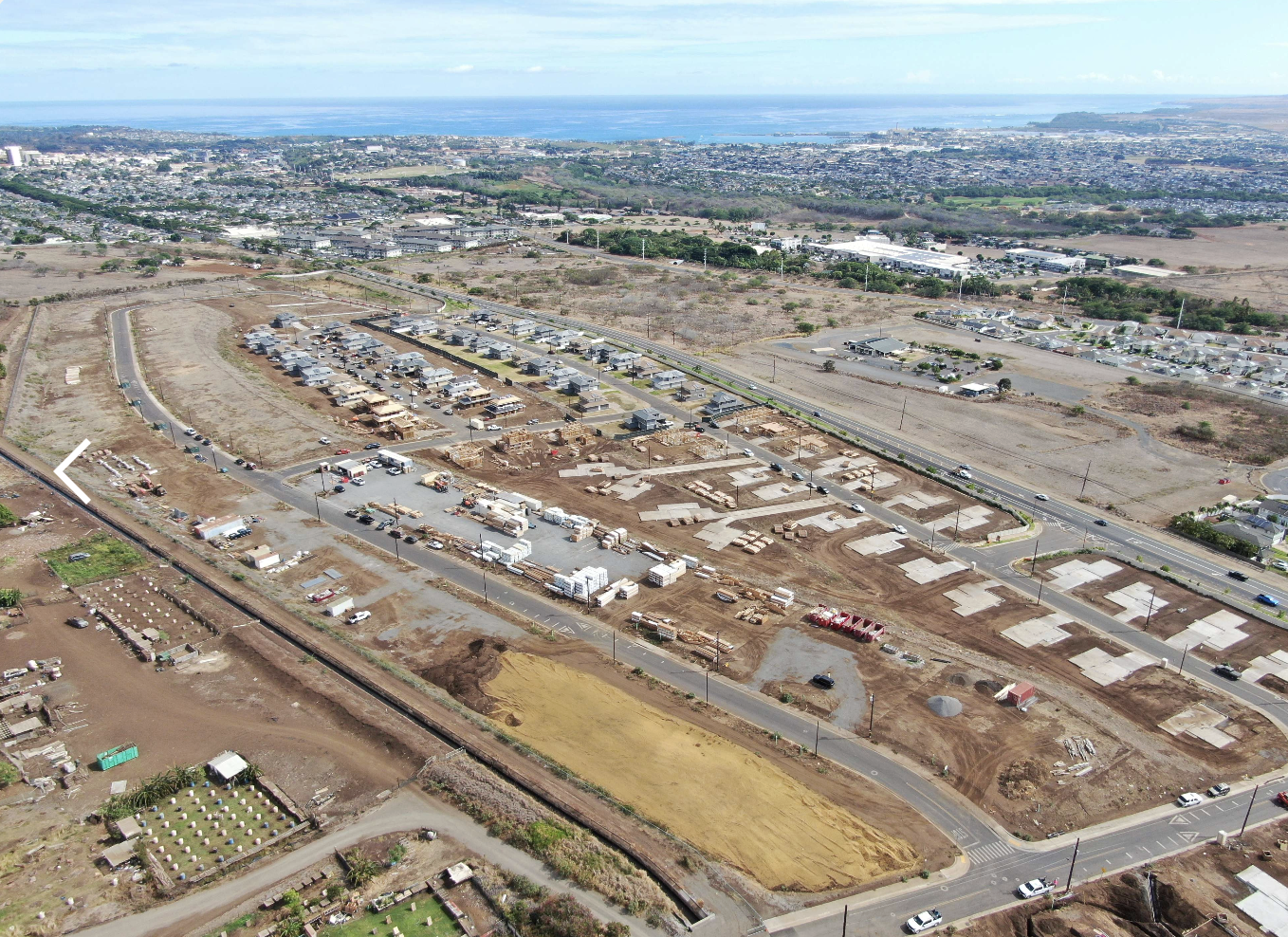
In May 2023, the department broke ground on the first project to be funded under the $600 million allocation: a $17 million effort to install infrastructure for Pu‘uhona (formerly known as Pu‘unani), a 161-lot development of turnkey homes and improved vacant lots in Central Maui.
In June 2024, the department awarded 52 turnkey homes of three to five bedrooms ranging in price from $509,800 to $699,000. In April 2025, it awarded 91 turnkey homes with two to five bedrooms ranging in price from $411,422 to $699,000.
The first family to move into the Phase I homes over the summer had been waiting nearly 40 years and called it a “dream come true.” Phase II’s first homes are expected to be completed in February, according to the department.
Before the end of the year, the department plans to award over 1,100 more leases for four projects where beneficiaries hope they can one day buy a home. The four projects, which DHHL is spending about $300 million on, are:
- Kamalani in Kīhei, which will have 400 single-family homesteads. Construction is expected to begin in 2026 with completion of the first phase in 2028. DHHL is spending $35.1 million for the project’s first phase of 150 homes. The developer is Gentry Homes.
- Waiehu Mauka, which will have 343 single-family turnkey homes and owner-builder lots. Construction is expected to begin in 2027 with the first homes in 2030 and completion in 2033. DHHL is providing $95 million for land acquisition and project infrastructure. The developer is Dowling Company.
- Wailuku Single-Family Homestead, which will have 173 single-family turnkey homes and 31 owner-builder lots. Construction is expected to start in 2026 with the first homes in 2029 and completion in 2031. DHHL is providing $45 million for land acquisition and infrastructure. Dowling is the developer.
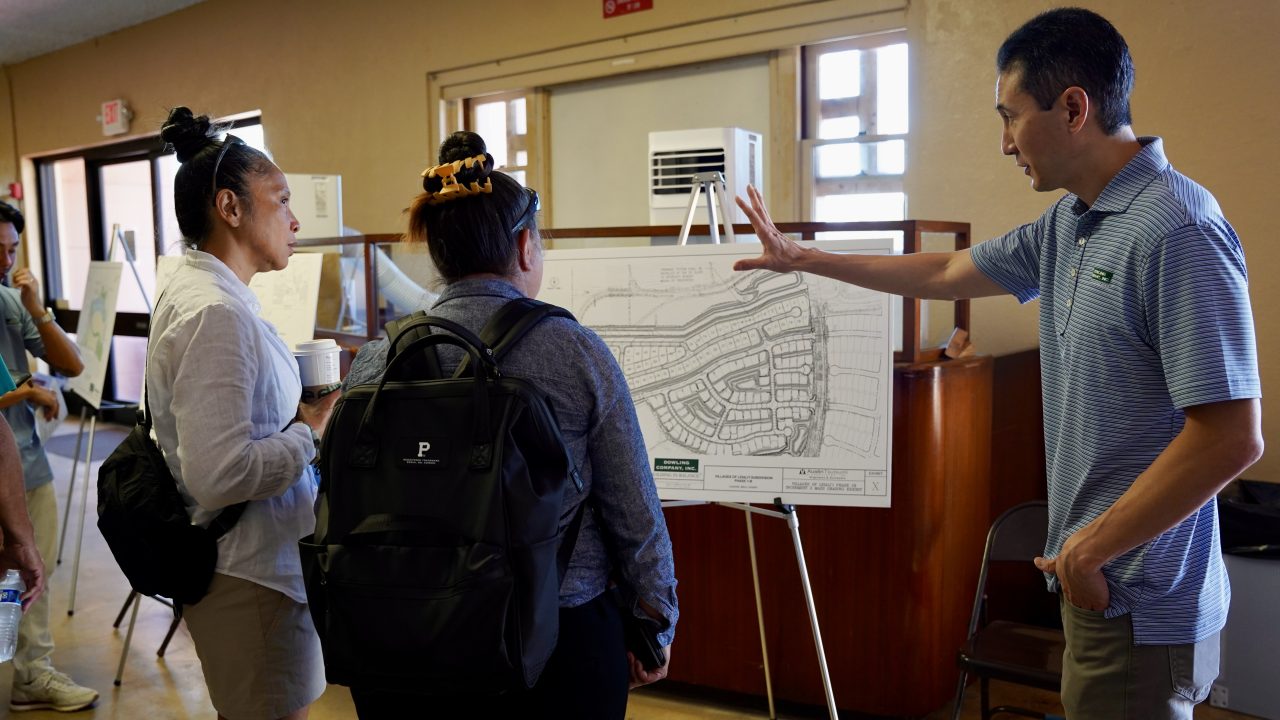
- Villages of Leiali‘i 1B in Lahaina, which will have 155 single-family turnkey homes. Construction is expected to begin in 2026, with the first homes in 2028 and completion in 2031. DHHL is providing $128 million for infrastructure. Dowling is the developer.
Because the projects aren’t built yet, beneficiaries will receive a “paper lease,” basically a promise of a spot in the development but no physical home yet. Watson said paper leases allow beneficiaries to pass leases down to their heirs who don’t have 50% Hawaiian blood.
Currently, if someone dies while on the waiting list, their spot can only be taken by a designated successor of 50% Hawaiian blood. However, if they have a lease, that can be passed down to someone with 25% Hawaiian blood.
“That’s one of the major reasons why we’re doing these … paper leases,” Watson said.
Past administrations have tried to use paper leases to pare down the list. The administration of Gov. Linda Lingle, who pledged during her 2002 campaign to eliminate the waiting list in five years, issued about 1,400 paper leases, but less than 20% of homes were occupied two years after she left office, Civil Beat reported in 2012.
With the expectations they bring, paper leases can be “a double-edged sword,” Hashimoto said. “You have to be very laser focused on getting these projects finished, and you are clear on the expectations of what the timeline is going to be. Because they are giving people very lofty timelines.”
The hope of having something to pass down to their children drives many families to wait decades for a homestead. Plus, the costs are below market rate. In Maui County, the median sales price for a single-family home was $1.3 million in September. But one of the greatest benefits is “the sense of community in that all of your neighbors are Hawaiian,” said Henderson Huihui, a staff attorney with the Native Hawaiian Legal Corporation.
“We all understand our history and why we’re even on a homestead because of the dispossession of land over the years and the fact that the Hawaiian race almost became extinct,” said Huihui, a fourth-generation homesteader from Waimānalo.
Huihui, who handles all of the nonprofit law firm’s Hawaiian home lands-related cases, said “it’s always great” to see beneficiaries get leases because they can pass it down even if their heirs don’t meet the successorship requirements. His dad and grandma have leases, but he’s not eligible for the list.
However, he said a big concern is how long it will take the department to come through on undeveloped projects.
“This was something the department did in the past … and so the concern, I think, is that, is this basically going to be the same thing?” he said.
Watson said the department currently has a level of funding that was not available before. The $600 million will go toward infrastructure for the projects where people are promised homes, saving money and moving the developments forward more quickly.
And, the department is trying new things, like working with the counties to find more funding sources. In 2024, Maui County enacted a new law that set aside 20% of general excise tax revenues for DHHL projects, which Watson said has never been done before.
The department currently oversees 28 projects statewide and also stands to inherit Ka La‘i Ola, the modular home project built by the state for Lahaina fire survivors, in 2029.
“The department and the program is in a totally different mindset and position than it was versus 1921,” Watson said. “And so I’d have to say that we’re going to be one of, if not the largest developer in the state, because of all the stuff we’re doing and the approach we’re using.”
KEEPING THE MOMENTUM
For the last two decades, Crabbe has had a paper lease that she received in the early 2000s for the Waiohuli homestead community. At the time, she was a single parent and didn’t have the money to build her own home, so she put those dreams on hold.
Over the years, Crabbe got offers to live in other developments on Maui, but she turned them down. She still wanted to live Upcountry, closer to the heavens, where the stars look “like diamonds in the sky,” she marveled while visiting her sister in Makawao. A fashion designer and seamstress, Crabbe dreams of having a home where her family can gather and a studio where she can design her clothes.
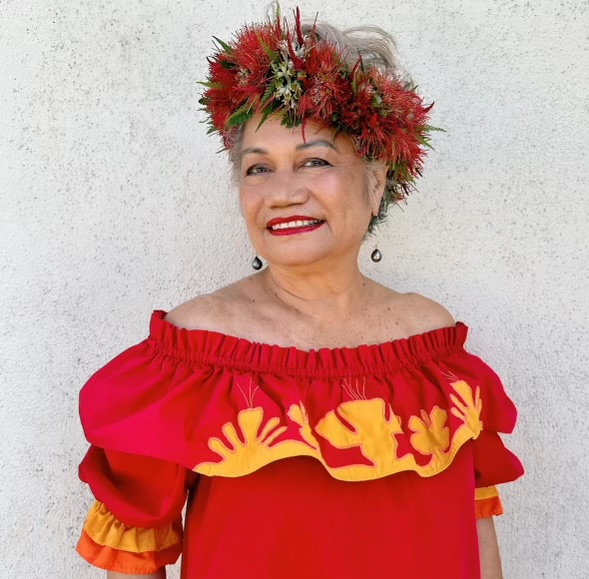
“It’s kind of like cat and mouse and … being there at the right time for some people,” she said. “I don’t know what else to say except I’m still hopeful.”
As a policy advocate who represents Maui and Lāna‘i on the Sovereign Council of Hawaiian Homestead Associations, MacDonald is happy to see longtime families get their shot at a homestead. But she also knows people who have held onto their paper leases for years because they were waiting for a development to finish or they couldn’t afford a home.
“I’d like to celebrate each individual who has received a paper lease, but I would also say proceed with caution because you need to advocate for the very lease that was just given to you,” MacDonald said. “And that means being a part of the advocacy to hold the department accountable for each and every single action or reaction they make to these development projects coming forward.”
MacDonald has multiple family members who’ve died on the list, including her grandmother, who got on in 1968 but died in 2005 without receiving a lease. MacDonald has been waiting a year for the department to process her paperwork to succeed her grandma; this would move her up into the 600s for the agricultural list and the 400s for the residential list.
With the big push for paper leases, MacDonald said “we’re going to need all hands on deck for beneficiaries to really have a complete understanding of really what’s at stake.” Watson was appointed in 2023 for a four-year term — what happens when he leaves?
“Will that chair carry the same tenacity as Kali? Or will everything stop? … Because that’s happened before,” MacDonald said.
The top things that she thinks would help clear the list are more funding for the department, more consultation with beneficiaries on developments and more efficient technical assistance to help beneficiaries prepare to own a home.
A big factor in finishing what the department started is the money. Even with the 2022 funding, Watson estimates it will cost $6 billion to fulfill the entire waiting list. Earlier this year, he asked the Legislature for $600 million more, a request that lawmakers rejected.
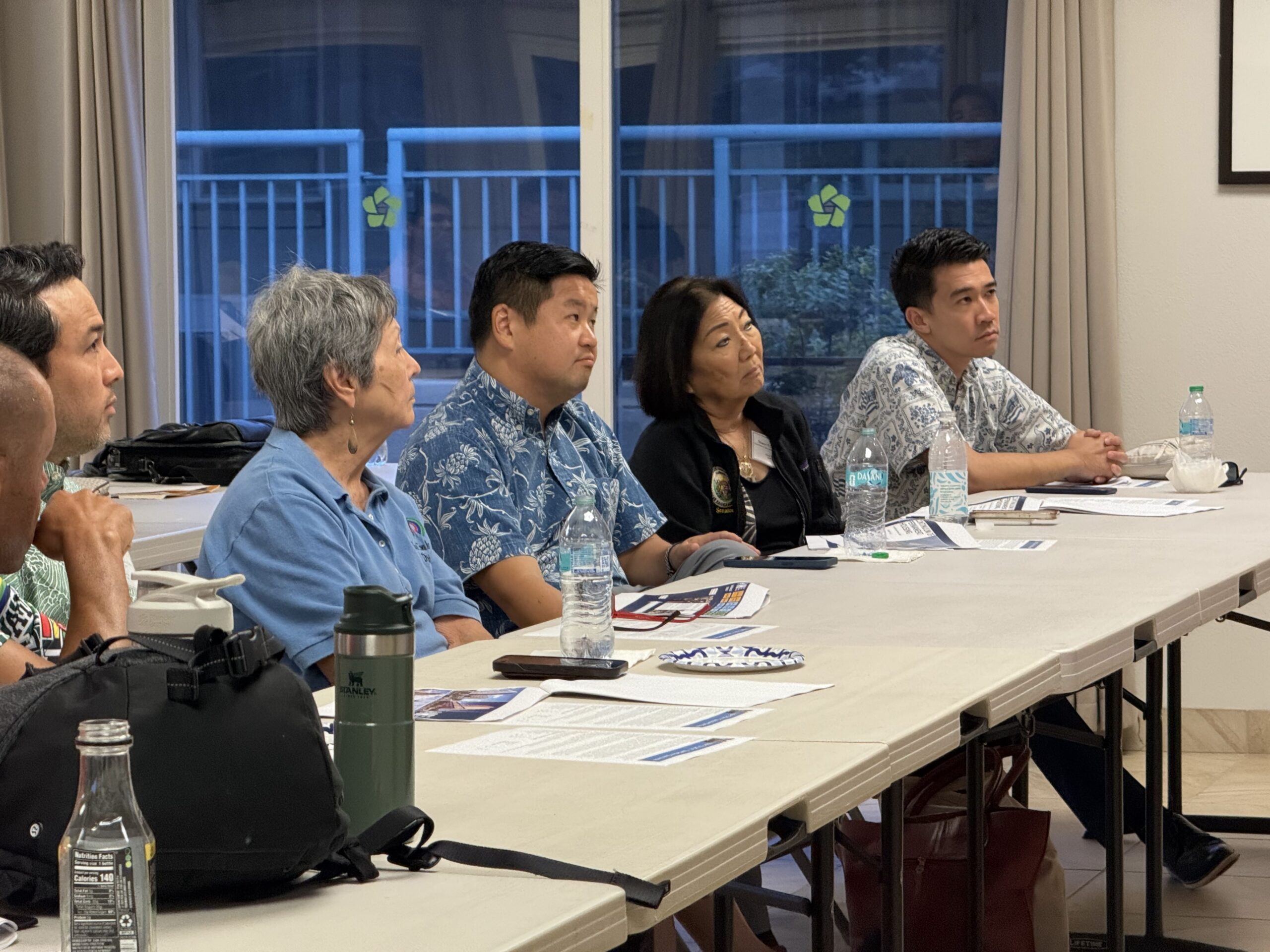
Hashimoto said the concern with DHHL in the past was that they would under-deliver on their promises. Before lawmakers approve more money, they want to make sure the $600 million is spent effectively.
“If he can prove that they can successfully get these projects done, then I think the Legislature is always willing to give more,” Hashimoto said.
The successes so far are “really exciting, but we need to see a little bit more,” he said.
In 2022, the state was flush with cash, boosted by federal dollars after the pandemic. But now, with the state facing a slower economy, “we’re not going to be able to give those large buckets of money,” Hashimoto said.
Watson’s vision for 2026 is just as ambitious. He wants to see “at least another 2,000 leases.” Next year, the department is planning 230 project lease awards on Maui, including 100 at Pūlehunui, 40 at Honōkowai and 96 in Hāna.
Watson said the department is “moving a lot faster than we have historically.” But, he said, “I take that criticism” from beneficiaries that it’s not enough. “I’d like to move faster, and so we’re doing a lot of new things to try and make it move faster.”