Episode 35 of Kīlauea eruption dazzles with dual fountains
During the lapse in appropriations, the USGS Hawaiian Volcano Observatory continues to maintain monitoring networks and issue updates and notifications of volcanic activity via the Hazard Notification Service.
Episode 35 of the ongoing Halemaʻumaʻu eruption ended on Oct. 18 after 7.5 hours of continuous fountaining. Vent areas and lava flows continue to exhibit slow movement and/or incandescence as they cool and solidify.
Kīlauea summit inflation immediately resumed following the end of episode 35 and continues along with tremor and vent glow. These observations indicate that another fountaining episode is probable, but likely at least two weeks away, according to the HVO.
Intermittent glow, and possibly some flames, continued from both the north and south vents throughout the night, though the north vent was more persistent. Remobilized flows were sluggishly active through Sunday on the slopes around the cone. Additional secondary flows and creep of agglutinated tephra is possible in the coming days, the HVO reports.
The Uēkahuna tiltmeter (UWD) recorded 2.5 microradians of inflationary tilt over the past 24 hours and 7.2 microradians of inflationary tilt since the end of episode 35. Tremor shows small spikes about every 5 minutes that are characteristic of gas pistoning of magma within the vents, the HVO reports.
Plumes of gas are rising from both vents this morning and sulfur dioxide gas emissions remain at background levels, typically between 1,200 and 1,500 tonnes per day.
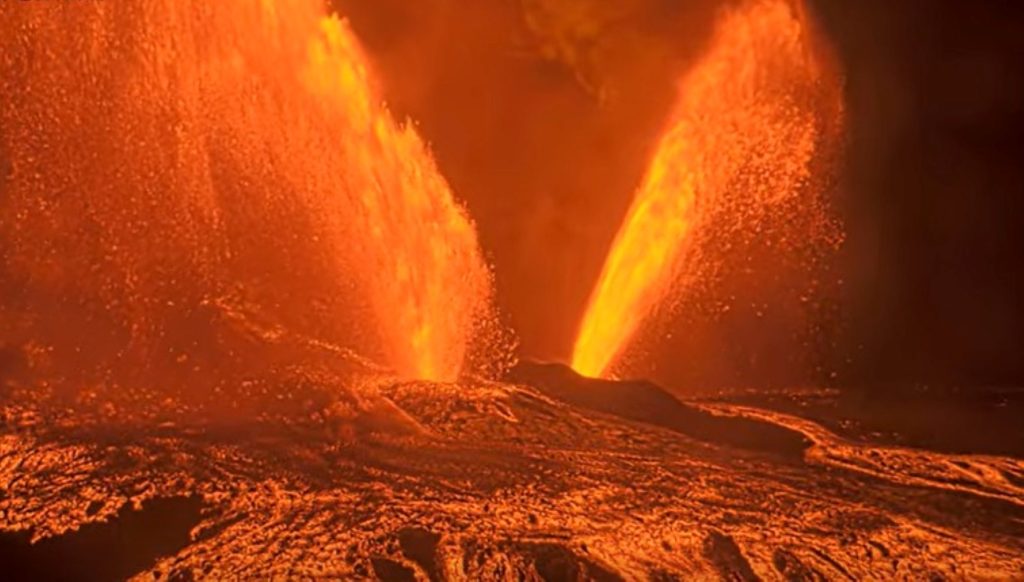
Episode 35 fountains began at approximately 8:05 p.m. HST on Oct. 17 and ended at 3:32 a.m. on Oct. 18. South vent fountains reached heights of nearly 1,500 feet (460 meters) and north vent fountains reached heights of about 1100 feet (330 meters). These were the highest single fountain and highest pair of fountains seen during this eruption so far.
Episode 35 fountains produced an estimated 13 million cubic yards of lava. The combined average eruption rate was over 500 cubic yards per second from the dual fountains. Lava flows from the fountains covered about two thirds of the floor of Halemaʻumaʻu crater.
Sponsored Content