

Hawaiian Electric proposes rebate for customers in wildfire risk zones to buy backup power equipment
Qualified Hawaiian Electric customers in wildfire risk areas who are subject to preemptive power shutoffs would be eligible to receive a rebate for the purchase of backup power equipment, under a new company proposal.
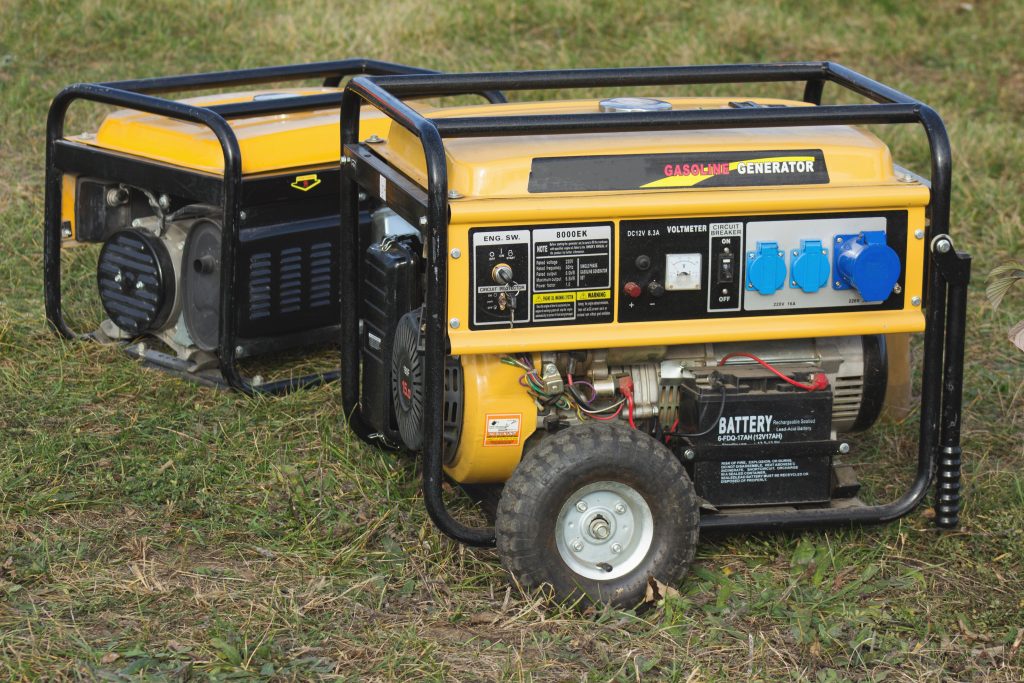
The Backup Power Rebate Program, designed to serve low-to-moderate income households and customers with special medical needs, would provide eligible residential customers a rebate of up to $500 for the purchase of a portable generator and up to $1,000 for the purchase of a portable battery. Commercial customers would be eligible for a rebate of $400 per kilowatt for the purchase of a generator or battery.
For qualified residential customers, the program would be limited to home addresses that fall within areas subject to Hawaiian Electric’s Public Safety Power Shutoff (PSPS) on Maui, Moloka‘i, Hawai‘i Island and O‘ahu. For commercial customers, the rebate is proposed for all areas served by Hawaiian Electric, with prioritization given to those located in PSPS areas.
The utility said the primary goal is to provide low-to-moderate income households and customers with special medical needs with the minimum power required to keep essential household appliances such as a refrigerator and medical equipment running during outages.
“We are sensitive to the fact that customers affected by PSPS events may experience extended power outages,” said Brendan Bailey, HECO vice president of customer service. “We want to make sure that vulnerable populations have access to backup power as the company works to reduce wildfire risks and keep customers safe.”
The two-year pilot program would authorize up to $3 million in annual rebates across the five islands Hawaiian Electric serves, benefiting an estimated 4,800 residential customers, according to HECO.
The utility added that backup generators at commercial locations could be used to support “resilience hubs,” by which businesses could be called upon to use their generators to help offset load on the grid if an island encounters a generation shortfall.
The funding would be allocated in an amount roughly proportional to the number of customers on each island that are in designated PSPS zones. Accordingly, about half of the funding would be allocated to customers in Maui County, with 40% going to customers on Hawai‘i Island and 10% to customers on O‘ahu. After two years Hawaiian Electric would review the program’s performance and seek feedback on whether to extend it.
To qualify for the program, residential customers would have to either prove low-to-moderate income status using the same process as Hawaiian Electric’s BYOD Plus program or register with the company’s Special Medical Needs registry.
Hawaiian Electric’s PSPS program was launched in mid-2024 as part of the company’s wildfire safety strategy. It enables the company to proactively shut off electricity in high-risk areas during extreme conditions to prevent electrical equipment from igniting wildfires. Shutoffs are only implemented when there is a severe fire danger and other preventative measures are deemed insufficient.
The company designated specific circuits on Maui, Hawai‘i Island, O‘ahu and Moloka‘i that are subject to PSPS. The areas were designated based on wildfire history, vegetation dryness, wind exposure and evacuation challenges. PSPS decisions are made on a case-by-case basis, guided by National Weather Service red flag warnings and current field conditions.
Customers on life support with special medical needs are urged to prepare now for the possibility of extended power outages. Hawaiian Electric asks those customers to provide their contact information to receive future notifications in advance of a PSPS by submitting an online Medical Needs Communications Form.
Hawaiian Electric is seeking approval from the Public Utilities Commission to recover the cost of the program from customers. The company estimates that the average monthly bill impact for a residential customer using 500 kilowatt-hours would be $1.64 on Maui, $1.10 on Hawai‘i Island and $0.08 on O‘ahu. For customers on Moloka‘i and Lāna‘i using 400 kWh per month, the estimated bill impact would be $1.31.
Sponsored Content