Four Seasons wins SMA permit after Maui Planning Commission backs off property-wide water monitoring
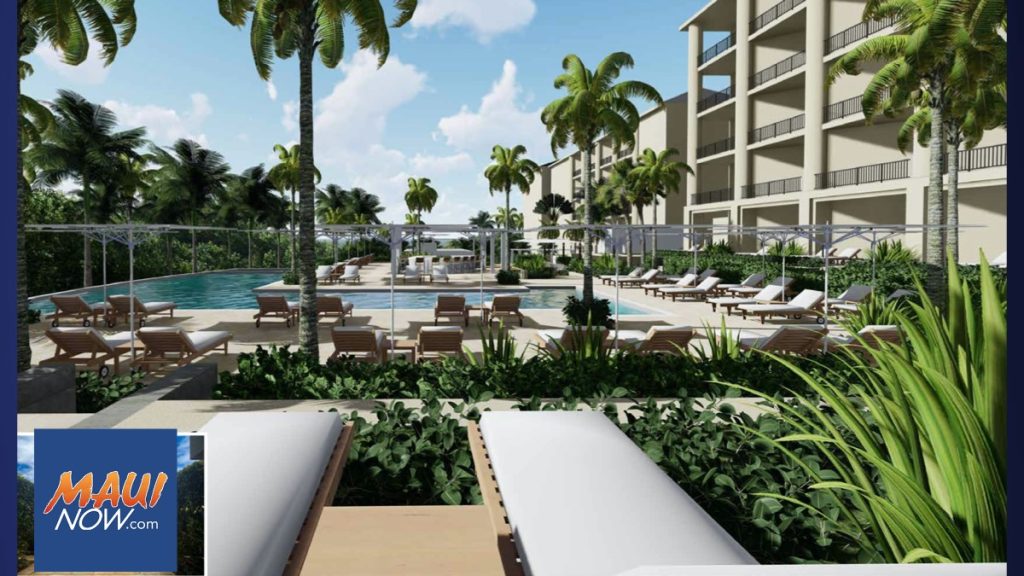
The Maui Planning Commission voted 5-1 Tuesday to grant a special management area use permit for the Four Seasons Resort Wailea’s $16.3 million project to make exterior renovations, including new swimming pools. But the approval came after legal concerns compelled the commission to back off attempts to impose property-wide monitoring of the resort’s water usage.
Commissioners initially pushed to impose a strict, property-wide cap on the resort’s total water usage, tied to a financial penalty for any overage. Commissioners said they wanted to hold the resort “accountable” for its water consumption, fully aware that their actions were being watched by residents seeking a balance of public benefits.
Concerns were also raised that the project’s goal of retaining guests longer on-site could attract “additional people on property,” further stressing water resources. Commissioner Mark Deakos noted the difficulty of addressing these “cumulative impacts.”
Water shortages underscore resource concerns
The water use showdown comes Maui residents face ongoing drought conditions and water shortages that stymie development of direly needed housing. Central and South Maui draw water from the underground ʻĪao aquifer, and are in a Stage 1 Water Shortage Alert. West Maui and Upcountry are in a more severe Stage 2 Water Storage Alert status, according to the Maui County Department of Water Supply.
At the same time, the Maui County Council is considering Bill 161 to impose interim restrictions on construction of new private swimming pools in West Maui, in favor of saving water “to support stable housing.”
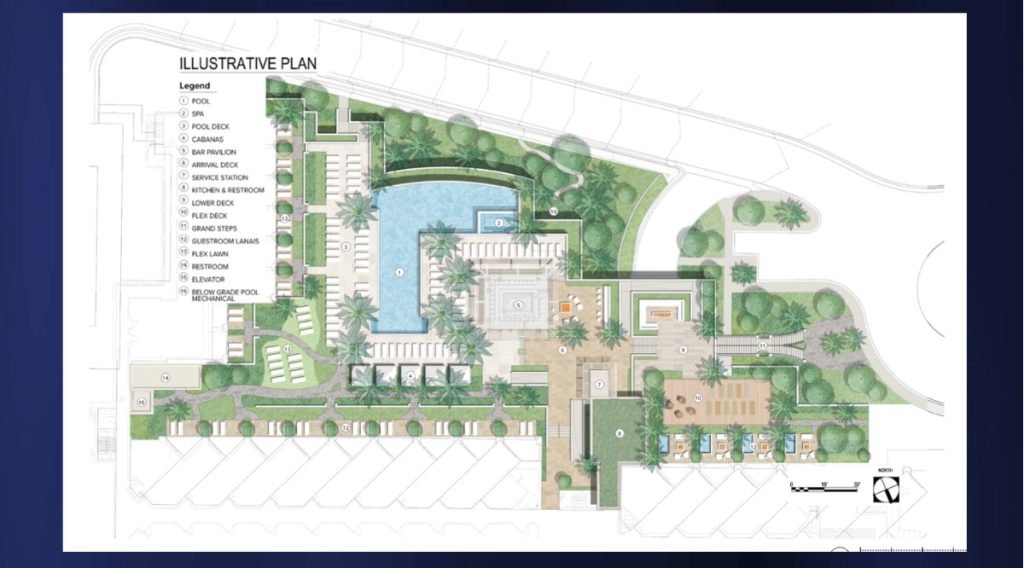
The Four Seasons project calls for building a new leisure pool, a private plunge pool for the Lokelani presidential suite, two new massage hales and the expansion of the resort’s solar photovoltaic arrays. The commission’s scrutiny of the resort’s plans took nearly eight hours Tuesday and ended with a deferral of two other bills for scheduled for consideration to Jan. 13. One of those measures would increase floor space in accessory dwelling units, called ʻohana homes, to help make them more affordable.
‘Weird territory’ leads to closed-door executive session
A number of commissioners struggled with allowing the resort to self-police its monitoring of water use. The sticking point was that the resort’s plans to consolidate five meters into one larger one meant that it would be impossible to independently track water use for the new project additions alone.
As commissioners brainstormed water use conditions and ratcheted up pressure for imposing stricter conditions, including one to impose a cash penalty for water over-use, deliberations were abruptly interrupted. Planning Director Kate Blystone cautioned the panel that its discussion was straying into what might be legally problematic territory.

“I am starting to get uncomfortable with the direction this is going,” she told the commission. “I’m not a lawyer. I’m not going to pretend that I am, but I think it’s worth having a conversation with your attorney at this time… Who is the body responsible for measuring water?”
Deputy Corporation Counsel Michael Hopper reinforced the concern, advising the commission that any condition imposed must be directly tied to the “impact of this project, not general water usage of the project.” This guidance ran counter to the move by some commissioners to use permit conditions to address the overall resort’s water consumption.
Commissioners considered “sub-metering” the pool to check its water use, separate from the resort property as a whole. They also heard ideas for a $50 fee for each 1,000 gallons over a cap in water usage, with the funds going to support a local watershed conservation group; eliminating the Lokelani pool entirely; or reducing the size of the new leisure pool.
“I think we’re getting into some weird territory,” Blystone said.
Shortly thereafter, the commission voted unanimously to meet privately with Hopper in a closed executive session to discuss legal implications. When they returned, commissioners abandoned the proposed water cap and penalty, instead focusing on devising measurable mitigation directly related to the new development.
Later, on the motion to approve the permit, as amended, Commissioner Andrea Kealoha cast the lone dissenting vote.
Current water infrastructure
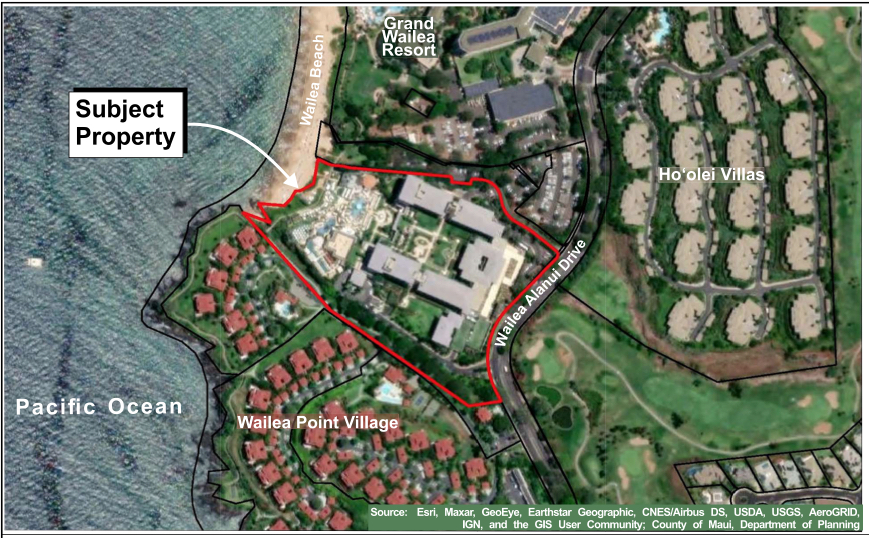
The 383-room Four Seasons resort currently receives domestic water service from Maui County’s Water Department via a bank of five existing 2-inch water meters along Wailea Alanui Drive. These five meters have a combined flow rate capacity of 800 gallons per minute. Fire protection water is delivered via a separate 10-inch detector check meter. The site does not currently have access to reclaimed water, though resort property managers intend to install the infrastructure necessary to use reclaimed service water once it becomes available in the vicinity.
Projected post-project water use impacts
According to the Planning Department staff report on the project, the renovation project will affect the resort’s water infrastructure and result in a net 30,209-gallon reduction of water use per year. This is based on a Water Demand Analysis that calculated water demand reductions (466,696 gallons per year) primarily from removing turf, and water demand additions (436,487 gallons per year) from the new pool and landscaping.
Other water features:
- Peak flow within capacity: A domestic cold water flow study determined the proposed peak flow post-renovation would equal 530 gallons per minute, which is within the 800 gallons per minute capacity of the existing meters. No new Maui County water meters would be required.
- Meter consolidation: The project scope includes consolidating the existing five 2-inch domestic meters into a single 6-inch domestic meter within the property, as the applicant understands the Water Department may require this for properties with multiple domestic meters.
- Irrigation reduction: The addition of the new leisure pool will reduce the area of irrigated grass lawn (the croquet lawn area) from 12,000 square feet to approximately 800 square feet, significantly reducing irrigation requirements.
- Reclaimed water readiness: The resort plans to incorporate the necessary infrastructure to accommodate reclaimed service water when it is extended to the vicinity of the project site.
Permit conditions mandate conservation
The Planning Department supported approving the resort’s SMA application, with conditions, including one for water conservation. It said that “water conservation practices be implemented in accordance with voluntary and mandatory water restrictions of the Central Maui Water System and the Department of Water Supply, including limiting scheduled irrigation to specified days of the week and times of day.”
But the commission went further by adding conditions, including:
- Verifiable water offset: The applicant must submit evidence as part of its final compliance report to demonstrate that following implementation of the project, the new pool and landscape water use is offset by, or equal to the estimated reduction in irrigation use for the turf area that is removed.
- Long-term conservation commitment: The applicant will continue to implement water conservation measures over time, including an educational component for guests, and submit evidence with the final compliance report.
- Native plants and sunscreen: The project’s landscaping plan must include at least 60% native plants and incorporate an educational program for guests about using reef-safe sunscreen.
- Pool cover: A pool cover must be implemented for the Lokelani plunge pool.
The South Maui resort’s operations are already subject to Maui County’s current Stage 1 mandatory restrictions. These limit landscape irrigation for all customers to two days per week and prohibit emptying and refilling existing pools using potable water unless necessary for public health or safety.
The planning commission has the last say on special management area use permits.
Sponsored Content