


Nēnē that lost mate has found new partner and is once again nesting in Hilo park
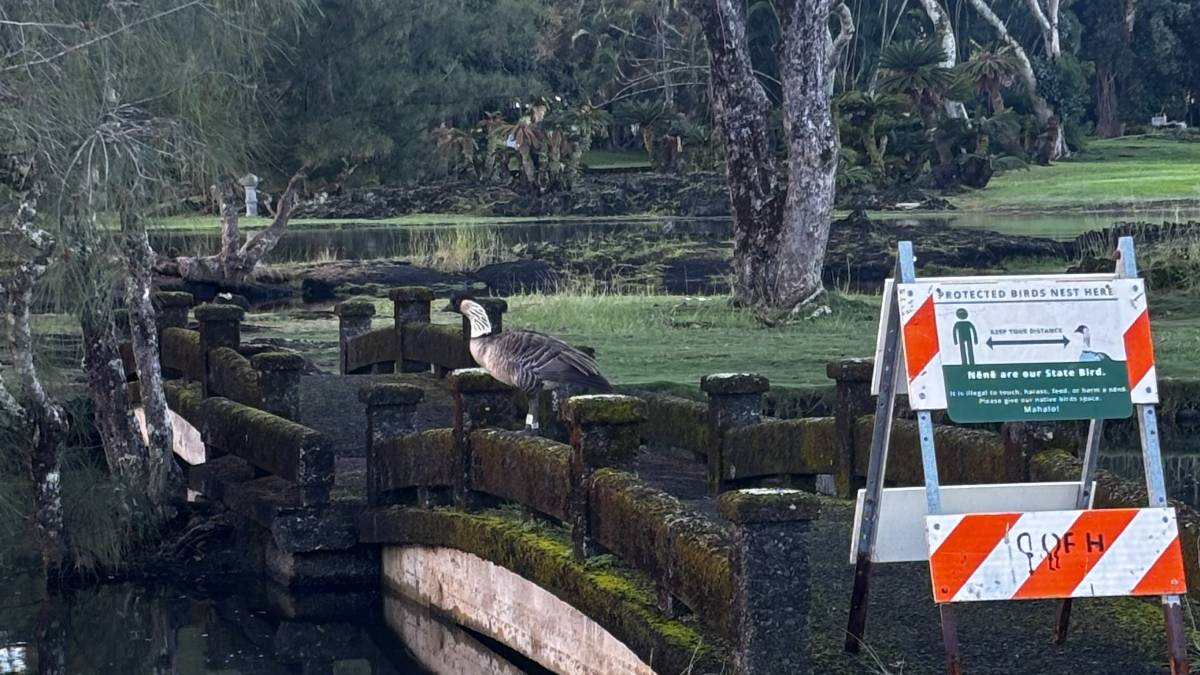
A nēnē that lost her mate in 2024 after it was hit by a car has found a new partner and nesting in Hilo’s Lili‘uokalani Gardens.
Staff from the Department of Land and Natural Resources’ Division of Forestry and Wildlife and the County of Hawaiʻi Department of Parks and Recreation have posted signs marking the area and will be monitoring the female, known by her banding code NTC, and her partner throughout the nesting season, which can run from October to March and sometimes later.
After years of tragic nēnē deaths in Hilo, officials hope that new county regulations that prohibit the feeding of feral animals on county property and increased observation will lead to nesting success at the busy park.

This new rule takes effect in January 2026. The hope is it will reduce significant disease, predation and associated impacts from invasive species, according to a press release from the Department of Land and Natural Resources.
“By protecting the nēnē nests in Hilo, we not only allow nēnē to reestablish their habitat, but also allow people to connect with a vulnerable Hawaiian species,” said Raymond McGuire, a biologist with the Division of Forestry and Wildlife on Hawaiʻi Island. “It is an incredible gift to have nēnē in our neighborhood, but with this great gift comes an even greater responsibility to protect these birds by not interacting with them and by only observing them from afar.”
NTC has faced several tragedies over the past few years. In 2023, her gosling that was abducted from Wailoa State Park was luckily returned to her. She had another gosling that died from toxoplasmosis in 2024. She was also the mate of the nēnē that was struck and killed by a car in 2024 while crossing the street to reach a cat feeding station.

NTC was already heavy with eggs at the time of her mate’s death in 2024, and none of the goslings survived. This year, NTC has found a new mate and is nesting in a less busy section of the park, which should be easier to protect.
The greatest chance for success during NTC’s new nesting season will depend on the behavior of park goers.
“The Parks Department continues to support conservation efforts to protect nēnē that live and nest in our parks,” said Clayton Honma, director of Parks and Recreation. “We ask everyone to please follow park rules, such as those related to keeping dogs on leash and to refrain from feeding feral animals. These actions will help safeguard native birds and create healthier, more enjoyable public spaces for everyone.”
Citizen science has also captured the story of NTC. Jordan Lerma, director of Nēnē Research and Conservation, reports his organization has one of the most extensive sighting histories in its catalog, thanks to years of community observations.
“As the recovery of nēnē continues, it’s becoming increasingly common to see these birds in parks and other public spaces,” said Lerma. “Together, we are learning how to balance the protection of native wildlife with shared use of these places. We are grateful to everyone who has helped us keep track of these birds by submitting photos and sightings on nene.org.”
Sponsored Content




Subscribe to our Newsletter
Comments