Services set for venerated hula master Nālani Kanakaʻole
Services honoring the life and legacy of Nālani Kanakaʻole, a revered hula master and cultural practitioner, will be held on Saturday, Feb. 21, 2026, in the storied place that bears her late mother’s name, Edith Kanakaʻole Stadium in Hilo.
A hoʻolewa ceremony to honor Nālani Kanaka‘ole and her legacy will be hosted by the Edith Kanaka‘ole Foundation, founded by Nālani and her siblings in 1990 to elevate Hawaiian intelligence through cultural education grounded in the teachings and traditional practices of their late parents, Luka and Edith Kanaka‘ole.
Inquiries regarding support or donations may be directed to the Foundation at 808-961-5242 or ekf@edithkanakaolefoundation.org. ʻAha will begin at 10 a.m., followed by visitation. Floral arrangements, lei, and kinolau are welcome.
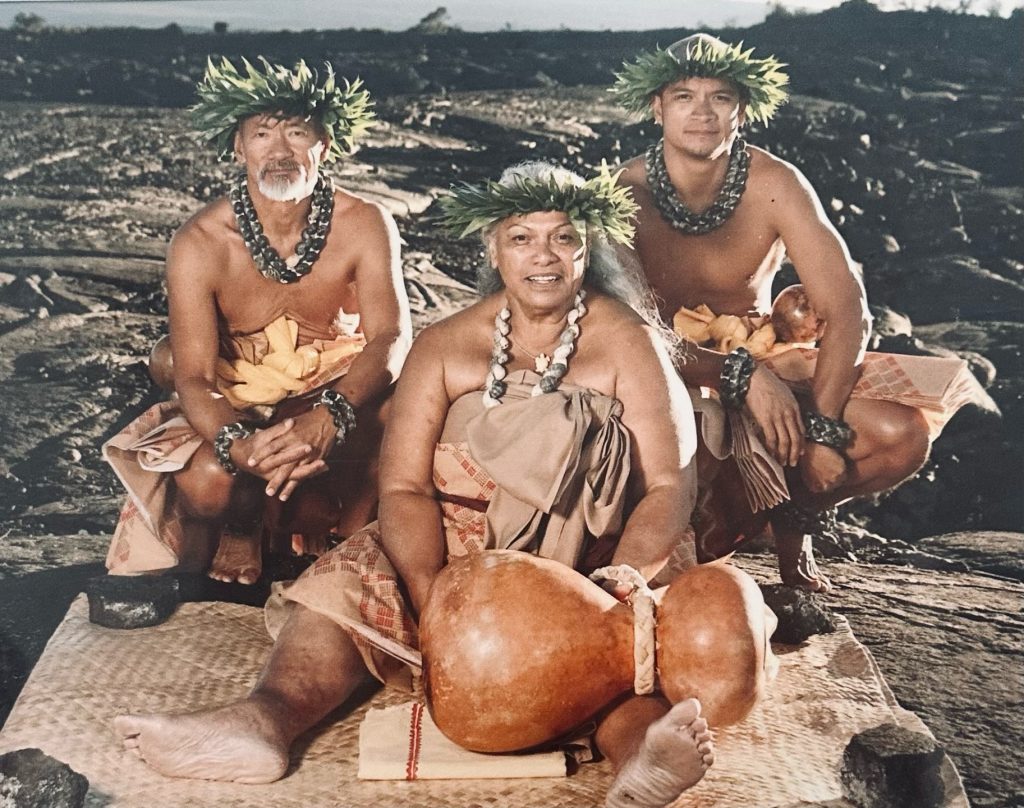
Kanakaʻole passed away peacefully on Jan. 3, 2026, in Hilo at the age of 79. A fifth-generation loea hula, she dedicated nearly seven decades to the preservation and perpetuation of Hawaiian chant, hula kahiko, and cultural protocol. Born and raised in Keaukaha, Hilo, she was immersed from childhood in the traditions of her ancestors and began teaching at age 14.
The youngest daughter of the late Edith Kanakaʻole, Kanakaʻole co-led Hālau o Kekuhi with her sister, Pualani Kanakaʻole Kanahele, and later with her niece, Huihui Kanahele-Mossman. The hālau is internationally recognized for its mastery of pre-contact hula forms while remaining deeply rooted in Hawaiʻi Island.
In 1993, Kanakaʻole and her sister were jointly named National Heritage Fellows by the National Endowment for the Arts, the nation’s highest honor in the folk and traditional arts.
She also co-founded Sig Zane Designs in 1985 with her husband, Sigmund Zane, blending cultural storytelling with fashion inspired by native Hawaiian plants, moʻolelo, and design traditions.
Kanakaʻole is survived by her husband, Sigmund Zane; son Kūhaʻoʻīmaikalani Zane; grandchildren; sister Pualani Kanakaʻole Kanahele; and the extended Kanakaʻole, Kanahele, and Zane ʻohana, along with generations of students and practitioners worldwide.
Sponsored Content