


County pioneers ‘Maui Method’ for safe disposal of hazardous lithium-ion batteries
A new protocol for disposing of damaged lithium-ion batteries, developed by Maui County officials in the wake of the 2023 wildfires, is now being recommended by federal regulators as a preferred standard for handling such hazardous waste.
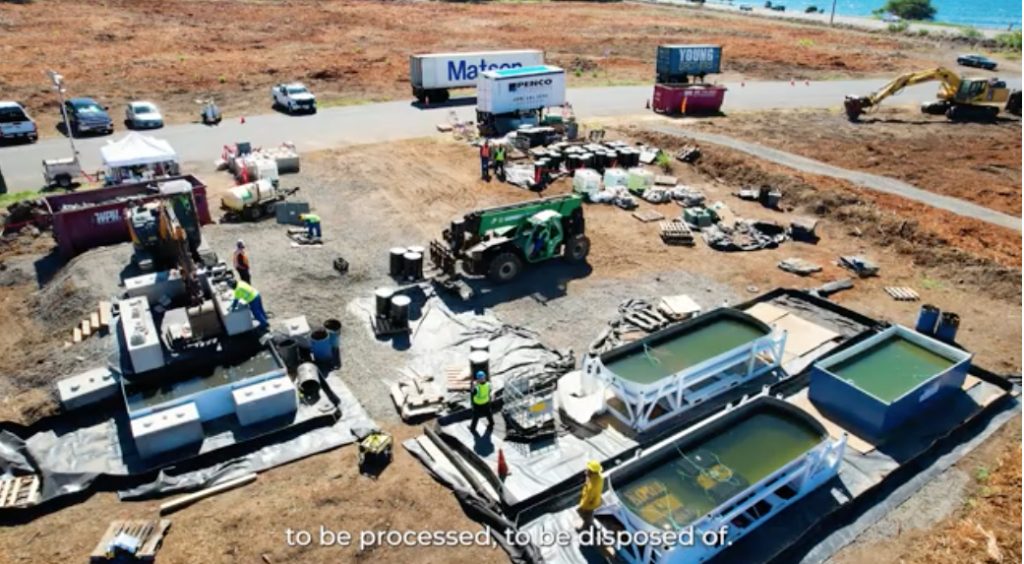
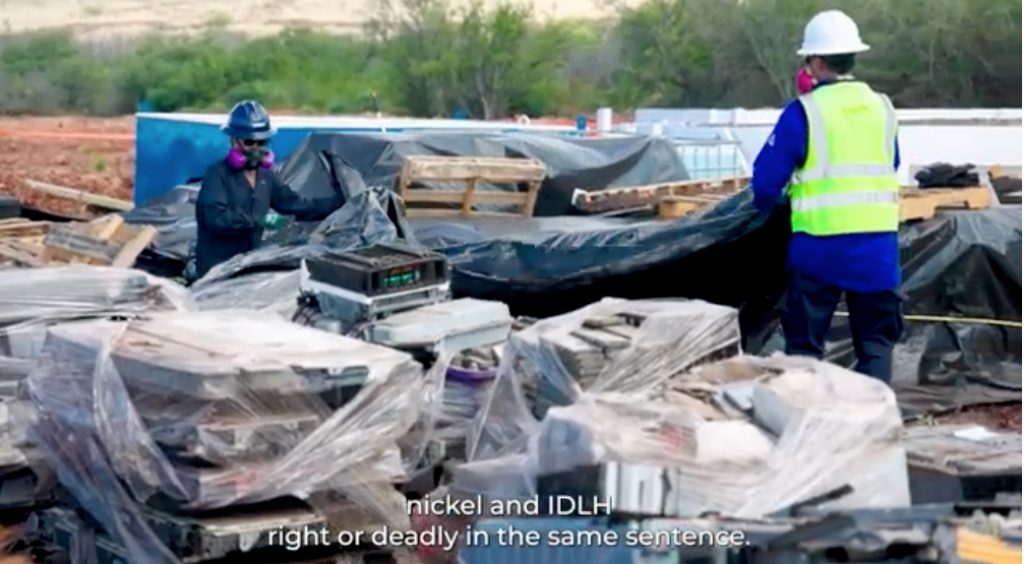
Known as the “Maui Method,” the process involves submerging damaged batteries — specifically those from electric and hybrid vehicles — in a brine solution. This neutralizes the energy stored within the cells, allowing them to be processed as nonhazardous waste.
Maui Emergency Management Agency Administrator Amos Lonokailua-Hewett said the initiative demonstrates the power of local innovation.
“The ‘Maui Method’ shows what is possible when innovation, collaboration and expertise come together,” Lonokailua-Hewett said. “Considered one of the first full-scale, nondisaster initiatives of its kind, this operation sets a national and even global precedent for safe and effective EV battery management while protecting our community and environment.”
The technique was successfully deployed late last year during a Wildfire Risk Reduction project in Ukumehame. Over a five-week period in November and December 2025, crews stabilized, decommissioned and destroyed 13 tons of batteries using the method.
The US Environmental Protection Agency has identified the “Maui Method” as a solution for lithium-ion battery disposal.
Justin Marquez, a member of the EPA’s National Lithium-Ion Battery Task Force, noted that prior to this development, there were few safe options for disposal.
“Up till about this point, there really hasn’t been any good way of disposing of lithium-ion batteries. A lot of them are going into people’s trash cans and ending up in landfills and causing tons of fires, burning up garbage trucks all over the place and causing millions of dollars of damage for local entities,” Marquez said. “Our ultimate goal is for this ‘Maui Method,’ or some version of it that accomplishes the same goals, to be rolled out across the entire nation and even potentially globally.”
The urgency to develop such a method arose following the Aug. 8, 2023, Lahaina fire. The disaster left thousands of damaged electric vehicle batteries scattered or buried. With no battery disposal facility on the island and shipping companies refusing to transport the damaged units due to safety risks, local officials were forced to find an on-island solution.
Lithium-ion batteries pose significant risks when damaged, including the potential for thermal runaway, a phenomenon where the battery self-heats and can lead to fire or explosion. These fires are difficult to extinguish with water or foam and emit toxic gases.
The “Maui Method” uses the conductivity of saltwater to slowly and safely pull remaining energy out of the battery, effectively destroying its structure and eliminating safety hazards before transport.
The recent operation at Ukumehame was conducted under the direct oversight of the Hawaiʻi Department of Health with technical guidance from the EPA. The project operated under strict safety protocols, including 24/7 security and continuous air monitoring.
A documentary video detailing the approach is available on the YouTube channel for the Maui Emergency Management Agency.
Sponsored Content


_1768613517521.webp)

Subscribe to our Newsletter
Comments