

New Maui Public Art project blends movement and story rooted in Hāmākua
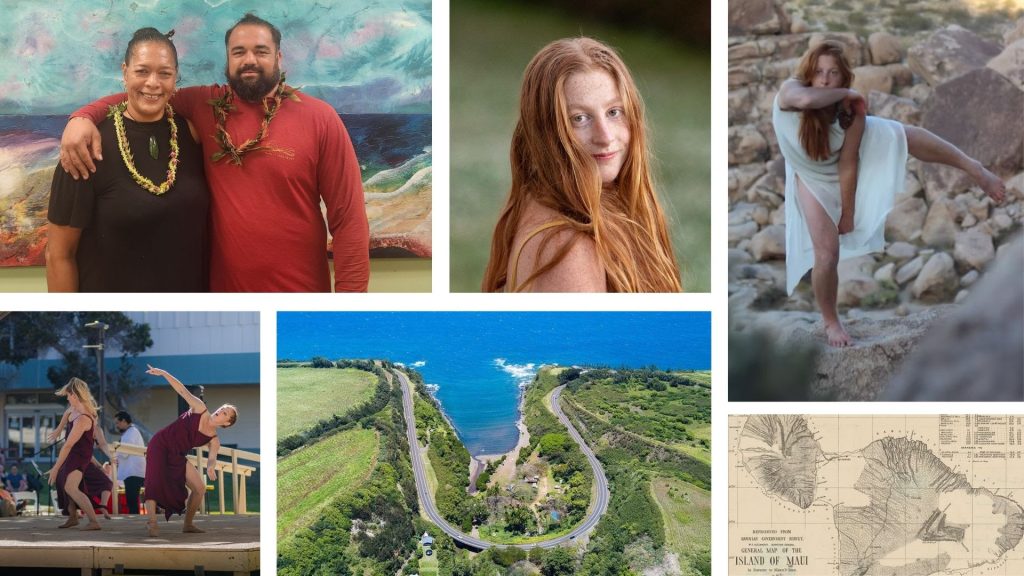
Maui Public Art Corps, in collaboration with the County of Maui and cultural consultant Sissy Lake-Farm, announced a new public art commission led by artist and choreographer Karli Jo List. Rooted in the Hāmākua region, the project finds its heartbeat in a Hui Moʻolelo recording featuring Hawaiian scholar, educator, and philosopher Pūlama Collier and her son, Kiaʻi Collier, Manager of ʻĀina Stewardship at Hawaiʻi Land Trust.
“This commission marks a continuation of our commitment to listening first,” said Kelly White, who manages the County of Maui public art program and is Chair of the nonprofit Maui Public Art Corps, “We believe that authentic public art is not a solitary act of creation, but a collective process. It is shaped through public dialogue, refined through community relationships, and grounded in lived experience and sense of place.”
The selection of Karli Jo List followed a professional vetting process, with her initial proposal reviewed by a community panel whose scores qualified her for further evaluation. This structured approach ensures that the resulting work is not a grant-funded independent project, but a true commission; a partnership between the artist, the County, and the community to steward a shared narrative.
The project’s conceptual framework is built upon the intergenerational dialogue between Pūlama and Kiaʻi. Karli Jo selected this specific recording from a menu of over 60 Hui Moʻolelo recordings, identifying its themes of guardianship and “cherishing” as the foundation for a new choreographic work. As a team, organizers facilitate connections between the artist and a network of community mentors and cultural consultants to ensure the movement is an extension of the land’s own rhythm.
In recent community consultations, the dialogue has focused on the accountability of the artist to the resource. Cultural steward and waterman Daniel Goldberg emphasized that land stewardship requires reciprocity rather than consumption, said, “If we don’t take care of the land, the land doesn’t take care of us.” He highlighted the vital importance of intergenerational knowledge transfer, noting that authentic art emerges when we prioritize learning from elders over modern technological shortcuts.
Furthering this sentiment, Pūlama and Kiaʻi have emphasized that the work must be co-authored with the community. Pūlama said, “It’s not just our story—because once you hear the story, then it becomes your story too,” and added, “To tell a story authentically, you have to be the storyteller. You cannot be the observer. This is regardless of blood, race, or age. It’s about awareness.”
They envision a “triangulation of meaning”; a weaving of movement, landscape vocabulary, and ancestral narratives. Discussing the revitalization of Maliko Bay, the group explored how art can mirror environmental resilience, shifting from degradation to collective healing. Karli Jo has been exceptionally tuned in to this demanding process, navigating the complexities of cultural accountability with deep respect for the “authentic intelligence” of the people who belong to this place.
This commitment to cultural grounding was further strengthened through a community consultation with Dr. Keola Donaghy, a specialist in Hawaiian language and music. Donaghy guided List to root her choreography in the structural logic of mele and the sensory specificity of place, encouraging the dance to unfold like a traditional song – opening with land, deepening through local winds, rains, and histories, and closing by returning to the original theme.
He shared metaphors of the hale, emphasizing land as foundation and central supports as sources of cohesion, and offered directional principles such as moving mauka to makai. Donaghy stressed that movement must remain inseparable from language and meaning, urging specificity over abstraction and encouraging deep place-based research so the work could be shaped by intergenerational knowledge and lived experience.
Maui Public Art Corps will invite the community to participate in this ongoing story through a series of engagement activities.
To learn more about this developing public art project, upcoming activities, and to watch full community consultations, visit mauipublicart.org/collier as well as https://www.facebook.com/MauiPublicArt/ and https://www.instagram.com/mauipublicart/.
Visit the partnership’s current Hui Mo‘olelo exhibit at Queen Ka’ahumanu Center through March 31, 2026, which is displayed in the common area on the main level just outside the Macy’s Men’s Department, near the parking garage entrance.
Sponsored Content