Coconut Rhinoceros Beetle puts Hawaiʻi’s endemic loulu palms at risk
By Serene Gunnison — Maui Invasive Species Committee
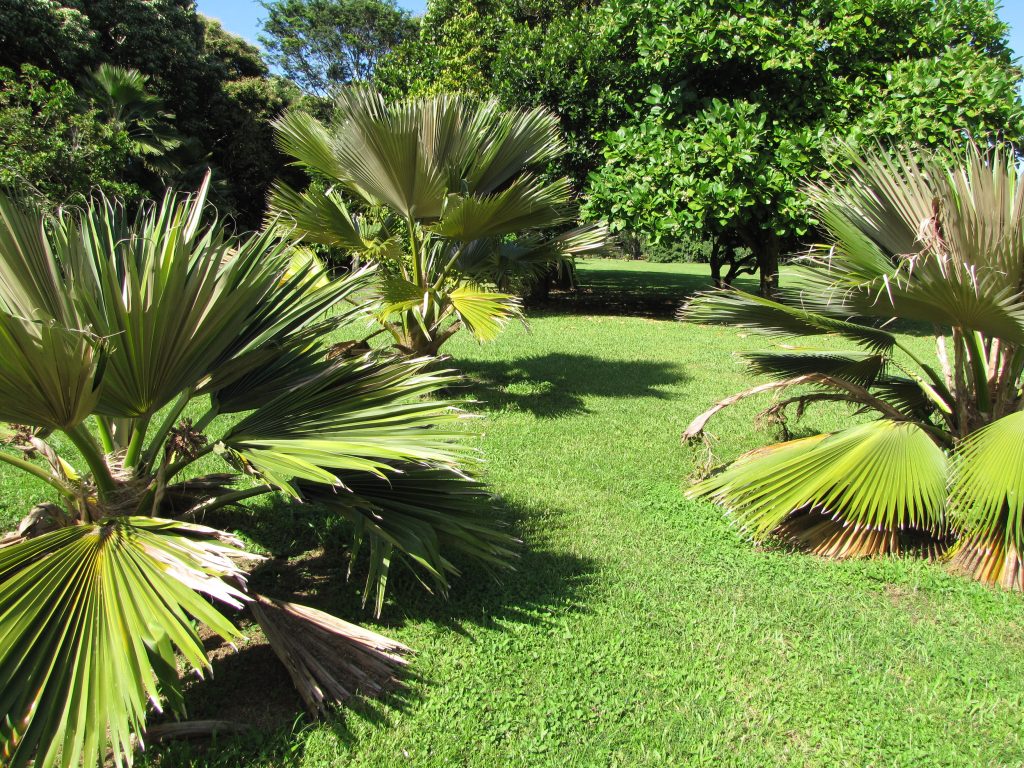
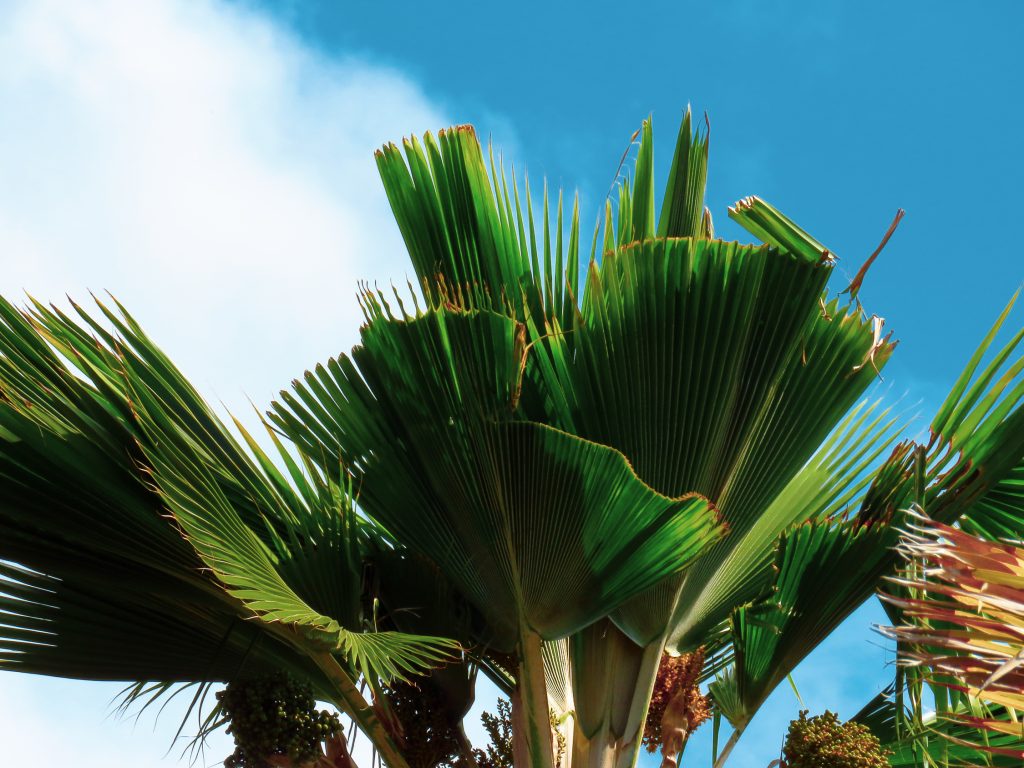
About 40,000 years ago, the first Pritchardia (fan palm)seed arrived on Hawaiian shores, carried by bird or ocean currents from a distant Pacific island. Over time, this single ancestral introduction evolved into over 20 distinct species of endemic loulu. As Hawai‘i’s only native palm, loulu is featured in numerous Hawaiian chants and legends. Vast loulu forests stretched across Hawai‘i’s coastal lowlands long before voyaging Polynesians introduced the first niu, or coconut tree. Early Polynesians also carried accidental hitchhikers: ‘iole, or rats, which fed so heavily on loulu seeds that it drove the tree to near-extinction. Now, coconut rhinoceros beetle (CRB) is jeopardizing the few loulu that remain.
First detected in Hawai‘i in 2013, coconut rhinoceros beetle is one of the Pacific’s worst invasive species. The large, shiny-black scarab burrows into the crown and feeds on the inner spear palms, leaving trees damaged, vulnerable to infection, or killing them completely. While coconut palms top the list of CRB’s preferred foods, endangered loulu is also on the menu.
“Loulu is one of our biggest concerns,” says Arisa Barcinas, outreach associate with CRB Response Hawai‘i. “Coconuts are very resilient to CRB damage, but loulu damage is very impactful.” Coconut palms can withstand multiple feeding events. Some coconut trees have survived for up to five years despite extensive damage. Loulu, on the other hand, faces severe mortality from CRB feeding. Loulu’s small crowns are easier for beetles to penetrate than those of coconut palms, which results in a higher risk of lethal damage or secondary fungal infection. “Extinction is definitely a worry,” says Barcinas.
CRB’s impacts on coconuts are visible, often happening in backyards and beach parks, which drives widespread public awareness and concern. But for wild loulu, which are often confined to remote valleys or mountain slopes, the epidemic is quieter.
Though CRB has not been detected on Maui since November 2023, a widespread infestation could level the island’s wild loulu population. Maui is home to five loulu species, each endangered and endemic to Maui County. The most abundant, Pritchardia arecina, found only on the eastern slopes of Haleakalā, has a wild population of about 500 individuals. In Ukumehame Valley, Pritchardia munroi has just two wild individuals left.
To lose loulu would mean losing a piece of Hawai‘i’s cultural identity. Early Hawaiians used loulu for weaving, construction, and roof thatching. Its young fruits were a common food source. Loulu’s Hawaiian translation, “umbrella,” owes to its large, fan-shaped leaves that offer protection from rain and sun. Ecologically, loulu provides essential habitat for native birds and insects and aids in soil stabilization and carbon sequestration.
Resource managers have noted loulu damage and mortality in areas hard-hit by CRB across O‘ahu, Kaua‘i, and Hawai‘i Island. But it’s not too late for loulu. “There are a lot of efforts trying to preserve Hawai‘i’s rare and endangered palms,” says Barcinas, specifically at McBryde and Allerton Gardens on Kaua‘i, which houses over 700 endemic Pritchardia. Garden managers not only collect and store loulu seeds for outplanting and to share with partners, but also actively manage CRB in the garden using pheromone traps, detector dog surveys, mulch pile netting, and by inspecting loulu weekly for damage.
Maui still has a chance to prevent a large-scale CRB infestation. “One of the most effective things you can do is prevent accidental movement,” says Barcinas. CRB nests in organic material and has been known to hitchhike on potted plants, bagged soil, and mulch. In September 2023, a dead adult CRB was discovered in a bag of potting soil on Maui. By sourcing your gardening materials locally, you can reduce the risk of CRB reaching our shores from other islands.
Knowing how to identify CRB is equally important. “The first detection on Maui came from a public report,” says Barcinas. “It’s so important for the community to know what to look for.” CRB create deep bore holes in palm crowns and V-shaped cuts in fronds. In fan palms such as loulu, CRB creates scalloped leaf edges and patterns that look similar to a paper snowflake. However, it can take months of feeding for palm damage to become visible. Finding and reporting grubs is the key to stopping a new CRB infestation in its tracks. CRB grubs grow up to four inches long, but look very similar to Oriental Flower Beetle grubs. If you find a large grub in your garden, note the location and time you found it, save the specimen, and report it at 643pest.org or 643-PEST (7378).
With collective action, vigilance, and care, we can safeguard not only coconuts but Maui’s precious loulu as well.
Serene Gunnison is the education and outreach assistant with the Maui Invasive Species Committee. Kia‘i Moku, “Guarding the Island,” is prepared by the Maui Invasive Species Committee to provide information on protecting the island from invasive plants and animals that can threaten the island’s environment, economy, and quality of life.
Sponsored Content