


Hawaiʻi public schools advance farm-to-school efforts with new small farm partnerships
To advance farm-to-school initiatives, the Hawaiʻi State Department of Education (HIDOE) is rolling out a new process that encourages small farm micropurchases of locally grown produce for school meals across the state.
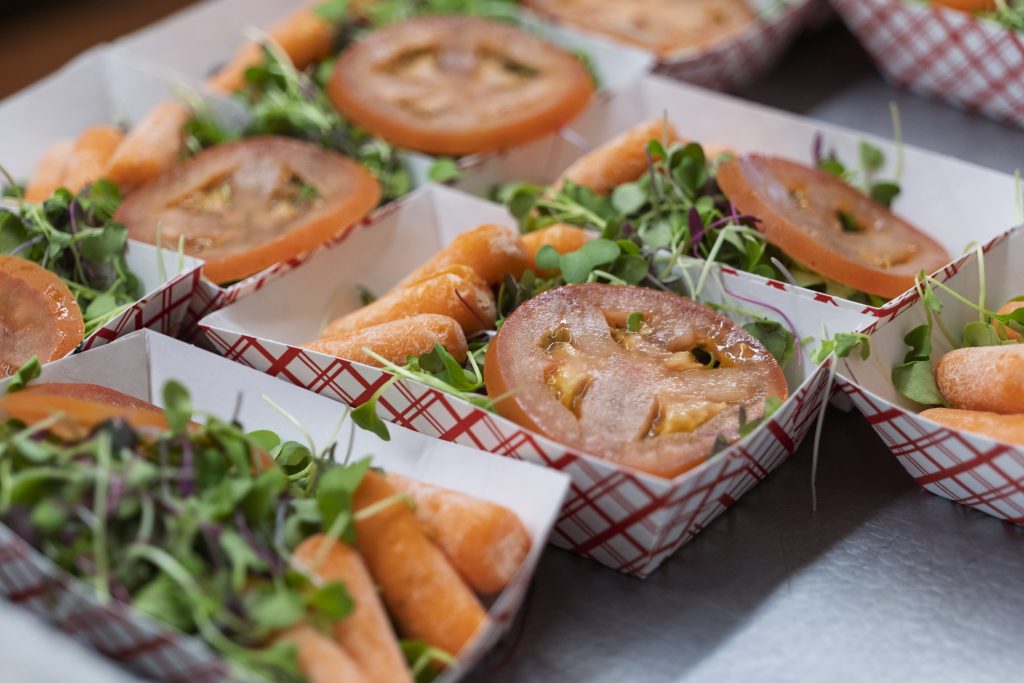
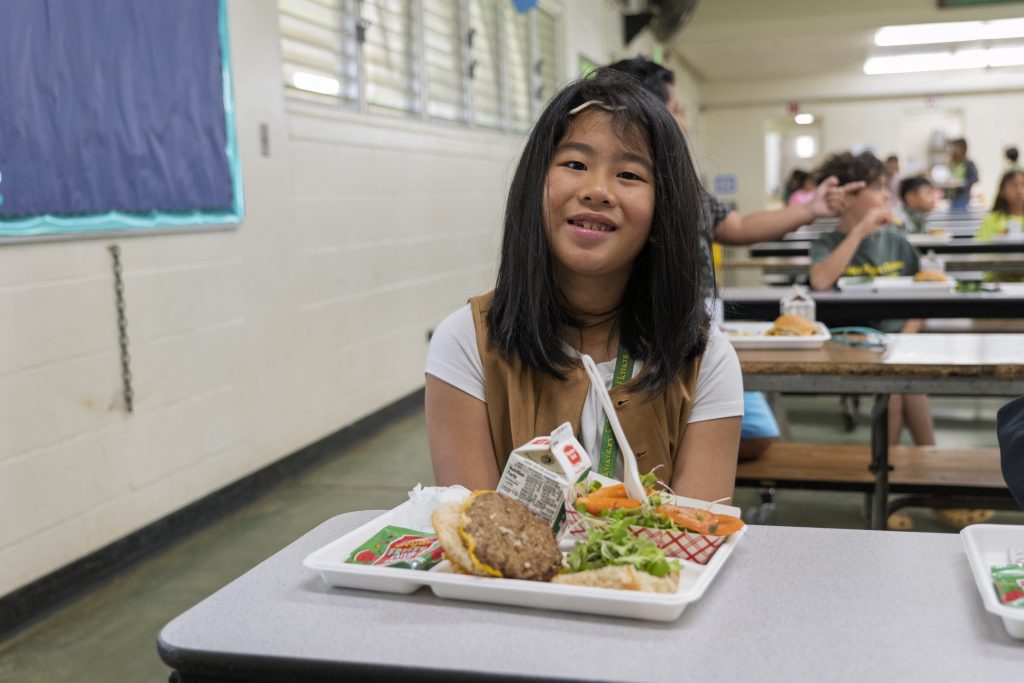
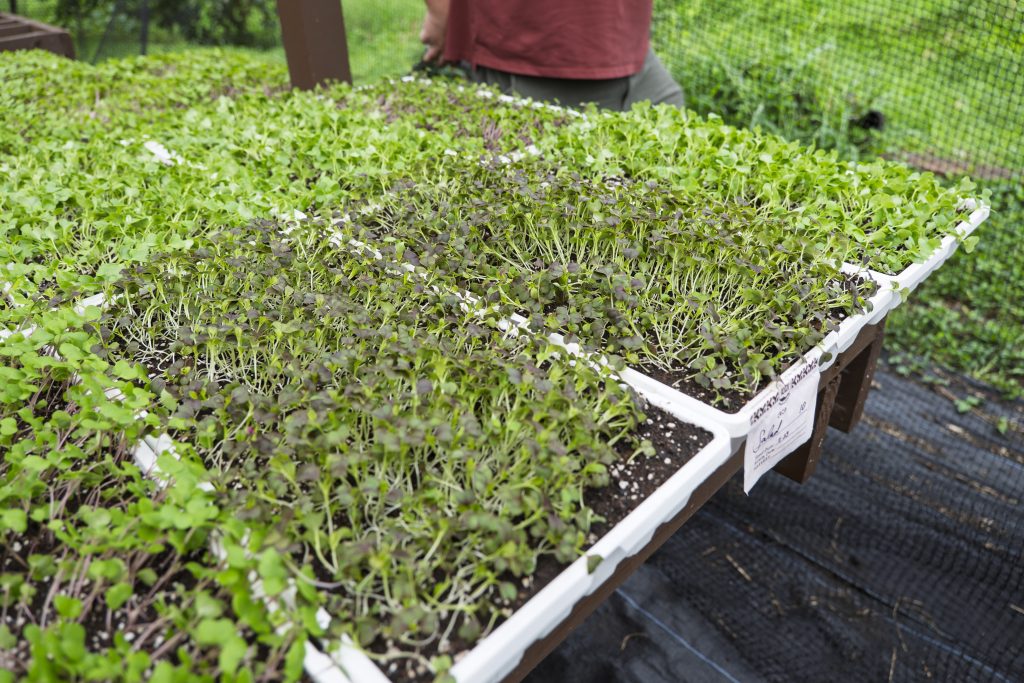
Students at Kahaluʻu Elementary School enjoyed locally grown microgreens on their lunch plates this week, harvested just across the street from campus at Kupu Place. Because of the farm’s close proximity, the greens were picked Sunday, delivered Tuesday, and served to students Wednesday.
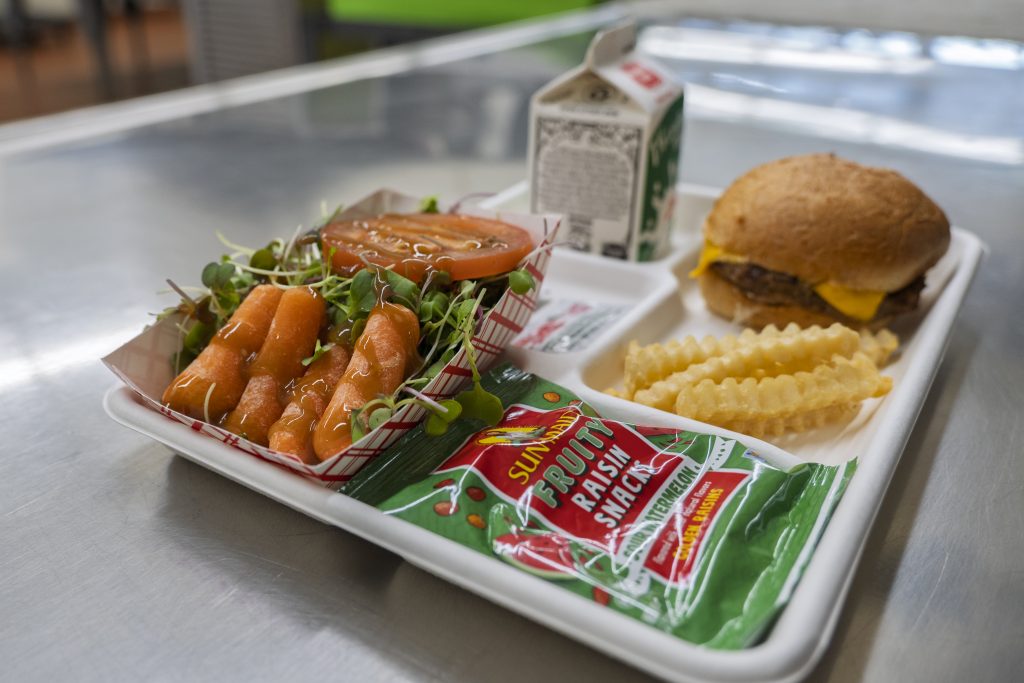
The microgreen mix featured mustard greens including kale, mizuna, arugula and amaranth, served alongside a classic student-favorite cheeseburger entrée. The greens will also appear later this month as a garnish for the school’s teri burger lunch.
While some Kahaluʻu students were already familiar with microgreens, it was many students’ first time trying them.
“When I got my plate and I got the microgreens, I thought, ‘Wait, we actually got microgreens?’’ sixth grader Chloe Preston said. “Personally, I really like microgreens. I think it’s a good vegetable.”
“The microgreens weren’t bad,” added fourth grader Brian-James Pakele. “Sometimes I don’t really like grabbing the vegetables but today I thought it would be a good idea because I haven’t been eating my vegetables.”
“They were really crunchy and fresh,” sixth grader Emiko Shimizu said. “I would want to eat it again.”
The partnership between Kahaluʻu Elementary and Kupu Place marks the first small farm micropurchase to be completed under HIDOE’s new process. The initiative enables schools to purchase produce directly from small farms while remaining in compliance with state procurement requirements. Under the program, purchases must remain under a $5,000 cap over the 10-month school year and focus on a single farm or food hub providing a specific item to one school. The produce must also fit within an approved HIDOE recipe, and vendors must maintain Hawaiʻi Compliance Express compliance and food safety certification.
“We’re super happy for this new partnership with Kahaluʻu Elementary,” said Ryan Rautureau, farm lead at Kupu Place. “The micropurchasing arrangement is very cool and promising for farms like us… I would hope that the partnership solidifies and then expands. Hopefully we are expanding our growing operation in order to feed more kids, and hopefully more farms are getting involved as well.”
Beyond increasing the availability of fresh, locally grown produce in school meals, the new micropurchase process aims to strengthen students’ connection to local agriculture. The initiative is part of HIDOE’s broader farm-to-school program, which supports food sustainability in Hawaiʻi and aligns with Act 175’s goals to improve student health while strengthening the local agricultural economy.
“The kids can come over and see where their food comes from,” Rautureau added. “We’ve visited the school, and students have also come over to the farm.”
As student Preston enjoyed her microgreens during lunch, she recalled visiting the farm herself.
“I did some farming over there,” she said. “I pulled weeds, watered the plants, and got to go inside where everything is grown.”
Additional micropurchasing agreements are in development across the state, including collaborations between school cafeterias and school gardens, as well as additional small farm produce purchases on Kauaʻi, Hawaiʻi Island and Maui.
Hawaiʻi public schools are among the state’s largest institutional food consumers, serving more than 100,000 student meals each day. HIDOE continues to work with local farmers and vendors statewide to expand the regular use of fresh, Hawaiʻi-grown produce in school cafeterias.
Sponsored Content