


 Hawai'i Journalism Initiative
Grand Wailea’s expansion plans advancing after years of debate over ancestral remains, tourism impacts
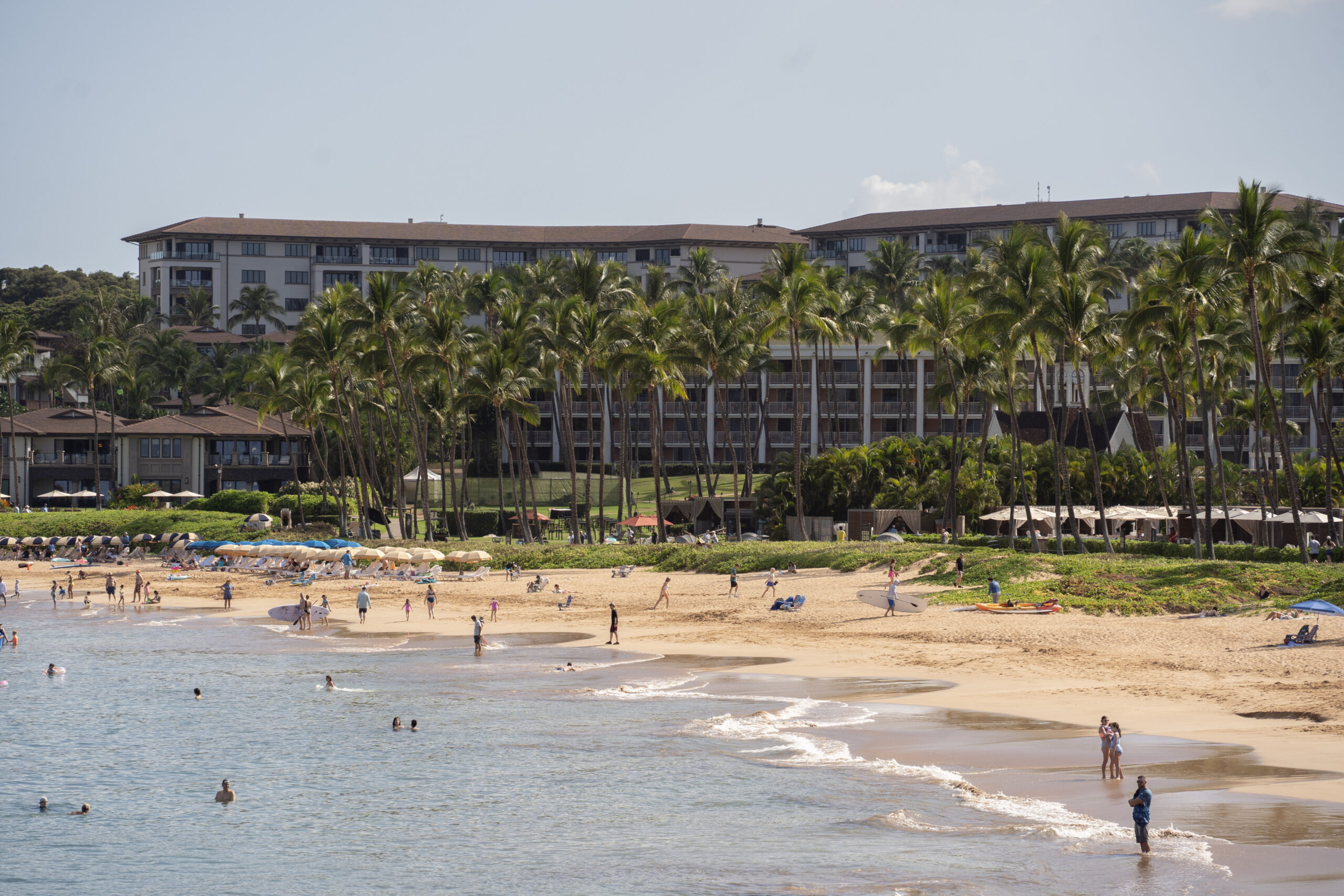
One of Maui’s largest resorts is one step closer to adding 137 rooms after seven years of deferred votes and disputes over protecting iwi kūpuna (Native Hawaiian ancestral remains) and managing water usage, traffic and more visitors.
The Maui Planning Commission voted 5-2 earlier this week to give The Grand Wailea’s expansion project the green light, but with more than 30 conditions that include limits on how much water the hotel can use and requirements to work with Native Hawaiian lineal and cultural descendants.
HJI Weekly Newsletter
Get more stories like these delivered straight to your inbox. Sign up for the Hawai‘i Journalism Initiative's weekly newsletter:
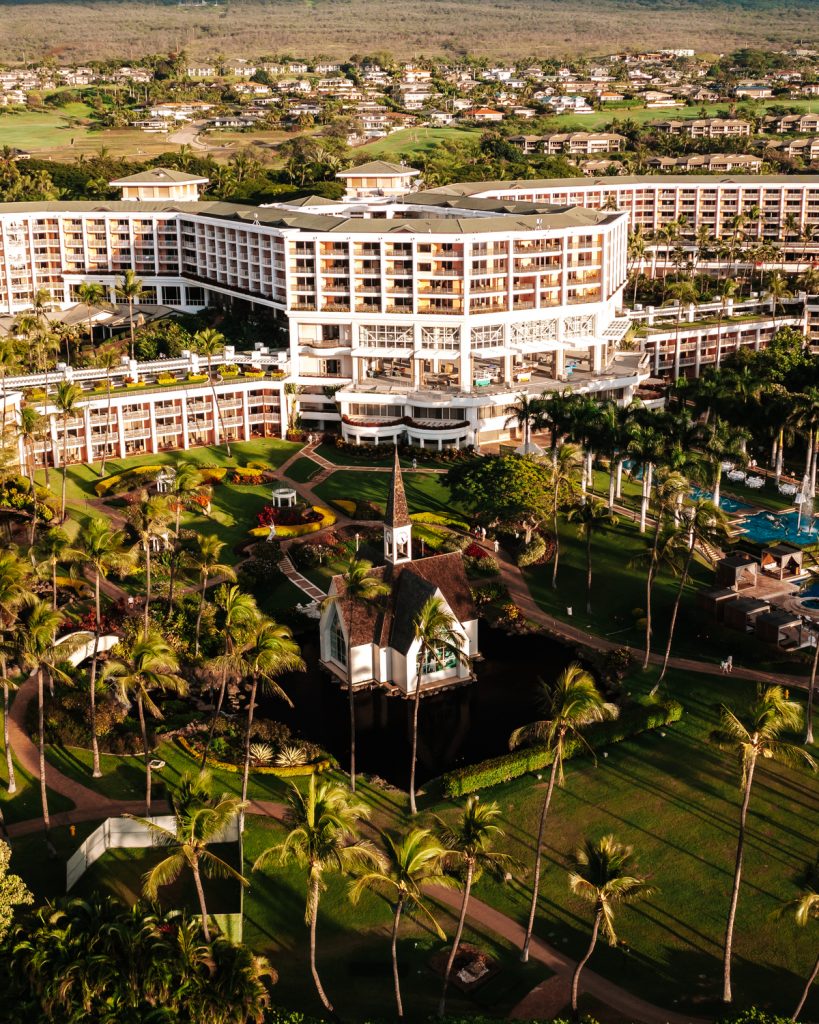
The Grand Wailea, which opened in 1991, has 844 total accommodations, with 737 guest rooms, 57 suites and 50 villas across a property of nearly 40 acres. It’s slated to get even bigger with the proposed addition of the guest rooms, as well as new pool amenities, landscaping enhancements and 30 new public beach parking stalls. The new rooms will be added to the Wailea and Haleakalā wings, which will stay the same height, while two new floors will be added to the existing Chapel and Lagoon wings, according to the resort.
“Large hotels and existing hotels who have been here for 30 years have to stay up to date and stay relevant if they are going to be part of the global tourism economy,” said Ashley Lindsey, vice chair of the Planning Commission. “I’m not saying that I support the tourism economy as our primary, but until we shift over to something that could sustain us, we need to keep our hotels relevant.”
Lindsey voted in favor, along with Chairperson Kimberly Thayer and commissioners Joshua Circle-Woodburn, Christopher Elizares and Brian Ward. Commissioners Mark Deakos and Crichton Lind voted in opposition.
“What are the public benefits?” Deakos asked. “I keep hearing jobs, economy. If those were net-positive public benefits, then our policies would reflect more hotels, more tourism … but our policies don’t reflect that because we recognize there are negative consequences to overtourism.”
The vote is a tentative approval. The resort needs to submit a final decision and order that includes the conditions that the commission would adopt for final approval at a future meeting date.
“We thank the Planning Commission for its thoughtful consideration of Grand Wailea’s enhancement plan, which was reduced by more than 40% in response to community feedback,” Cal Chipchase, attorney for The Grand Wailea, said in a statement to the Hawai‘i Journalism Initiative.
The groups that have opposed the project for the past several years are already considering an appeal if the project gets final approval, said Clare Apana, president of Mālama Kakanilua that is named for a historic battle that began in the Mākena area.
“This is the big message we want to give: stop digging in our known burial grounds,” Apana told the Hawai‘i Journalism Initiative.
In 2019, The Grand Wailea unveiled plans to add 224 rooms and expand its parking structure from three levels to five.
Mālama Kakanilua, Pele Defense Fund and Ho‘oponopono O Mākena filed a petition to intervene, raising concerns over disturbing more ground in a historic area where hundreds of burials were found and reburied elsewhere on the property during construction of the hotel in the 1980s.
“I think it served to show people that anywhere on the shoreline you are building on top of our iwi kūpuna because that’s a traditional burial place,” Apana said.
The groups’ petition led to contested case hearings in 2020 and another round in 2021.
In March 2023, hearings officer Linden Joesting filed a report stating that the proposal “does not yet meet legal standards” and denied the resort’s application until it followed the recommendations to make adjustments to traffic, water use, stormwater drainage capacity and access to the property for traditional and customary Native Hawaiian practices.
The Grand Wailea countered that it had worked to reduce the overall impact of its project, which Joesting recognized, through changes such as eliminating 40 proposed bungalow units, parking garage expansions and a new planned lap pool. The resort also decided to keep the Seaside Chapel originally slated for removal.
Over the past year, the Maui Planning Commission has worked to hammer out conditions on the project to address the central issues, including requiring the developer to follow a transportation management plan with measures such as airport shuttles and employee carpool incentives with the goal of “completely offsetting the expected increase in vehicle trips” that come with the expansion.
Other conditions call for limiting water use on the property to 550,000 gallons per day, increasing drainage capacity, mitigating additional stormwater runoff, building 30 public beach parking stalls at the same time as the proposed expansion, developing educational materials on coral reef health to inform guests and requiring engagement with recognized Native Hawaiian lineal and cultural descendants on cultural programs, activities, educational materials and construction affecting cultural sites.
The conditions also call for any ground-disturbing activities to follow the 2020 final archaeological monitoring plan approved by the State Historic Preservation Division. If any additional burials are found during the project, work must stop in the immediate vicinity. Access to and use of burial preserve areas also must be developed and implemented.
The commission deferred votes on the project five times in 2024, twice in 2025 and once in February 2026 before voting on Monday in favor of the project and pushing the required construction start date to 2029. The project’s conditions give it five years for completion.
“Grand Wailea is a hub of economic opportunity as the largest private employer on Maui with 1,200 team members and through our partnership with 70 local businesses, J.P. Oliver, Grand Wailea’s area managing director, said in a statement to the Hawai‘i Journalism Initiative. “This investment in Grand Wailea and Maui’s future will ensure we can compete as a world-class destination and continue to grow our positive impact on the island.”
The resort said its plans “have been thoughtfully revised to minimize risk by reducing ground disturbance and avoiding areas of archaeological or cultural sensitivity,” and that the ground-disturbing work is focused on areas that were highly developed as part of the resort’s original construction. An archaeological monitor and a cultural monitor will observe all ground disturbance and have the authority to halt construction to investigate and protect anything of historic significance.
Attorney Bianca Isaki, who represents the groups who intervened on the project, said that they’ve often been blamed for slowing down the process, but said that the only time they asked for a delay was in 2020 when they didn’t want the older clients they represented to show up for hearings at the start of the COVID-19 pandemic.
She pointed out that while waiting for permits on its expansion project, The Grand Wailea was still able to complete a $350 million renovation.
“So if they want to keep it up to date, that’s what they already did,” Isaki told the Hawai‘i Journalism Initiative.
Isaki said her clients were more focused on stopping the major permit approvals for the expansion and decided not to fight the renovations because it costs $3,000 just to file a petition to intervene or appeal.
Even with a scaled-back project, Isaki said there will still be “significant impacts” from the additional rooms and pools. When impacts are expected, there needs to be “a compelling public interest,” and Isaki said she didn’t see one.
Commissioners saw the benefit in the jobs provided by the hotel, one of the largest employers in Maui County with about 1,000 workers, though Thayer, the chairperson, noted the challenge of weighing economic benefits with increasing tourism: “We’re back to, once again, striking a balance between a project like this and the impacts that it brings.”
“One argument is there’s so much that’s been done, it’s already impacted, just continue with the impacts and we’ll study those as we go,” Thayer said. “But on the other hand of that argument it’s like, there’s already been this much impact. Are we OK with impacting further on top of everything that’s happened thus far?”
Other commissioners also were concerned about the protection of burials but felt that all the parties involved had worked to find the best path forward and pointed out that the State Historic Preservation Division would oversee any potential burials.
“I think we’ve done our due diligence,” said Ward, adding that protection of burials should be at “the forefront of this project.”
Lind, who voted no, said he agreed that the commission tried to alleviate the issues but was still worried about what could happen given the past history of disturbance to burials.
“It’s just the cultural resources and the cumulative impacts that (are) still unforeseen,” Lind said.
CORRECTION: This story has been updated to reflect that The Grand Wailea is seeking to add 137 new rooms with no expansion of the parking garage. A previous version of the story incorrectly stated the expansion details based on information provided to the Hawai’i Journalism Initiative.