


UH study highlights critical role of fathers in pregnancy outcomes
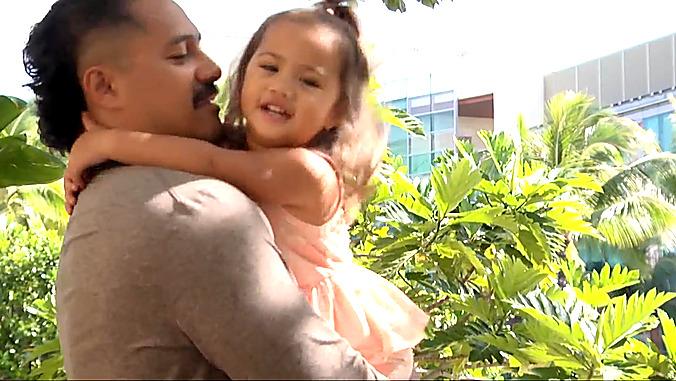
New research from the University of Hawai‘i at Mānoa finds that a father’s health and upbringing significantly impact pregnancy success and child development, challenging the traditional focus on mothers.
The study, recently published in The Lancet, suggests paternal factors like weight, substance use and age contribute as much—and sometimes more—to infant health as maternal factors.
“The more we look, the more we find important contributions from fathers,” said Jonathan Huang, lead author and assistant professor at the UH Department of Public Health Sciences.
Paternal contributions are often related intergenerationally to the father’s own upbringing and environment, Huang said.
The transdisciplinary review examined how stress, education and physical health during a man’s early life influence his health during reproductive years.
Researchers noted that historical trauma from racism and colonialism has disrupted family roles for many Black and brown men, creating significant barriers to healthcare access.
To address these disparities, the study advocates for culturally grounded health interventions, particularly for Native Hawaiian and Pacific Islander kāne.
Keawe‘aimoku Kaholokula, co-author and chair of the Department of Native Hawaiian Health, said Hawaiian men are more responsive to programs that center on their cultural roles.
Kaholokula pointed to the concept of Hale Mua—a traditional cultural space for men—as a blueprint for modern health interventions.
These spaces provide safe environments for mentorship and emotional regulation while reinforcing a man’s kuleana to his family and community.
The research team included collaborators from the United Kingdom, New Zealand, Singapore and the continental United States.
Focusing on men’s health is intended to support pregnant partners and allies, ensuring they are equipped as caretakers long after the child is born, Huang said.
The study concludes that investing in the wellbeing of boys and young men is a primary key to reducing future health disparities across Hawai‘i.
Sponsored Content