Kona Low storms drenched Maui County; second wettest season in 30 years
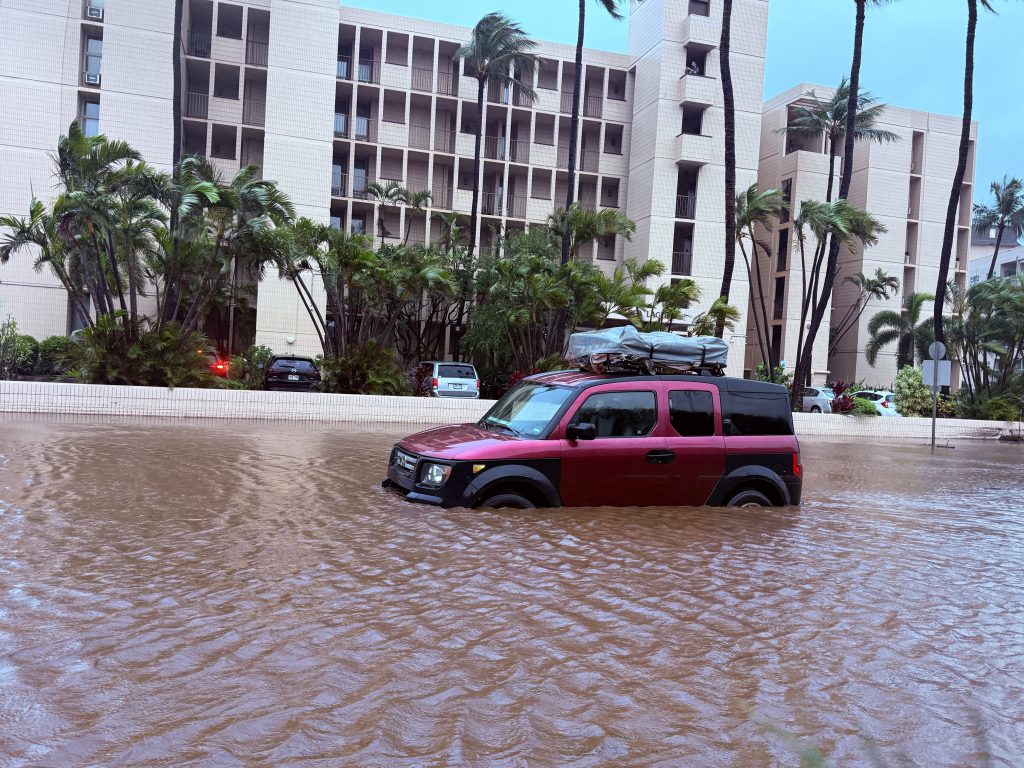
Maui County logged its second wettest season in 30 years during the 2025–2026 wet season. Rainfall totals ran 100 to 250% of average across most of the county and catastrophic flooding hit multiple areas statewide, according to a summary released this week by the National Oceanic and Atmospheric Administration.
Kahului Airport recorded 28.25 inches of rain for the October 2025 through April 2026 wet season—the second highest total at that station in the past three decades. Molokaʻi Airport matched that mark, registering 28.80 inches.
The season overall ranked as the wettest in Hawaiʻi in the past 30 years, narrowly edging the 1996–1997 wet season, according to NOAA’s National Weather Service office in Honolulu.
Severe drought flips to deluge
Maui County entered the wet season amid ongoing dry weather. Drought conditions at the severe drought level covered leeward portions of Maui and Molokaʻi as of October 2025, and by November, drought had worsened to the extreme level for Central Maui—the second-most-severe category on the US Drought Monitor scale.
October and November brought mostly below-average rainfall statewide. December offered little relief for Maui County, with totals continuing below average and existing drought areas expanding slightly.
The turnaround came in late February, as a series of significant storm systems swept through the islands. March and April brought well-above-average rainfall statewide, accompanied by significant flooding in many areas. By the end of April, drought across Maui County had been essentially eliminated, with only small areas of abnormally dry conditions lingering over inland portions of the island.
Wildfire risk persists
Despite the wet season’s success in beating back drought, NOAA cautioned that the lush vegetation growth produced by all that rain created abundant fuel for wildfires once the landscape dries out.
The agency’s outlook for the dry season—May through September 2026—is mixed. NOAA’s Climate Prediction Center forecasts above-normal rainfall through early autumn, which is in line with typical El Niño patterns. There is approximately an 80% chance that El Niño conditions will develop by early summer, the agency said, with a greater than 90% chance they will persist through the winter of 2026–2027.
But NOAA also projects a likely shift from above-normal summer rainfall to below-normal rainfall as the wet season approaches. That transition, combined with the heavy vegetation growth from the wet season, is expected to raise significant wildfire risk.
Any drought that develops is first expected to impact non-irrigated agriculture, water systems dependent on surface water diversions and residents who rely on rainfall catchment systems.
Statewide report and outlook
The wet season’s final numbers saw steep increases statewide. Honolulu Airport recorded 25.67 inches, its second wettest wet season in 30 years, with most Oʻahu locations registering 100 to 200% of average rainfall. Līhuʻe Airport on Kauaʻi logged 41.13 inches, the third wettest on record there, with most of the island seeing 80 to 150% of average. Hilo Airport on the Big Island recorded 67.32 inches, ranking as the 20th wettest — or 11th driest — in the past 30 years. The island’s rainfall was 90 to 200% of average.
The season was shaped in part by weak La Niña conditions that prevailed from summer 2025 into spring 2026. That climate pattern had led forecasters to predict above-average rainfall, focusing on leeward areas. The La Niña conditions transitioned to a neutral state where neither El Niño nor La Niña conditions were present in early April 2026.
NOAA also noted that the 2026 Central Pacific hurricane season is forecast to be above normal, and that tropical cyclones and their remnants can be significant contributors to summertime rainfall in Hawaiʻi.
Sponsored Content



_(1)_1787857947612.webp)