Maui Council votes 7-2 to raises fines for loud car stereos, drops equipment seizure
The Maui County Council voted 7-2 on Friday to raise fines for loud vehicle sound systems, advancing a measure that drops an earlier proposal to seize stereo equipment from repeat offenders.
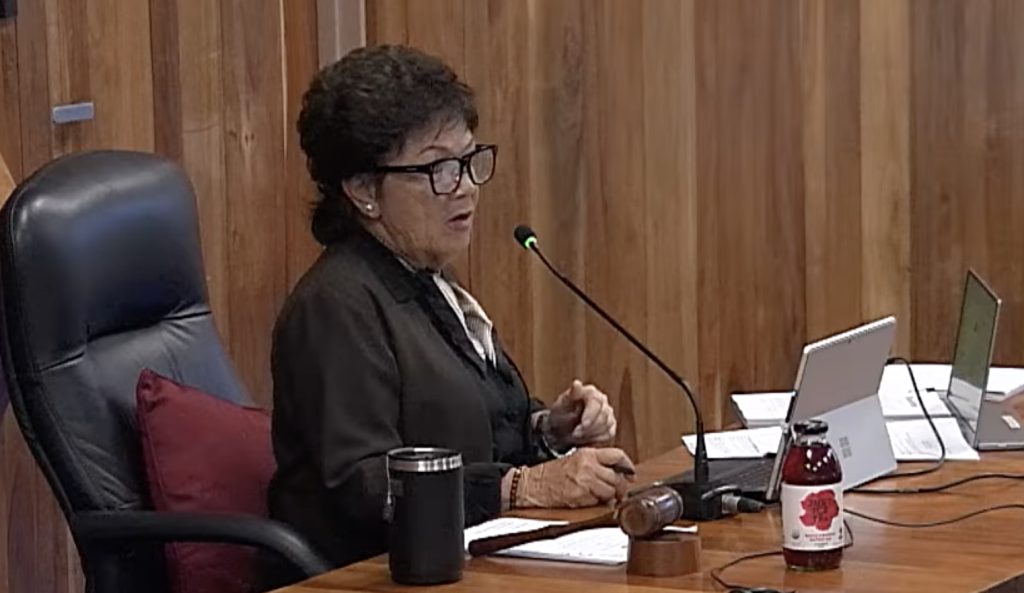
The Council passed Bill 119 on first reading after adopting an amended version offered by Council Chair Alice Lee. Council Members Keani Rawlins-Fernandez and Gabe Johnson voted no.
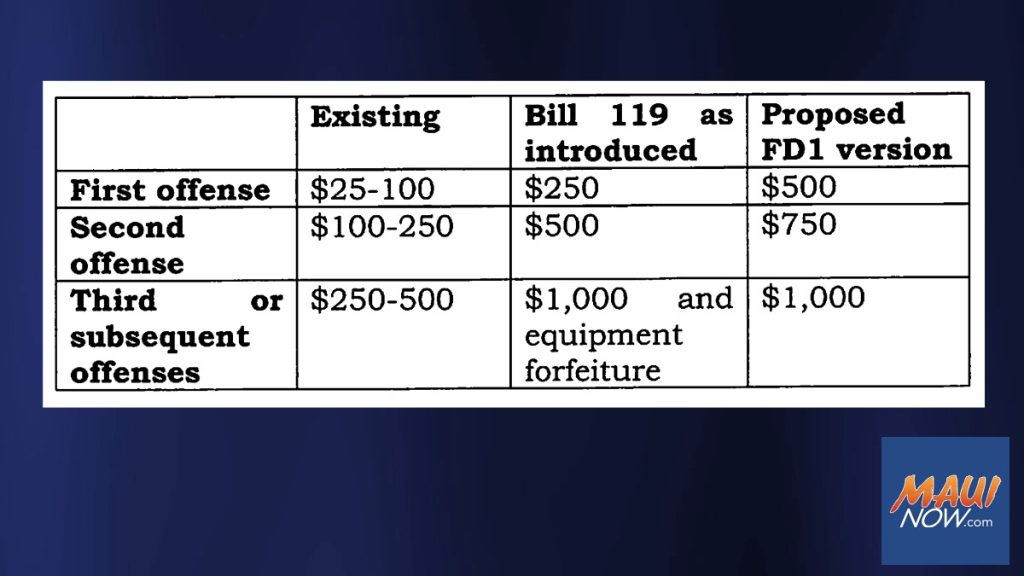
The bill raises the maximum fine for a first noise violation to $500 from the current range of $25 to $100. A second offense carries a $750 fine, up from $100 to $250. A third or later offense brings a $1,000 fine, up from $250 to $500. Lee’s revised version removed a forfeiture provision included in an earlier draft that would have allowed authorities to seize sound equipment.
Lee, who holds the Wailuku-Waiheʻe-Waikapū residency seat, called the proposal the first change to the County’s noise control law in nearly 35 years. She told council members that she regularly hears from constituents about music blasting at all hours and said she received a petition from Central Maui business owners concerned about widespread disregard for the law.
Some residents have reported that loud music shakes their homes and worsens conditions for sick family members, she said.
Police have agreed to step up enforcement, including the use of drones and possibly installing cameras at intersections where complaints are common to record license plates and noise levels, Lee said.
The Water Authority, Social Services and Parks Committee, chaired by Council Member Shane Sinenci, recently voted to discharge the bill for full Council consideration. The committee had met on the bill in October and again in May, hearing concerns from the Police Department and the Department of the Prosecuting Attorney about enforcement difficulties.
Council members were divided over whether the fines would help.
Johnson opposed the increase, arguing that a $1,000 fine could lead to a suspended license and ultimately jail time for people who can’t pay. Police should focus limited resources on dangerous offenses such as speeding and impaired driving rather than loud stereos, he said.
Council Member Tamara Paltin shared similar doubts with Johnson about the measure’s effectiveness, but she would not block the bill. It could at least send a message — “Please be considerate of your neighbors,” she said.
Council Member Tom Cook and Vice Chair Yuki Lei Sugimura supported the bill. Sugimura noted the issue has drawn TV news coverage, and Cook called it a tool for police to use, even if it’s not a full solution.
Council Member Nohelani Uʻu-Hodgins said she found it difficult to legislate social behavior but supported the bill anyway, while Sinenci said the increased fines could act as a deterrent, particularly near schools and hospitals.
Council Member Kauanoe Batangan said fines alone won’t solve the problem, but he cited license-plate-reading and noise-detection camera technology already deployed on Oʻahu as a step that could support enforcement. He supports pairing fines with public education on the issue.
The bill moves on to second and final reading. The measure would take effect after final approval.
Sponsored Content