Episode 51 of Halemaʻumaʻu eruption at Kīlauea sends lava 950 feet high, ash plume 18,000 feet into sky
Update: 6:08 p.m., July 15, 2026
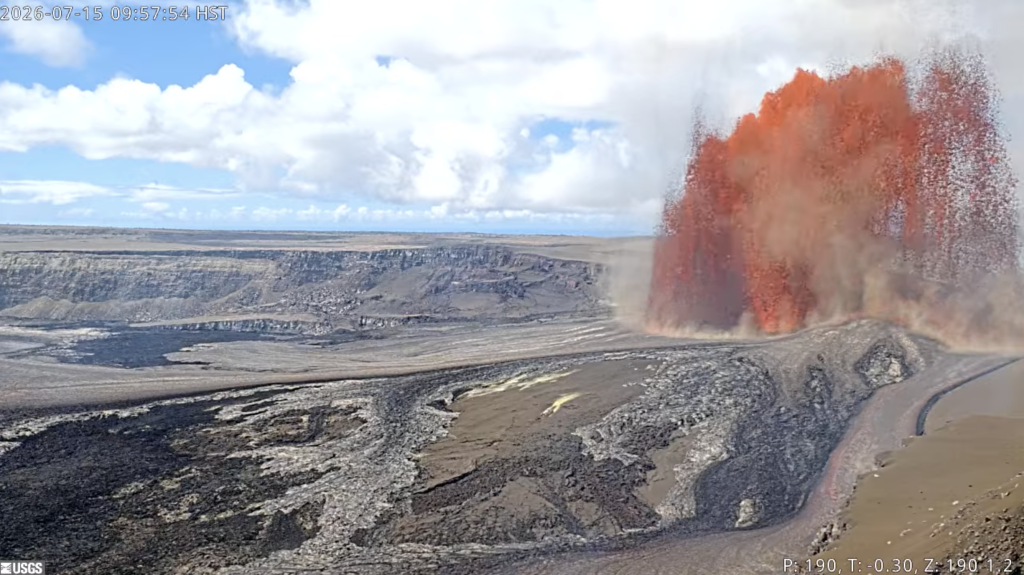
Lava fountaining episode 51 in Halemaʻumaʻu at the summit of Kīlauea began around 8:30 a.m. on July 15 and ended abruptly at 4:46 p.m., after 8.3 hours of continuous fountaining from the north vent.
The last 2-3 minutes were marked by gas jetting from the north vent. The south vent never fountained during this episode but did emit flames and gas jets.
The Hawaiian Volcano Observatory reports the instantaneous effusion rate peaked at about 370 cubic yards per second at approximately 10:30 a.m. HST, with an average effusion rate of 200 cubic yards per second for the entire fountaining episode.
An estimated 6.6 million cubic yards of lava erupted and covered about 50% of the Halemaʻumaʻu crater floor, according to the HVO.
Precursory activity began from the north vent on the afternoon of July 14 with four overflows between 3 and 4 p.m., the longest lasting over 30 minutes. Activity then paused when inflation leveled off. Summit inflation resumed later in the evening.
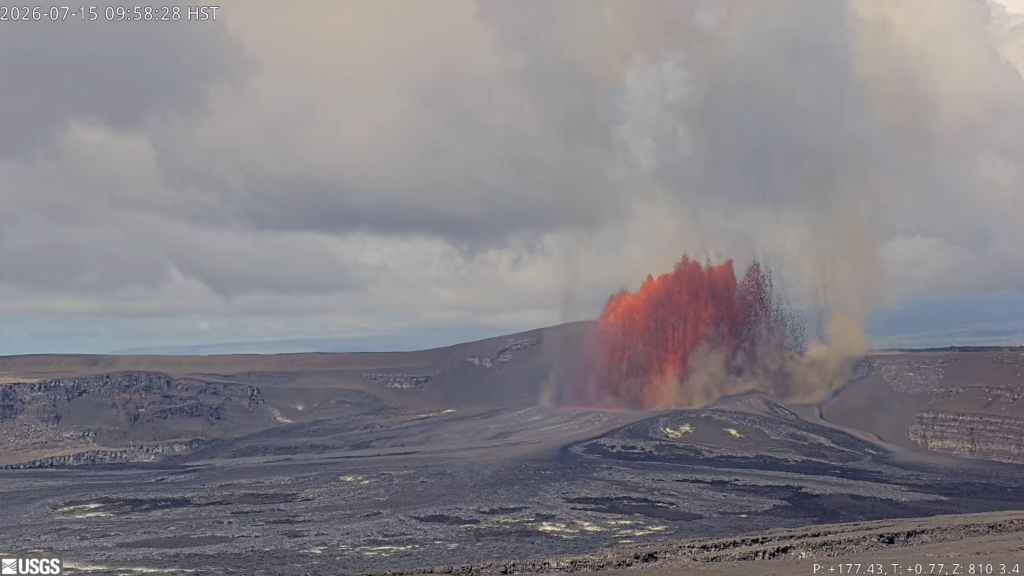
The north vent lava fountain reached a peak height of approximately 950 feet around 10:30 a.m. and produced significant heat and ash, feeding a plume cloud that reached a maximum height of about 18,000 feet above sea level based on radar data reported by the National Weather Service and verified by HVO webcam images. The plume track largely remained within Hawaiʻi Volcanoes National Park with most tephra falling in the closed area.
The abrupt switch from summit deflation to inflation at the end of episode 51 indicate that another lava fountaining episode is likely, according to the HVO.
Update: 10:58 a.m., July 15, 2026
Episode 51 of lava fountaining in Halemaʻumaʻu began at the summit of Kīlauea began at 8:30 a.m. HST on July 15 and continues as of this notice. Fountain heights are at 950 feet and effusion rates have reached a peak of about 400 cubic yards per second at 10:30 a.m. HST July 15.
The National Weather Service reports that the plume from this eruption is reaching 18,000 feet above sea level. Ground-level sensors near the eruptive vents indicate that light winds are blowing from the northeast direction, which suggests that volcanic gas emissions and volcanic material may be distributed to the southwest direction from Halemaʻumaʻu. At higher altitudes the plume is rising vertically at this time over an area just southwest of the vents. Most tephra fall currently remains within the closed area of Hawaiʻi Volcanoes National Park. Very light fall of Peleʻs hair was reported from the Kaʻu Desert trail head along Highway 11. No tephra is currrently falling in the town of Pāhala or anywhere outside of Hawaiʻi Volcanoes National Park.
Previous post:
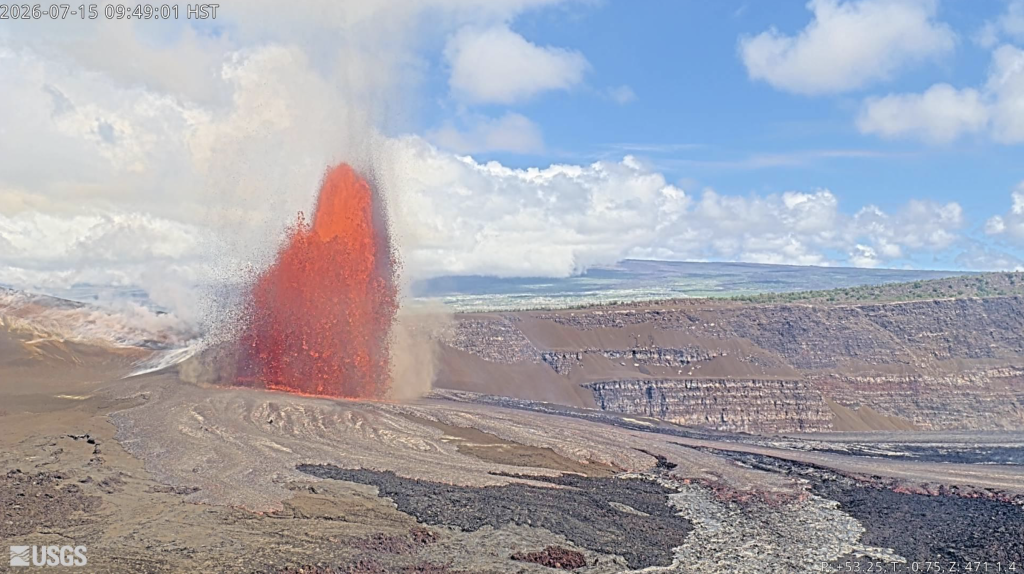
Episode 51 of the Halemaʻumaʻu eruption began at 8:30 a.m. today, July 15, with lava fountains currently reaching 160 feet. Low-level winds are carrying volcanic gas and tephra toward the west-southwest, potentially impacting Ka’u District communities like Pāhala and Nāʻālehu.
Lava fountains are currently erupting from the north vent and reaching heights of about 160 ft (50 m) above ground level. Peak fountaining typically occurs 1-2 hours after onset. North vent fountains are feeding large lava flows onto the floor of Halema’uma’u crater.
Ground-level sensors near the eruptive vents indicate that winds are blowing 5-10 mph from the east-northeast direction, which suggests that volcanic gas emissions and volcanic material may be distributed to the west-southwest direction from Halemaʻumaʻu.
Tephra including ash may be carried by the wind in the direction of communities in the Ka’u District including Pāhala and Nāʻālehu, and on Highway 11 southwest of Volcano. Higher level winds are from the south with the possibility of tephra being dispersed into communities adjacent to and north of Hawaiʻi Volcanoes National Park.
The National Weather Service reports low level winds from the east-northeast that would move the plume to the southwest towards Pāhala, and high level winds from the south that would move the higher plume over communities adjacent to Hawaiʻi Volcanoes National Park. The NWS has issued a Special Weather Statement regarding potential impacts from wind-blown tephra.
All eruptive vents and lava flows are confined to Halemaʻumaʻu crater within Hawaiʻi Volcanoes National Park. Tephra fall from volcanic ash clouds is greatest within 3 miles of the vents, lighter ash and Pele’s Hair may stay suspended for large distances from the vents.
Most lava fountaining episodes since Dec. 23, 2024, have continued for a day or less.
Sponsored Content