 Hawai'i Journalism Initiative
Moloka‘i growers feeding the island in wake of missed barges, plant shipping restrictions
When the state banned the shipment of plants and gardening materials to prevent the spread of invasive pests to Moloka‘i last year, people started asking Patrick Rogers if he had any herbs and vegetables to sell.
Rogers and his partner were farming on a small scale on his late father’s property on the outskirts of Kaunakakai town.
“Realizing there was a market there, we started growing more,” Rogers said.
Now his fledgling business grows more than 100 kinds of edible crops and ornamental plants out of Rogers’ backyard to sell and give away to people in the community.
He is one of the local farmers and growers who is learning to plant, harvest and sell their own products through the University of Hawai‘i programs Seed to Harvest and Harvest to Market.
On an island rich with farmland and resourceful people, the goal is to help make the community more resilient and sustainable during unexpected crises like missed shipments and interisland restrictions.
“We always hear, what if the barge doesn’t come?” Rogers said. “And it happened recently. We had three barges in a row that didn’t come.”
The Seed to Harvest program launched last year as a collaboration between UH-Mānoa’s College of Tropical Agriculture and Human Resilience, Moloka‘i Cooperation Extension Service and the Maui County Department of Agriculture, which funded the program.
The third cohort finished in December, with each group of about 10 to 14 farmers growing between 300 and 400 pounds of fresh fruits, vegetables and herbs.
Harvest to Market launched earlier this year to teach growers how to market, brand and sell their products. The first cohort of about 10 participants graduated in April after 12 weeks of classes, said Kyle Franks, junior extension agent for the Department of Hawaiian Home Lands and one of the principal investigators for the program.
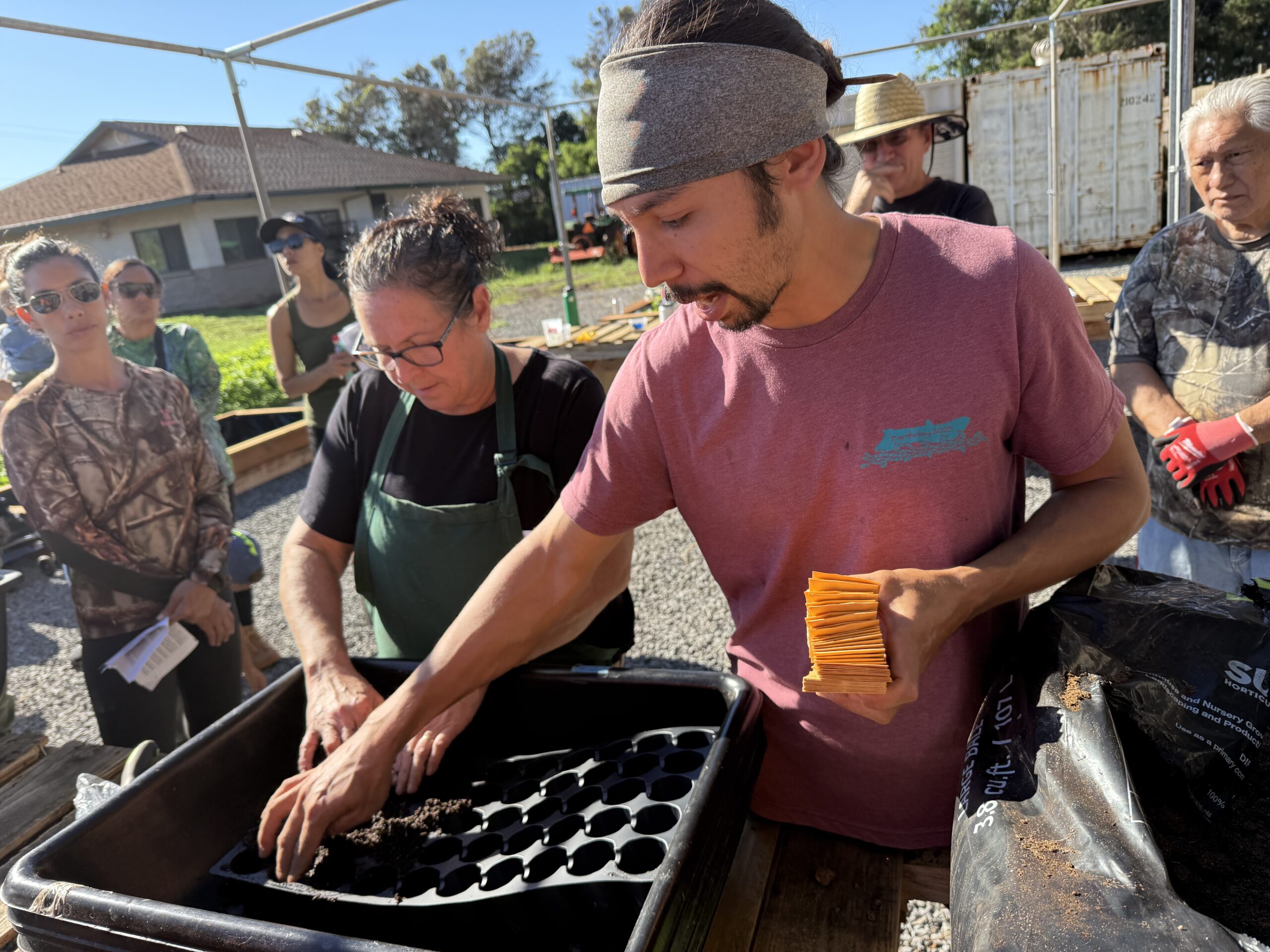
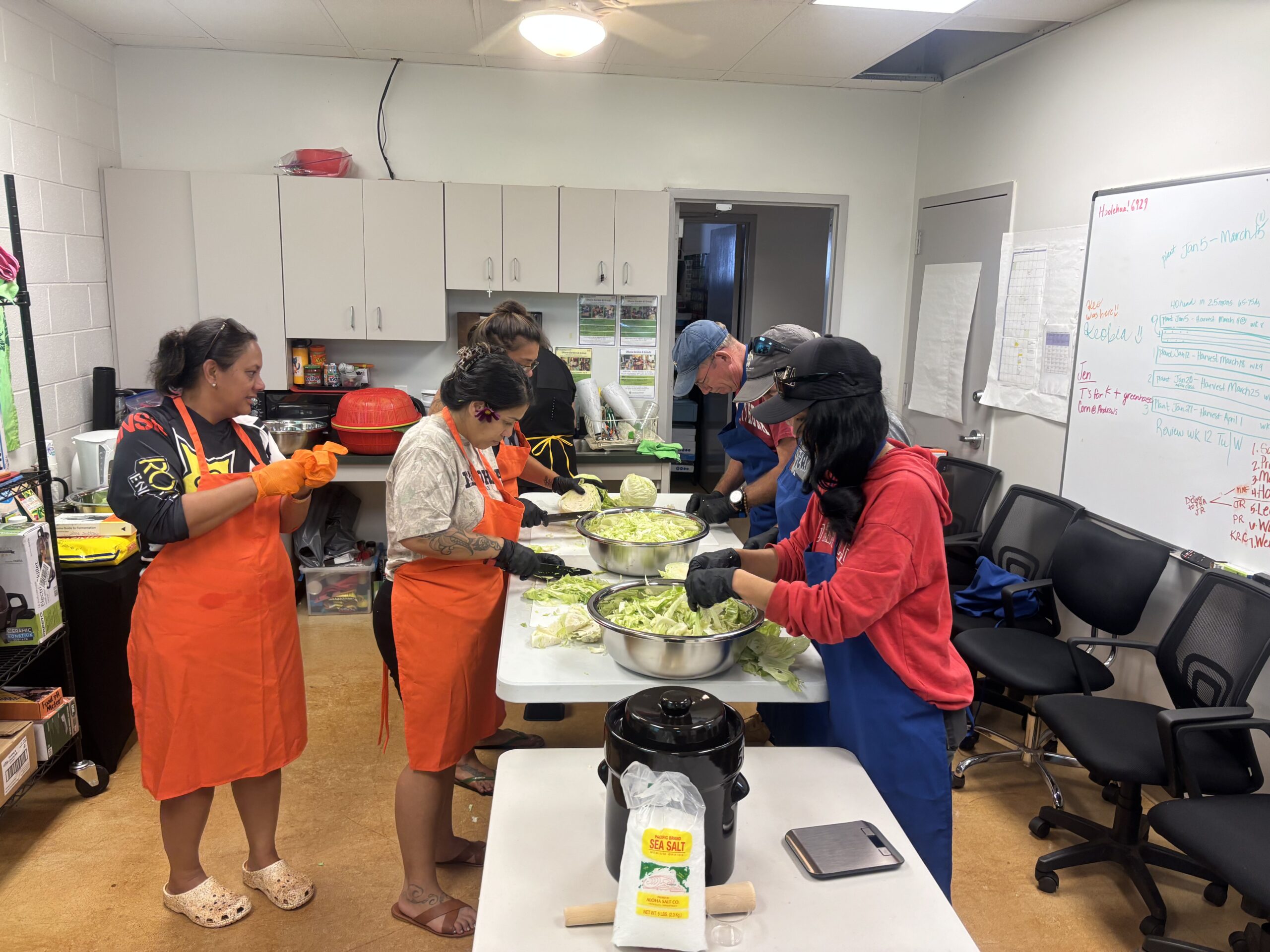
Participants, who had to have access to land and water, learned to plan out their crops, what grows well in the area and how to battle pests. Franks and Jennifer Hawkins, the junior extension agent for edible crops and co-principal investigator, taught them about the process of setting up a business, scaling up their operations, and adding value to their products, such as turning cabbage into sauerkraut.
Hawai‘i imports about 85 to 90% of its food, and islands like Moloka‘i and Lāna‘i that lack big box stores get hit hard when regular deliveries don’t arrive. When bad weather sidelined consecutive shipments from Young Brothers last month, shelves were bare at the handful of grocery stores on Moloka‘i.
But for local stores and restaurants, the solution is not always as simple as buying local. Consistency is a major challenge, with smaller local farmers and growers not always able to provide the amount of vegetables grocery stores need, Hawkins said.
That’s why programs like Seed to Harvest and Harvest to Market are trying to help farmers close the gap and understand the costs. During the programs, participants grew cabbage, a popular starter crop.
They planted two rows of nearly 90 feet of cabbage and sold it through the mobile market of Sust‘āinable Molokaʻi. At the end of the day, they only made roughly $3 in profit, a tough first lesson in costs, but a positive result that ended in the green, Franks said.
He taught the students about economies of scale and hopes that they can one day supply local needs, and maybe even go beyond that.
“They’re going to cap the Moloka‘i market very quickly,” Franks said. “So how are we going to get stuff out? We don’t have the venues to go out like we used to. Shipping costs have not gone down. … The hurdle becomes larger.”
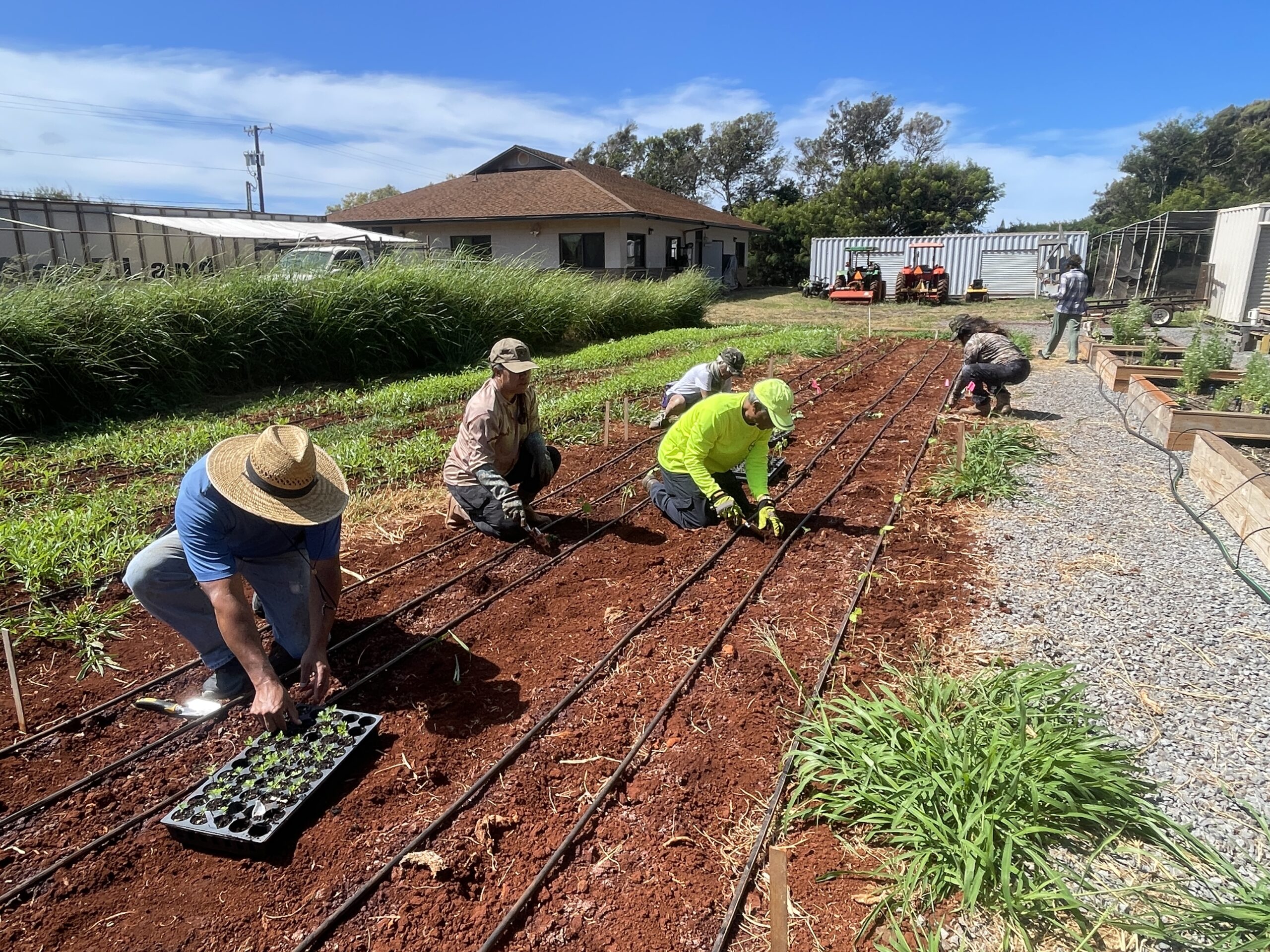
The program participants, a mix of homesteaders and non-homesteaders, have started a hui that meets weekly to help out on each other’s properties.
Rogers, a key member of the hui, had a lot to learn. He was a retired consultant in structural and coastal engineering and design when he took over the property from his late father a few years ago.
Before he could plant anything, he and his partner first had to clear out large swaths of the haole koa trees. The backyard is now a bountiful “food forest” of pigeon peas, eggplants, peppers, papayas, tomatoes, figs, cantaloupe, six varieties of sweet potato and three different varieties of bananas. There are herbs like rosemary and Thai basil, and ornamental plants, including milo trees and royal poinsettia.
Rogers is happy to donate plants to families who want to grow their own food. He remembers a mom who sent him a picture of a child picking the tomatoes they had planted “and saying it’s way better than the grocery store.”
“That’s a gold star day,” Rogers said.
The operation is small and visits are by appointment only. In a slow month, they’ll sell or give away eight to 10 plants. In a busy month they can sell or give away well over 100.
Rogers says some of his biggest challenges are invasive species, including axis deer and bugs. He had to raise his dad’s old 4-foot fencing to 6 feet to keep out the deer who overrun the island. Heavy rains in the spring gave them plenty of greenery to forage, but as conditions get drier, the animals started to come down in search of food. Rogers said fencing is one of the biggest costs for him and other local growers.
Bugs are also a bother in a place where there is no cold season.
“There’s some times where a certain pest will be so bad, and then Jennifer tells us, ‘you can’t win with that one,’” Rogers said.
“We try different companion plantings,” he added. “We try to do things to encourage whatever the enemy of that pest is.”
Rogers said the Seed to Harvest and Harvest to Market programs have been a big help in getting his nursery off the ground and connecting with other local farmers and gardeners.
“When I signed up for the class … it didn’t occur to me that I would be getting into this ‘ohana of growers and grower’s resources, and it’s blossomed in just amazing ways,” he said.
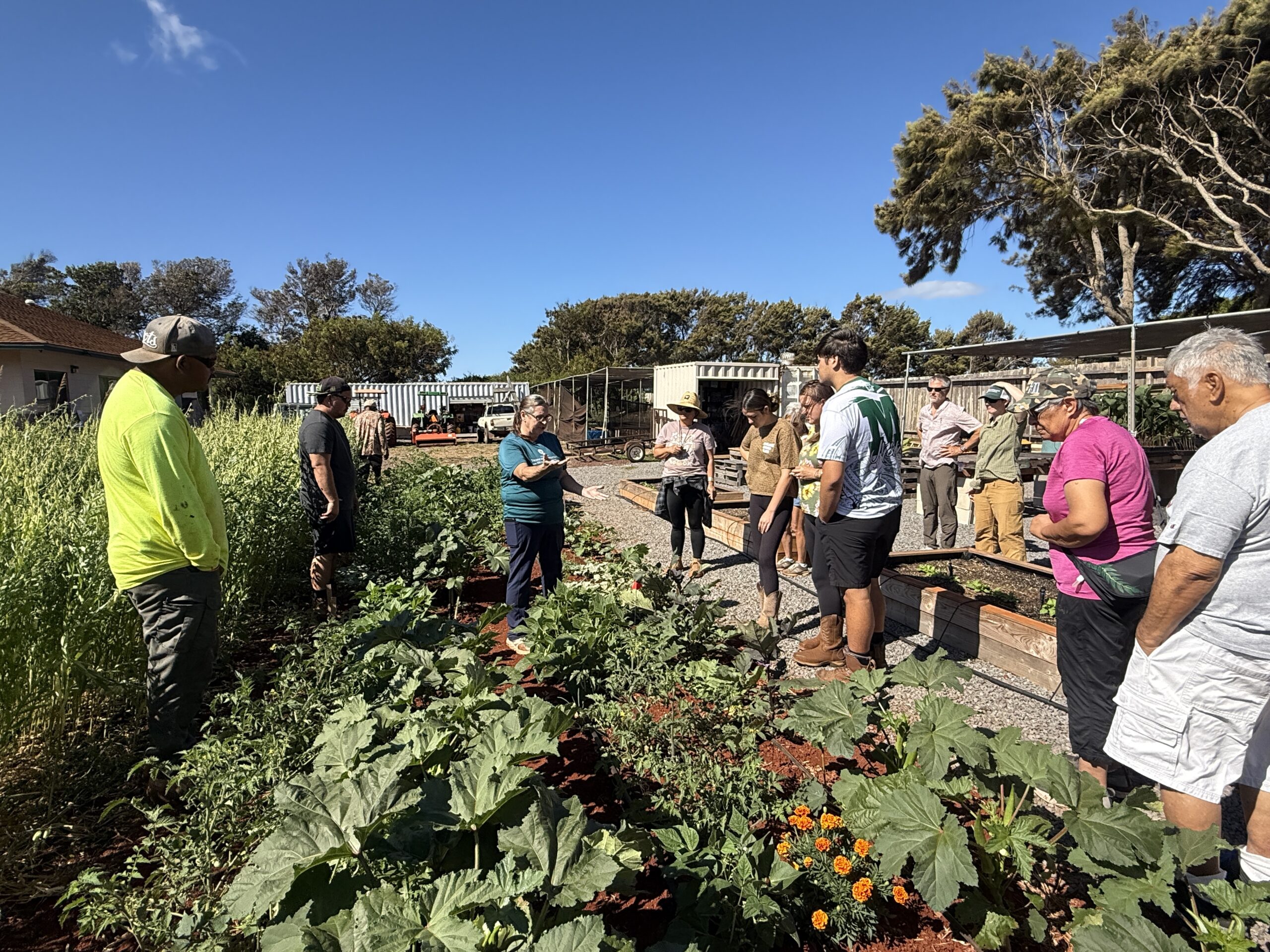
At a time when Moloka‘i is trying to hold off the coconut rhinoceros beetle and other invasive species like little fire ant and the coqui frog, locally grown trees and plants are more needed than ever.
The Hawai‘i Department of Education wants to reach its goal of 30% locally sourced school food by 2030, and “when they’re ready to implement that on Moloka‘i, if we don’t start planting fruit trees now, we won’t have enough fruit for our kids to eat that is local,” Hawkins said.
Hawkins and Franks recently started a class to teach people orchard production. In the fall, they plan to host a class with ‘ulu expert Noa Lincoln on growing and preserving breadfruit. They’re talking about recycling water for aquaponics in anticipation of shortages and looking at ways to sterilize potting mixes on the island so they don’t have to worry about bringing in outside insects and disease.
“I think it goes so much deeper than just food on the table and what we have tomorrow,” Hawkins said. “With the wars around us, with the price of fuel, with the delays we’ve seen in the planes coming over and leaving, it’s really made us relook at the whole system here on the island.”
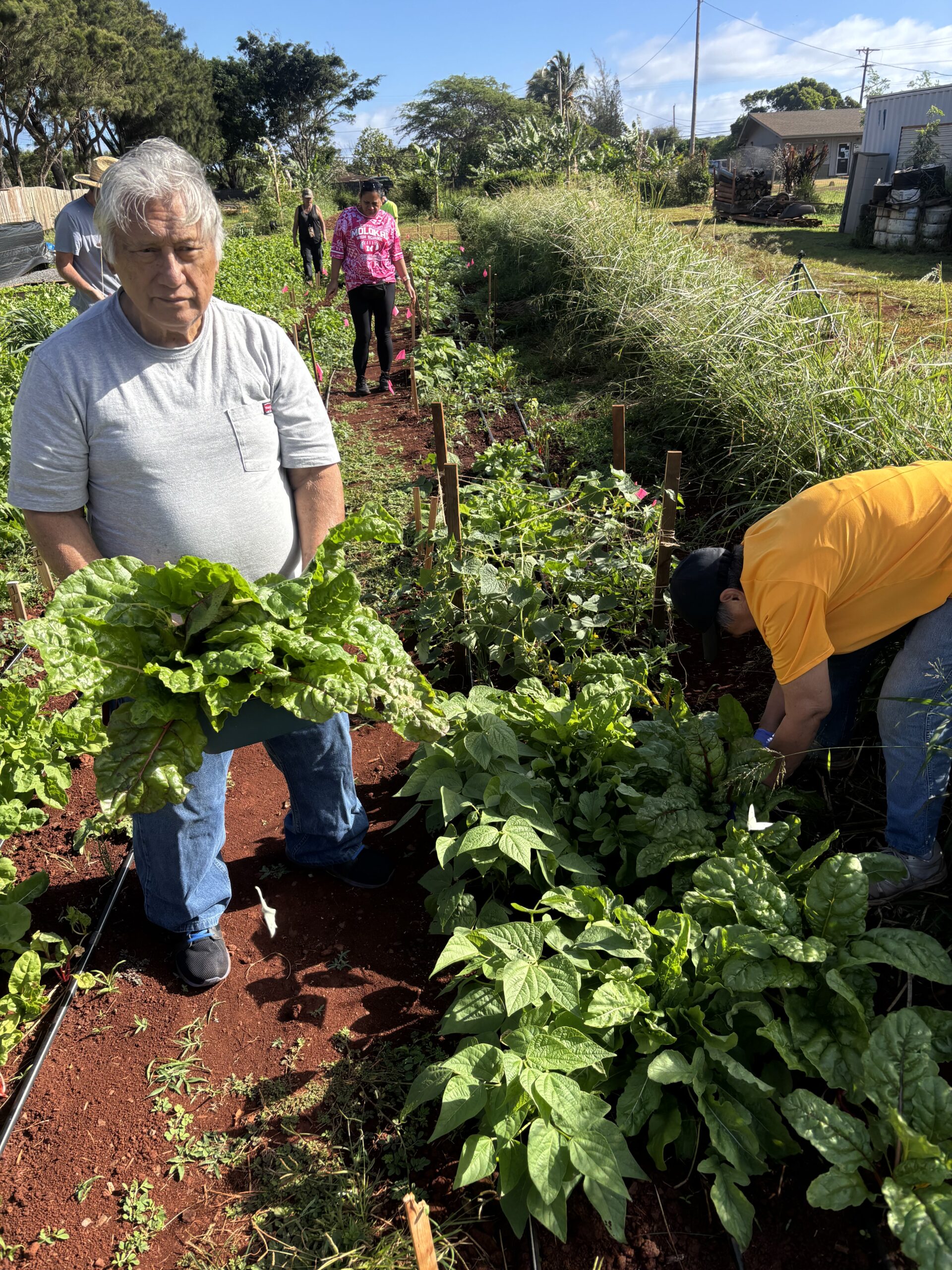
Amber Kaholoa‘a, one of the members of the hui formed through the UH programs, dreams of growing enough food to provide for local businesses. A couple of years ago, she and her family landed a homestead in Ho‘olehua, and she started taking classes.
Now the Kaholoa‘a family runs Ala Ekolu Homestead, where they grow more than 50 different varieties of crops that include guava, lychee, mango, taro and Hawaiian chili peppers. Their greenhouse hydroponic system supports lettuce, watercress, ong choy and pak choi, and they also have a flock of chickens who lay about 20 eggs a day, some of which goes toward feeding their family of 10.
When the UH programs were over, she and her classmates “didn’t want it to end.” They agreed to form a hui and meet regularly to help each other out, clearing lots and putting in irrigation. It’s especially helpful for those who could use the extra hands, such as the single mom with two kids and 40 acres who wants to see the land go to good use.
“If we all kōkua each other’s backyards, we can establish something big, you know?” Kaholoa‘a said.
The hui has met with organizations such as Maui-based Local Harvest, which gave them a list of needs such as beans and bananas. The organization promised to buy from the hui if they could grow it. Kaholoa‘a is excited to expand but said first, the hui hopes to have enough for their island.
“Moloka‘i has a bigger need,” she said. “Our goal is to support here first, and then go bigger scale. … We don’t even have enough right now to support our stores.”
One of the Moloka‘i businesses they hope to one day supply is Na‘ike, which makes shoyu and sauces with a spicy kick. Kaholoa‘a said if the hui can grow enough Hawaiian chili peppers, the owner is willing to buy from them. She said they’ve just started to plant them.
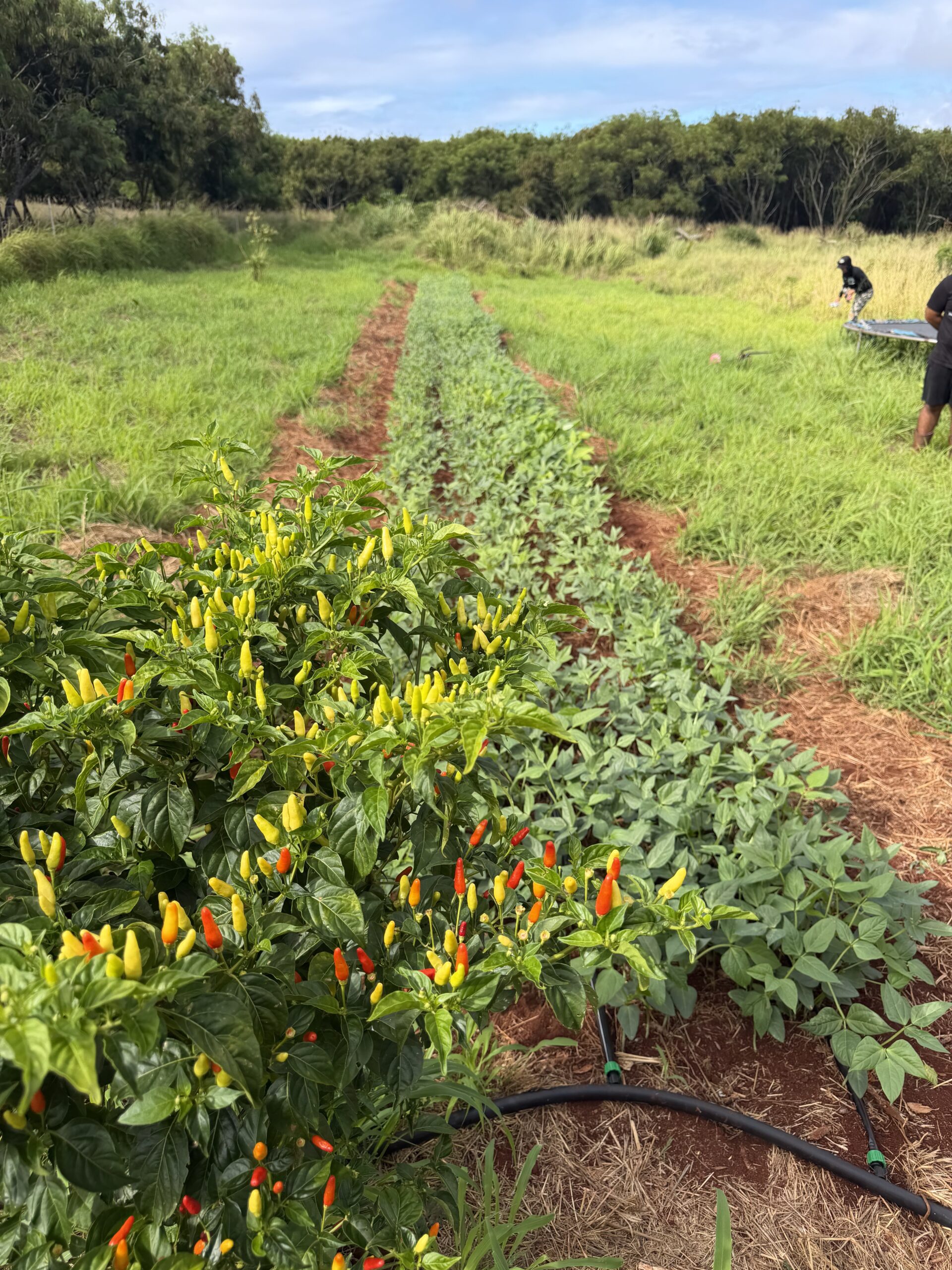
“We have to be consistent. We have to meet the demands,” she said. “It’s a process, but I believe we can do it. There’s lots of land, lots of willing people.”
Kaholoa‘a’s family fishes and hunts, and they weren’t affected by the missed barge shipments. But she said not everyone can sustain themselves, especially kūpuna.
To Franks, locally grown food is “basic public infrastructure,” but it isn’t really recognized as such. He said that every person who can “fill in the blank,” whether that’s a nursery growing plants or a farmer putting in the labor on the land, all contribute to making the island more sustainable.
“When we come together on that in a collaborative effort, it’s not just one person thinking, ‘oh, I got to do everything,’” Franks said. “It’s a group thinking, ‘well, I can provide this,’ and every little bit begins to count and everyone helps everyone out.”