


 Hawai'i Journalism Initiative
$4B Mākena development with 652 homes advances after reducing project due to public pushback
A project of 652 market-rate and affordable homes on 1,000 acres in Mākena is moving forward after developers scaled back more than a quarter of the project in response to community backlash.
Mākena Mauka, a master-planned residential community in South Maui, got the green light from the Maui Planning Commission earlier this month for its “substantially lower density” plans that nixed nearly 250 units from the original proposal.
Now, developers must seek state and Maui County approvals for the project that calls for 543 market-rate homes and 109 on-site residential workforce units.

The project will also include the existing 18-hole Mākena North Golf Course, the closed and soon-to-be-renovated 18-hole Makena South Golf Course, and about 135,000 square feet of operational support buildings, including golf maintenance, staff offices, restaurants and other uses.
Amenities such as a community gathering place, hiking trails, public beach parking, conservation and open space areas, and paths for walking, bicycling and golf carts also will be part of the development.
Mākena Mauka is expected to cost about $4 billion over 30 years and will be developed in three 10-year construction phases starting in 2028.
And while it’s much less dense than originally planned, community members still worry about growing traffic in a busy resort and residential area, with thousands more homes on the horizon.
The project by AREG AC Mākena Propco has come a long way since 2024, when its proposed plans for 900 new homes, including 60 to 100 affordable units, sparked opposition from community members.
Janelle Kekiwi, whose family has had ties to Mākena for centuries, said at the time that the area had become “unrecognizable with all the development” and no longer accessible to Hawaiians who used to camp and fish in those same places.
“I want to know exactly how they believe this is going to benefit the Kanaka (Native Hawaiians)? How will this help our people?” Kekiwi questioned in written testimony to the project developers in 2024. “They say the development is going to make ‘market priced’ homes for people, in reality the only people that can afford those prices are people not of this ʻāina. In reality this development is promoting a life for non-Hawaiians, people from the mainland, the rich and the wealthy.”
Heidi Guth, founder of Kai Ho‘oulu, a consulting firm that seeks “collaborative solutions with indigenous and island communities,” surveyed Mākena residents as part of a social impact assessment for the project and found they had “strong concerns that the development would not be good for local people, the land or other resources of Maui,” Guth told the Maui Planning Commission at its Aug. 11 meeting.
Guth said residents worried about impacts to water and traffic and emphasized that the needs of lineal descendants, Native Hawaiians and local residents, as well as natural and cultural resources, should take priority.
She pulled together focus groups to brainstorm the top actions they wanted to see developers take to mitigate the project’s impacts. Developers ended up adopting 50 mitigations, Guth said.
Most notably, that included scaling back the project from 900 to 652 units, a 27% reduction, said Mark Roy, lead planner for Mākena Mauka and vice president for consultant Munekiyo Hiraga. A draft environmental impact statement with the reduced plans was published in December 2025.
“This change was made as a result of the community feedback,” Roy told the Planning Commission.
The residential portion will take up 473 acres of the 1,044-acre project area. While the full project is set for a 30-year timeline, Roy said the workforce housing would be developed as part of the initial construction phase.
Based on similar projects that the developer has worked on, about 90% of the residential units are expected to be used as part-time homes, according to project documents. Vacation rentals will not be allowed within the project area.
Brad Anderson, a representative of the developer, said other priorities that came out of community feedback have included a focus on stormwater, with retention basins on one of their adjacent projects and a decision to reduce parking at Mākena Mauka by 50%, eliminating more than 4 acres of nonpermeable surfaces that “are typical of stormwater sheet flow and bad events.”
Anderson added that the developer has also strengthened its commitment to the wiliwili protection program and native landscape restoration, relocating 16 wiliwili trees so far this year and propagating 1,200 seedlings in its on-site greenhouse.
Other key changes included reducing the south golf course irrigation by 15.3 acres, a decrease of 20.2%, and dropping nonpotable average daily demand from 630,190 gallons of water per day to 567,300, Roy said.
The project will provide drinking water to the market-rate homes from a private system of three existing brackish wells, a portion of which would be treated by a reverse osmosis desalination system. Potable water for the workforce housing will be supplied by the Maui County Department of Water Supply’s Central Maui system. Recycled water will be used for irrigation, Roy said.
The project also has to follow conditions set by a law passed in 2009 that granted Mākena Resort zoning changes allowing for hotel, business, residential and park uses. One of those conditions calls for 60 public beach parking stalls; 10 have already been installed at the north end of Maluaka Beach. Thirty-three stalls will be provided within the developer’s land holdings in Mākena, and 17 others are planned at the H-2 Residential Project owned by H2R LLC.
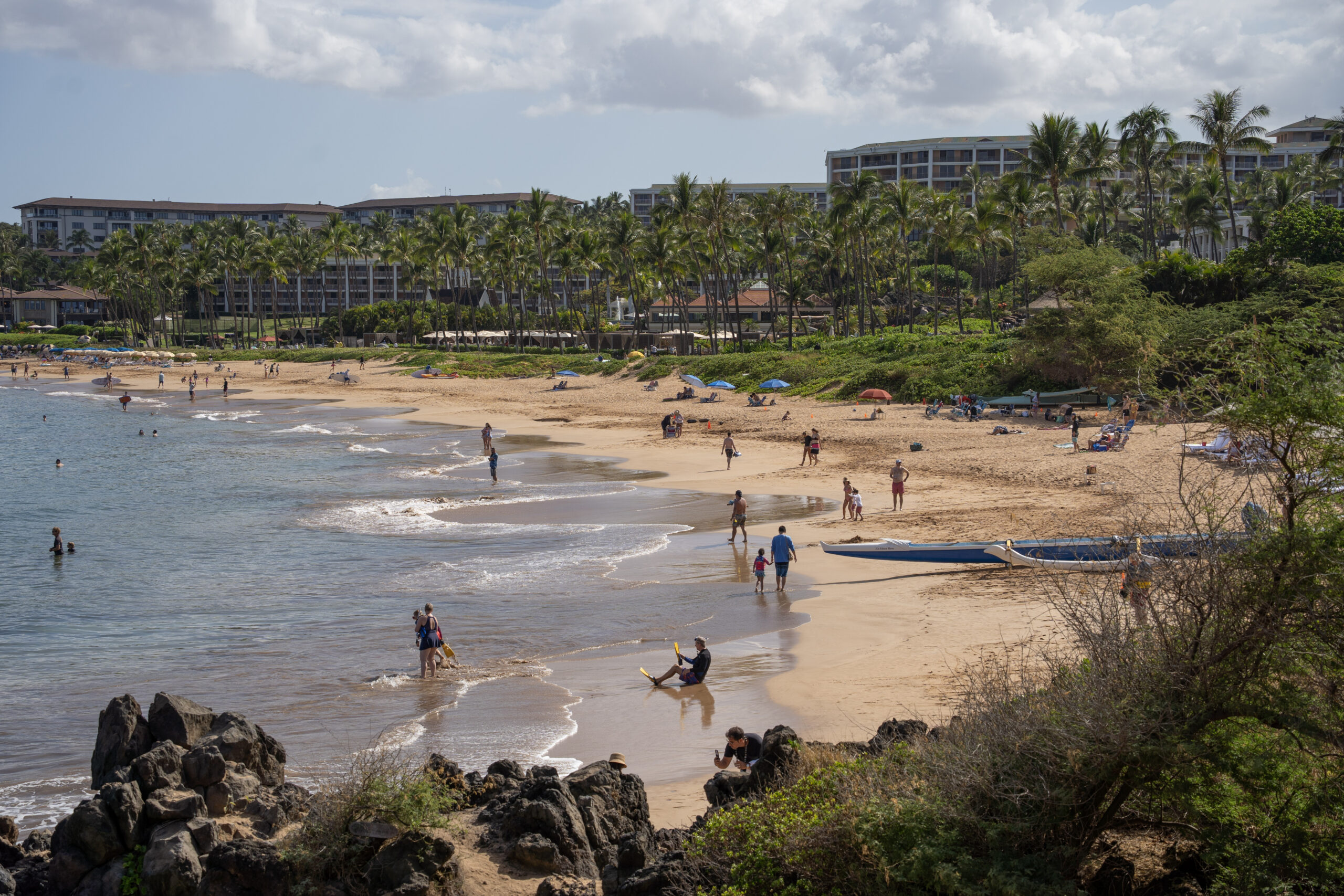
Many of the project’s public benefits are also due to a 2017 settlement agreement with Ho‘oponopono o Mākena, Sierra Club Maui and Maui Tomorrow, which challenged AREG AC Mākena Propco and Discovery Lands’ 47-acre luxury resort plans and their potential impacts to coastal views, beach access and cultural resources.
Even with the changes, community members still had concerns because Mākena Mauka is just one of several projects planned for the area. That includes Honua‘ula, a development of 1,150 homes south of Maui Meadows, and Ledcor Maui’s nearly 1,000-unit South Maui Properties development in Wailea.
Kula resident and retired Maui Community College professor Dick Mayer pointed out that a top policy of the South Maui Community Plan calls for adequate highway capacity, including widening Pi‘ilani Highway from two to four lanes, prior to or alongside major construction projects. He wanted to make sure Mākena Mauka would contribute to the road improvements.
Attorney Cal Chipchase said that Mākena Mauka is contributing to the widening of Pi‘ilani Highway and that its share “has not been diminished or increased or changed in any way.”
In addition to road widening, the project’s paths and trails also seek to encourage walking and biking, traffic engineer Mike Packard of SSFM International said. Packard added that workforce housing will be built on site along with retail and commercial spaces that will make trips to the store closer and more convenient.
“It is not anticipated that those living in and around this area are going to have a detrimental impact on the surrounding traffic,” Packard said, adding that extending bus routes to the area and providing shuttles to take people to the beach have also been proposed.
Kay Anderson of Wailea808 worried about the desalination plans and where the energy to power the system would come from. She also wanted to know how the leftover brine would be disposed of, a concern shared by other residents as Maui County also considers its own desalination plans.
Chipchase said Hawaiian Electric would provide the power for the desalination and that the concentrated brine would be used for irrigation, as has been done in other projects with similar systems.

The Maui Planning Commission voted 5-1 to accept the final environmental impact statement and more than a dozen conditions recommended by Maui County planning staff. The announcement that the plans had been accepted was published in “The Environmental Notice” earlier this week.
Commission Vice Chair Andrea Kealoha said she had “a hard time believing” that the thousands of new units planned for the Mākena-Wailea area would not impact the environment, traffic and cultural resources. However, Kealoha said she thought that the project’s final environmental impact statement “crossed the T’s and dotted the I’s,” and she made the motion for the commission to accept the report.
“I think you guys did a great job as far as being thorough and updating everything and giving us the information needed,” Kealoha said.
Commissioner Mark Deakos was the lone vote in opposition, and Commissioners Joshua Circle-Woodburn and Christopher Elizares recused themselves “based on employment situations.”
“I know I have a high bar, but when you’re doing majority high-end homes … I have to weigh the public trust resources,” Deakos said. “Are they truly being mitigated for the benefit of the public?”
The project still has more scrutiny ahead. Chipchase said portions of the project will require Land Use Commission approval, Maui County Council approval and ultimately special management area use permit approval from the Maui Planning Commission.