


 Hawai'i Journalism Initiative
Kapalua golf course to host LPGA tournament as lawsuit over water restrictions heads to trial

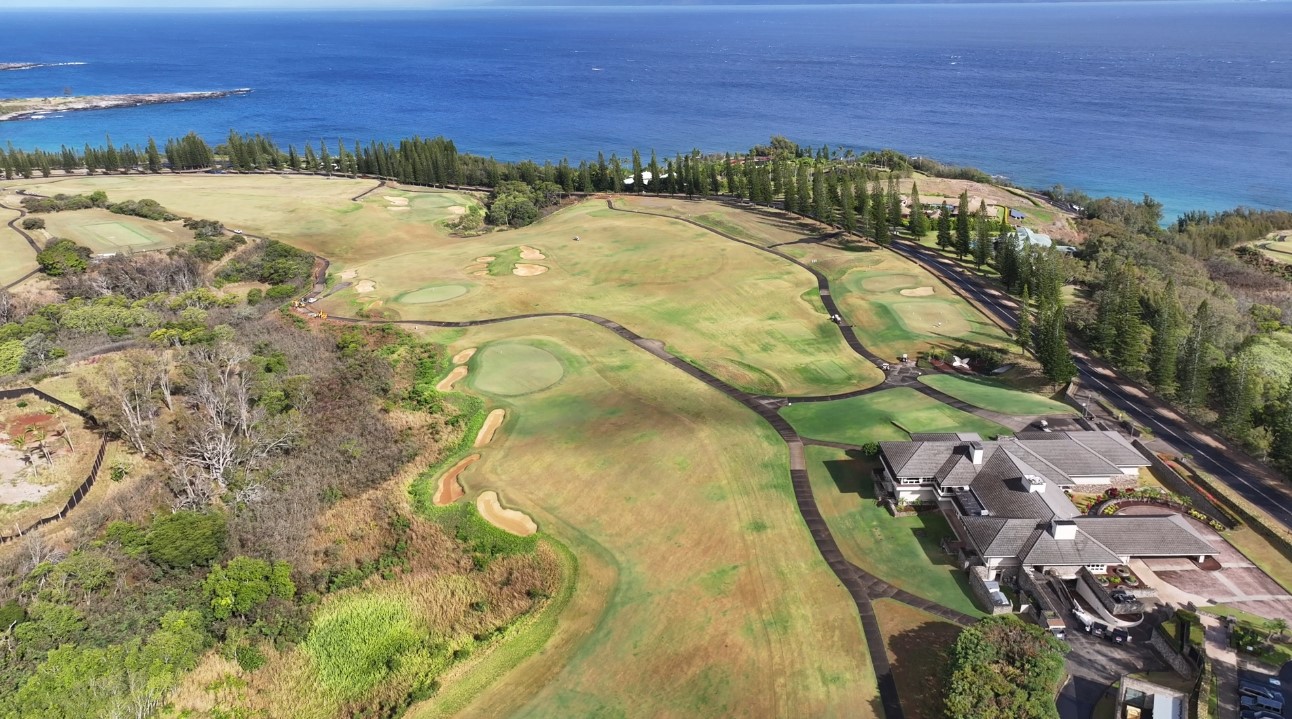
The golf course in Kapalua that sued Maui Land & Pineapple Co. over water restrictions that owners complained had dried up the greens last year and led to the cancelation of the PGA Tour’s opening tournament The Sentry is now “in fantastic shape.”
After recent rains it is in such good shape that it will host a professional women’s tournament in March.
The Plantation Course at Kapalua announced Monday that the LPGA Tour’s 2027 LOTTE Championship would take place at the course from March 18-21, featuring a full field of 120 LPGA professionals competing over four rounds.
“We are thrilled to welcome the LPGA back to Kapalua and professional golf back to Maui,” Kapalua Golf General Manager Alex Nakajima said in a news release Monday. “The Plantation Course offers a unique challenge that will showcase the talents of the world’s best female golfers.”
The tournament is set to tee off just days before the water lawsuit is scheduled to go to trial on March 29, according to 2nd Circuit Court records.
Kapalua hasn’t hosted an LPGA event since 2008 when the Kapalua LPGA Classic was played on The Bay Course, according to the news release. This will be the first time that the par-73, 7,596-yard course will serve as the venue for the LOTTE Championship, which has been held at the Hoakalei Country Club on O‘ahu from 2022 to 2026, with Thai golfer Jeeno Thitikul taking home the title on Sunday.
The Plantation and Bay golf courses are owned by TY Management, which filed a lawsuit against Maui Land & Pineapple in August 2025 along with three homeowners’ associations and Hua Momona Farms, claiming that the company failed to maintain the Honokōhau ditch system, leaving the golf course conditions to deteriorate and forcing them to close temporarily to rehabilitate the grass.
Maui Land & Pineapple has countered that a lack of rainfall, not its system, is to blame. The company claims that TY Management failed to follow water restrictions and used millions of gallons of water that were meant for fire suppression to irrigate its golf courses.
In September 2025, with the courses still brown, the PGA Tour announced that it was canceling The Sentry that had been set for the Plantation Course in January 2026. The golf course had hosted the tour’s season-opening event for 27 years.
“We do not have a comment about the lawsuit, but The Plantation Course is currently in fantastic shape and we are excited and focused on bringing this event to Kapalua,” said Kenji Yui, general manager of TY Management, in a statement to the Hawai‘i Journalism Initiative on Tuesday.
Yui did not respond directly to questions about whether the golf course or Maui Land & Pineapple had done anything differently to improve conditions at the golf courses since the lawsuit.
Race Randle, CEO of Maui Land & Pineapple Co., said that the company has not made any changes “because the system was never the problem.”
“Last year was the driest on record for Maui, and when the stream isn’t flowing at state-set levels, there is no water to divert,” Randle said in a statement on Tuesday. “Following the increased rainfall this year, stream flow and reservoir levels have improved, and there are currently no irrigation restrictions in place on the Kapalua system.”
In West Maui, long periods of drought prior to this year’s rainy summer have led to water shortages and restrictions. In June 2025, when users under Maui Land & Pineapple Co.’s water system were under Tier 4 restrictions prohibiting all irrigation, the company claims that the golf courses used more than 11 million gallons of water, compared with just 80,000 for Maui County drinking water and none for agricultural tenants.
Farmers in Honokōhau Valley have repeatedly raised concerns over their kalo patches rotting due to lower streamflow. They have complained about service from Maui Land & Pineapple Co.’s system as well as the golf courses’ high water usage while they struggled to irrigate their own crops.
In December, Maui Land & Pineapple was fined $140,000 for violating streamflow standards, though the state Commission on Water Resource Management gave the company the chance to offset the penalty with improvements to its water system.
Ciara Kahahane, deputy director of the water commission, said at a meeting last month that Maui Land & Pineapple plans to have the U.S. Geological Survey install a stream gauge below one of its diversions on Oct. 26.
The company is in the process of selling the water system to Maui County under a tentative agreement announced in May. Maui Land & Pineapple said Tuesday that “due diligence and appraisals of MLP’s assets are currently underway.”
Randle emphasized that “consistent with state law, traditional and customary uses, drinking water and fire prevention have priority.” Maui County must also receive enough water for its treatment facility before any water can go to other off-stream uses.
“We support more storage and a more interconnected system so that water can move where it is needed most during droughts and emergencies,” Randle said. “That is what our agreement with Maui County, which would transition ownership to the public, is designed to deliver.”
Maui Land & Pineapple sold its subsidiary, Kapalua Water Company, to Hawai‘i Water Service in 2021, but it remains the owner and responsible party under the water commission’s orders on streamflow levels.

Kapali Keahi, who lives in Lahaina and plays music at Taverna restaurant in Kapalua, which overlooks the Bay Course, said he’s watched the grass shift from brown to green over the last several months and thinks that the golf courses have benefited from the El Niño weather conditions that have stirred up several storms in the Pacific this summer.
“Lahaina was really, really green the entire summer,” Keahi said. “But it’s about to change. Some parts of Lahaina are already pretty crispy.”
Keahi, a lineal descendant of Honokōhau where some of his family members still live, said he thought it was “disrespectful” for the golf course to host a tournament given everyday community members’ fight for water while the golf courses continued to irrigate. For far too long, he said, “economic growth has gone way too far beyond the ecological carrying capacity of the west side.”
However, he acknowledged that there are local groups that benefit from having a major professional tournament on Maui.
The loss of The Sentry was an estimated $50 million economic blow, and Kapalua Golf said in its news release that the golf industry contributes an estimated $3.4 billion annually to the state’s economy.
In the absence of The Sentry, Tadashi Yanai, the Japanese billionaire owner of TY Management and clothing company Uniqlo, donated $750,000 last year to Maui nonprofits, including organizations that would have made money from working the competition.
“There’s a lot of people that actually depend on it who are a part of our community,” Keahi said.
But, he added, water is a need, and a golf tournament is “a luxury.”
“Water is so precious right now that we definitely need to have a better plan on how to use water, especially in these uncertain times,” Keahi said.