

Op-Ed: Lower condo prices don’t mean affordable housing for Maui residents
Op-Ed: Lower condo prices don’t mean affordable housing for Maui residents
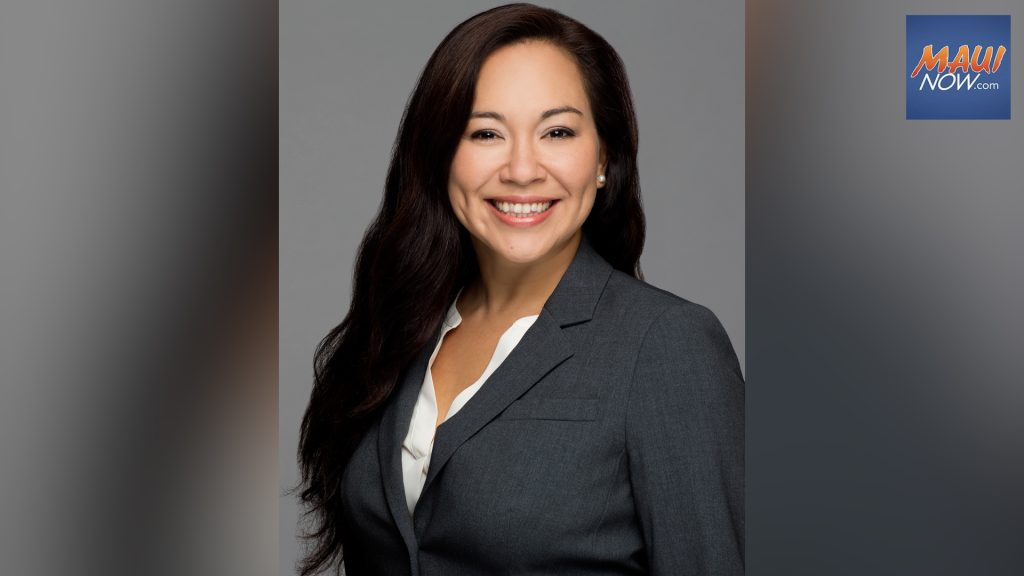
By: Malama Minn, Chief Advocacy Officer, REALTORS Association of Maui
“We agree that Maui needs more housing local residents can afford.
Bill 9, enacted as Ordinance 5909 in December 2025, seeks to make more units available for long-term residential use by phasing out transient vacation rentals in apartment-zoned properties. While it is too early to know the ultimate outcome, recent real estate activity is worth examining.
The REALTORS Association of Maui (RAM) recently reviewed 183 condominium sales recorded from January through July 2026 among properties included in our analysis. Nearly 70% of those transactions had tax-bill mailing addresses in the Continental US. Approximately 21% had Hawaiʻi mailing addresses, with Maui-island addresses accounting for approximately 20% of all transactions.
A tax-bill mailing address does not establish residency or how a property will be used, particularly for properties purchased through trusts or LLCs. Still, the data raise an important question: As prices decline, who is positioned to purchase these units? Are they becoming more accessible to local residents, or are cash buyers better positioned to take advantage of the changing market?
Consider a current listing at Paki Maui, a condominium property affected by the planned short-term rental phaseout. The fee-simple unit was originally listed at $472,000. After more than 300 combined days on the market across two listings, the asking price has fallen to $330,000, a reduction of approximately 30%.
Yet HOA fees and property taxes alone total $2,023 per month, before a mortgage, homeowners’ insurance, utilities or any special assessments. Lower-priced housing is not necessarily affordable housing.
RAM previously presented the Maui County Council with an analysis showing modeled monthly carrying costs for selected condominiums ranging from approximately $3,400 to more than $11,000, depending on the property and unit size. Those estimates did not include insurance, special assessments, or mortgage payments.
Housing affordability is about more than whether a household can qualify for a mortgage. It is also about whether the people who teach our children, care for our families, serve our visitors and sustain our neighborhoods can live in the communities they help make whole.
Financing also deserves attention. Of the 183 transactions RAM reviewed, 63, approximately 34%, had no mortgage loan recorded in the data, indicating they were likely all-cash purchases. Of those, 43, or 68%, had Continental U.S. tax-bill mailing addresses. Based on the experience of our REALTOR members, cash purchases in these condominium properties have traditionally been more common among investors and second-home buyers than local owner-occupants, who are more likely to rely on mortgage financing.
While the data do not tell us who these buyers are or how they intend to use the properties, they raise an important question: Are these changing market conditions creating meaningful opportunities for Maui residents to secure housing, or are they creating greater opportunities for buyers with the financial resources to purchase without conventional financing?
Our REALTOR members are also observing investor interest in single-family homes, where lower carrying costs and fewer regulatory requirements may make these properties more attractive than condominiums affected by the phaseout. These trends warrant continued attention as we evaluate whether our housing policies are expanding opportunities for local residents to find a home and remain rooted in their communities.
Concerns about who would be positioned to purchase affected properties and whether local buyers could compete are not new. Before Bill 9 was enacted, the County Council’s Temporary Investigative Group identified the possibility that local and out-of-state investors could purchase affected units and that financing difficulties could disadvantage local buyers.
RAM supported Bill 88 and the creation of H-3 and H-4 Hotel Districts as a pathway for qualifying properties to be considered for rezoning. But Maui’s larger challenge remains: increasing housing inventory at prices residents can afford through workforce housing, more efficient permitting, infrastructure investment and other measures that address the cost of producing housing.
Bill 9’s full impact will not be known for years. We should not declare success or failure based on several months of sales activity. But neither should we ignore what the market is telling us.
We should continue to monitor who is purchasing these properties, what it actually costs to live in them, how many transition to long-term residential use and, most importantly, whether Maui residents are ultimately able to call them home.
We all want more housing for Maui residents. The question is whether the policies we pursue are getting us there.”
*****Views expressed in Op-Ed pieces are those of the author’s alone and do not reflect or represent the opinions, policies or positions of Maui Now.*****
Sponsored Content