

NOAA Fisheries to open public comment on plan to allow commercial fishing in Pacific Islands Heritage Monument
The National Marine Fisheries Service is scheduled to publish proposed rules Monday that would allow industrial longline and purse seine fishing in about 408,000 square miles of the Pacific Islands Heritage Marine National Monument. The proposal would open a 30-day public comment period, according to the Pacific Islands Heritage Coalition.
The proposal covers waters 50 to 200 nautical miles from Johnston Atoll, Wake Island and Jarvis Island. The waters were closed to commercial fishing under the monument’s 2014 expansion, although fleets briefly regained access in 2025, according to the coalition.
Members of the public can submit comments through Regulations.gov under docket NOAA-NMFS-2026-2410 by Dec. 9. The coalition, an advocacy group that opposes the change, is urging the public to ask the agency to keep the existing protections.
The coalition said the National Marine Fisheries Service, also known as NOAA Fisheries, describes the expected effects on protected species and cultural resources as “negligible” in its proposed rule. The coalition disputes that finding.
“The proposed rule threatens to reverse decades of progress in protecting one of the planet’s last wild, healthy ocean ecosystems and a place of profound cultural significance for Indigenous Pacific Islanders,” the coalition said.
William Aila, a Native Hawaiian fisherman and former chair of the Hawaiʻi Department of Land and Natural Resources, said the monument’s waters hold historical and cultural significance for Pacific peoples. The waters also give threatened and endangered wildlife a refuge to feed, breed and recover, he said.
“The Pacific Islands Heritage Marine National Monument protects some of the world’s most pristine coral reefs and open-ocean habitats,” said Robert Richmond of Kewalo Marine Laboratory at the University of Hawaiʻi at Mānoa. “Marine protected areas give fish a safe place to grow, reach maturity, and reproduce, helping sustain ecologically, culturally and economically valuable fish populations. Keeping these waters protected is an investment in a healthy Pacific that can support marine ecosystems and the communities who depend on them for generations to come.”

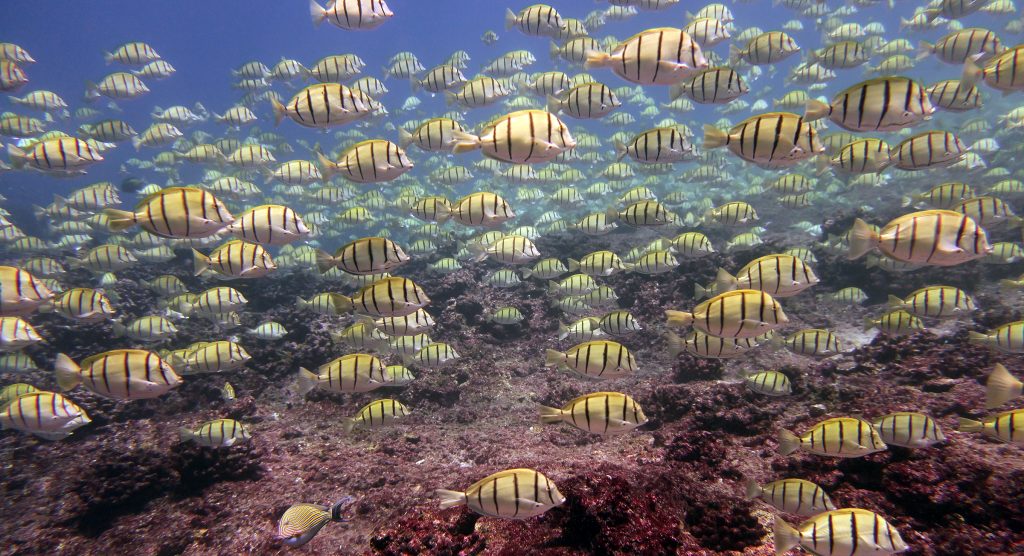
The monument contains 5,000-year-old coral systems and 165 known seamounts, the coalition said. The area shelters seabirds, sharks, rays, sperm and blue whales, and leatherback sea turtles. In 2013, before the monument’s expansion, the Hawaiʻi longline fleet caught 2,328 sharks in the area and kept 10, the coalition said. The rest were thrown back, injured or dead.
The coalition also challenged the economic case for opening the monument.
The National Marine Fisheries Service’s own analysis describes the expected benefit to fishing operations as “likely minor,” citing possible fuel savings and the chance that purse seine vessels could avoid fees for fishing in foreign waters, it said. The coalition said the same analysis reports the Hawaiʻi longline fleet earned $109 million in 2025. It said fishing activity remained limited when fleets were briefly given access that year and that the fleet largely fished elsewhere.
“The writing is on the wall: people want our most precious natural and cultural places protected, not opened up for commercial exploitation,” said Sheila Sarhangi, founder and executive director of the Pacific Islands Heritage and Papahānaumokuākea coalitions. “The Trump administration is once again prioritizing the demands of an already highly profitable commercial fishing industry over the irreplaceable ecological and cultural value of this extraordinary place.”
President George W. Bush established the monument in 2009, and President Barack Obama expanded it in 2014. The coalition said the final expanded area was smaller than the 782,000 square miles Obama initially considered, reflecting input from the commercial fishing industry.
The proposal follows an April 2025 proclamation by President Donald Trump seeking to reopen the area to commercial fishing. A federal court in Honolulu halted that fishing in August 2025, and the Western Pacific Regional Fishery Management Council voted in March to recommend reopening the monument, according to the coalition.
The coalition is asking the Trump administration and the agency to maintain existing protections. It also wants any federal action to follow applicable law, rely on the best available science, respect Indigenous Pacific voices and cultural connections, and provide meaningful opportunities for public participation.
Sponsored Content