

Concert, new album mark Protect Kahoʻolawe ʻOhana’s 50th

Fifty years after a protest helped launch the movement to protect the island of Kahoʻolawe, University of Hawaiʻi faculty are helping to carry forward its message of aloha ʻāina, or love and care for the land.
A new album, 50 Years of Aloha ʻĀina, and a November 13 concert at Bishop Museum are the culmination of a year-long celebration of the Protect Kahoʻolawe ʻOhana’s 50th anniversary. The concert features Hawaiʻi musicians such as Ikaakamai, Kimié Miner and Kaʻikena Scanlan.
Music video (Credit: Blake Abes)
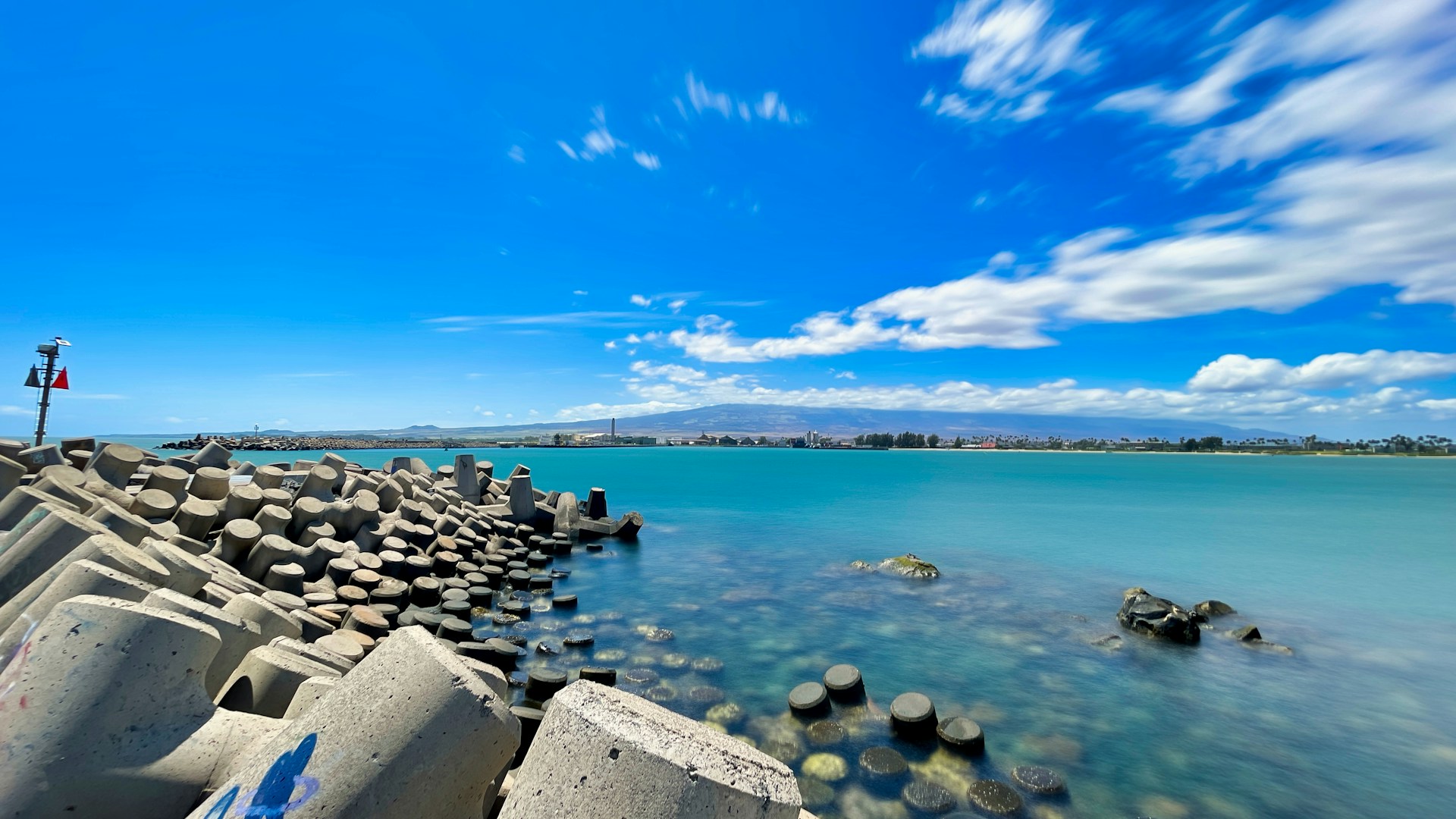
Archive and scenic broll of Kahoʻolawe (Credit: Blake Abes)
“Gathering and singing songs together creates alignment and collective spirit. Contributing our voices and mana fosters aloha lāhui (love for our people),” said Isaac ʻIkaʻaka Nāhuewai, known musically as Ikaakamai, a student engagement and Hawaiian language resource coordinator at UH Hilo.
Nāhuewai helped develop the anniversary album, which features 12 original mele (songs) and is available on all music platforms. The recording artist, who is also a PhD candidate in UH Mānoa’s Hawaiian and Indigenous performance studies, helped recruit collaborators, wrote songs, directed the Protect Kahoʻolawe Band, and produced and mixed five tracks together with other featured artists.
He sees music as a way to help people remember history and pass knowledge between generations.
Across UH, faculty, staff and students also carry that work into classrooms, onto the ʻāina (land) and across the ʻAlalākeiki Channel to Kahoʻolawe.
Beyond stopping bombs

Today’s efforts grew from a movement sparked in 1976, when nine people landed on Kahoʻolawe to bring awareness to the United State’s illegal overthrow of the Hawaiian Kingdom. When the activists reached Kahoʻolawe, they were devastated by the destruction caused by nearly 50 years of military bombing. Deeply moved by what they saw, they felt called to protect and heal the island. Their historic landing inspired the formation of the Protect Kahoʻolawe ʻOhana. The bombing ended in 1990 after nearly 15 years of advocacy. The work to restore the island and its cultural practices, however, continues.
Related UH News story: Kahoʻolawe 50 years later: The island that once shook, Jan. 4, 2026
Kaipu Keala, an assistant professor at UH Mānoa’s Kamakakūokalani Center for Hawaiian Studies, said the movement started by the ʻOhana also affirmed Hawaiian beliefs as a foundation for aloha ʻāina.
He describes it as a sacred relationship that guides daily responsibilities.
“The value of aloha ʻāina takes on this religious dimension and that allows it to become more than just a slogan. It becomes a way of life,” Keala said.
Learning through care

For Kumu Kaliko Baker, that relationship is central to teaching.
The associate professor at UH Mānoa’s Kawaihuelani Center for Hawaiian Language helps lead the I Ola Kanaloa program. On Kahoʻolawe, students practice ʻŌlelo Hawaiʻi (Hawaiian language), care for historical sites, remove invasive plants, and engage in traditional practices such as haku mele (song composition).
“UH students today are fortunate that they don’t have to be at risk as much as before when engaging in civil action. Aloha ʻāina pathways are available through Hawaiʻinuiākea School of Hawaiian Knowledge and other Hawaiian knowledge spaces on our campuses,” Baker said.
Generations at sea

Those learning opportunities also depend on families who help people reach the island.
Kaulu Luʻuwai, an attorney with UH Mānoa’s Ka Huli Ao Center for Excellence in Native Hawaiian Law, belongs to one of them.
Her grandfather began transporting visitors and supplies to Kahoʻolawe in 1983 after her uncle, a student in Professor Emerita Davianna Pōmaikaʻi McGregor’s UH ethnic studies class, helped arrange transportation. Today, her father and brothers help transport volunteers to and from Kahoʻolawe aboard the family’s boat, Pualele.
“It’s a generational commitment. It’s not something we can just stop doing. It’s an obligation for us, a really heavy kuleana: getting people there safely to support the work the ʻOhana does on the island,” Luʻuwai said.
The Nov. 13 concert runs from 5 to 9 p.m. on Bishop Museum’s Great Lawn. Proceeds support the Protect Kahoʻolawe ʻOhana.
Sponsored Content