Incidents on Hawai‘i Island shed light on Hawaiian Hawk abuse
Threats to Hawaiʻi’s endangered wildlife usually come in the form of habitat loss and degradation, disease or predators. But recent incidents on Hawaiʻi Island involving the ʻio, or Hawaiian hawk, shed light on another hazard: human interactions.
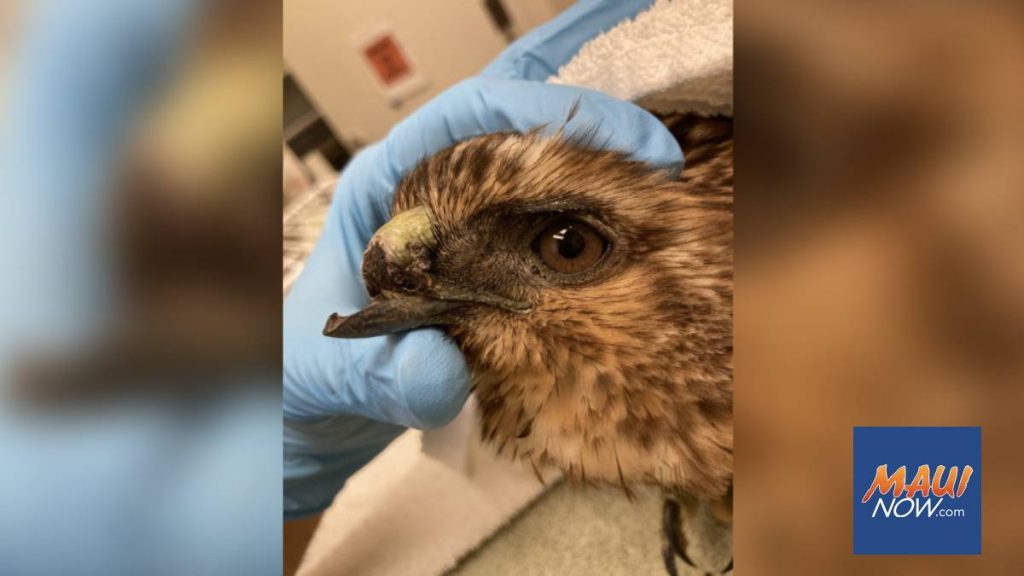
Last month, an ‘io—also known as the Hawaiian hawk—was found emaciated and missing the upper portion of its beak in the Mountain View area of Hawai‘i Island. The resident who discovered the bird contacted the Hawai‘i Wildlife Center, which notified officials from the state Department of Land and Natural Resources.
A wildlife biologist with DLNR’s Division of Forestry and Wildlife (DOFAW), Raymond McGuire, transported the injured bird to the Hawai‘i Wildlife Center. Upon evaluation, the injury was determined to be human-caused. Unable to feed itself, the hawk was euthanized.
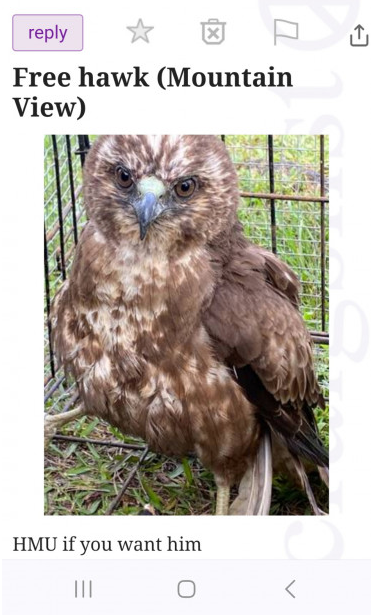
Hawai‘i Wildlife Center received a tip the previous week about a posting on Craigslist that offered a free hawk in Mountain View. Posted photos of that bird showed similar feather, eye and cere (lump above the beak) color to the hawk they admitted, though it still had its full beak. The post has since been deleted. It hasn’t been determined if the two incidents are related.
“I just want to make people aware that these types of abuses are happening in our backyards and if community members see something, please say something,” McGuire said.
In Hawaiʻi, endangered wildlife like the ‘io carry state protections. Hawai‘i Revised Statutes prohibit the “taking” of endangered or threatened species, which includes harming, killing or otherwise disrupting them.
McGuire added: “We’ve received several reports in recent years of shootings and other harmful misconduct aimed at Hawaiian hawks. We can all contribute to the protection of our native ʻio and stop the trend of abuse if we keep our eyes open and speak up.”
To report suspected illegal activity, call the DLNR enforcement hotline at 808-643-3567 or use the DLNRTip app. For information on raptor rehabilitation and rescue, reach out to the HWC at 808-884-5000.
Sponsored Content