Maui Council panel gives preliminary OK for Kahului workforce rental housing project
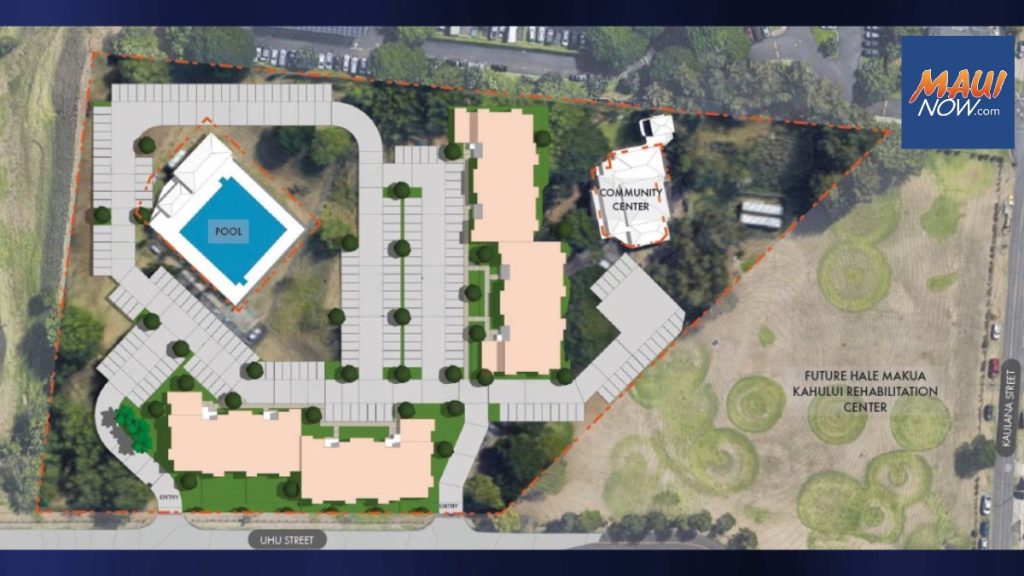
A Maui County Council committee recommended approval Monday of a resolution expressing support for conveying public land in the vicinity of the Kahului Community Center and Kōkua Pool for a 100-unit workforce rental housing project by Hale Makua Health Services in partnership with Alakaʻi Development.
Hale Makua Chief Executive Officer Wesley Lo told members of the Council’s Water Authority, Social Services and Parks Committee that the project aims to provide workforce housing — particularly for healthcare workers — as well as teachers and displaced wildfire survivors.
“We need to do something about our workforce for our aging community,” he said. “If we do workforce development and we don’t provide housing, the people will leave. We need to find a way to keep them, and the goal is to provide healthcare for our community.”
Lo noted that Maui has the largest deficit of physicians in the state, so additional medical practitioners are needed here, calling the need “vital to the survival of our community.”
The Council resolution would allow the project — now many years in process — to continue to pre-development work, including engineering and property surveys, Lo said.
One of the priority projects of the Maui Economic Recovery Commission, Hale Makua’s workforce housing project, located at 275 Uhu St., is targeted for entry- and mid-level healthcare and education workers and displaced Maui wildfire survivors. Aside from workforce housing, Hale Makua also plans to develop a 76,200-square-foot expansion rehabilitation center on a nearby 2.8 acres as part of its master plans.
Workforce housing rental units would cost no more than 30% of a resident’s household income for monthly rent and utilities. Estimated monthly rent would be $1,880 for a one-bedroom, one-bath, 575-square-foot unit aimed for a household earning $75,000 annually or 75% of the area median income. For a two-bedroom, two-bath, 850-square-foot unit, estimated monthly rent would be $2,540 for a household earning $100,000 annually, or 80% area median income.
Current project plans call for 74 two-bedroom units and 26 one-bedroom units.
The project has secured a $5 million grant from a philanthropic organization and is planning to apply for financing through the Hawaiʻi Housing Finance and Development Corp.’s Dwelling Unit Revolving Fund.
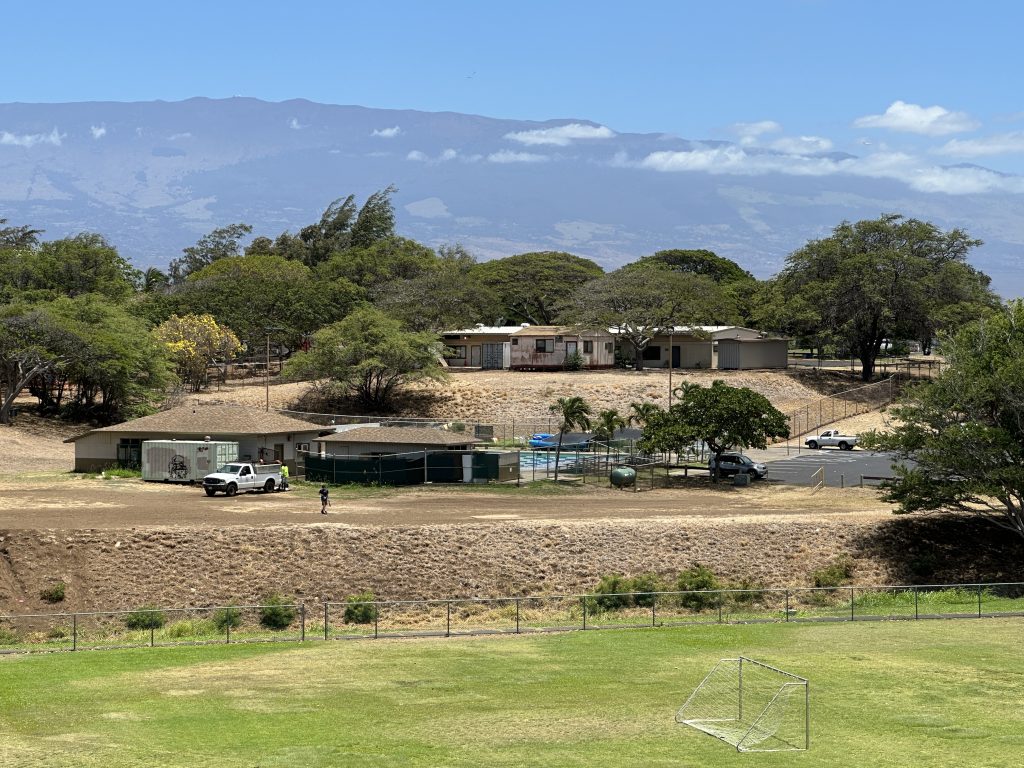
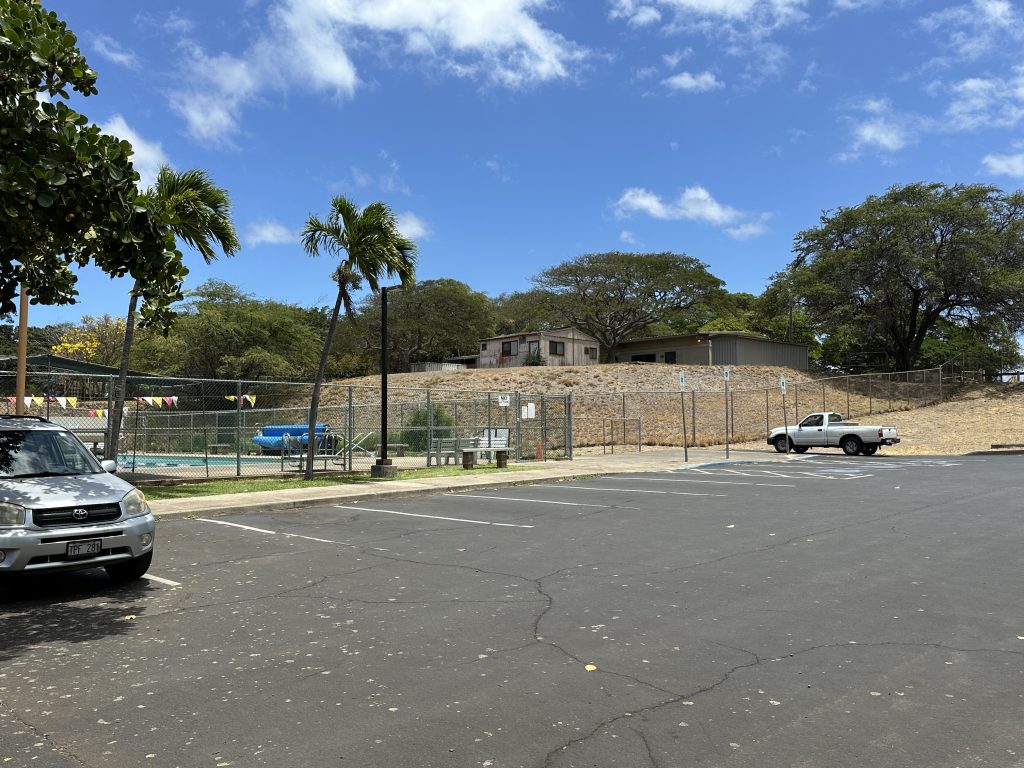
 A photo taken from Onehee Avenue shows Kahului Community Park, Kokua Pool and the Kahului Community Center. PC: Brian Perry
- Kahului Community Park, near the intersection of Onehee Avenue and Uhu Street. PC: Brian Perry
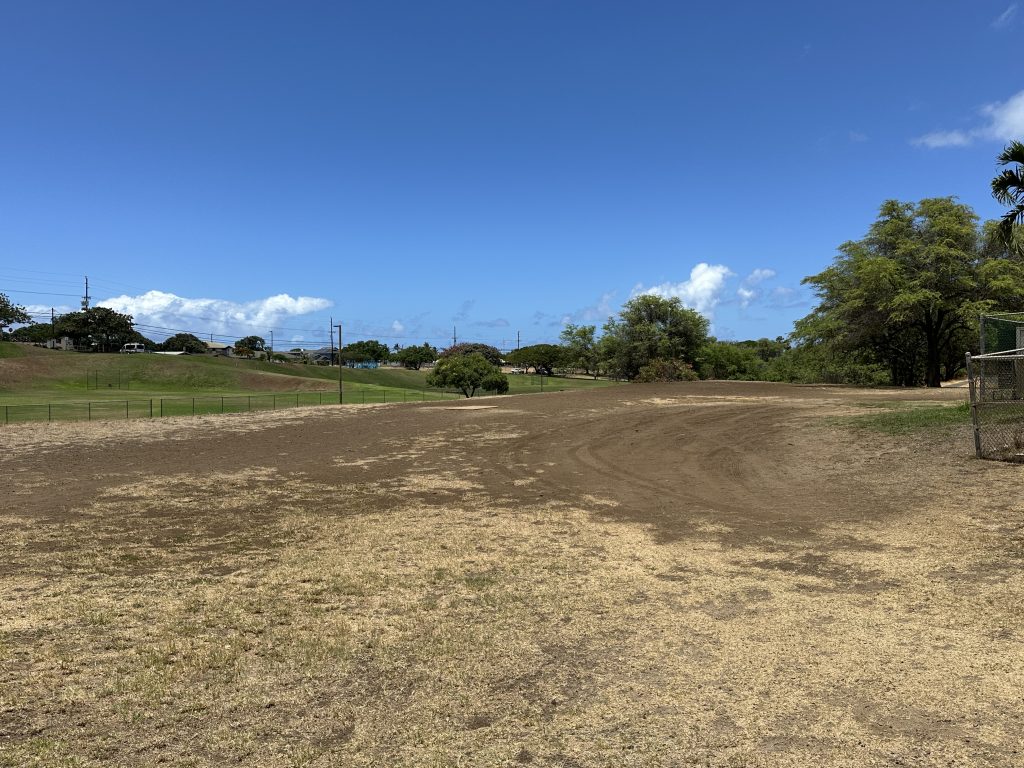
- A vacant dirt lot is between the Kokua Pool and Kahului Community Park soccer fields. PC: Brian Perry
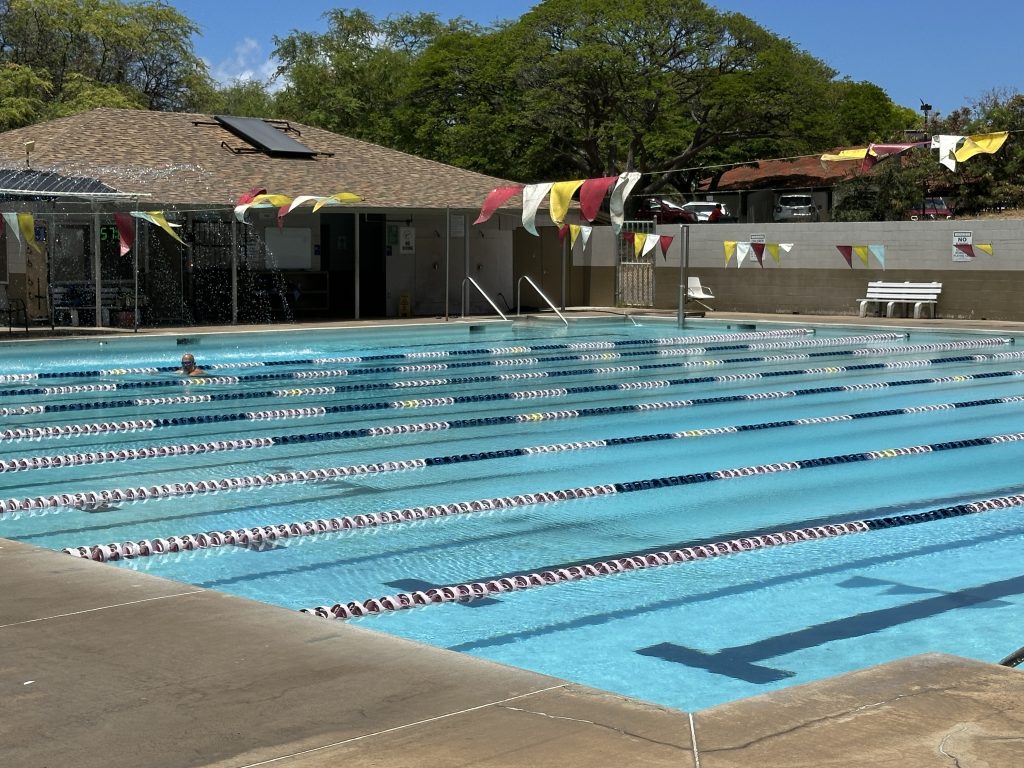
- The Kokua Pool would remain open for public recreational use while nearby public property would be subdivided for a 100-unit workforce housing development by Hale Makua Health Services. PC: Brian Perry
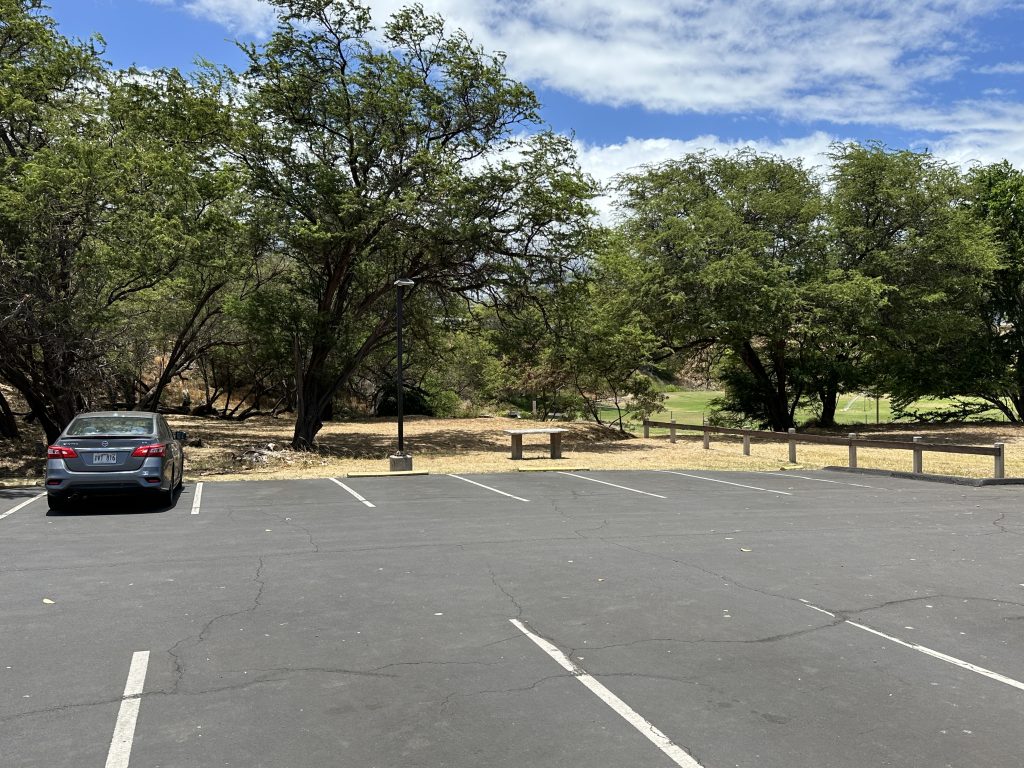
- A parking lot provides space for visitors to the Kokua Pool in Kahului. PC: Brian Perry
- Another view of the Kokua Pool parking lot with the Kahului Community Center behind it. PC: Brian Perry
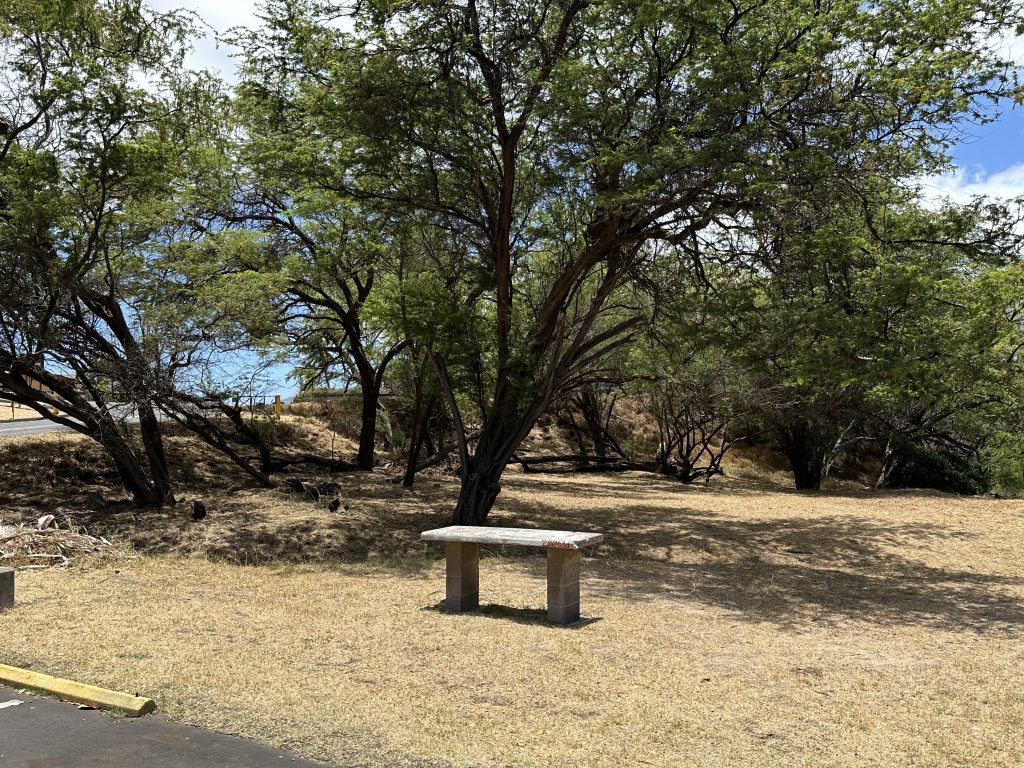
- Kiawe trees shade a portion of property next to the Kokua Pool parking lot. PC: Brian Perry







The resolution also affirms that Maui County would retain the nearby Kōkua Pool and Kahului Community Center. However, the community center may be moved to a different location, “in which case the existing facility would be repurposed.” Project developers said they intend to retain nearby soccer fields for public use as well.
According to a June 20 letter from Managing Director Josiah Nishita, the Council resolution would enable Hale Makua to demonstrate control (of the property) to equity partners and funding agencies as required to secure finance and advance predevelopment activities.
The proposed project site is part of a larger 34-acre parcel that includes the Kōkua Pool and Kahului Community Center, which would be excluded from the housing development and retained by the County for public use and recreation through a subdivision of the property.
The project would include amenities such as laundry, lānai areas, walk-in closets and spaces for “resident services and engagement.”
Council members expressed support for the project overall. “It is an amazing project to me,” said Council Member Yuki Lei Sugimura, adding that the project’s goal is to “develop exactly what we, as council members, talk about in terms of workforce housing, but really targeting those that are highly in need.”
Other council members, including Keani Rawlins-Fernandez, Tamara Paltin and Gabe Johnson, had reservations about conveyance of the property to the nonprofit Hale Makua without ironclad provisions that would keep the rental units affordable in perpetuity. Some questioned whether the property should be leased instead.
Lo said the workforce housing project needs to comply with the Fair Housing Act, which prohibits discrimination arising out of the Civil Rights Movement. Projects are allowed to give preference to local residents, however.
And he said that they have to comply with the Fair Housing Act, which says you cannot discriminate, but he said you can give preference to locals.
Nishita told council members the proposed resolution is a preliminary step to help the development team secure financing to move ahead. Property conveyance details have not been finalized, and he noted that the conveyance of the property would come back to the County Council for final approval.
The proposal is going through a so-called “201-H” expedited approval process with the Hawaiʻi Housing Finance and Development Corp. Because of a recent change in state law, county councils can only approve or disapprove a 201-H project. They cannot attach conditions, which appeared to vex some council members.
The committee, chaired by Council Member Shane Sinenci, voted 7-0 to advance the draft resolution to full Council for a final vote. Council Members Rawlins-Fernandez and Nohelani Uʻu-Hodgins were absent and excused at the time of the vote.
Sponsored Content




_(1)_1787857947612.webp)