Hawaiian Moment: Wai Momi — Pearl Harbor

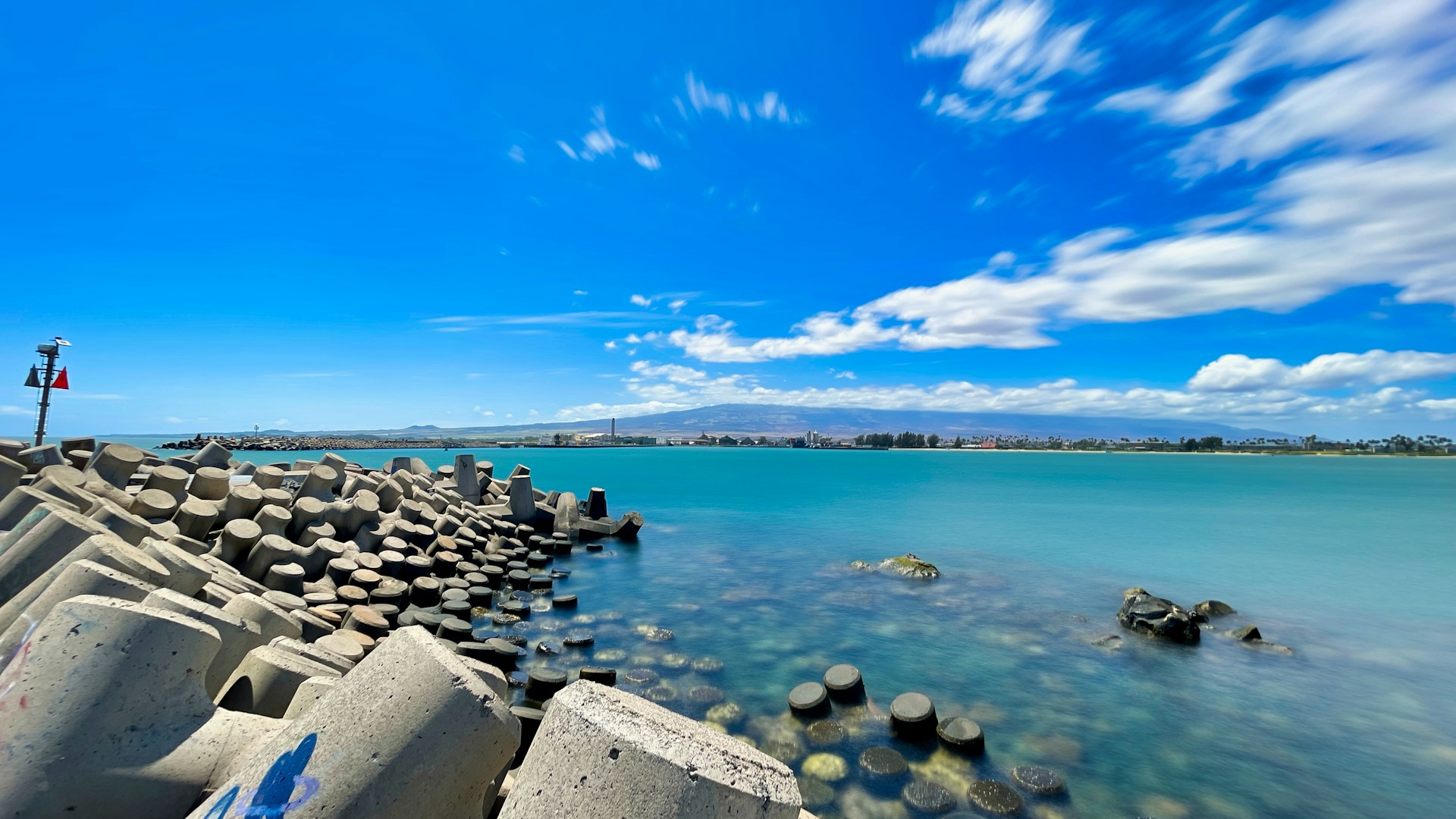
Both Hawaiian history and geological research claim the body of water that we know as Pearl Harbor was actually a river in ancient times of Hawaiʻi. The area lies at the end of a long valley formed by the Koʻolau and Waiʻanae Mountain ranges. Rainfall from the mountains would flow down streams and rivers cutting deep canyons into the valley walls and floor before reaching the ocean.
As time progressed, parts of the Island of Oʻahu shifted and sank while sea levels rose higher. The sea water flooded the valley’s ravines, leaving only the highest land tips exposed. We know these land points as the Waipiʻo Peninsula, the Pearl City Peninsula and Ford Island (a.k.a. Poka ʻAilana).
The area around Pearl Harbor was named Puʻuloa, meaning long hill as it specifically refers to the rounded land area projecting into the sea at the long narrow entrance of the harbor. The waters provided ancient Hawaiians an ample supply of fish, invertebrates and shellfish from the sea, as well as birds. It was a thriving area with many loko iʻa; Hawaiian fishponds, where amaʻama (mullet) and awa (milkfish) were cultivated.
“The demigod guardian sharks of Puʻuloa were Kaʻahupahau and her brother Kahiʻuka. Hawaiian legend says that Kaʻahupahau established the law that no shark must bite or attempt to eat a person in Oʻahu waters making it safe for anyone entering Oahu’s beautiful blue ocean waters.”
Ancient Hawaiians named the river Wai Momi, meaning the river of pearls for its abundance of oysters and pearls. The Hawaiian people ate oysters both raw and cooked. They used the shell to carve fishhooks believing the shiny and colorful inside of the shell would attract fish. They had no logical use for the pearls, discarding them if they were found.
Arriving in 1778, Europeans on the other hand, fished oysters only for their pearls. By 1788 the European lust for wealth from the pearls had spread to the Hawaiian people. King Kamehameha declared that all oysters were on his property and oyster fishing was strictly prohibited; kapu. Europeans continued to fish and by 1840 almost all of the oysters had gone from the water.
In 1887, six years before the illegal overthrow of Hawaiʻi’s monarchy, the US Navy had moved into the harbor. Although, Hawaiian culture and legend of Puʻuloa and Wai Momi remained strong.
The US Navy began building the harbor’s first dry dock in 1914 despite Hawaiian belief of demigod shark guardians and predictions of failure. Hawaiians warned the dock was being built over the shark guardians of the harbor. The US Navy ignored warnings, and the dock collapsed not long after completion. Attempting to rebuild, the US Navy consulted a kahuna (Hawaiian priest), who offered chants, prayers and food to the shark gods. The new dock construction was successful and while water was being pumped out, laying at the floor bottom was the body of a 14-foot shark.
Sponsored Content