WestPac Council pushes for tougher standards on foreign fisheries
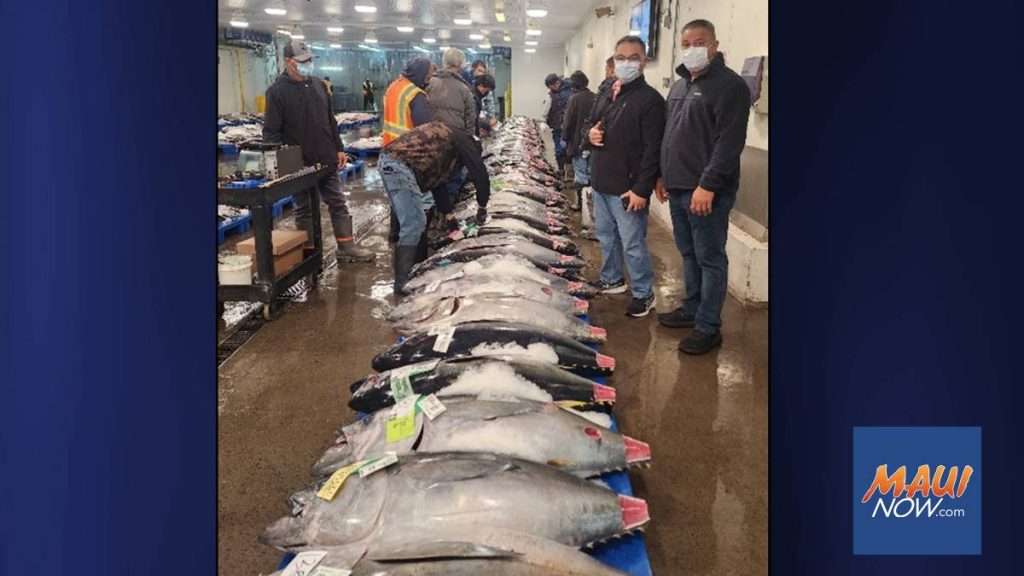
Western Pacific Regional Fishery Management Council has called on NOAA to strengthen its new Marine Mammal Protection Act (MMPA) Import Provisions, which were published in the Federal Register on Sept. 2, 2025. The council urged NOAA to apply more rigorous standards when determining whether foreign fisheries meet US requirements for protecting marine mammals and reducing bycatch, and to create a clear process for public and stakeholder input.
The MMPA Import Provisions, first enacted in 1972 but never fully implemented, are designed to prevent seafood imports from countries that do not have measures comparable to US standards for reducing the incidental capture, injury or death of marine mammals.
For the first time, NOAA’s Comparability Findings identified specific nations and fisheries that will be prohibited from exporting seafood to the United States beginning Jan. 1, 2026. The findings affect approximately 15% of all US seafood imports. However, the restrictions do not apply to tuna longline fisheries in the Western and Central Pacific, which are of particular concern to the council. To better understand the scope and impact of the rule, the council also requested that NMFS evaluate the amount of tuna imports into the United States that are affected by the Comparability Findings Report.
During public comment, Eric Kingma of the Hawai‘i Longline Association voiced frustration with the findings that did not bar other Western and Central Pacific fisheries, citing strict requirements the Hawai‘i longline fishery faces. “You’re telling me that foreign distant-water longline fisheries operating around Hawai‘i, in the same proximity and same fishing grounds as us, are removing hooks from false killer whales without causing serious injury? To me, that is absolutely inaccurate.”
Deep-Sea Mining in the Western Pacific
University of Hawai‘i professor Jeff Drazen presented a comprehensive review of deep-sea mining that highlighted current technologies, potential ecological impacts on fish at different levels in the water column and the significant data limitations and uncertainties that remain. There is renewed interest in extracting minerals needed for battery production in both the Clarion Clipperton Zone southeast of Hawai‘i and in US waters off American Samoa.
Hawai‘i council member Matt Ramsey emphasized the importance of distinguishing between the different mining technologies being considered. Traditional “tractoring” methods involve large machines moving across the ocean floor, creating sediment plumes and discharges, while companies such as Impossible Metals are developing robotic arms designed to pluck individual mineral nodules from the seafloor.
“This Council banned bottom trawling in 1983, recognizing the harm,” Ramsey said. “You can see how bottom trawling and the tractoring method are similar, but Impossible Metals is a different conversation. The technology and the resulting regulations may be different.”
The council directed staff to continue monitoring developments in American Samoa and to work with its advisory groups to provide information and analysis on potential impacts to fisheries and marine resources. The council also invited NOAA to present an overview of proposed commercial recovery permit applications in the Clarion Clipperton Zone at its next meeting.
2026–2029 CNMI Bottomfish Catch Limits
The council also took initial action to set the annual catch limit (ACL) for the CNMI bottomfish fishery at 72,000 pounds and the annual catch target (ACT) at 66,000 pounds for fishing years 2026–2029. These specifications are based on the results of the NMFS 2025 stock assessment update, along with application of the council’s P* and SEEM analyses to account for scientific and management uncertainty. The ACT was set below the ACL to provide a management buffer that helps prevent the fishery from exceeding the ACL, ensuring catches remain within sustainable limits.
The Western Pacific Regional Fishery Management Council consist of Secretary of Commerce appointees from nominees selected by American Samoa, the Commonwealth of the Northern Mariana Islands (CNMI), Guam and Hawai‘i governors, in addition to designated state and federal officials. The council includes the following members:
- Will Sword, American Samoa Power Authority (American Samoa) (chair)
- Roger Dang, Fresh Island Fish Co. (Hawai‘i) (vice chair)
- Edgar Feliciano, Feli Fisheries Inc. (American Samoa)
- Pete Itibus, noncommercial fisher (CNMI)
- Frank Perez, AC Sales and Service, (Guam)
- Matt Ramsey, Conservation International (Hawai‘i)
- Jesse Rosario, Guam Fishermen’s Cooperative Association (Guam)
- Gene Weaver, Tasi to Table (CNMI)
In addition to designated state officials:
- Dawn Chang, Hawai‘i Department of Land & Natural Resources
- Sylvan Igisomar, CNMI Department of Lands & Natural Resources (vice chair)
- Nathan Ilaoa, American Samoa Department of Marine & Wildlife Resources
- Chelsa Muña, Guam Department of Agriculture.
And designated federal officials:
- Sarah Malloy, NMFS Pacific Islands Regional Office (voting)
- Jeremy Raynal, US Fish & Wildlife Service (non-voting)
- RADM Sean Regan, US Coast Guard Oceania District (non-voting)
- Rachel Ryan, US State Department (non-voting)
Sponsored Content