Is your keiki at risk? Hawaiʻi DOH urges lead quiz during national lead poisoning prevention week
As National Lead Poisoning Prevention Week approaches, running from Oct. 19 to 25, the Hawaiʻi Department of Health is urging local families to take a simple, confidential quiz to assess their child’s risk of lead exposure.
Lead is a toxic metal with no known safe level in the blood, posing a danger to health at any age. However, children are especially vulnerable due to their rapid mental and physical development.
The state Health Department’s Hawaiʻi Childhood Lead Poisoning Prevention Program created a simple risk quiz available online at lead.hawaii.gov.
“Because keiki are still in the developmental stages, both mentally and physically, they are especially susceptible to the effects of lead exposure,” said Dr. Ruben Frescas Jr., chief of the DOH Children with Special Health Needs Branch. “Unknowingly, keiki may be exposed to sources of lead in their everyday environment at home and anywhere they play or receive care.”
Common sources of exposure
In Hawaiʻi, the most common source of known exposure is lead in dust and soil. However, countless everyday items can harbor the metal, including:
- Paint in older buildings constructed before 1978.
- Fishing tackle, old toys, jewelry, cosmetics and antiques.
- Certain dishes, food, spices and tobacco/vaping products.
- Water sources and even artificial turf.
“Lead poisoning is completely preventable,” Frescas said. The Childhood Lead Poisoning Prevention Program “hopes that the lead risk quiz can inform and empower parents and caregivers about potential lead poisoning sources with recommendations that can immediately protect your keiki, including getting a blood lead level test from your healthcare provider.”
Long-term consequences
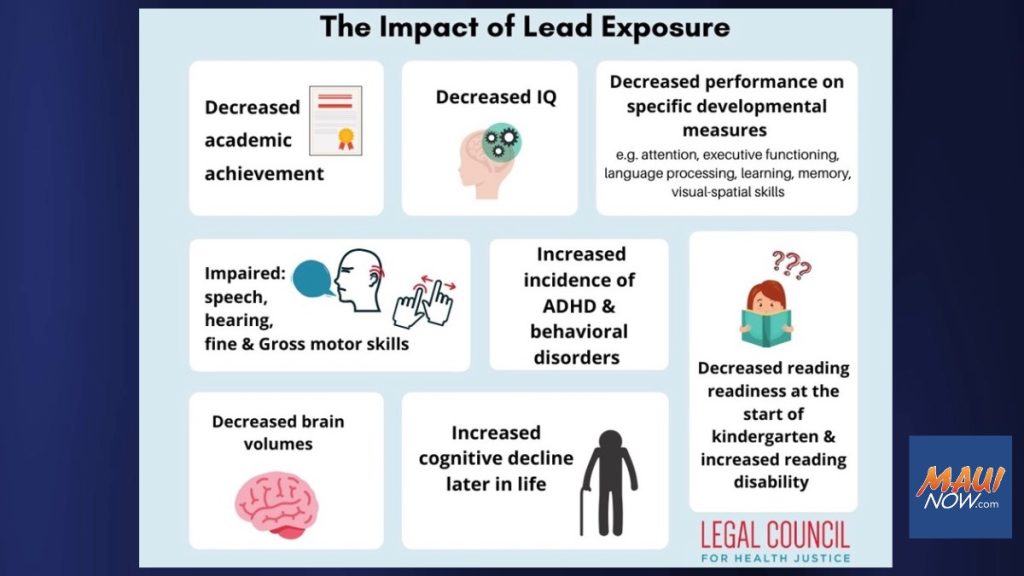
In children, lead exposure often presents with no obvious symptoms until they begin school, where it can cause learning and behavior problems. Research shows these issues can lead to long-term negative effects, including increased delinquency, lower educational attainment, and lower income throughout adulthood. However, early intervention and rapid removal of the lead source can significantly improve a child’s outlook.
Lead also poses serious risks to pregnant women, where it can damage a developing baby’s nervous system, potentially leading to miscarriages and stillbirths. Adults with persistent exposure can face serious health issues like kidney and brain damage, infertility, heart disease and cancer.
The federally funded lead poisoning prevention program works to prevent childhood exposure, identify children already exposed so the source can be removed and link families to critical services like early intervention and in-home residential investigations.
Parents and caregivers can find the lead risk quiz and more prevention information at lead.hawaii.gov. Healthcare providers can also access resources on when to test patients and how to help them avoid lead exposure.
Sponsored Content