Mayor Bissen urges Council to pass Bill 9, citing need to restore housing balance
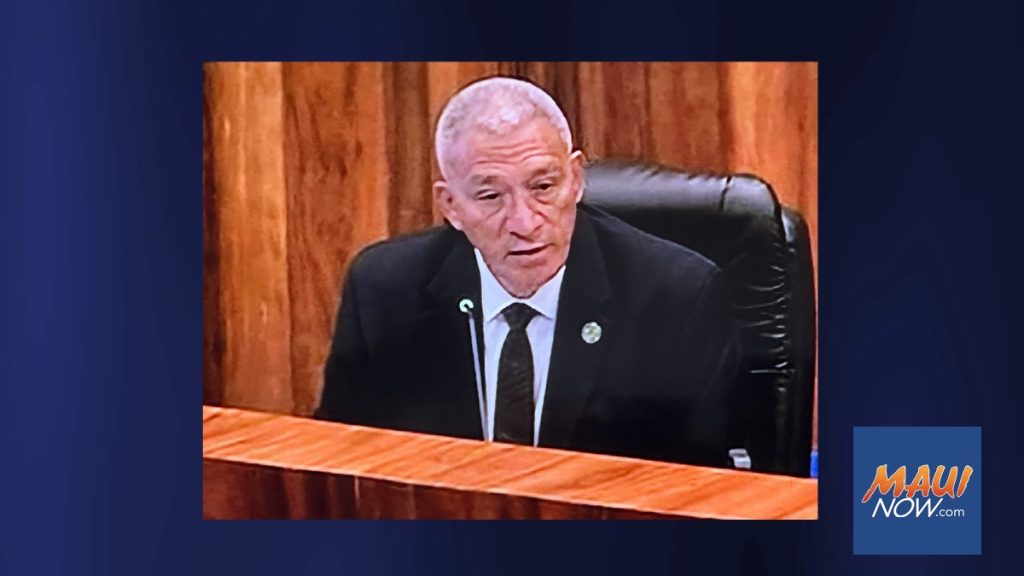
Mayor Richard Bissen urged Maui County Council members to pass Bill 9, which would phase out apartment district properties operating as transient vacation rentals, arguing the move is critical to addressing direly needed long-term housing for residents.
Addressing the Council’s Housing and Land Use Committee this morning, Bissen said the recommendations from the Temporary Investigative Group that studied the implementation and impacts of Bill 9 outline a “clear and fair path” for rezoning properties that he said “have been operating more like hotels.”
“From the very beginning, we recognized that Bill 9 would require thoughtful conversation, community input, and most importantly balance,” Bissen said. “It’s clear that not all TVRs and apartment districts are appropriate for long-term residential use, and that some have been operating more like hotels. At its core, this is a zoning issue that has had a detrimental impact on our local housing inventory, and it must be corrected.”
The mayor characterized Bill 9 as an effort to restore integrity to apartment districts intended for residents. “This approach protects housing intended for residents by upholding the integrity and the purpose of apartment districts, while ensuring properties are properly zoned for their actual use,” he said.
Bissen stressed the human element of the housing crisis, stating, “My administration remains firmly committed to protecting housing from all these families because this is not just about policy. In fact, it is about people.”
He added: “We’re at a crossroads where bold decisions must be made if we are to change the trajectory of our future,” noting that the commitment to housing for local families “requires courageous and decisive political action.”
(To see a video of today’s meeting, go online to YouTube here.)
Addressing attack ads and scope of measure
The mayor also took aim at off-island, special-interest groups opposing the measure. A group called Progress Action has been running widespread negative media ads that contend a ban on short-term rentals “will cost us millions.”
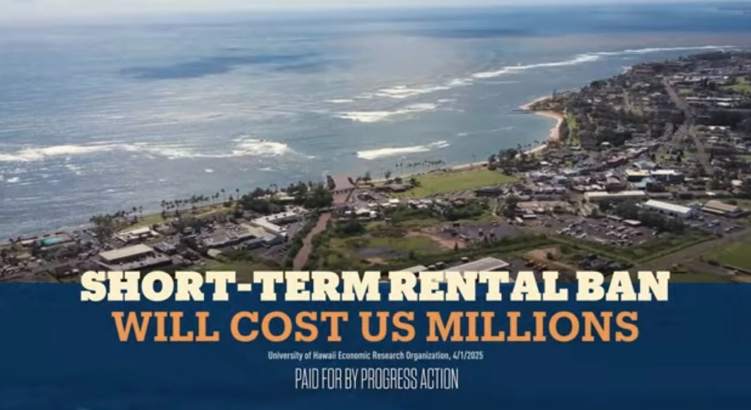
Bissen called the ads contain “misleading and politically motivated claims” that are “being spread by out-of-state special interest groups.”
“These ads are designed to divide our community. And create fear,” he said. “The truth is, Bill 9 does not punish property owners or eliminate tourism. It restores balance to our housing system.”
While acknowledging “some real property tax impacts are expected,” Bissen assured committee members that the county is “planning adjustments to help offset those losses,” and that the “long-term benefits of this bill are well worth the short-term implications, which we will navigate with responsibility and foresight.”
He clarified the scope of the measure, which is aimed at short-term rentals within apartment districts. “This measure affects about 6,700 of the nearly 15,000 short-term rentals countywide, the most of any island statewide,” he said, adding, “to be clear, we are not and never were banning all STRs.”
Bissen highlighted the investigative committee’s work, stating the measure “clarifies and strengthens zoning laws to prevent short-term rentals from replacing homes that have always been meant for local families.”
He noted that while passing a “clean bill” is important, it will require “commitment in legislation to follow,” including “additional measures” to strengthen tax incentives for long-term housing and balance revenue adjustments.
He concluded by framing the bill as part of a broader housing strategy: “This work reflects our collective commitment to a broader strategy to address Maui’s housing crisis – a balanced approach that includes building new homes, incentivizing long-term rentals, and restoring existing housing to residents.”
“These are the kinds of solutions that remind us that government works best through open dialogue, collaboration and compromise,” Bissen said. “Our strength as leaders is measured by our willingness to listen to different perspectives, find common ground and take decisive action that reflects both the heart and the needs of our community.”
The mayor thanked the committee for its work on the “deeply impactful issue,” specifically recognizing committee Vice Chair Nohelani Uʻu-Hodgins for her “leadership in guiding the Temporary Investigative Group.”
The committee closed public testimony at 11:41 a.m. after hearing from 39 public testifiers. After committee deliberations for about 30 minutes, Uʻu-Hodgins recessed the meeting until 11 a.m. Thursday in Council Chambers.
Tomorrow’s meeting can be viewed on Akakū: Maui Community Media, cable Channel 53; on Microsoft Teams at http://tinyurl.com/HLU-Committee; or on the Maui County Council’s YouTube channel.
Editor’s note: This post is updated from its original version with new information on the time for closed public testimony and the total number of testifiers. Another update reported the meeting’s recess until tomorrow morning.
Sponsored Content