Volcano Watch — Catching up on Kīlauea: 36 episodes and counting
The summit eruption of Kīlauea continues, with 36 episodes of lava fountaining since the eruption began on Dec. 23, 2024. Let’s catch up on the events and hazards associated with the volcano’s most recent few eruptive episodes, and review the current status of Kīlauea.
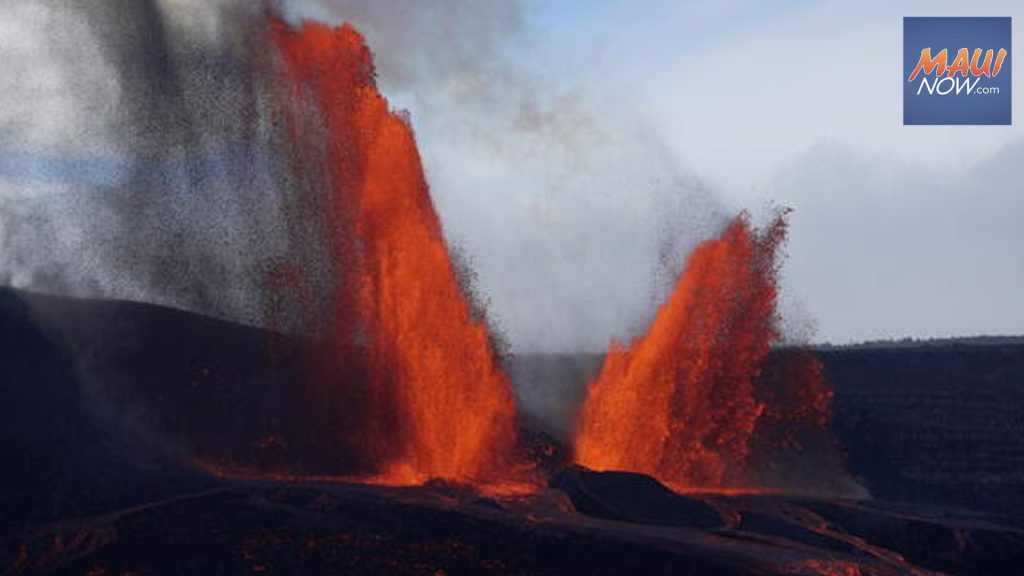
Within the past month and a half, fountaining episodes at the summit of Kīlauea broke several records for this eruption. Recent episodes featured the highest lava fountains, the most volume of lava erupted, and the highest rate of lava effusion for this event, which has now lasted over 10 months.
During the early morning hours of Oct. 1, episode 34 was characterized by inclined fountains from the north vent which showered the crater floor with tephra, while the south vent fountains soared vertically to about 1,200 feet. About 9 million cubic meters of lava erupted during the 6 hours of episode 34.
Episode 35 occurred overnight on Oct. 17–18. Fountains at both the north and south vents increased in height over the first two hours of the eruption, with the lava from the south vent reaching 1475 feet—the highest lava fountain observed yet in this eruption—with the north vent fountains reaching only a few hundred feet lower. These dual fountains erupted for about 7.5 hours, adding the greatest volume of all episodes in this eruption so far: 10.2 million cubic meters of lava on the crater floor, raising it by an average of about 9 feet.
When eruptive episodes are ongoing, the summit region of Kīlauea deflates, as magma that had been stored within the volcano erupts on the surface. The summit consistently inflates between eruptive episodes as magma accumulates within shallow storage areas. This pattern of inflation and deflation is what allows the USGS Hawaiian Volcano Observatory to forecast timeframes for when new eruptive episodes can start.
After the end of episode 35, the summit of Kīlauea resumed inflation. As the window for when episode 36 could start approached, lava began to overflow from the south vent on Nov. 4. These overflows were driven by gas-piston events, which have been observed prior to the start of many episodes. As magma rises within the eruptive conduit beneath the vents, it develops a cooler crust that prevents gas within the magma from escaping. Eventually, the magma rises enough to overflow, removing the cooler cap and exposing the gas-rich material below it (which often spatters as it erupts). Eventually, conduit pressure subsides, and the remaining lava then drains back into the vent. Overflows continued intermittently from both vents until the start of episode 36 on Nov. 9.
Episode 36 finally started mid-morning on Nov. 9. Both the north and south vents erupted 8.1 million cubic meters over the next five hours. This amount of lava erupted over the short duration of episode 36 makes it the episode with the highest rate of lava effusion.
These recent episodes added tephra to the growing cone on the rim of Halemaʻumaʻu crater, with about 30 feet added during episode 36 alone. In total, the new cone has grown to about 138 feet above the pre-eruption ground surface on the crater rim.
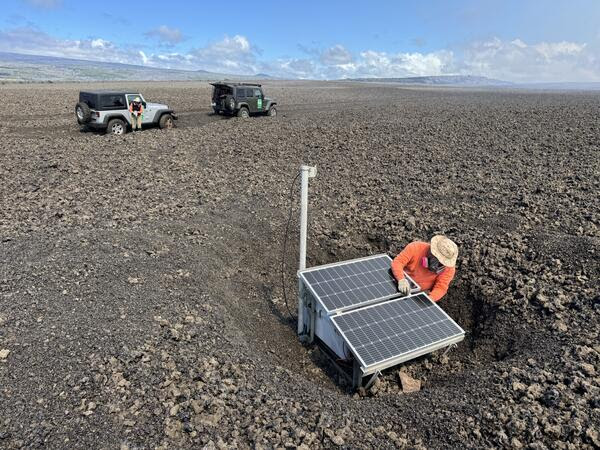
The tephra deposited during recent episodes also impacted HVO monitoring stations nearby. Several monitoring stations were buried by tephra, needing to be manually dug out after lava fountaining ended. As a result of the highest lava fountains during episode 35, solar panels powering several stations downwind were broken, and some camera equipment on the crater rim partially melted.
The combination of high fountains and wind conditions during episode 35 resulted in up to fist-size tephra being deposited on Highway 11, prompting a Hawaii County Civil Defense Agency message about the roadway. Pele’s hair was also transported farther downwind to communities on the southwest side of the Island of Hawaiʻi. Wind also carries elevated volcanic gas emissions during eruptive episodes, contributing to volcanic air pollution (vog).
As episode 36 ended, the summit region of Kīlauea resumed inflation. As long as this pattern is observed, the eruption and its associated hazards will likely continue. HVO will continue to monitor closely, and the forecast for episode 37 is as early as Nov. 22.
Volcano Activity Updates
Kīlauea has been erupting episodically within the summit caldera since Dec. 23, 2024. Its USGS Volcano Alert level is WATCH.
Episode 36 lava fountaining happened for 5 hours on Sunday, Nov. 4. Glow from the vents was observed overnight. The summit is reinflating and forecasting models indicate that episode 37 is likely to start between Nov. 22 and 29. No unusual activity has been noted along Kīlauea’s East Rift Zone or Southwest Rift Zone.
Mauna Loa is not erupting. Its USGS Volcano Alert Level is at NORMAL.
No earthquakes were reported felt in the Hawaiian Islands during the past week.
HVO continues to closely monitor Kīlauea and Mauna Loa.
Visit HVO’s website for past Volcano Watch articles, Kīlauea and Mauna Loa updates, volcano photos, maps, recent earthquake information, and more. Email questions to askHVO@usgs.gov.
Sponsored Content