


 Hawai'i Journalism Initiative
New beach parking program that charges visitors, prioritizes residents to roll out next year in South Maui
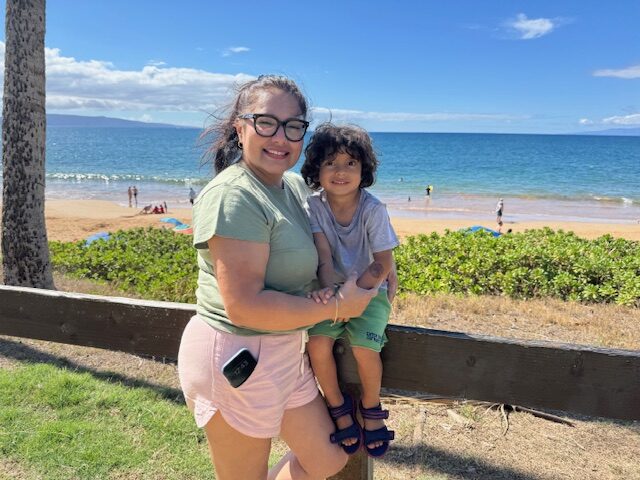
KĪHEI — The parking was free on Tuesday when Texas resident Hanna Jewell took her 3-year-old grandson Noa to Kama‘ole Beach Park III in Kīhei for the first time.
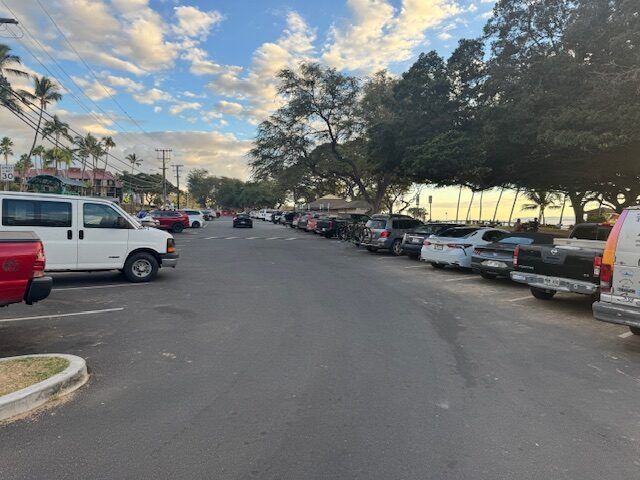
But that won’t be the case early next year as Maui County rolls out its Park Maui program that will require visitors who live out of state to pay to park and will give priority parking to locals on weekends and holidays.
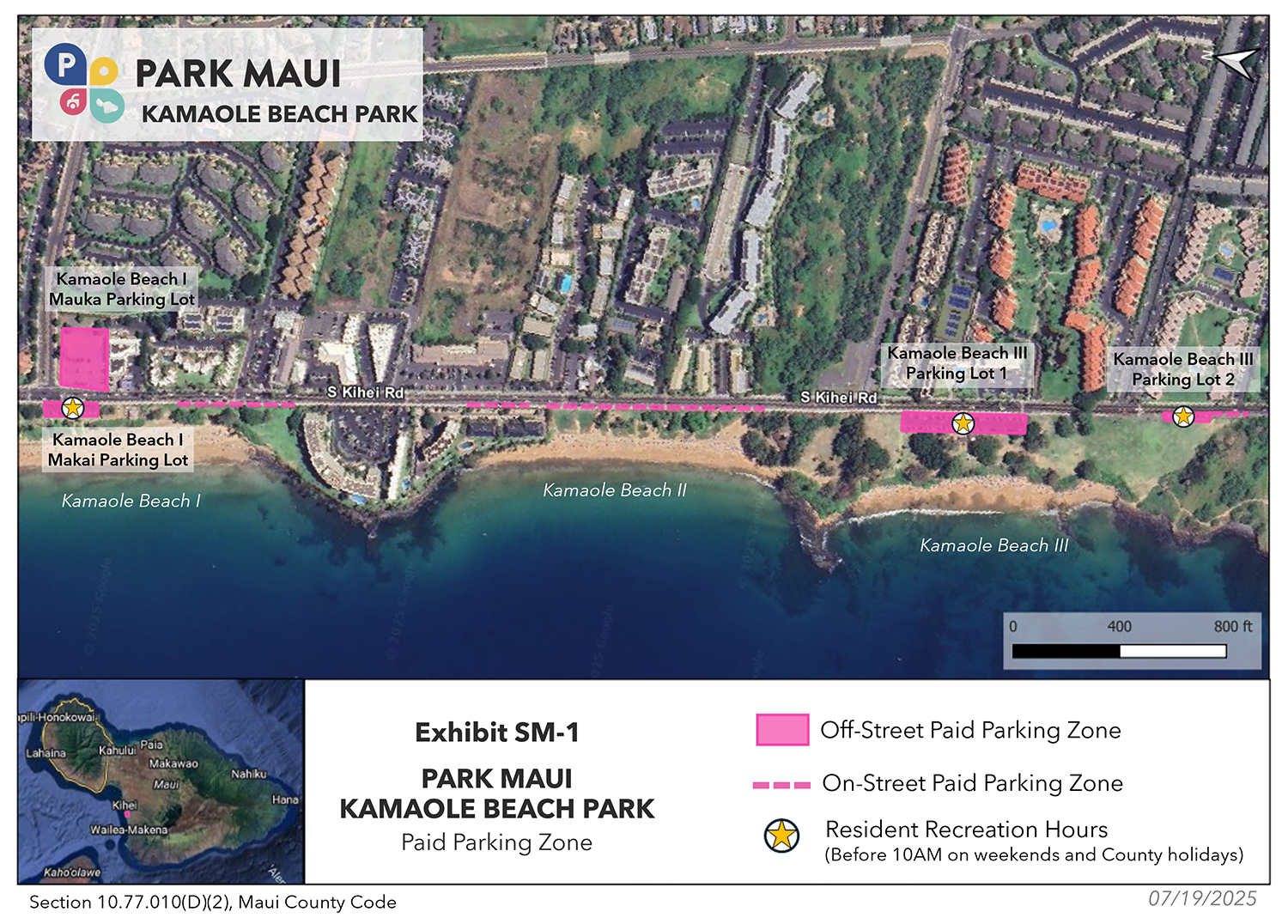
Phase 1 of the program will start at Kama‘ole Beach Parks I, II and III in South Maui, according to Marc Takamori, director of the county’s Department of Transportation. Plans are to eventually expand to other county parks.
Under the program, visitors will be charged $10 per day per car at beach parking zones, with options for a weekly pass at $50 or a monthly pass at $150. Parking remains free for people with a Hawai‘i driver’s license or identification card.
Before 10 a.m. on weekends and holidays, parking in the beach zones will only be available to Hawaiʻi residents.
Takamori did not provide an official date for the launch of the program, but it is expected to take place in early 2026.
Jewell, who used to live in Kīhei, said she thinks the fee is reasonable: “It gives the county a little bit more leeway. I mean, $10 is not a lot, especially if you’re coming to Hawaiʻi. You have $10 in your pocket to have a good time.”
The Maui County Council passed Bill 79 that created the parking program on Sept. 8. Mayor Richard Bissen signed it into law four days later.
Council Member Tom Cook, who holds the South Maui residency, said Wednesday the Kama‘ole beaches are a “really good place to implement the project” because they are used by many local families.
Kama‘ole III is a popular spot for keiki birthday parties and family gatherings on Saturdays, Sundays and holidays.
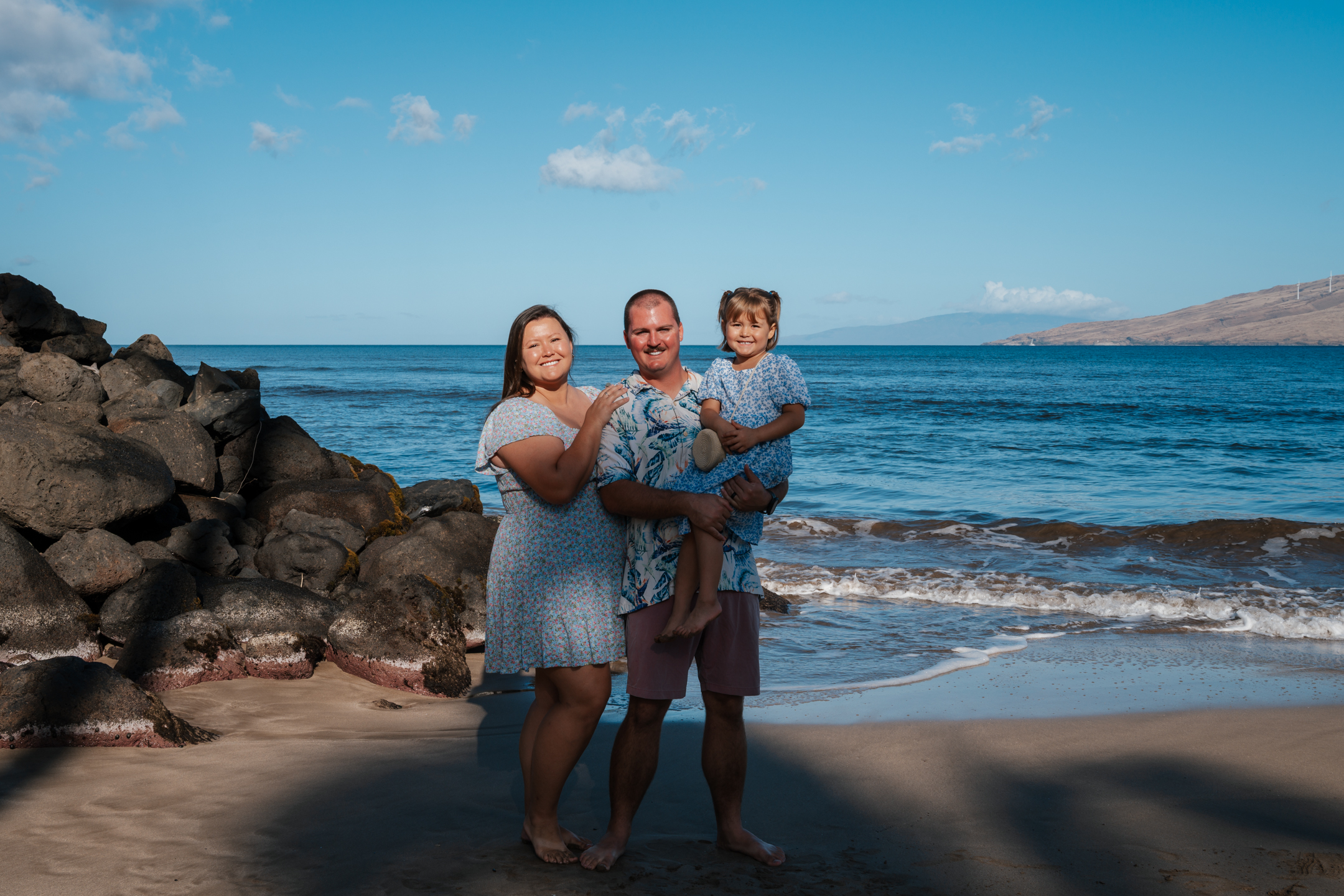
Vera Brun, owner of Simple Creations Photography, said she is often contracted to take birthday party photos at Kamaʻole III. She also has attended six birthday parties there just this year with her husband Chris and 5-year-old daughter Cora Marie.
She said sometimes there are three parties going on at once, “and three parties equals at least 20 adults” who each have cars.
“The residents need to be able to enjoy where they live without having to worry about the tourists pushing them out,” Jewell said. “They feel they’re getting shoved out right now by all the vacationers.”
Brun added: “We always need parking, and there’s not much street parking for us to be able to enjoy. So if we had the opportunity to get there sooner and not have to worry about finding parking it would be really wonderful. It’s actually not just wonderful for us, but for the county to get money.”
Takamori said the funds raised from the parking fees will go into the County Parking Revenue Fund. The county did not provide an estimate about how much the program could raise.
After covering the costs of operating the parking system, any remaining revenue can only be used to improve county parks, enhance transit and walking/biking infrastructure, strengthen safety and signage in business districts, and protect cultural and environmental sites.
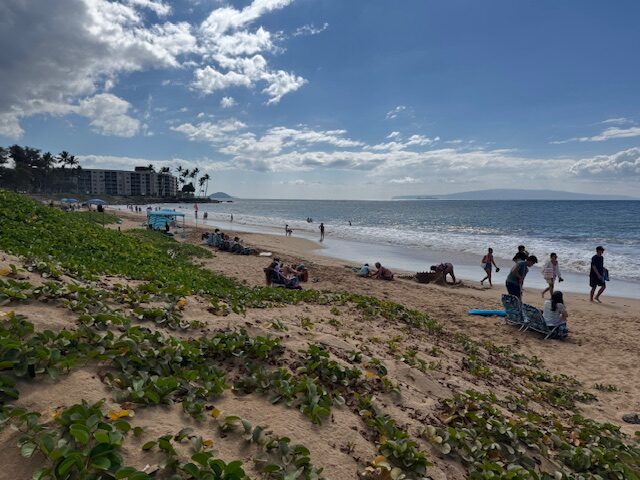
Takamori said the initial cost to roll out Park Maui to Kamaʻole beach parks I, II and III is estimated to be about $522,000, which is coming from the county’s General Fund.
The key steps required to begin the project include:
- Installation of pay stations that will scan Hawai‘i driver’s licenses for resident verification.
- Launch of the Park Maui mobile app, which scans Hawai‘i driver’s licenses for resident verification on cellphones.
- Installation of new signage.
- Deployment of parking ambassadors, who will be trained by the Maui Police Department and use handheld citation systems.
The kiosks will be self-serve. However, parking ambassadors will be available during park hours to provide help and ensure compliance, Takamori said.
Erin Wade, deputy managing director of Maui County, said the program at the Kama‘ole parks will help with parking disputes that sometimes force lifeguards out of their stands to referee.
“We were getting feedback from the parks department that a lot of the lifeguard time was being spent resolving disputes in the parking lots,” Wade said. “There’s some tension in a lot of residents who live in South Kīhei in that immediate vicinity.
“It’s kind of their backyard because it’s multifamily housing. So they use those parks as a backyard as an extension of their living space. And when there’s a lot of visitors, it can create tension in the space.”
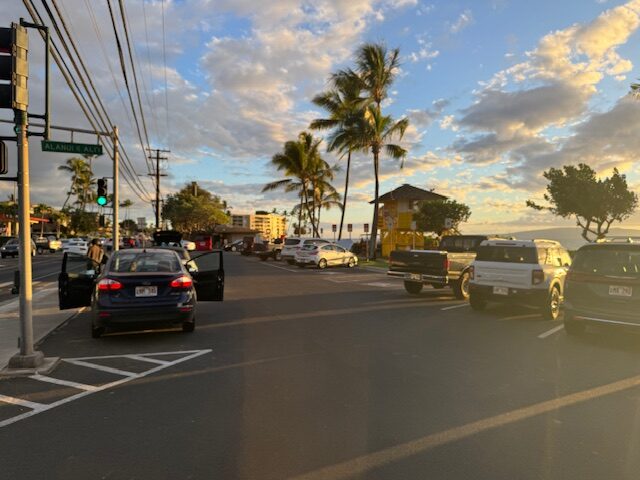
Wade, who was a small town planner with the Maui County Department of Planning when the Park Maui concept was first discussed in 2014, added: “Having the ability to manage the parking, to ensure families can come for their baby lūʻau, and they can plan for it because we’re going to have early morning weekends and holiday time for them to come in and do that kind of setup.”
She said the prevalent family gatherings were the reason the county “started with Kama‘ole as a pilot.”
“Millions of people visit Maui’s beaches every year, and the County is entrusted with protecting these natural resources for future generations,” Wade said. “Effective management helps prevent overuse and environmental harm, preserving both the quality of the experience and the economic benefit our beaches provide.”
Cook said the Park Maui program is similar to a state system that was first implemented in 2020 at state parks on the Big Island, Oʻahu and Kauaʻi.
The Park Maui project started with the Wailuku parking garage, which opened in January 2024.
“I’m not a big fan of fees and taxation,” Cook said. “But then, our island home, with more density and local residents, we don’t have that much beach access. We really need to manage our parking.”
Takamori said after Phase 1 is evaluated, the program could expand to other county beaches in South Maui later in 2026 or 2027. Eventually, the plans are to include beach parks that are “highly impacted” by visitor parking, according to Cook.
Cook said Baldwin Beach Park in Pā‘ia could be added to the list of Park Maui venues, while Wade mentioned Launiupoko Beach Park in Lahaina and popular North Shore venues including Ho‘okipa Beach Park that could be added after Phase 1 is evaluated.
Reaction to Phase 1 of the program was mixed among beachgoers to Kama‘ole I on Monday, with some visitors opposed and others saying they understood the need.
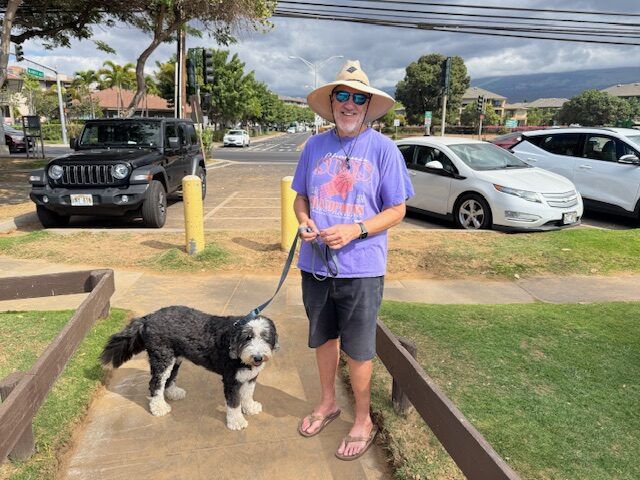
“I’m not super excited about discouraging the tourism industry,” said Jim Ogsbury, a 66-year-old Kīhei resident who has lived on Maui for four years.
Ogsbury, who was walking his 6-year-old sheepadoodle “Captain Goodboy” near Kama‘ole I on Monday, said adding a $10 fee “on top of all the other hassles and obstacles people have coming to Maui, I think it is all additive.”
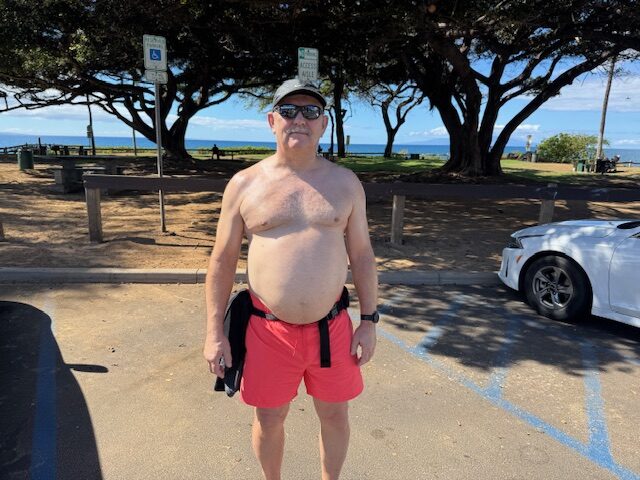
Also not in favor of the new parking fees is Ken Peterson from Vancouver, British Columbia, who was at Kama‘ole III this week.
“It is very expensive here,” said Peterson, a 69-year-old electrician who said he has been an annual visitor to Maui since 1975. “We’re already getting taxed like crazy and taxes here are incredible. I understand if they need to do that to keep the services up and everything. But whether I like it or not? No, I don’t like it.”
Peterson added: “Would I pay it? I guess if I had to I would, but I wouldn’t be happy about it.”
Zef Gojevic, a 46-year-old electrician, and his wife Dr. Vanessa Gojevic, a 42-year-old family practitioner, were visiting from New York City and took an Uber ride to Kama‘ole I on Monday to enjoy the beach from their cruise ship that was docked for the day at Kahului Harbor. The Gojevics plan to return to Maui soon and said they would not mind paying the parking fee.
“Realistically, my mindset is when you’re traveling, you’re going to spend money no matter what you do,” Zef Gojevic said. “And I mean, if it’s going to help the locals and preserve the beach the way it is, then I think that it’s fine. … I don’t see it as any kind of detriment.”
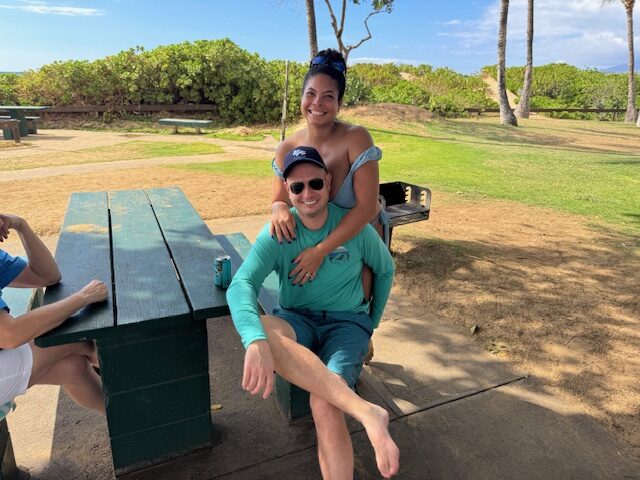
Vanessa Gojevic added that the fees that will be put in place for the South Maui beaches are similar to what is charged for beach access in New York.
“I would pay it because even in New York, when you go to the Long Island beaches and you’re not from the Long Island towns — let’s say if you’re from Queens, the Bronx, Brooklyn — you still pay about $10 to park in the parking lot to go to those beaches,” she said. “And they’re not as beautiful as the Maui beaches. So, I would pay $10 a day.”
Lahaina residents Shawn Fatemi and Amy Beal were enjoying lunch Tuesday at Kama‘ole III on their first visit there. Fatemi said the program is “a good idea if we know for sure it’s going to maintaining the parks.”
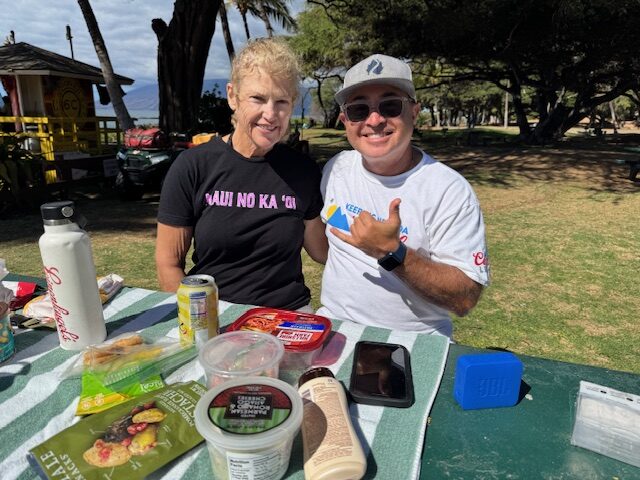
“We took a walk earlier and it seems so clean,” Fatemi added. “Everywhere, there’s no debris, trash. So right now it seems like a really good job is being done to maintain it.”
Wade said the program is good for residents and visitors alike because the funds generated will help preserve the beaches.
“Protecting beach access for our residents goes beyond recreation,” she said. “These spaces are vital to our spiritual and cultural identity, and to our mental health. Managed parking ensures access and space availability to residents and visitors alike. … Parking management is an investment in the community.”