Akamai Internship Program opens applications for 2026 cohort
The Akamai Internship Program, a STEM workforce program led by the Institute for Scientist & Engineer Educators at University of California Observatories, in partnership with the University of Hawaiʻi, is now accepting applications for its 2026 cohort.
“Since 2003, I’ve seen how transformative it is when students from Hawaiʻi are invited into environments where their ideas matter,” said Lisa Hunter, director of the Institute for Scientist & Engineer Educators. “The Akamai Internship Program opens doors that many students don’t realize are within reach, and each new cohort reminds us how much potential exists when we invest in local talent that strengthens our technical community and contributes to innovation across our observatories and high-tech employers.”
In 2025, the program placed 33 students in a Hawaiʻi-based observatory — including 15 at Maunakea Observatories — for an intensive summer internship. Interns gain hands-on project experience, one-on-one mentorship, communication training and the opportunity to present a final technical presentation. Many alumni return to serve as mentor the next generation of students.
2025 intern highlights
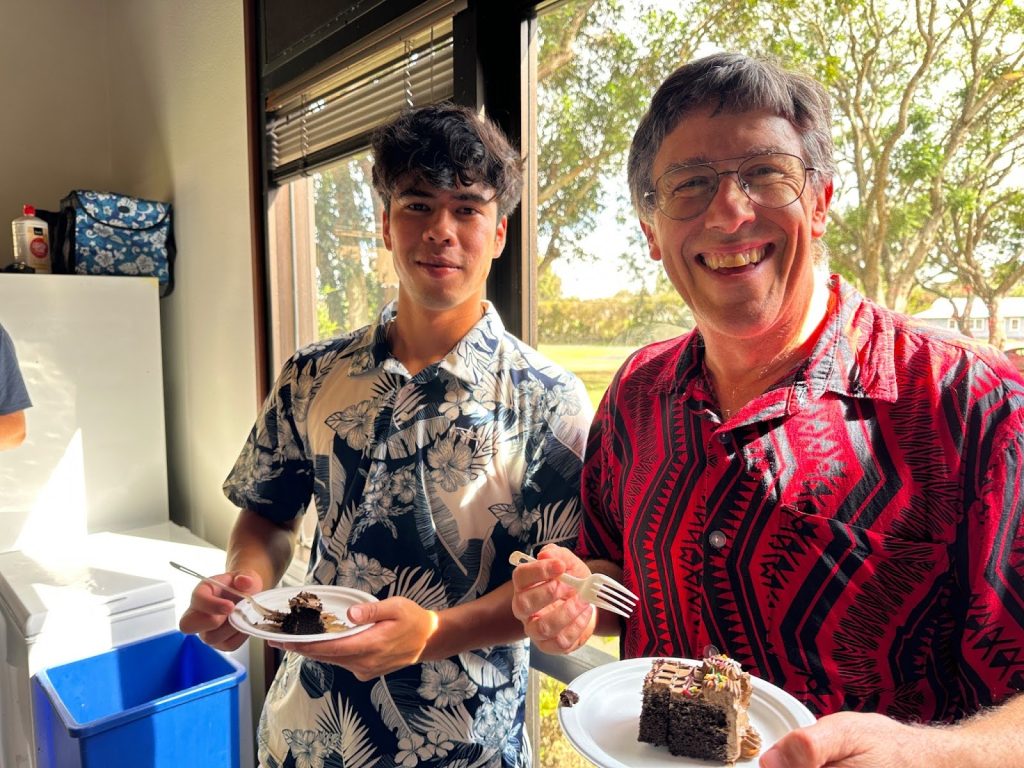
Austin Cataluna transferred from Leeward Community College to UH Mānoa, where he is pursuing a degree in mechanical engineering. Working under the mentorship of Gregory Barrick at Canada-France-Hawaiʻi Telescope, Cataluna designed a specialized cart for a telescope instrument that serves multiple functions: assembly, storage and installation. The cart had to meet challenging specifications including fine-scale position adjustment, shock absorption for transport and a structural design capable of supporting 170 kilograms. Cataluna completed the design, verified its structural capacity and presented his work at a design review, positioning CFHT to move forward with building the cart.
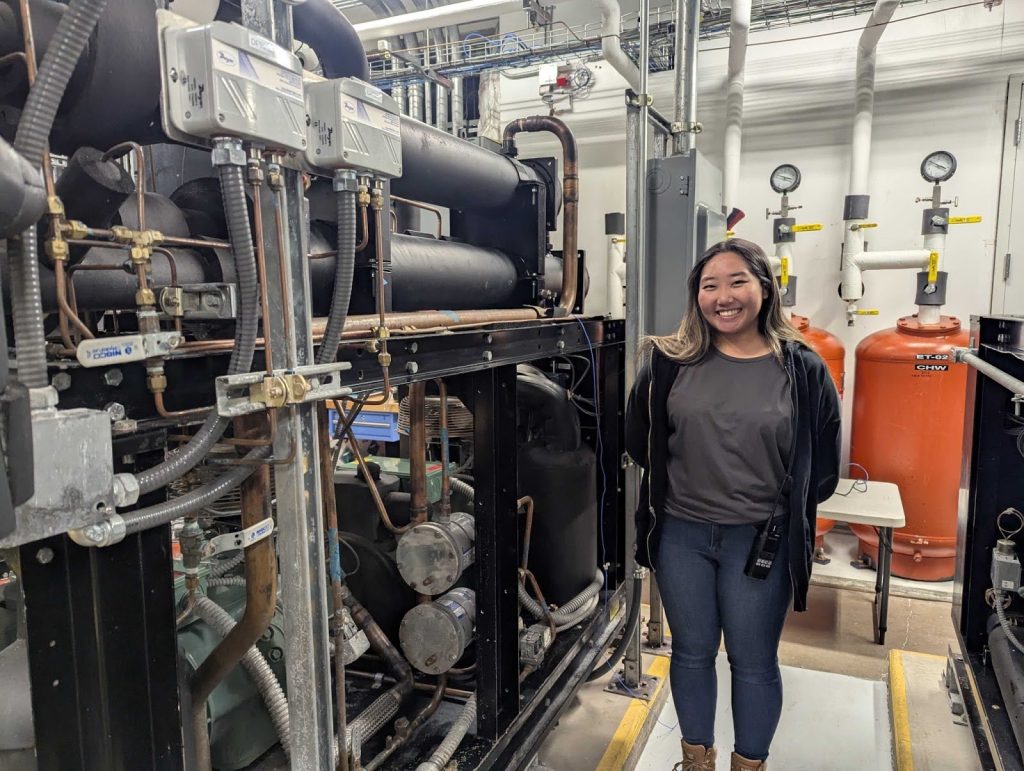
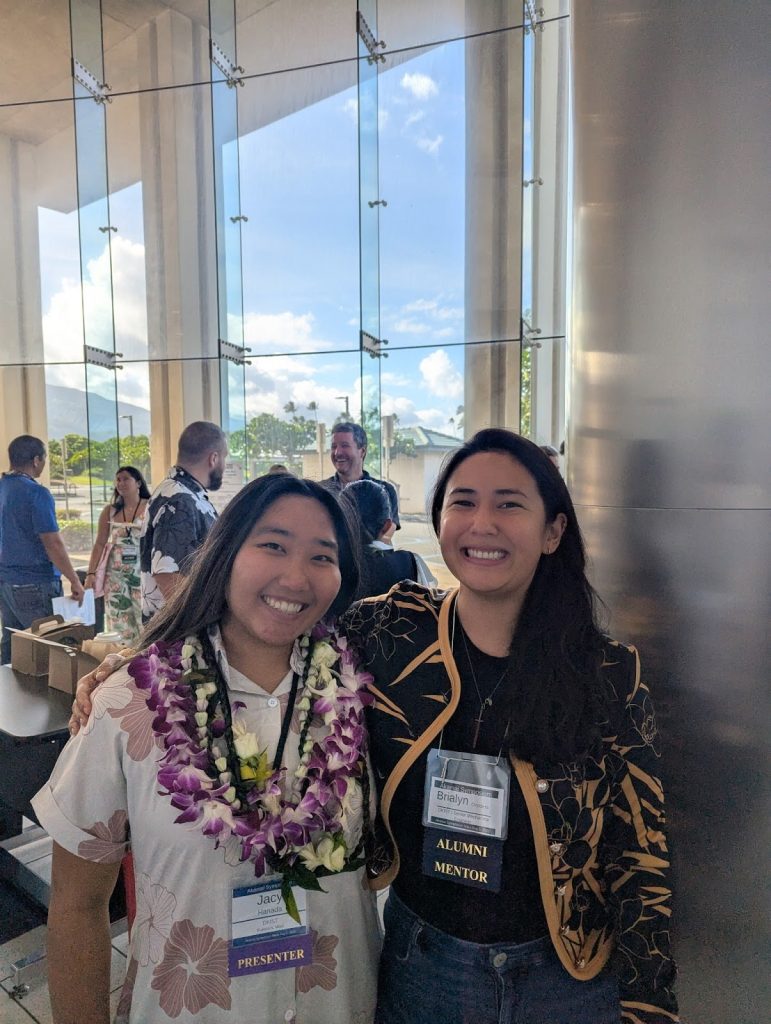
Jacy Hanada grew up on Maui and graduated from Maui High School before pursuing mechanical engineering at the University of Portland. This summer, at the Daniel K. Inouye Solar Telescope on Haleakalā, Hanada worked under the mentorship of Brialyn Onodera, an Akamai alum, and James Hoag. Her project involved measuring vibrations with an accelerometer, requiring extensive time at the summit gathering data on the chillers that are critical to preventing the telescope from overheating due to the sun’s intense heat. Hanada’s analysis produced actionable recommendations for reducing vibrations that can cause chiller leaks. DKIST has implemented her recommendations and used her data to verify their effectiveness.
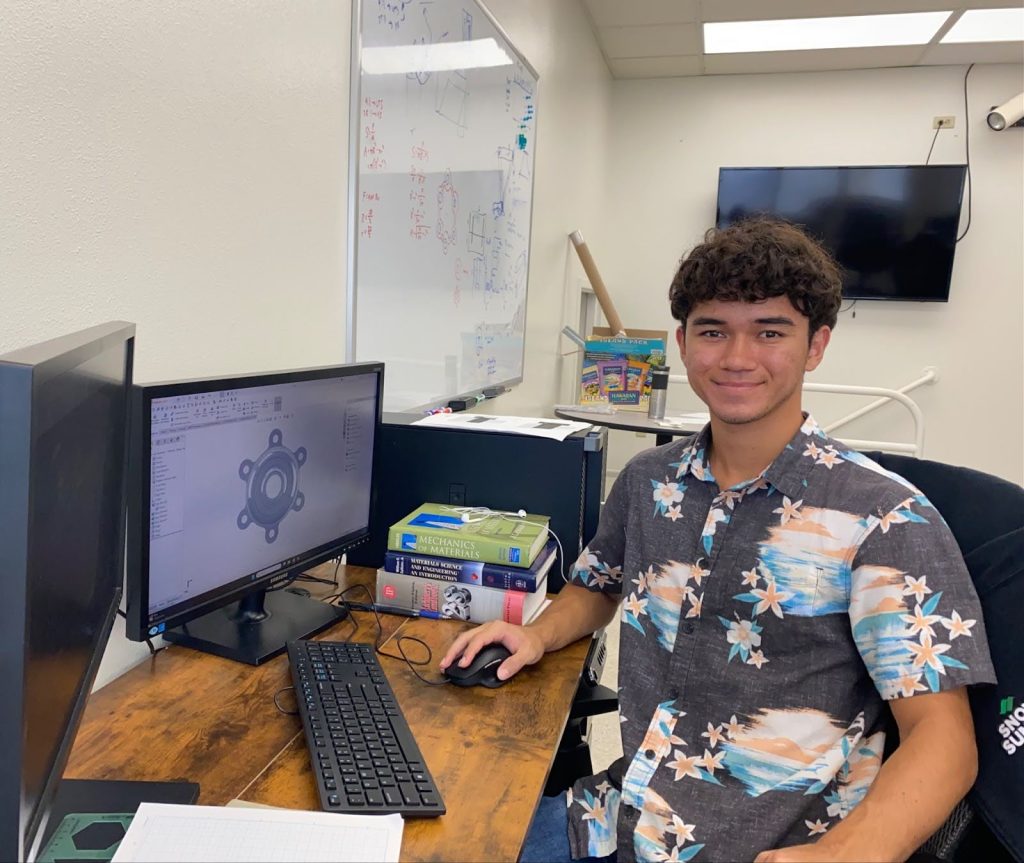
Jake Taylor was born and raised in Honolulu and is currently studying mechanical engineering at UH Mānoa. At W.M. Keck Observatory, working under the mentorship of Jason Worden and Justin Ballard, Taylor designed a system to test a crucial component of the Keck telescopes: the actuators that move the mirrors. The system simulated the weight load the actuators experience during telescope operations. Taylor’s design enables Keck Observatory to move forward with detailed specifications and fabrication of the test system.
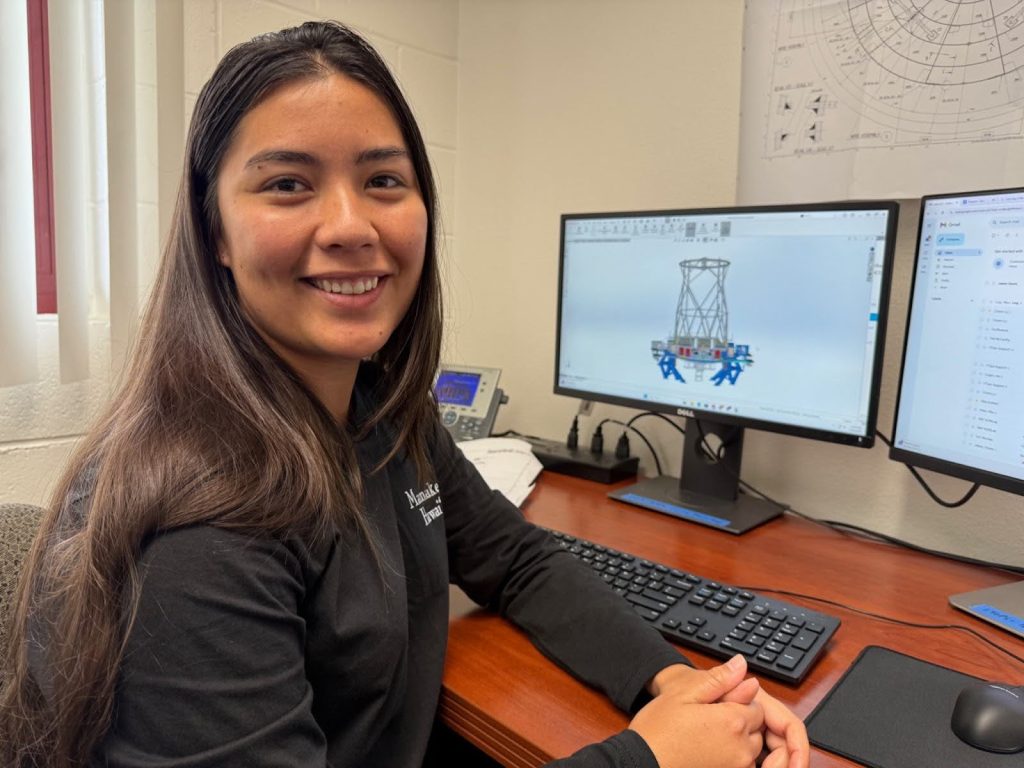
Carina McCartney is from Oʻahu and is now an aerospace engineering major at the University of Colorado Boulder. At the International Gemini Observatory, McCartney worked under the mentorship of Anthony Sylvester and Logan Sato, both Akamai Internship alumni, as well as Hawi Stetcher. She created detailed 3D models of the telescope enclosure and mount for import into a real-time visualization tool. This tool enables simulations of weight distribution changes when instruments are added or removed from the telescope. McCartney verified her models, which were then used by a collaborating intern to create a simulator that Gemini can use to balance the telescope and expand upon.
Applications for the 2026 cohort are now open, and close Friday, Jan. 23, 2026. Eligible applicants must either study in Hawaiʻi or be from Hawaiʻi. For more information or to apply, visit the Akamai Workforce Initiative website.
The Akamai Internship Program is currently funded by the Gordon and Betty Moore Foundation, the National Science Foundation and University of California Observatories.
Sponsored Content