As expected, Bill 9 challenged in court; lawsuits seek to block short-term rental phaseout
A group of West Maui property owners has filed the first legal challenge against Maui County’s controversial Bill 9, days after Mayor Richard Bissen signed the legislation into law.
Filed Dec. 19 in 2nd Circuit Court, the lawsuit seeks to block the county from phasing out thousands of short-term rental units in apartment-zoned districts.
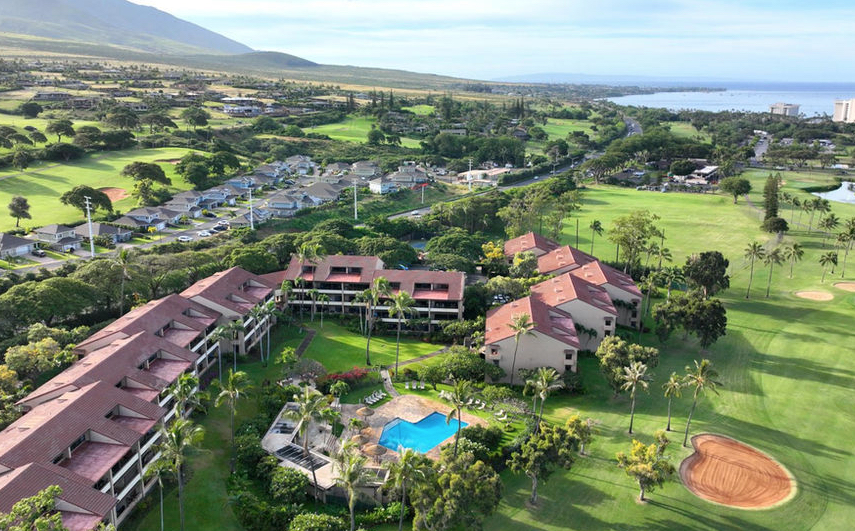
The complaint, Malter v. Maui County (Case No. 2CCV-25-0003778), was brought by several owners at the Kāʻanapali Royal complex, luxury condominiums located at 2560 Kekaʻa Drive on the 16th fairway of the Kāʻanapali Golf Course.
This property is part of the so-called “Minatoya List,” a group of approximately 7,000 units that have operated as transient vacation rentals for decades under a long-standing grandfathered zoning exemption.
Attorneys H. Maxwell Kopper and Francis Chandler, representing the plaintiffs, argue that Bill 9 is “wrongful, oppressive and unreasonable.” The lawsuit contends that by phasing out these rentals, the county is violating “vested property rights” protected by the Hawaiʻi and US constitutions.
Maui County’s conduct “has resulted in a total denial of plaintiffs’ viable economic use of their property rising to the level of an unconstitutional per se regulatory taking,” the plaintiff attorneys allege.
When contacted via email after the lawsuit filing last month, Maui County’s Department of the Corporation Counsel said it does not comment on pending litigation. County officials have expressed confidence that Bill 9 is legally defensible.
The lawsuit says that “private property shall not be taken or damaged for public use without just compensation,” citing Article 1, Section 20 of the Hawaiʻi Constitution. The plaintiffs argue that because the county has allowed these units to operate as short-term rentals for nearly 45 years, the sudden elimination of that use constitutes a “regulatory taking” without compensation.
Bill 9, which was introduced by Bissen in May 2024 following the devastating August 2023 wildfires, aims to return vacation rental units to the long-term housing market for local residents. The law sets a phase-out deadline of Jan. 1, 2029, for West Maui properties and Jan. 1, 2031, for the rest of the county.
During the legislative process, Bissen and supporters of the bill emphasized that 94% of the affected units are owned by non-residents. “Decisions about Maui’s housing should be guided by the needs of the people who live here — not by outside interests trying to protect profits,” Bissen said during the bill’s signing on Dec. 15.
However, the lawsuit points to the uncertainty created by the Maui County Council’s recent deadlock on a resolution to rezone some Minatoya properties. While a Temporary Investigative Group recommended that about 4,500 units — including those at Kāʻanapali Royal — be moved into new hotel districts to allow continued renting, the Council did not advance those rezoning measures before passing Bill 9.
The plaintiffs are asking for a preliminary injunction to prevent the County from enforcing the bill while the case is litigated. Legal experts have anticipated such challenges, noting that similar attempts to ban short-term rentals on Oʻahu were previously blocked by federal courts.
On Dec. 22, a second lawsuit (Lynam v. County of Maui, Case No. 2CCV-25-0003780, was filed in 2nd Circuit Court seeking a class-action status to represent all 7,000 “Minatoya List” properties.
The plaintiffs are asking the court for “appropriate declaratory relief regarding the unlawful and unconstitutional acts of Maui County and the right of Minatoya owners to provide short-term rentals.”
The lawsuit also asks the court to block any attempt by Maui County to enforce the phase-out of vacation rentals under Bill 9. The plaintiffs seek payment of attorneys’ costs and “full and just compensation” for the taking of all vested property rights belonging to short-term rental owners affected by the new legislation.
Sponsored Content