UH balloon mission over Antarctica seeks to decode mysteries of the universe
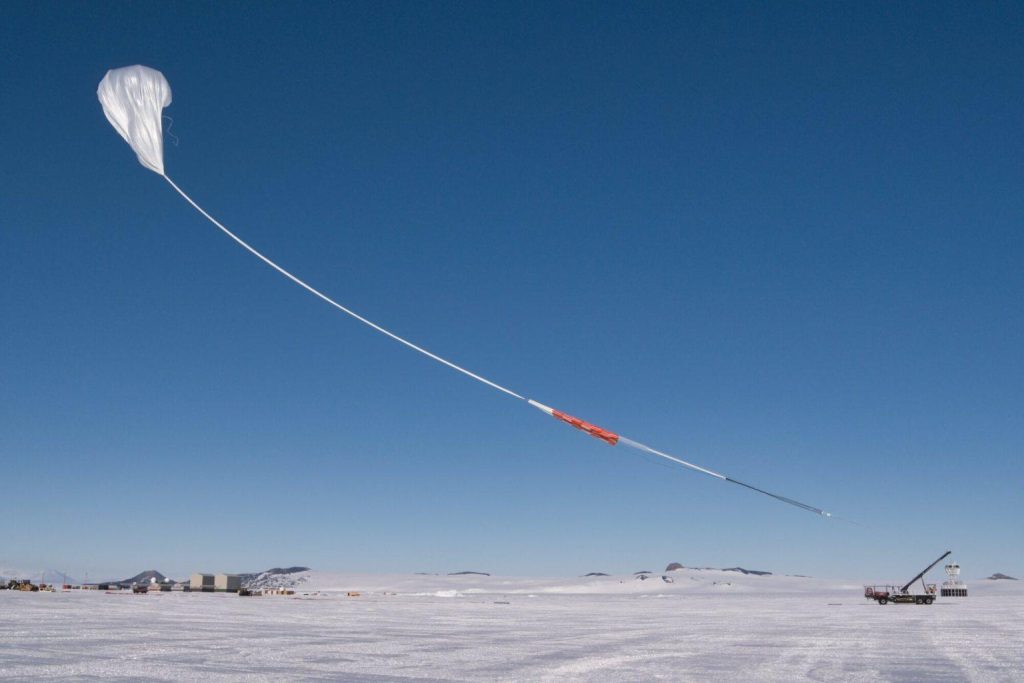
A NASA scientific balloon carrying a next-generation space science instrument has successfully launched over Antarctica, continuing a legacy of discovery that began at the University of Hawaiʻi at Mānoa.
The mission, known as the Payload for Ultrahigh Energy Observations, or PUEO, lifted off Dec. 20 (Dec. 19, Eastern Standard Time), from NASA’s launch facility near McMurdo Station. The balloon reached an altitude of about 120,000 feet and is now drifting high above the Antarctic ice while collecting data.
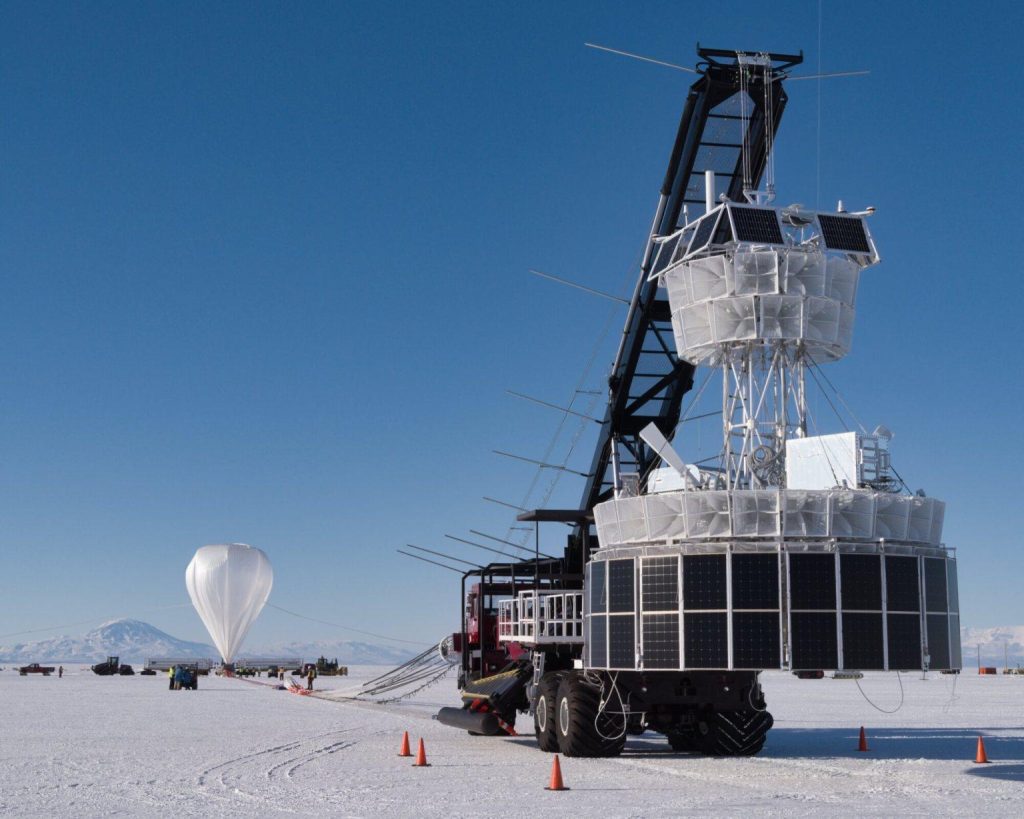
PUEO is designed to study tiny particles called neutrinos that travel through space at extremely high energies. When these particles strike the thick Antarctic ice, they create brief radio signals. From its vantage point far above the surface, the balloon-mounted instrument listens for those signals, using the ice below as a natural detector.
By tracking these signals, scientists hope to learn more about powerful events in the universe, such as black hole formation and collisions between dense stars. The mission also includes two additional balloons that send test signals to help researchers confirm the instrument is working properly. PUEO is expected to remain airborne for several weeks, circling the continent as it gathers information.
“This mission shows how ideas that start in Hawaiʻi can grow through years of collaboration and dedication into discoveries that help answer some of the biggest questions about our universe,” Department of Physics and Astronomy Professor Peter Gorham said. “It reflects the creativity and persistence of our students, researchers and engineers, and it points to a future where UH research continues to play a meaningful role in advancing science worldwide.”
PUEO builds on earlier work led by UH researchers through the Antarctic Impulsive Transient Antenna. That earlier project completed four balloon flights between 2006 and 2016 and helped open a new way of studying high-energy particles using radio signals detected over Antarctica. ANITA also recorded unusual particle events that scientists are still working to understand. With improved sensitivity and updated technology, PUEO aims to expand on those discoveries and clarify unanswered questions from the earlier missions.
This is the second high-altitude scientific balloon launched from Antarctica this season with major UH involvement. On Dec. 15, a separate scientific balloon carried the General AntiParticle Spectrometer experiment into the sky to search for rare cosmic antimatter linked to dark matter. Together, the missions highlight UH’s growing role in NASA-led balloon research, using Antarctica’s unique environment to study some of the most basic questions about the universe.
PUEO is led by Professor Abigail Vieregg of the University of Chicago. The Department of Physics and Astronomy is housed in UH Mānoa’s College of Natural Sciences.
Sponsored Content