31,000 Kaiser nurses begin strike at facilities in Hawaiʻi and California today as limited talks are scheduled
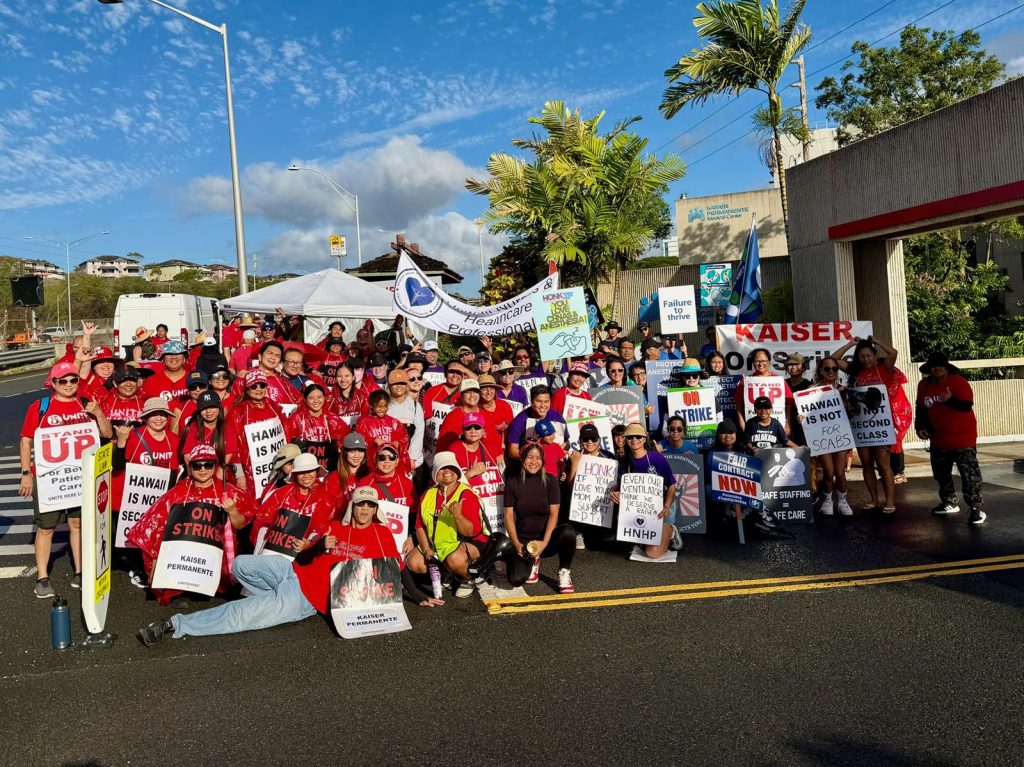
31,000 frontline registered nurses and health care professionals will begin an unfair labor practice (ULP) strike at Kaiser Permanente facilities across California and Hawaiʻi today.
The strike will affect more than two dozen hospitals and hundreds of clinics, including the Moanalua Medical Center on Oʻahu. This action follows a previous limited duration strike in October 2025.
According to Kaiser Permanente, the strike will not affect operations at Maui Memorial Medical Center or Kula Hospital, which are operated by Maui Health and staffed by workers under different union contracts.
Kaiser Permanente officials confirmed Saturday that while clinics will remain open, pharmacy operations will vary by location.
United Nurses Associations of California/Union of Health Care Professionals (UNAC/UHCP) members include registered nurses, pharmacists, nurse anesthetists, nurse practitioners, midwives, physician assistants, rehab therapists, speech language pathologists, dietitians, and other specialty health care professionals.
UNAC/UHCP members have been bargaining with Kaiser since May 2025. The union claims that “in December, Kaiser management walked away from negotiations, stalling progress and attempting to bypass the agreed-upon national bargaining process.”
As a result, the union filed unfair labor practice charges with the National Labor Relations Board, alleging Kaiser violated federal labor law by abandoning good-faith bargaining and undermining workers’ protected rights.
“Kaiser’s own communications to employees reveal exactly why we are striking,” said Charmaine S. Morales, RN, UNAC/UHCP President. “Instead of addressing unsafe staffing and patient care concerns, Kaiser is issuing messages that pressure workers not to strike, exaggerate the risks of participation, and encourage employees to report one another. That is intimidation.”
Kaiser Permanente released a statement on Sunday saying, “We have been informed that United Nurses Associations of California/Union of Health Care Professionals have agreed to return to local bargaining where we look forward to being able to finalize new contracts for our employees and their families.”
Kaiser Permanente has been bargaining with UNAC/UHCP and the Alliance of Health Care Unions for more than 7 months to reach agreement on a new set of national and local contracts.
“These negotiations come at a time when health care costs are rising, and millions of Americans are at risk of losing access to health coverage. This underscores our responsibility to deliver fair, competitive pay for employees while protecting access and affordability for our members. We’re doing both,” according to the statement from Kaiser Permanente.
KP says its Alliance employees already earn, on average, about 10% more than similar roles at other health care organizations in Hawaiʻi. “Our current proposal builds on that, keeping Kaiser Permanente among the best-paying employers in health care. It includes the strongest compensation package in our national bargaining history: a 21.5% wage increase over the life of the contract, with 16% within the first 2 years.”
Importantly, not all of the Alliance unions currently in negotiations will be taking part in the strike. In Hawaii, UNAC/UHCP, UNITE HERE Local 5, and HNHP make up the Alliance, which is comprised of about 2,300 employees.
“This open-ended strike by UNAC/UHCP is unnecessary when such a generous offer is on the table. The strike is designed to disrupt the lives of our patients — the very people we are all here to serve,” according to the Kaiser Permanente statement.
Union leaders say, “nurses and health care workers are taking collective action to confront unsafe conditions and corporate practices that put profits ahead of patients. Kaiser workers say their fight is part of that broader movement to protect the future of health care.”
Even as limited talks are scheduled to continue, union leaders say frontline caregivers remain prepared to stay on the picket lines as long as necessary to secure what they call “a fair contract.”
Sponsored Content