‘Vienna model’ bill advances to limit rental housing fund surpluses to more housing
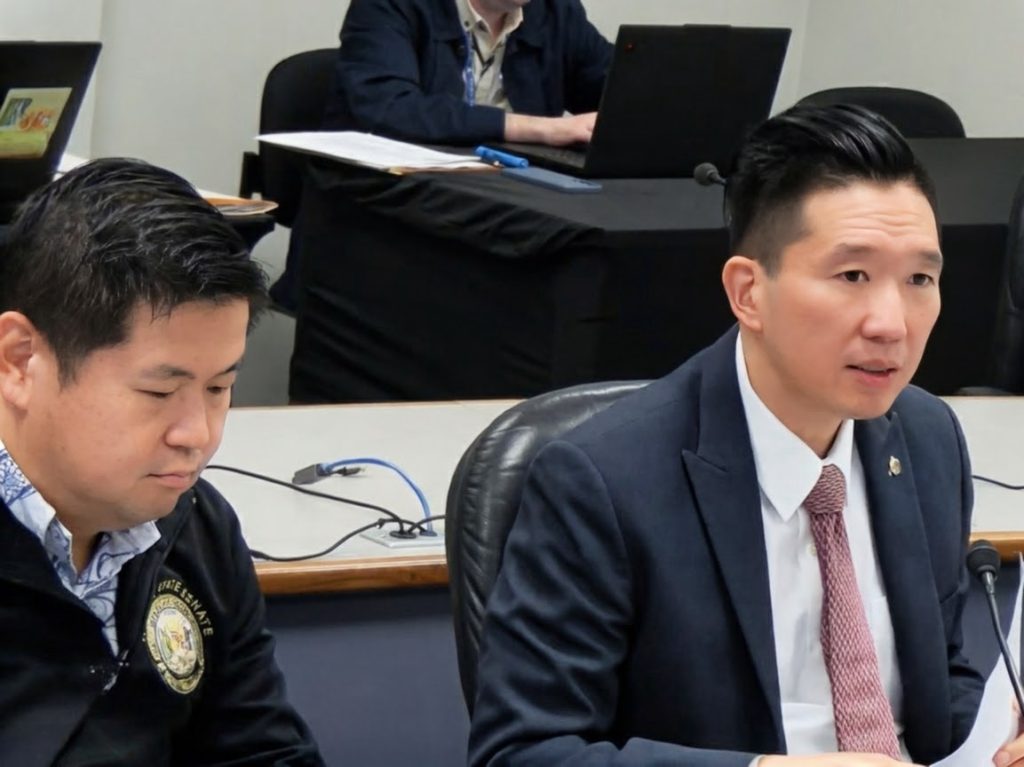
A state Senate committee has advanced a bill that uses the “Vienna Model” of housing in Austria, where limited-profit housing associations create a sustainable cycle of money available for future development.
Under Senate Bill 2194, eligibility for the Rental Housing Revolving Fund would be limited to government agencies or organizations. They would be required to reinvest all financial surpluses into building more housing in the state. The fund is administered by the Hawaiʻi Housing Finance and Development Corp.
The struggle to maintain affordability
In an Oʻahu case reminiscent of the Maui battle to maintain affordability of the Front Street Apartments in Lahaina, the state was compelled in 2006 to purchase the Kukui Gardens complex for $132.5 million to maintain that complex’s housing affordability. The project located on Liliha Street in Honolulu was developed in 1970 with subsidized federal loans. According to the bill, the previous owner used proceeds from that sale for charitable donations unrelated to housing.
“The Legislature finds that action is needed to ensure that the value generated by taxpayer-financed housing developments is recycled to build more housing,” the bill says.
In the situation that confronted low-income residents the Front Street Apartments, which were destroyed by the August 2023 Lahaina wildfires, tenants needed to seek relief in federal court when project developer Front Street Affordable Housing Partners tried to end affordability provisions for housing units.
Ultimately, Hawai‘i federal District Court Judge Jill Otake sided with the residents and decided to keep the units affordable until 2051.
According to the bill’s legislative findings, 15,000 affordable housing units in Hawaiʻi have affordability restrictions that will expire by the year 2100.
Senate committee action
The Senate Committee on Housing recommended second-reading passage of the measure. Committee Chair Stanley Chang said the bill is modeled after the Vienna, Austria, limited profit housing association system. In that model, associations are permitted to make a profit but must use those funds for future housing development.
“The bill merely prevents applicants from receiving the windfall profit of owning the building as well,” Chang said during a committee meeting Tuesday afternoon at the State Capitol.
State housing agency concerns
Dean Minakami, executive director of the Hawaiʻi Housing Finance and Development Corp., expressed reservations about the bill’s restrictions on fund applicants.
“We are concerned that the proposed restrictions may unintentionally create a disincentive for development and limit the pool of qualified applicants,” he said.
The HHFDC’s concerns included:
- Overly restrictive eligibility. “By requiring organizations to use all financial surplus for additional housing development, the bill may unintentionally reduce the number of quality development applications, which in turn would slow down the pace of affordable housing development at a time when Hawaiʻi faces an urgent housing crisis.”
- Impact on financial viability. “Development projects are complex and carry financial risks. Removing the ability to retain any surplus for organizational stability may discourage participation, particularly from smaller nonprofits and mission-driven developers who need flexibility to remain solvent.”
“Rather than mandating that all surplus be reinvested, the Legislature could consider requiring a reasonable reinvestment percentage or establishing clear guidelines for surplus use that balance accountability with operational sustainability,” Minakami said.
Chang noted that the committee report would acknowledge these concerns while clarifying that the bill still allows applicants to receive development fees.
The committee also noted that HHFDC currently receives significantly more applications for funding than it is able to fulfill.
In written testimony, the Hawaiʻi Public Housing Authority also provided testimony in support of the measure, which “reinforces the principle that taxpayer-supported housing investments should continue to benefit housing.”
“For taxpayers who contribute their hard-earned dollars to support affordable housing, it is reasonable and appropriate that the value generated from those public investments be reinvested to expand and preserve housing opportunities,” the public housing agency said.
The agency already operates under such a framework, it said.
“Any financial surplus generated through HPHA’s redevelopment or financing activities is dedicated to advancing the authority’s core mission of providing safe, decent and affordable housing for Hawaiʻi’s low-income families,” the agency said.
Central Maui Sen. Troy Hashimoto, who serves as the committee’s vice chair, joined in the unanimous recommendation to pass the measure unamended. Also voting in favor of advancing the bill were Sens. Brandon Elefante and Karl Rhoads.
If passed, the measure would represent a shift in how the state manages its rental housing revolving fund, which is a primary tool for financing affordable rental projects across the islands, including on Maui. The bill also has been referred to the Senate Ways and Means Committee.
Sponsored Content