 Hawai'i Journalism Initiative
Haleakalā telescope opponents show up in droves, but hold little hope the military is listening
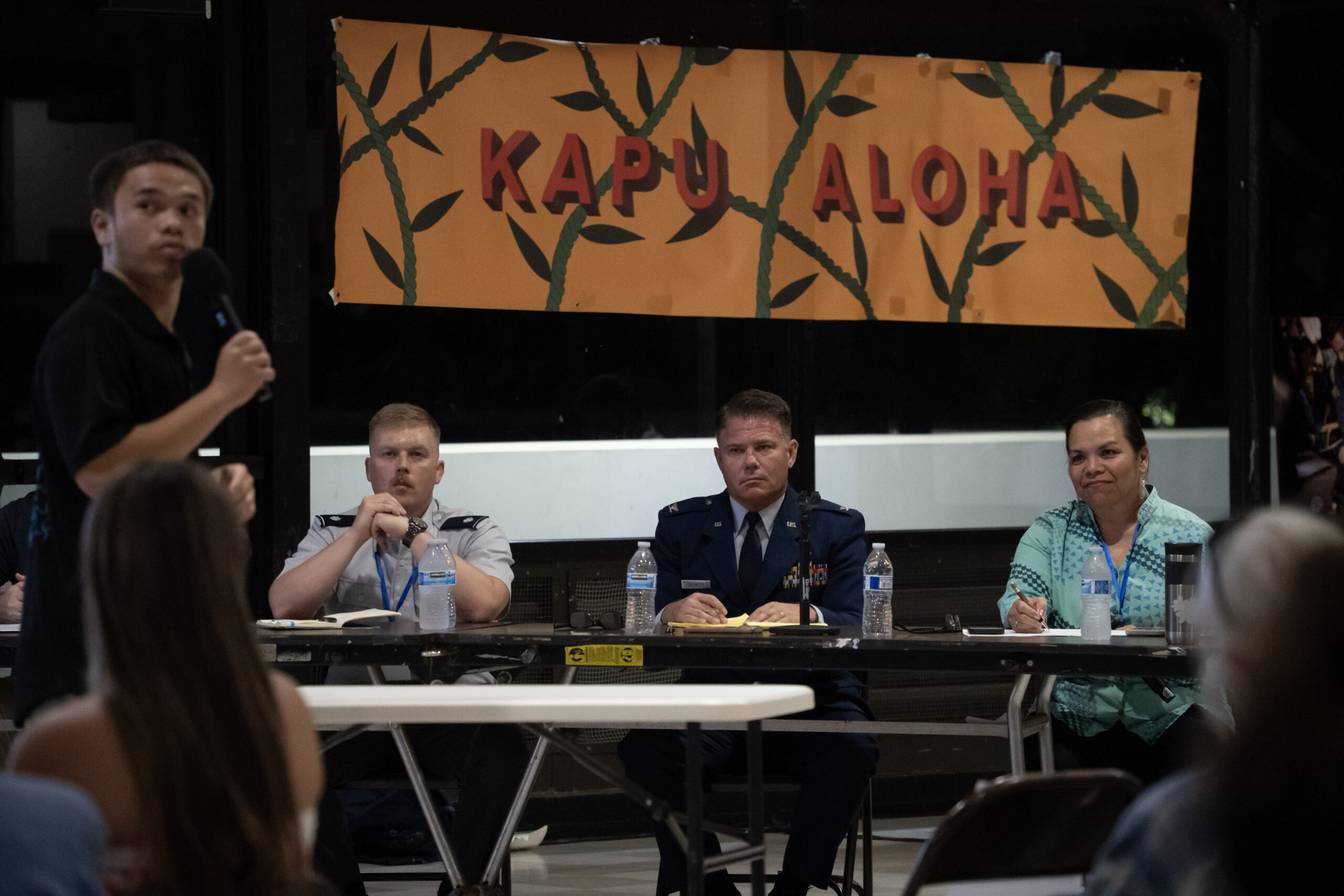
KĪHEI and PUKALANI — Walter Kahoiwai Kanamu Jr. stood at the microphone, breathing deeply and filling with emotion as he spoke to the military officials seated before him at the Kīhei Community Center on Tuesday night.
“How many words do we waste?” he said. “For over 20 years we’ve been protesting. Nobody listens. For crying out loud, what do we have to do?”
For two days, hundreds of Maui residents showed up to public hearings in Kīhei and Pukalani to oppose the U.S. Air Force’s plans to build up to seven more telescopes on the summit of Haleakalā, a place considered sacred to Native Hawaiians.
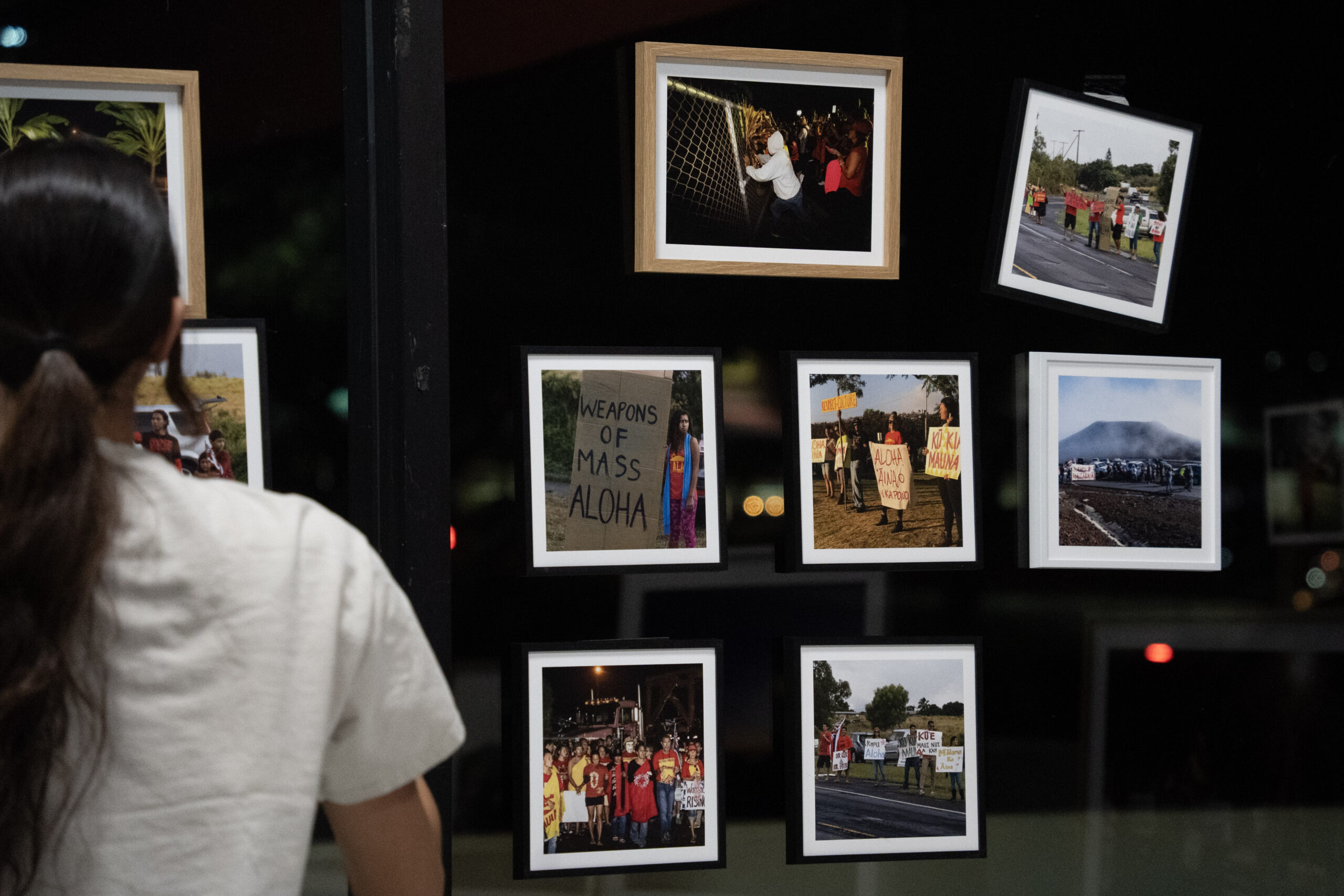
Surrounded by framed photos of telescope protests from years past and banners declaring “Kū Kia‘i Mauna” (the rallying cry in the successful movement to protect Maunakea from telescope development), they gave lessons in history and culture and poured out decades of frustration over a military legacy that includes the Marines’ role in the overthrow of the Hawaiian Kingdom and the Navy’s use of Kaho‘olawe for bombing practice beginning in World War II.
If the project went forward, they said, they vowed to fight it.
Still, many wondered if it was already a done deal.
“Haleakalā is not an empty summit,” Davileigh Kāhealani Nae‘ole said Tuesday in Kīhei. “It is not simply a location for your infrastructure. It’s a sacred ancestor and a place of deep cultural and spiritual significance for Native Hawaiians. Not that you haven’t heard that a thousand times, but maybe on the thousandth-and-first time? I don’t know, maybe you will get it.”
The Air Force says it needs to build the seven telescopes at the summit to deal with increasing threats in space. Monitoring what goes on high above Earth’s atmosphere is “a vital part of space flight safety and daily aspects of everyday life such as agriculture, travel, GPS, internet banking and satellite TV, in addition to the critical role it plays for national security,” a spokesperson for the U.S. Space Force Combat Forces Command told the Hawai‘i Journalism via email on Monday.
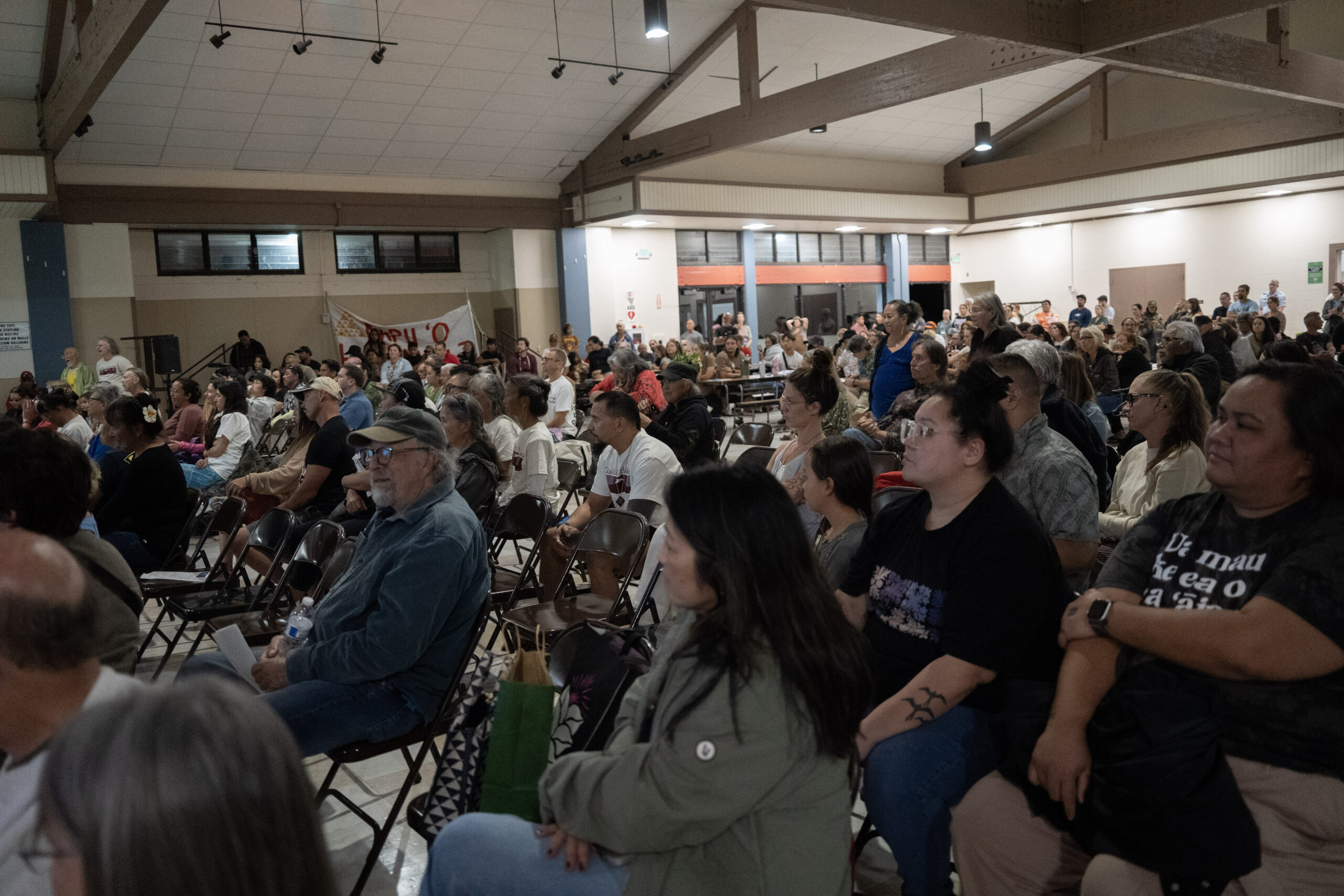
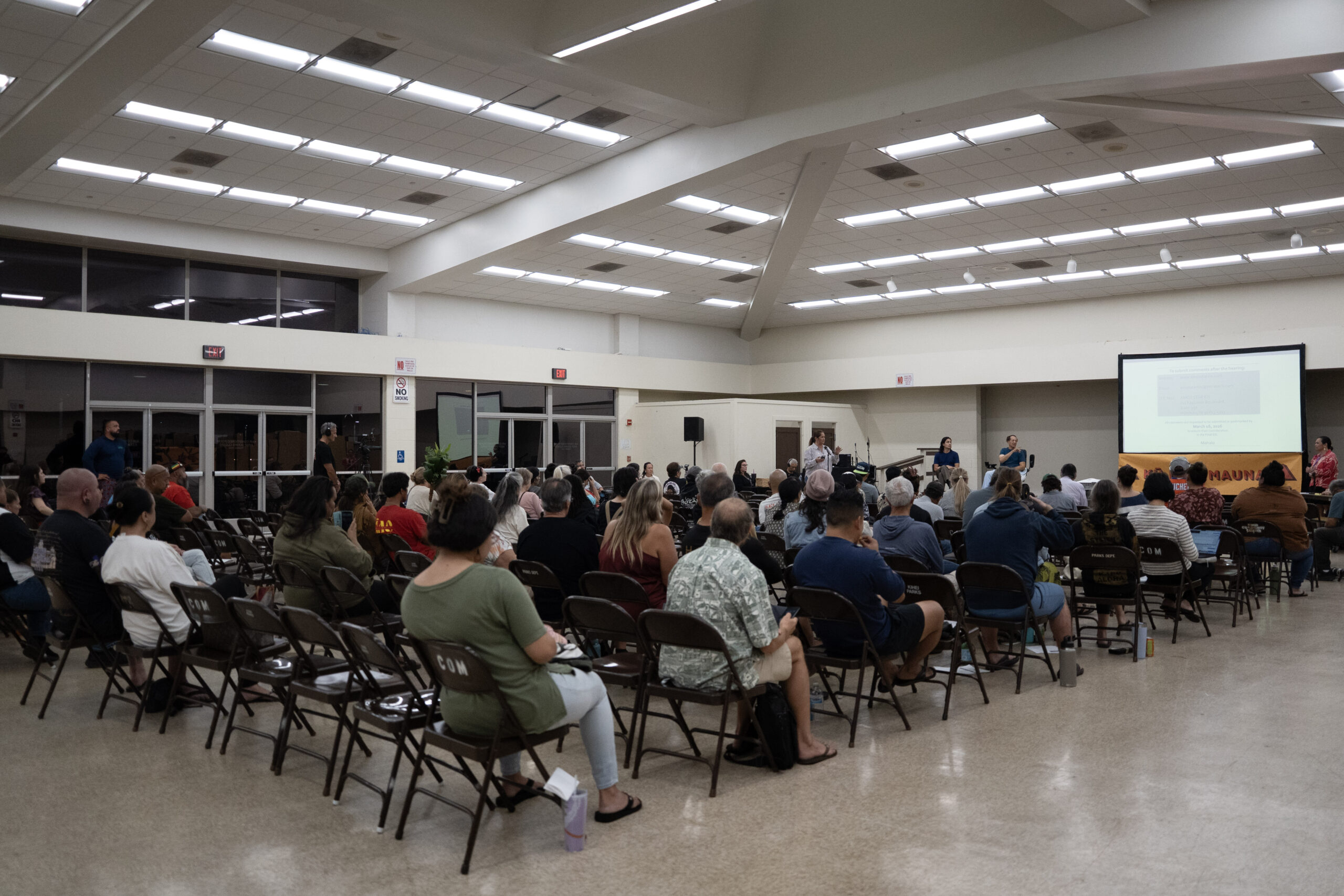
But at the meetings, the opposition was overwhelming. Nearly 100 people testified — about 50 in Pukalani and 40 in Kīhei, and just about all were against the telescopes project. About 30 other people who signed up in Pukalani, where it was standing room only, weren’t able to speak because time ran out at the 3-hour hearing.
In Pukalani, Stacey Moniz urged the military not to waste their time with the unpopular project.
“Every step you take forward, this group will grow and grow, and you will not succeed,” she said. “So you might as well just stop right now, save your money and take that someplace else. … We’ve seen this on Maunakea, here on Maui. We’re going to do everything we can to stop this from happening.”
Military officials declined to comment after both hearings, and in a statement to the Hawai‘i Journalism Initiative before the hearings, they gave no indication that they were reconsidering the project over public opposition that’s been ongoing since 2024 when the plans were unveiled.
A spokesperson for the U.S. Space Force Combat Forces Command said via email that the purpose of the public hearings, which were held after the release of the project’s 516-page draft environmental impact statement in January, “is to inform the public of potential impacts and mitigation measures to the proposed AMOS STAR initiative and its alternatives, as well as to provide further opportunity for community feedback. Open communication with the Maui community and key stakeholders has been and remains a top priority throughout this process.”
“AMOS STAR” is the acronym for Air Force Maui Optical and Supercomputing Site Small Telescope Advanced Research facility.
“The DAF (Department of the Air Force) and project team respects concerns for potential environmental impact as well as the cultural and spiritual significance of Haleakalā and are committed to continued engagement with the community and minimizing impacts,” the spokesperson said.
When asked why the military wouldn’t comment after the hearings, Preston Schlachter, another spokesperson for the U.S. Space Force Combat Forces Command, said they wanted to focus on the draft environmental impact statement process and collecting feedback.
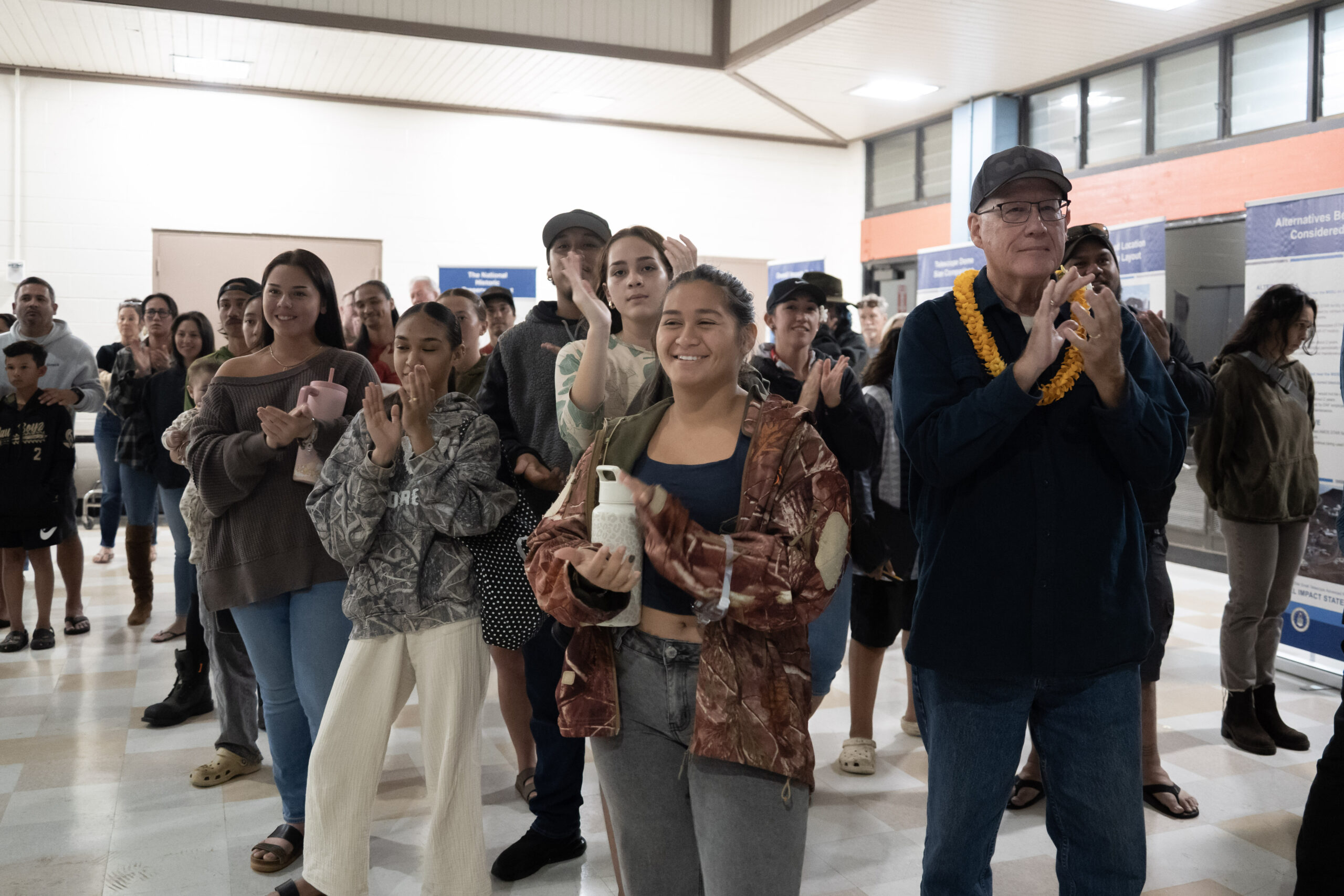
Kahele Dukelow said Tuesday night in Kīhei that she refused to trust the process. She felt like consultation with the public was “not really about listening to us or caring about what we say.” They were simply boxes to check, “and then you do whatever the hell you like,” as in the case with the construction of the Daniel K. Inouye Solar Telescope, a National Solar Observatory project that proceeded on Haleakalā in the face of multiple lawsuits and protests.
“Time and time again processes like these have just proven to marginalize, override or ignore Hawaiians altogether, sometimes even villainize us,” Dukelow said.
Dukelow said people didn’t show up to the public hearing because they thought the military would do the right thing. In fact, she told officials, “I don’t think you are capable of pono.” But they came anyway “because history must record that we were here to object and resist and bear witness to this continued desecration and to the continued occupation of our land.”
Maui County Council Member Keani Rawlins-Fernandez, who authored the resolution passed unanimously by the council in opposition to the project in 2024, said the military uses “national security as your trump card.”
“A threat to national security means anything,” she said. “An invasion of our islands, an occupation of our land, displacement of our people, destruction of our sacred spaces, poisoning our water resources. Yet, this is already happening by you. We need protection from you, the U.S. military. Who protects us from you?”
One testifier did see the value of the telescopes. Jamie Chapman said he used to be involved in measuring and assessing nuclear weapons and noted that China, Russia and North Korea all have the capability to launch devastating weapons to Hawai‘i. That’s where facilities like AMOS STAR would come in, capable of gathering data that could help intercept and destroy incoming warheads, Chapman said.
“I listened to your fight,” Chapman said Wednesday in Pukalani. “I was moved and impressed. However, your fight is not my fight. My fight is and has been making sure that you can live and continue with your fight.”
Others said threats from abroad proved the United States’ problem: it doesn’t play nicely with others. They compared the U.S. military to a bully and a rapist who didn’t know how to take no for an answer, and painted a stark picture between Native Hawaiian values and those of the military.
“National defense lies in the spirit of the people, in the heart of the people,” Pukalani resident Kapulani Antonio said, quoting George Helm, a revered figure of the aloha ‘āina movement who disappeared at sea during the effort to stop the bombing of Kaho‘olawe in the 1970s.
“This right here is our national defense,” she said, pointing to the crowd.
Antonio said even the name of the project was insulting, an uncanny reminder of the American missionary Amos Starr Cooke who ran the Chiefs’ Children’s School and was known for his harsh discipline of young ali‘i.
“He beat our chiefs into submission,” she said. “You will not beat us into submission. We will never submit to the United States military, and we will never submit to the continued desecration of our ‘āina and to the oppression of our people.”
The packed community center was dead quiet when Kilakila ‘O Haleakalā President Kī‘ope Raymond recounted the soft sounds of birds named by the earliest Hawaiians to set foot on Haleakalā. The words still used to describe the flora and fauna of the mountain today are “ancestral memory” kept alive every time they’re spoken. He told military officials that when they dig into what they see as lava at the summit, Hawaiians see it as digging into pele, molten rock named for the volcano goddess Pele.
“Our worldview is a little bit different than … ‘oh, that’s lava,'” he said. “No, you’re going after an ancestor.”
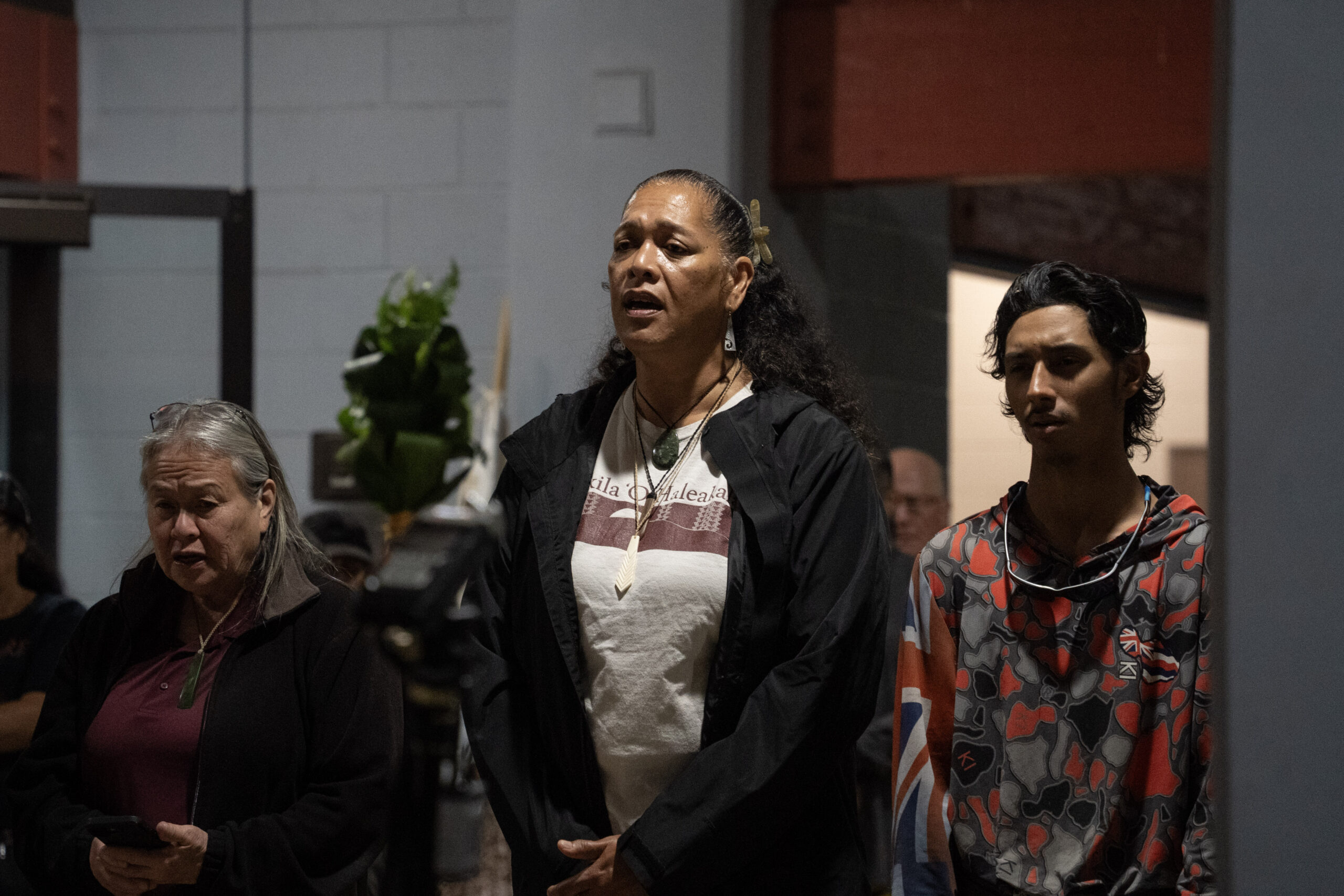
And while many testifiers felt like nothing had changed after years of speaking out, Hawaiian educator Pūlama Collier saw hope after two days of public testimony. After gathering a small group of community members for a pule, or prayer, to close out the public hearing in Pukalani, Collier said this time around feels different: there is a “deeper understanding of who we are,” and the fight is a shared intergenerational struggle.
Collier stood with two of her adult children as the three testified against the project on Tuesday, and several other parents and their children spoke up during the hearings. Hilina‘i Kodani, a 14-year-old student at Kamehameha Maui and the son of Kāko‘o Haleakalā organizer Tiare Lawrence, shared his experience of visiting the summit after roughly 700 gallons of fuel spilled at the Space Force’s complex in 2023. It has yet to be fully cleaned up.
“I don’t trust the government with Hawaiian land because chances they got to prove themselves were used irresponsibly,” Kodani said. “My generation deserves a healthy mountain, not one that has been slowly degraded piece by piece.”
King Kekaulike High School freshman and kaiapuni (Hawaiian immersion) student Preston Kamehameha Pullman, a descendant of Helm, said that “as a teenager, I shouldn’t have to fight battles that should have been resolved generations ago.”
“This fight did not begin with my generation,” Pullman said. “Our kūpuna stood up first. Now that kuleana has been passed to us. My generation will live with the consequences of what you decide. But we will also continue to fight on.”
The project is open to public comment through March 16. For more information on the project or to submit comments, visit https://www.amosstareis.com/.