Mental health crisis after 2023 Maui wildfires extends beyond burn zones
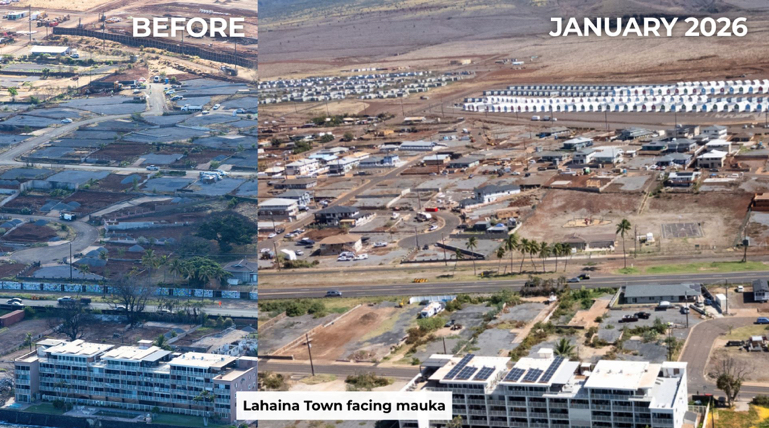
The 2023 Maui wildfires were linked to significantly higher levels of depression and anxiety among residents, with impacts extending beyond the burn zones and closely tied to housing and income disruption. That’s according to a new University of Hawaiʻi at Mānoa study published March 11 in “JAMA Psychiatry.”
The study examined 2,453 adults, including 1,535 wildfire-exposed residents on Maui and 918 unexposed residents from other Hawaiʻi counties. The data was gathered between January 2024 and February 2025 through the Maui Wildfire Exposure Study (MauiWES) and the UH Economic Research Organization’s (UHERO) Rapid Health Survey.
Key findings
- Residents inside burn zones had a 53% higher risk of depression and 67% higher risk of anxiety compared to unexposed residents.
- Maui residents living outside burn zones also experienced significantly elevated mental health risks, including more than double the risk of suicidal thoughts.
- More than half of the wildfire’s impact on depression and anxiety could be traced to housing instability and lost income.
- Being employed was strongly protective against depression, anxiety and suicidal ideation.
“These findings show that the wildfire’s psychological toll is not confined to the areas that burned,” said lead author and UHERO Professor Ruben Juarez. “The social and economic disruption—especially housing instability and income disruption—is driving much of the distress we see across the community.”
Co-author and John A. Burns School of Medicine Professor Alika K. Maunakea added, “Climate disasters affect biological, social and economic systems at the same time. If we only rebuild structures and do not stabilize housing, employment and mental health services, we leave communities vulnerable long after the smoke clears.”
Co-author Christopher Knightsbridge, a mental health therapist from MauiWES based in Lahaina, said, “The harm did not stop at the burn zone. Housing disruption and income loss have extended the crisis into daily life, which is why recovery must include stronger housing, economic, and mental health supports.”
The August 2023 fires, which killed more than 100 people and destroyed more than 2,200 structures, displaced an estimated 10,000 residents. The study found that psychological distress persisted six to 18 months after the disaster.
UHERO is housed in the College of Social Sciences.
Sponsored Content