Council committee advances Maui parking bill with resident benefits
A Maui County Council committee advanced a bill Monday to establish parking benefits for Hawaiʻi residents at the Wailuku Garage, correct a South Maui mapping error and create paid and permit parking zones in West Maui as Lahaina Harbor continues its post-fire recovery.
The Water and Infrastructure Committee voted 9-0 to send Bill 68 to the full Council with a recommendation for approval. The measure updates the Park Maui managed parking program to balance public access with resident benefits at county-owned lots.
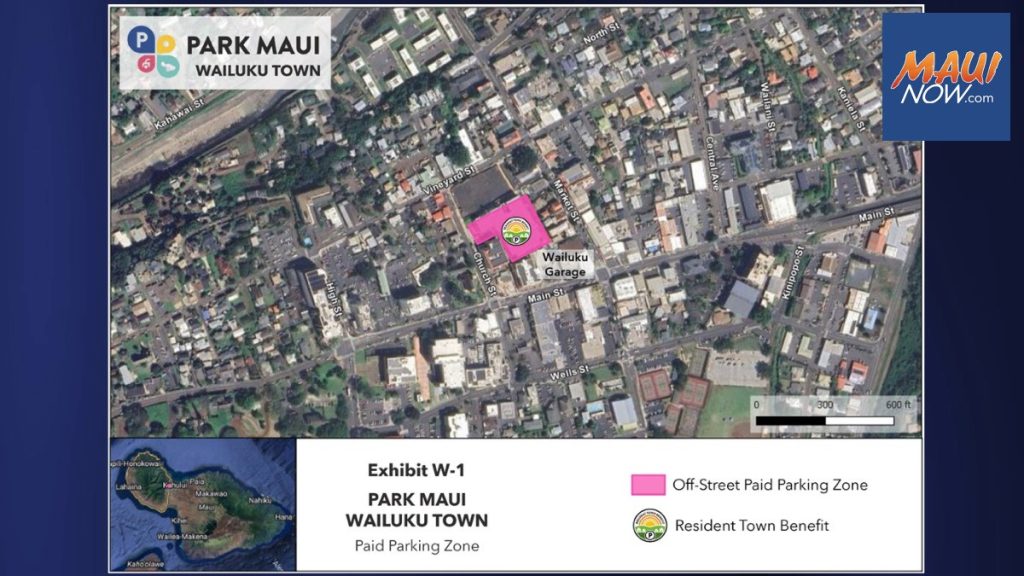
Under the bill, the Wailuku Garage becomes a designated resident town benefit location. Drivers who scan a valid Hawaiʻi driver’s license at a pay station or mobile app will receive the first two hours free, with a standard $1 hourly rate applying afterward.
During Wailuku First Friday events, parking on the garage’s ground floor is temporarily reserved for vendors beginning at 4:30 p.m. Public parking is on the second through fourth garage levels with counter-flow traffic. At 10 p.m., the garage returns to normal operations.
“We’re always at 100% capacity during First Friday,” said Park Maui program specialist Neil Nakamoto, who gave council members a slide presentation. “The community loves it.”
Residents arriving at 4 p.m. will not pay for parking for the remainder of the evening because garage fees end at 6 p.m. Located at 30 North Church St., the garage’s hours of operation are from 5 a.m. to 11 p.m. daily.
In South Maui, the bill corrects a mapping error by removing an unpaved dirt area near Kamaʻole Beach Park III from resident recreation hour restrictions. Nakamoto told committee members the county mistakenly included the unimproved area in the original legislation.
“It wouldn’t make sense to make that a resident recreation area because there’s only like about 10 stalls,” Nakamoto said.
Because the dirt area remains within a paid parking zone, non-residents are technically subject to standard fees — but with no pay station on site, it functions as informal free parking in practice.
The paved parking lots at Kamaʻole I and III will maintain their resident recreation hour designations. Only residents with a scanned Hawaiʻi driver’s license may park in those paved lots before 10 a.m. on weekends and county-observed holidays. Beach parking remains free for Hawaiʻi residents at all times with a valid license scan.
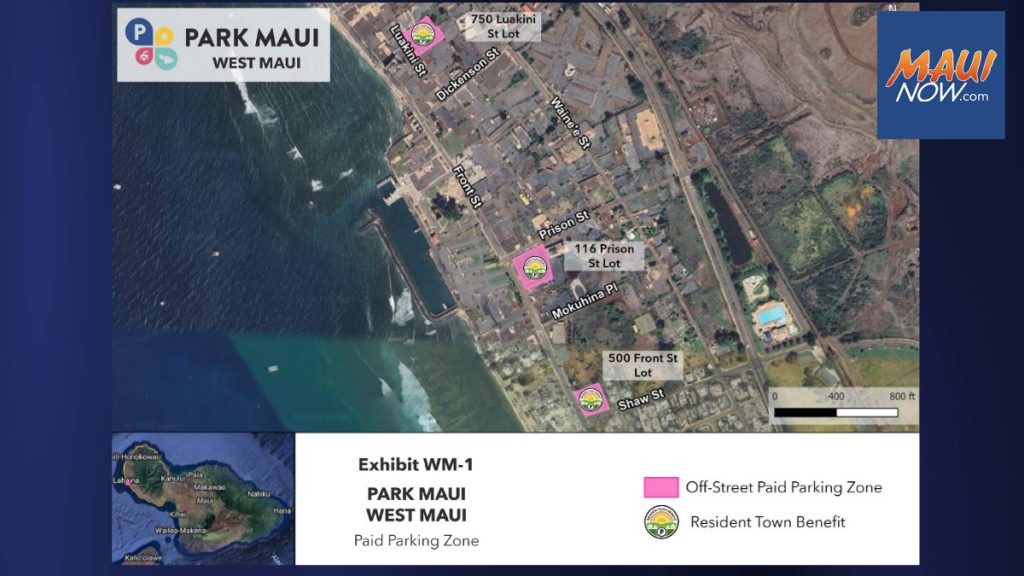
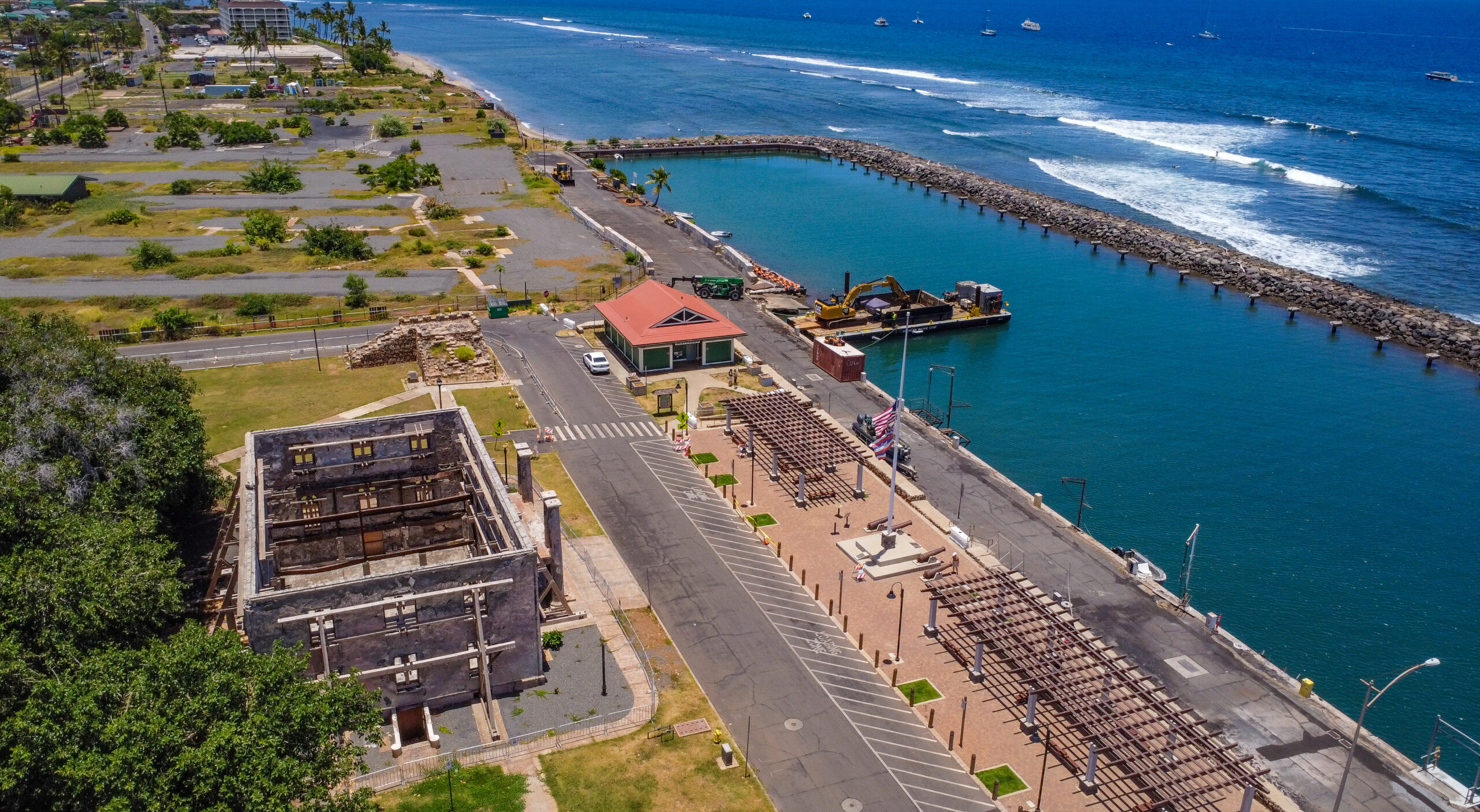
In West Maui, the bill establishes paid parking zones and resident town benefits at three county-owned lots near Lahaina Harbor: 750 Luakini St. (65 regular stalls, 5 disabled parking spaces), 116 Prison St. (85 regular stalls, 6 disabled) and 500 Front St. (67 regular stalls, 6 disabled). The Luakini Street lot is also designated as a permit parking zone, giving the county flexibility to manage access for specific users and operational needs as the harbor area continues to reopen.
“It also supports parking access needs in West Maui as the Lahaina Harbor area continues to recover and reopen,” Nakamoto said.
Revenue from the 500 Front St. lot will go to the Hawaiian Cultural Restoration Revolving Fund, which supports the restoration of Mokuʻula — the sacred island that served as the seat of the Hawaiian Kingdom under King Kamehameha III and sits at the heart of the Lahaina Royal Complex.
The county is currently developing a master plan for the complex, and 116 Prison St. also falls within the Royal Complex boundaries, raising the possibility it could eventually be incorporated into the restoration effort as well.
During Monday’s meeting, a discrepancy emerged between what committee members recalled being told during earlier discussions — that revenue from other county lots could offset any loss of 500 Front St. revenues to the revolving fund — and the Department of Transportation’s understanding of how the funds work.
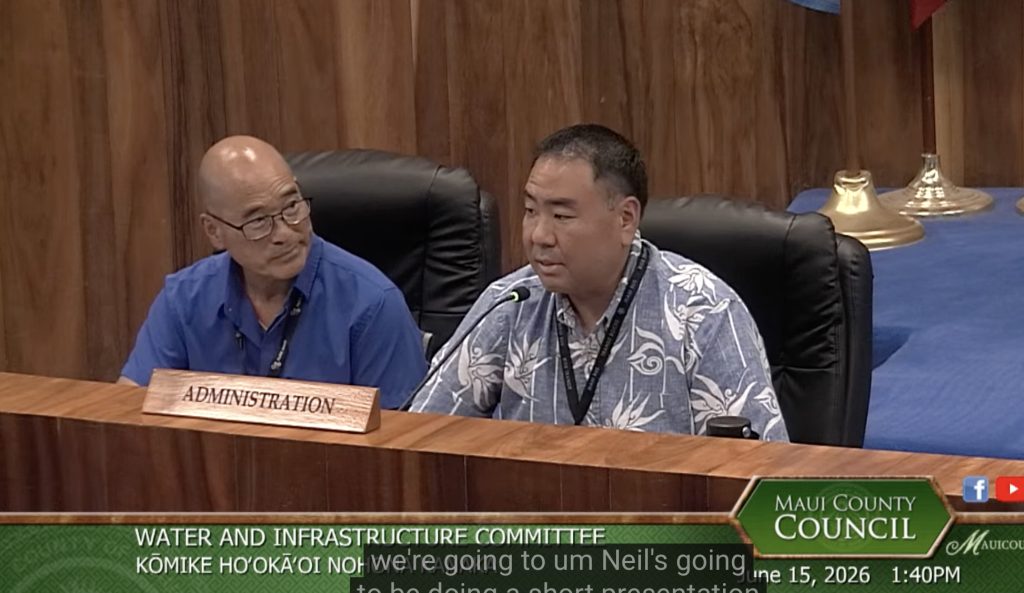
Director Marc Takamori said collected revenue is reinvested into the Park Maui program until it becomes self-sufficient, with surplus funds available for other purposes after that. The committee agreed to send a clarifying letter to the Department of Management and the Department of ʻŌiwi Resources to resolve the discrepancy.
The bill also removes outdated code references to West Maui parking lots, piers and loading zones that no longer exist or have changed since the 2023 wildfires.
No members of the public testified on the bill.
West Maui Council Member Tamara Paltin noted that private parking lots in the area currently charge $20 to $25 per day — more than double the county’s $10 daily maximum.
“The county doesn’t do that in West Maui yet, but seeing how profitable it is, we’re jumping on board because we’re getting blamed anyway,” she said.
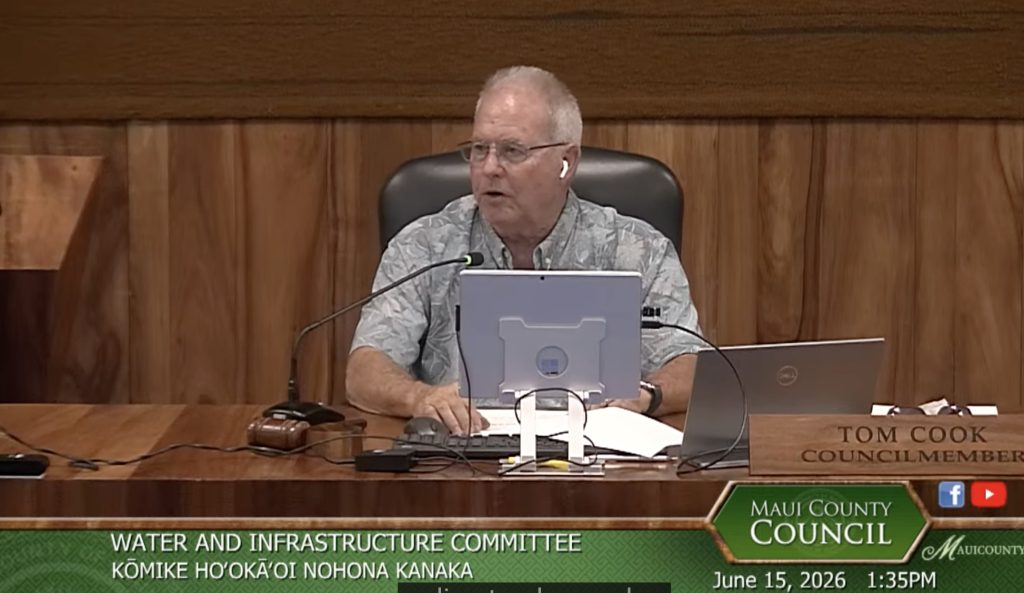
Committee Chair Tom Cook described the parking framework as a tourism management tool, giving residents reliable beach access on the weekends “and not have to fight to get there.”
“It isn’t necessarily a money maker. It should pay for itself,” Cook said.
Bill 68 now moves to the full Council for consideration.
More information about the Park Maui program is available at parkmaui.com.
Sponsored Content