 Hawai'i Journalism Initiative
5 political newcomers vying for Chair Lee’s Wailuku seat; winner could change balance of County Council
When longtime Maui County Council Chair Alice Lee announced May 8 she would not seek reelection for the Wailuku-Waiheʻe-Waikapū seat, it created an intriguing race of five political newcomers who all are active in public service.
Even before Lee, a moderate councilwoman in her late 70s, had decided not to run again, two progressive candidates, affordable housing advocate and policy analyst Alan Lloyd and attorney James Forrest, had filed papers prepared to take her on.
Also already in the race was longtime state airports manager Marvin Moniz, whom Lee immediately endorsed after announcing she would not run.
Since Lee’s decision, two more candidates have filed, arborist and pastor Randy Konohia and business owner and former Maui Planning Commission vice chair Ashley Lindsey, who are both Native Hawaiian and on the more progressive side.
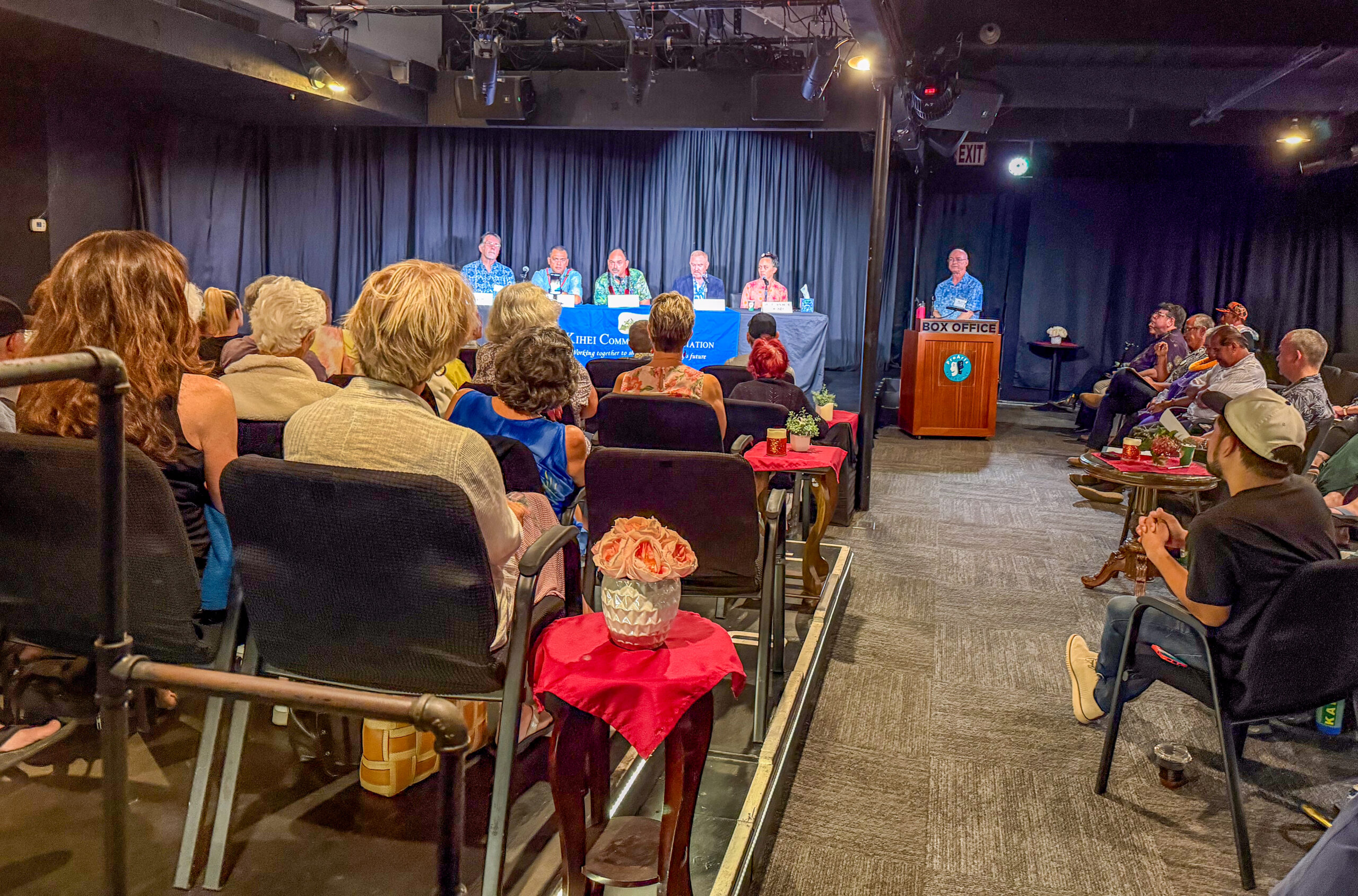
On Tuesday, all five sat together at a table at ProArts Playhouse for the Kīhei Community Association’s candidate forum.
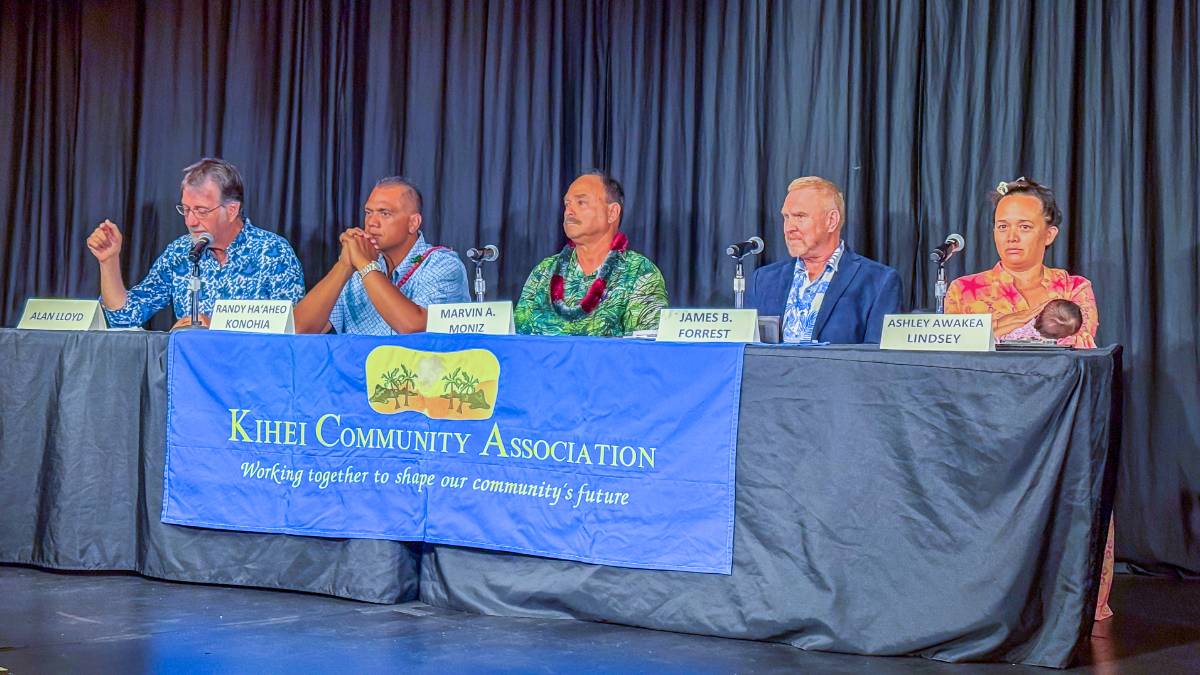
“What I heard was mostly candidates who are stepping up for the first time, no previous political experience, and clearly seeing that things need to change,” said Rob Weltman, a Maui resident for 13 years. “Mostly, they are very concerned about people having to leave the island because they can’t afford to stay here anymore.”
But while he thought the candidates all were passionate and cared, he was concerned there was “not a lot of clear ideas about how to address” the issues.
Lee has served 18 years on the council over two stints, the last six as chair.
This seat could turn out to be critical in determining the balance of the nine-member County Council, which now is 5-4 in favor of the moderate bloc.
With Lee and Vice Chair Yuki Lee Sugimura, who is not seeking reelection for the Upcountry seat to run for mayor, and South Maui Council Member and building general contractor Tom Cook in another tight battle with former council member Kelly King, the progressives see an opening to retake the majority.
“So I’m eager to join the progressive side of the council,” Forrest told the crowd. “That’s my cards on the table. And my favorite new candidate is Bobby Pahia (who is running for the Upcountry residency).”
Lloyd also touted his progressives chops, telling the audience: “Just also to let you know, I’m supported by Council Member Gabe Johnson,” who holds the Lānaʻi residency and is uncontested.
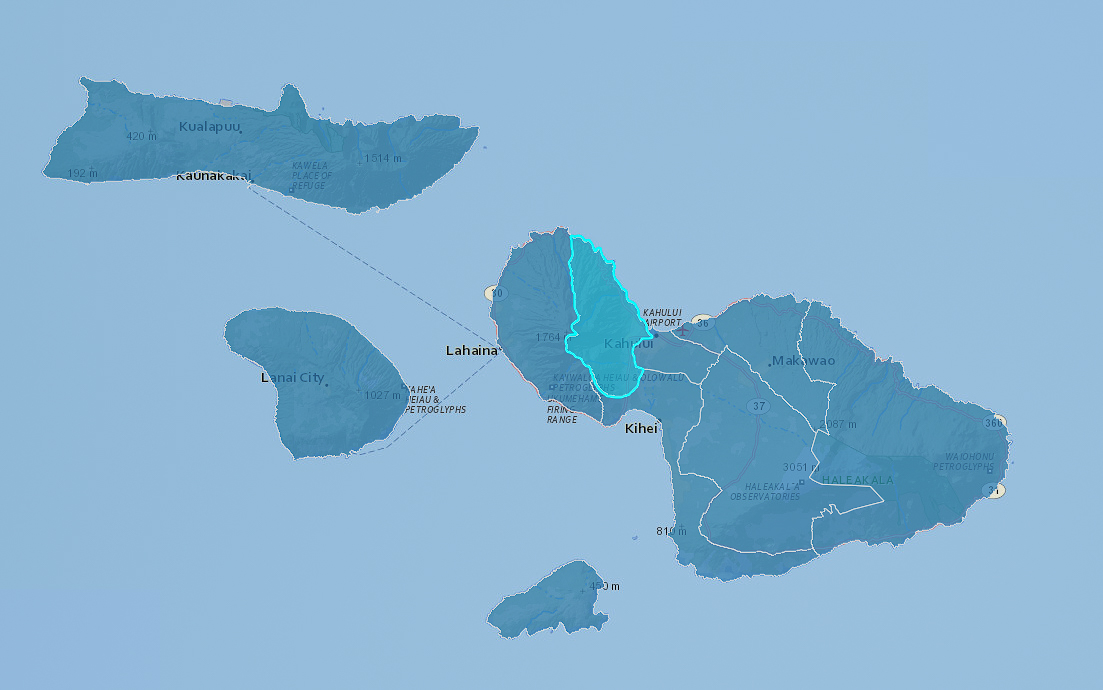
The primary election is Aug. 8, with the top two vote-getters for the Wailuku seat advancing to the general election on Nov. 3. All residents vote for all council seats.
But for the primary, the Wailuku residency is one of only three County Council seats that is being contested. Two seats are uncontested, and four others have only two candidates, which means they automatically advance to the general election.
Here is a look at the candidates in alphabetical order.

Forrest, with 25 years legal experience, said he calls himself “a friendly attorney because I fight for the people.”
The 50-year-old said his candidacy stands out because of his law background, which includes service as a public defender and as an attorney with the Hawaiʻi House of Representatives, Maui County Council Office of Council Services and Kauaʻi County Attorney’s Office, as well as positions in his home state of Texas.
“The council members are one of nine people on the island who have the ability to write laws,” he said. “My legal experience is very valuable, and it will enable our council to make more effective agreements, more effective laws. I can cut through the red tape. I can also watch for the loopholes, those sneaky things that other lawyers like to put in. I am the answer to that.”
He said his law degree will especially come in handy when the council deals with developers, who bring their whole team of attorneys and often “just steamroll through these contract negotiations. I will be there to stop that. I’ll fight for the people, not for special interests, not for big developers.”
He asked the crowed: “If we care so much about our island and we want to stop people from leaving, then why are we helping luxury developers? Why did we vote for Wailea 670? The whole community protested Wailea 670,” a mixed-use master-plan community of 1,150 homes in South Maui.
Forrest touted he was part of the Maui Pono Network as an ‘Ohana Candidate. This will be the second time he has run for the office. In 2024, he lost to Lee in the general election.
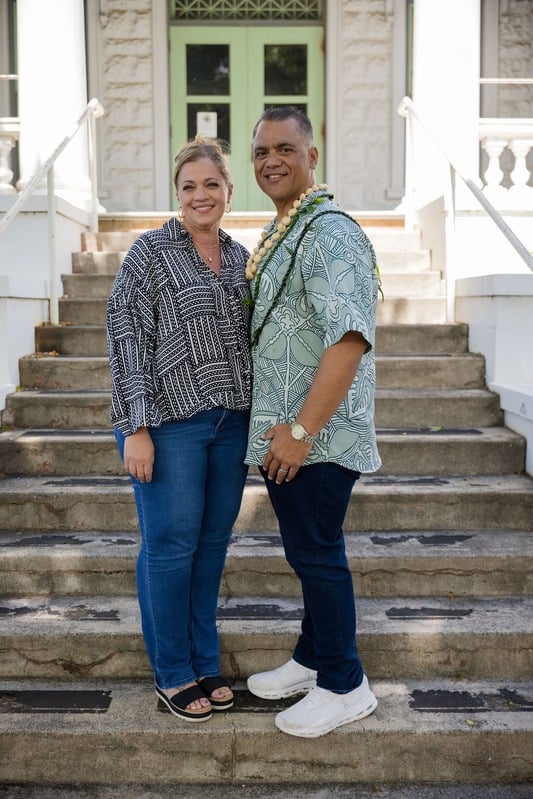
Konohia, 49, and his wife of 12 years have an 11-year-old daughter who attends St. Anthony School in Wailuku and a “whole blended family” with five adult children: three living on the mainland, one in Honolulu and one in Kahului.
He is a certified arborist by trade with 20 years in the industry, and currently working as the general foreman for the Asplundh Tree Expert Company, overseeing 30 employees across Maui and on Molokaʻi and handlng the day-to-day operations, including hiring, safety, compliance, budgeting and finances, and dealing with major contracts with the state and power companies.
“So I’m laser-focused when it comes to getting the job done safe, on time, and under budget,” he said.
He also is a pastor at King’s Chapel Kīhei, overseeing a “transformation ministry. It’s a ministry of encouragement.”
He and his wife spend their Monday nights helping men and women struggling with addictions and trying to overcome homelessness. They serve hot meals to over 120 people and provide child care.
He said they also go into the prison to help the incarcerated and “to share my testimony.”
Konohia served 12 years in prison on the mainland for a violent road rage incident in 2000 that happened in his early 20s. When he was released, he began his life of service.
“I’ve been just laser-focused in just helping the people of Maui,” he said. “So I choose to serve from my heart, and I just ask for your guys’ vote.”
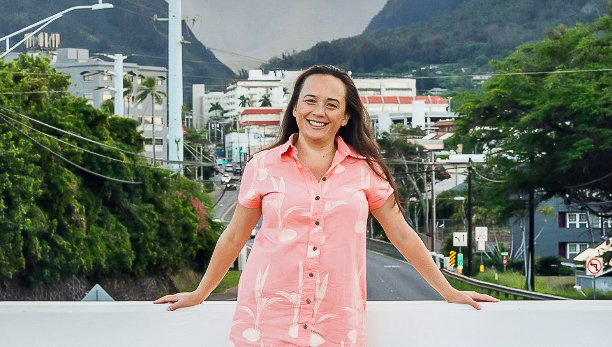
Lindsey, 42, sat at the table with her infant child, telling the crowd: “Sorry, we have a future voter here.”
Lindsey described herself a mother from Maui who grew up on the island and whose family has been here for generations. She served on the Maui Planning Commission, including as vice chair, with her term expiring in March.
She also was on the Wailuku Redevelopment Agency and was executive director for the Maui Historical Society, “so history is in my bones,” she said. She also has been on the board of Ke Kula ʻO Piʻilani, a Hawaiian charter and immersion school, for 10 years.
Lindsey got very emotional as she explained that she is running because of her family and her kids.
“Everyone’s moving away. We can’t have that,” she said. “What is Hawaiʻi without Hawaiians? So I’m here out of my comfort zone to be here for the people of Hawaiʻi, for the people of Maui, the people who grew up here, to represent them.”
She said she also has owned small businesses, including a small construction company, and has run bars and restaurants, and has been in property management for more than 20 years.
“I believe I can make a difference,” she said. “I have a lot of experience.”

Lloyd, a father of two adult children, said most people don’t know him because “I like to work quietly in doing what I do. But I’m a hard-driving, get-things-done person.”
The 72-year-old acupuncturist has a Master of Social Work in policy and planning, and has worked as a policy analyst for a police commission, state legislature and city council. He also said he has developed nonprofit housing.
He said he is running for a political seat for the first time “because many people have asked me to. I think it’s time for a change. And I want to focus on people who live and work here … because I think they’re being left behind.”
He was active after the Lahaina fire in the newly formed Maui Tenants and Workers Association, often leading groups to get their message that included rent stabilization to the Bissen administration.
His platform has five key issues: affordable housing (both ownership and rentals), affordable preschool, convenient local services for seniors, reducing grocery costs and maintaining infrastructure.
He said one way to create more affordable housing is to expand the two community land trusts on Maui so people don’t have to wait five to eight years for a new development in order to purchase a house.
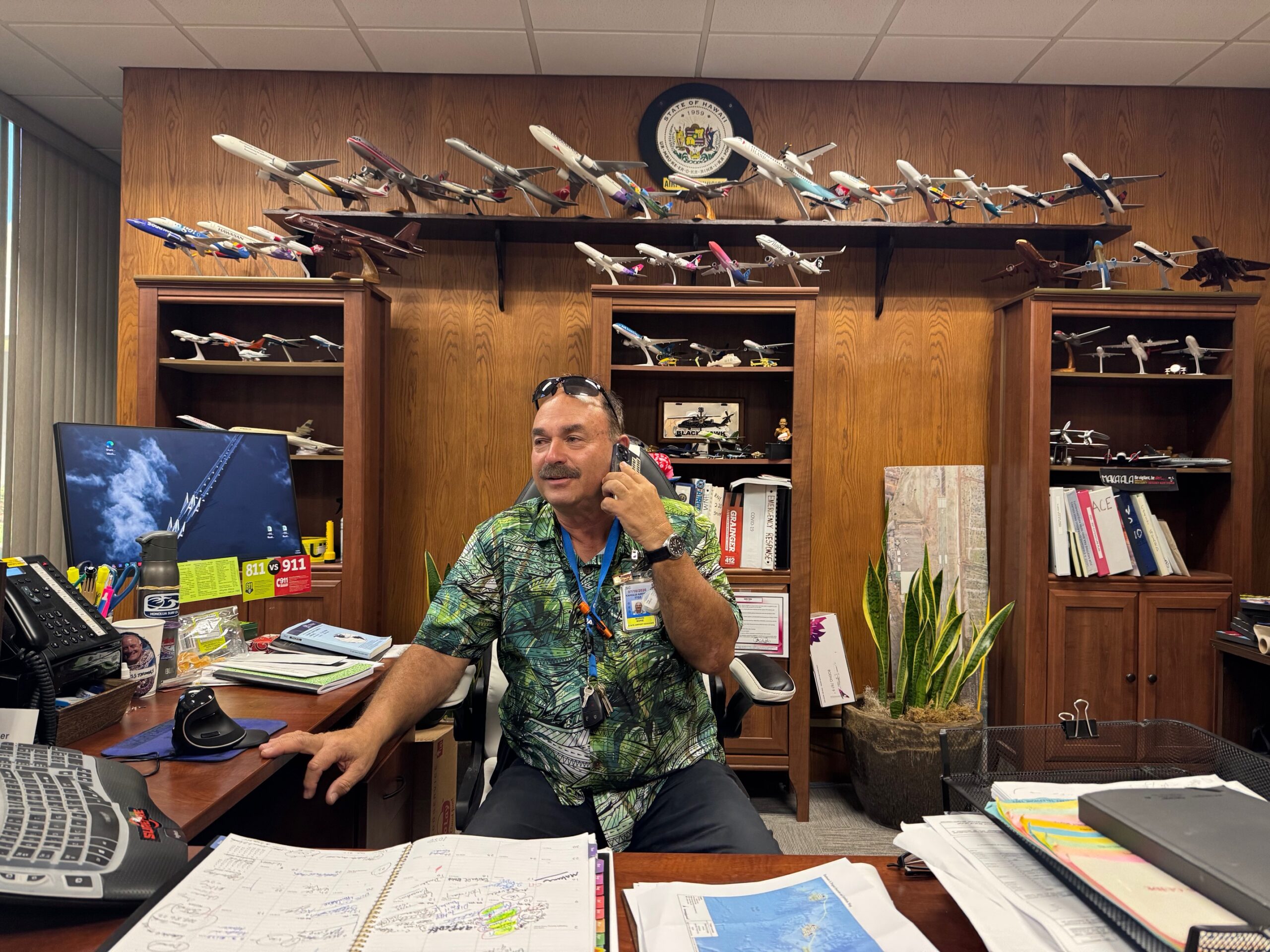
Moniz is a married father of three children and six grandchildren, with “one more on the way.”
He said he is running because he already has a daughter who has “moved away to Las Vegas” and due to his job at his airport he sees many “heart-wrenching” scenes of other families having to move away because they can’t afford to live on Maui.
“I see people moving away every week,” he said. “I see 7-, 8-year-old kids crying on the street. Bye, Grandpa. Bye, Grandma. Just crying. They don’t want to leave.
“I said to myself, I’ve got to do something for my community. I want to help the people. I can’t tolerate this anymore. So I pulled my papers, and I decided to serve our community.”
Moniz has managed the Kahului Airport for 20 years, and before that he worked for Hawaiian Airlines for 20 years.
“So I have a lot of years of experience managing crises,” he said. “I also have great relationships with our congressional parties, our state legislators, and our local government. And I want to continue that relationship with them because it’s key for us to have great relationships when we need to go out and get support for our community. I think we’ve come a long way. We’ve done a lot from fires to COVID, bankruptcies.”
Moniz said he also would advocated for more public-public partnerships, like the state airport fire department teaming up with the Maui Fire Department, which saves money.
“Instead of everybody having their own sandbox to play in, we shared the sandbox,” he said. “We bought tools together. We bought apparatus. We bought firefighting equipment, and we played in one sandbox. Now we respond to county fires with the airport. Likewise, the county helps us at the airport. And we’re doing training programs (together).”
Here is a look at the candidate’s positions on two key issues facing Maui County.
Vacation rentals and affordable housing:
After the Lahaina fires destroyed thousands of rental units, Mayor Richard Bissen proposed Bill 9, which eventually was passed in December 2025 and phases out nearly 7,000 transient vacation rentals in apartment districts. But six months later, the County Council passed Bill 88, which established a new hotel zoning framework that provides qualifying condominiums with a path to apply for rezoning to continue operating as a short-term rental.
Moniz, who got asked first about his position on those short-term rentals, said: “How much time do I have left? Just kidding.” Then he did his best to be neutral, saying there is “pros and cons” with the legislation.
“There’s a lot more that I need to know about Bill 9,” he said. “I know it’s a done deal. There was a lot put into it. I think there could have been a lot more time looking into the bill itself. I don’t know. I’m still reading on it.”
None of the five candidates know this issue better than Lindsey, who as a member of the Maui Planning Commission sat through more than 24 hours of public testimony and read through thousands of pages of testimony, which “took days out of my life and time away from my children.”
But she said despite “100%” of her income coming from long-term rentals, and understanding short-term rentals are the livelihood of others, she made the tough decision to support Bill 9.
“And I still stand by that vote,” she said. “Housing our people is the priority.”
Lloyd, who has advocated for tenants’ rights and affordable housing, said Bill 9 was “a way to start that process” of dealing with 20 years of not creating affordable housing.
“So I went back and forth on it. I testified in favor of it. But I had many concerns,” Lloyd said.
One of those concerns is that just by increasing the supply of housing will mean creating affordable rentals.
“I have research to show that in towns and cities, Seattle is an example, where they added 100,000 new housing units and it didn’t decrease substantially the price of rent,” he said. “We need some measure in this that will keep rents lower.”
Konohia said Bill 9 had “good intentions,” but he thought the process was “rushed and pressured.”
And while he is all for “locals getting homes and housing first,” he thinks “we just got to look at what Bill 88 is doing” and revisit the legislation. He said Bill 9 just hit everyone with a “hammer” and is “not fair for the guys who did everything right.”
Forrest said he supports the idea behind Bill 9, “which is to provide, of course, affordable housing” and fix a problem that had developed over about 20 years of those units being primarily owned by “people who don’t live here.”
“I’m looking at the taxing powers of property tax,” he said. “How can we provide incentives for local ownership and tax foreign ownership? That’s perfectly legal. Now, that is a slower approach, but it might be a wiser approach.”
He outlines his Locals 1st Bill 9 Plan that addresses affordable housing while “ensuring tourism benefits stay on Maui.”
How to protect the reefs from pollution and storm runoff
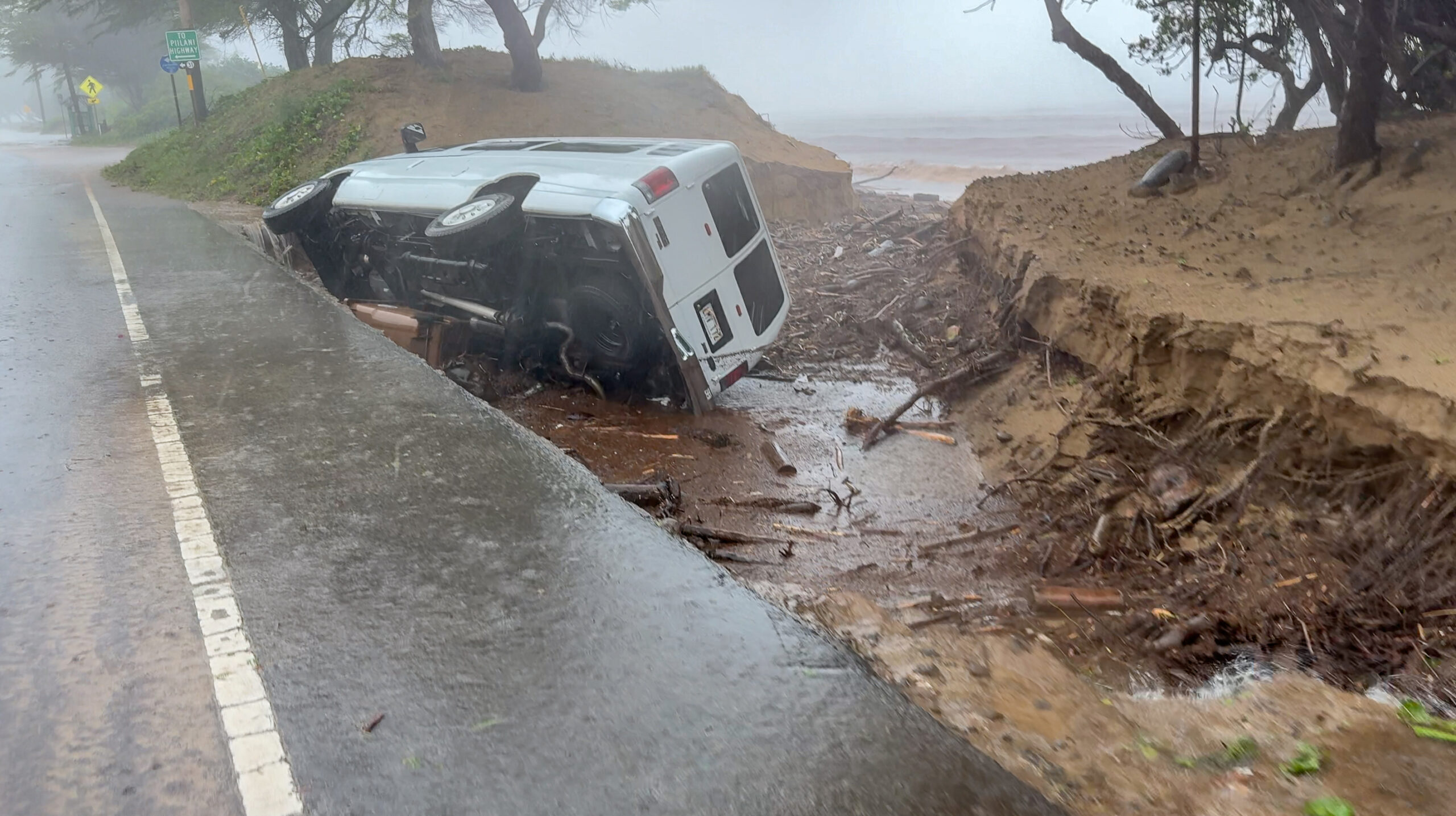
Many areas of Maui County have experienced flooding in the past few years, with storm runoff polluting the nearshore waters and the reefs.
Konohia, the arborist, said: “Itʻs all about looking up” and “you’ve got to plant trees.” He also thinks grass and other vegetation should be planted in gulches “to slow everything down from going into the reefs.”
The solution also is to partner with the Upcountry neighbors, including Haleakalā Ranch and Kaonoulu Ranch, “so we can build water basins so the water don’t run off all the way down.”
Moniz said at the airport, about 60,000 to 90,000 gallons a day of water is collected and treated to be used for irrigation.
“The water feature that you see when you’re driving in, that is all R1 water, treated water,” Moniz said. “We take that water and we use it for irrigation at night. We use it for the entire terminal and some of the areas off-site.”
He said similar projects could be done on the mountains: “So we can catch this water, we can treat this water, and we can use this water again … for fire control, dust control.”
He also said the county should reach out to other states and territories with similar flooding and reef problems and see how they handle it.
Forrest said while he served for three years as a legislative attorney on the County Council he worked closely with King on a wetlands bill, which would have created a map and wetland districts. But it did not pass.
“What went wrong?” he asked. “Developers. Developers are buying their way into our elections and controlling our council. … I would finish the job Kelly and I started. … That’s how you prevent the developers from having their way.”
Lindsey said it “starts with observation. The waterways that come down mauka (mountain) to makai (ocean) have changed over time. Development has changed it, the path of the water, the pattern of the rain. All of that is where we begin.”
She said after understanding this or finding people who do, then a plan can be made to deal with the reality that Kīhei was once a great wetland and now it is a “huge development.”
Lloyd said he supports wetland overlay districts to prevent building in these areas and having catch basins that capture the water before it can flow to the ocean.
“It seems like we’re not doing anything about it in the last 10 years, and we need to do something about it now,” he said.