West Maui watershed restoration engages Native Hawaiian students
The forests stretching from Honokōwai all the way up to Honokōhau, and the watersheds they protect, have been managed for nearly two decades from the top of the mountains to the ocean.
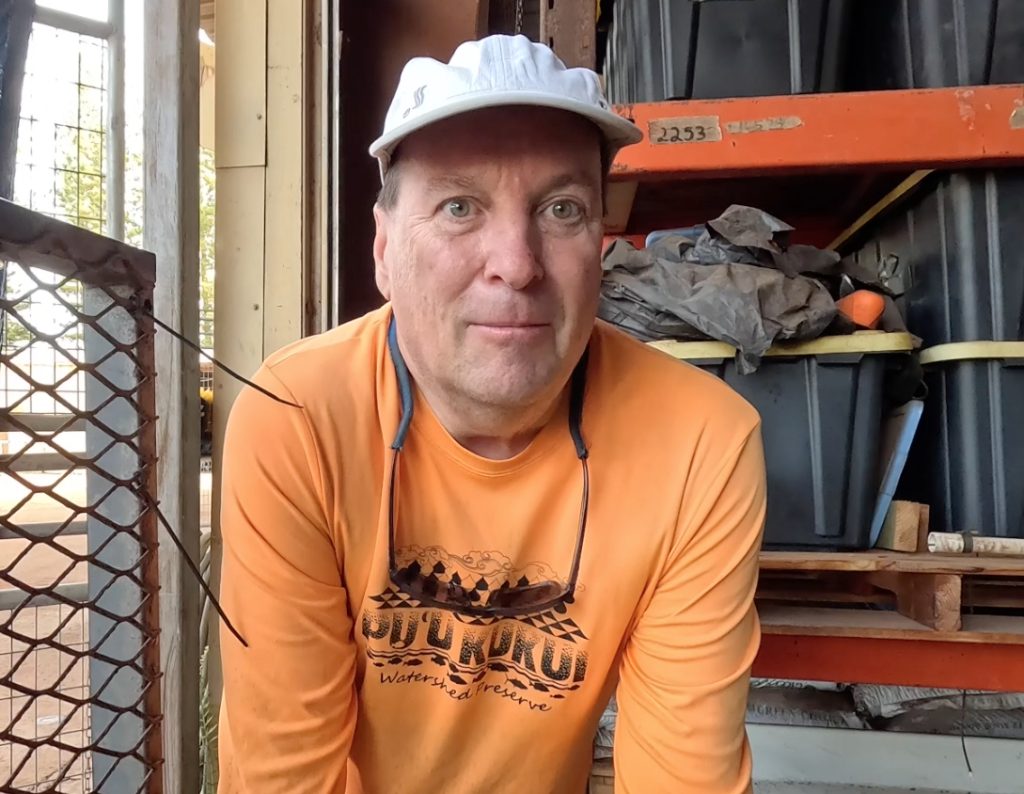
“You can’t just manage one part of it. You have to manage the whole, from the peak all the way to the ocean. They’re all connected. If you want the ocean to be healthy, the mountain above it has to be healthy,” said John Meier, president of the nonprofit Aloha Puʻu Kukui. His organization and a league of volunteers continue work to help restore vast acreages of land.
More than 9,000 acres of former pineapple plantation land in all is under co-management of Aloha Puʻu Kukui and The Nature Conservancy with support from the Hawaiʻi Department of Land and Natural Resources Division of Forestry and Wildlife.
Their mission is to help the watershed to capture as much water as it can. When a forest is intact and healthy, it captures water. Pigs, other invasive animals and plants need to be kept out of the forest for it to thrive.
The land is still owned by Maui Land & Pineapple Co., which provided conservation easements for the nonprofits to manage and restore the forest, and thus the watershed.
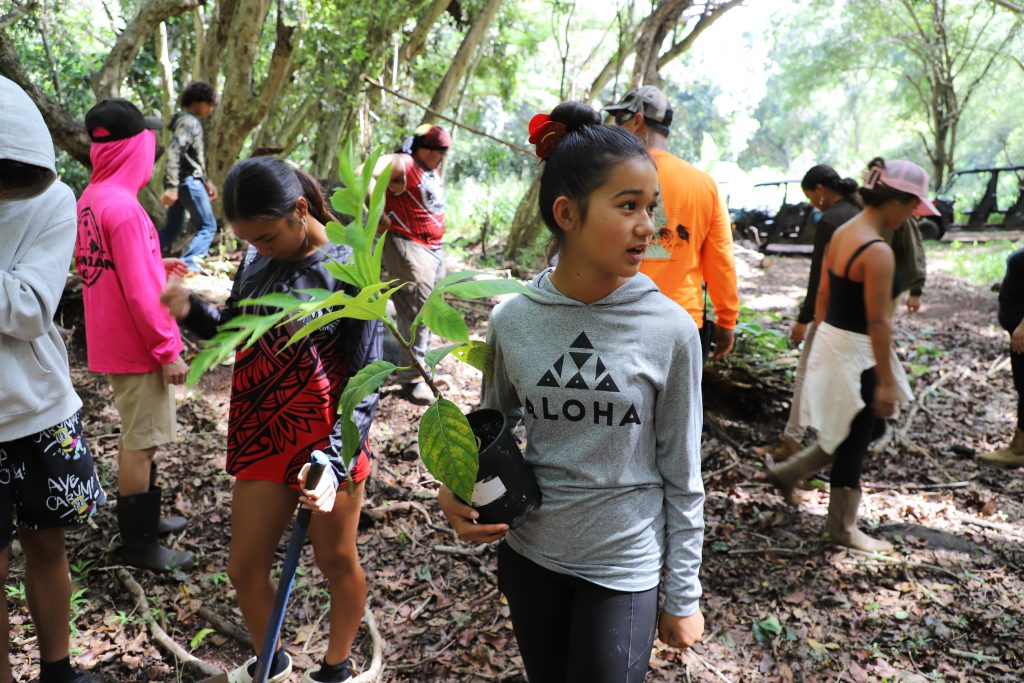
In this year of “The Community Forests,” as designated in a proclamation by Gov. Josh Green, students from Kula Kaiapuni ‘o Lahainaluna, the Hawaiian language immersion program at Lahainaluna High School, come to learn about the forest, the watershed and the importance of having native plants on the landscape for watershed protection.
 John Meier, president of the nonprofit Aloha Puʻu Kukui, discusses the need to protect and preserve the West Maui watershed. PC: Department of Land and Natural Resources
- Students from Kula Kaiapuni ‘o Lahainaluna, the Hawaiian language immersion program at Lahainaluna High School, come to learn about the West Maui forest, the watershed and the importance of having native plants on the landscape for watershed protection. PC: Department of Land and Natural Resources
- Lahainaluna Hawaiian immersion students use a shovel to prepare the ground for a new plant. PC: Department of Land and Natural Resources
- Students from Kula Kaiapuni ‘o Lahainaluna set out to begin watershed restoration work. PC: Department of Land and Natural Resources
- Native Hawaiian immersion students from Lahainaluna High School kneel to work on securing plants during a reforestation project in the West Maui forest. PC: Department of Land and Natural Resources
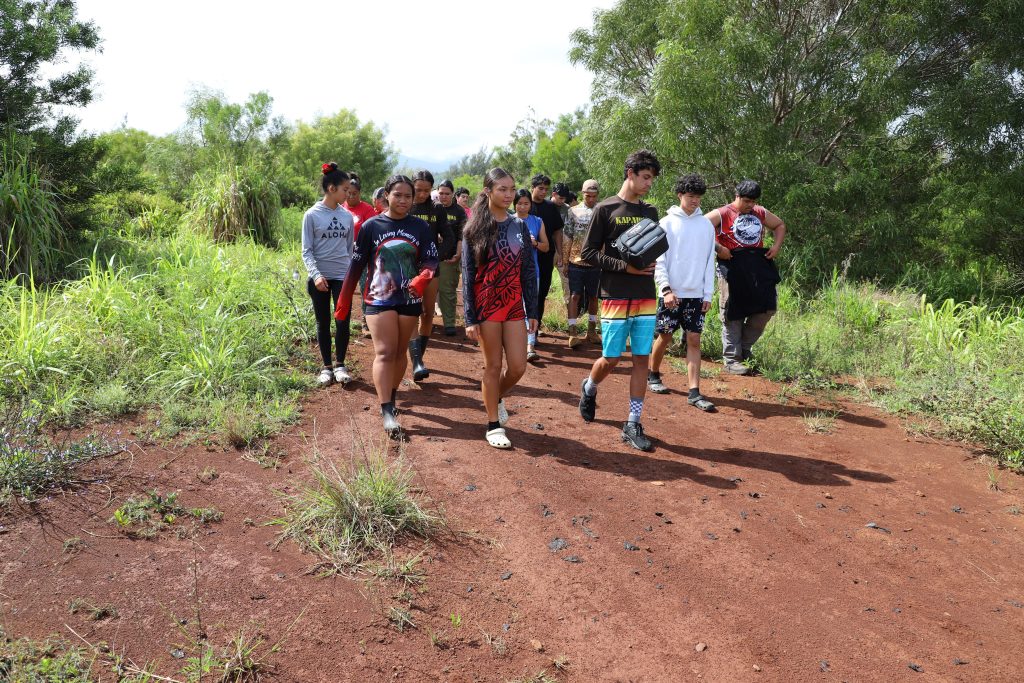
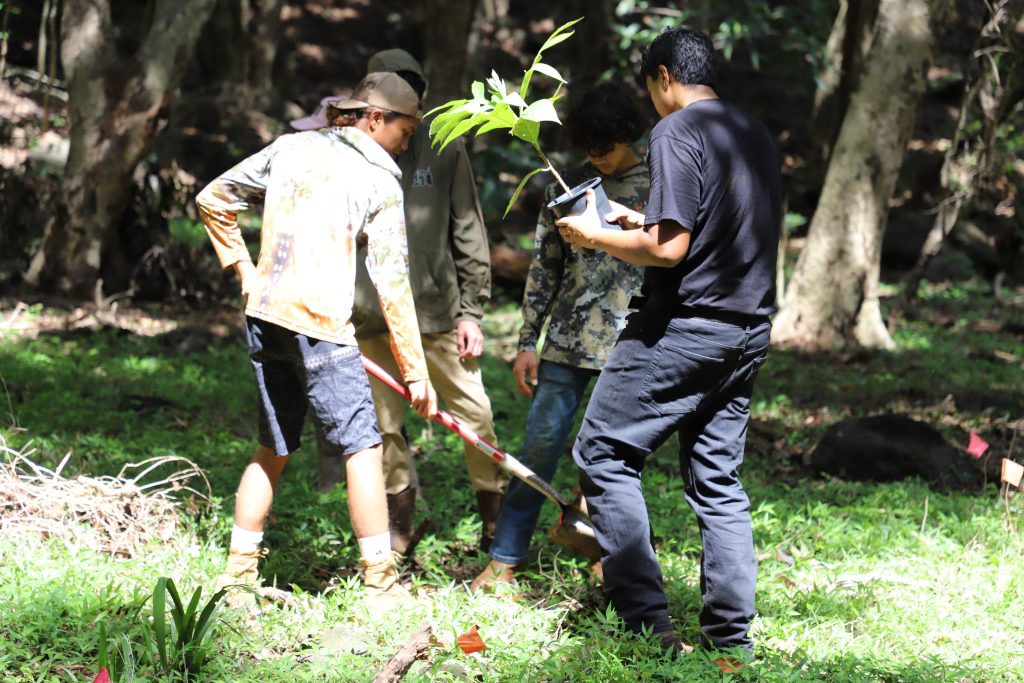
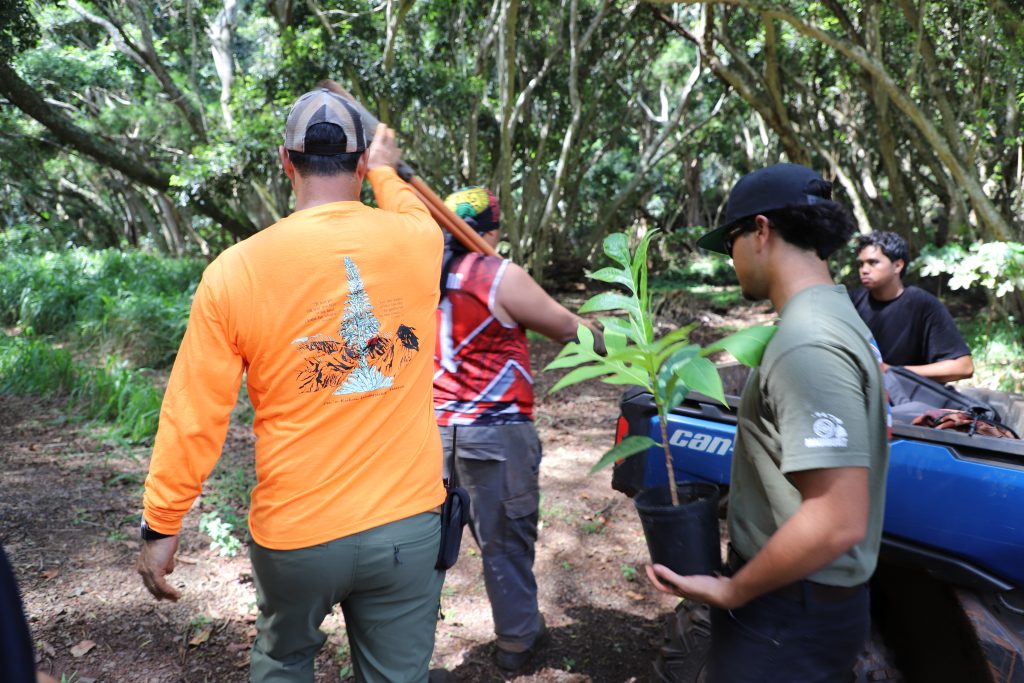
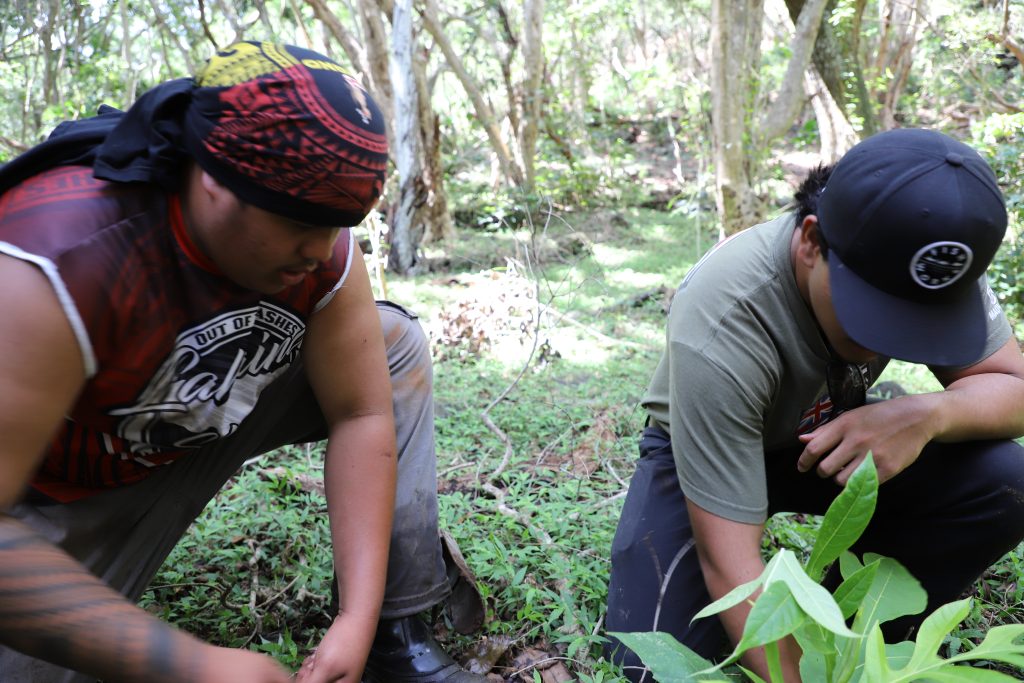

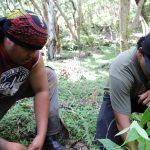
They spend the day, starting with protocols or pule, yanking weeds from the ground and digging holes to replace them with native plants.
During a short respite from the hot afternoon sun, student Kaliko Kalani Teruya reflected on what she hopes will be the result of their efforts. “ʻĀina momona (care for the land), choke plants make the rain come more often. ʻĀina momona so we can sustain and protect our native forest.”
“It’s very important,” said Aina Kapu. “Because here in Hawai‘i, this is where we come from, this is where we stand. This is where we expand our ʻike, our kuleana and our kūpuna did this for thousands of years, and we just want to repeat that same thing.”
Pomaikaʻi Kaniaupio-Crozier, director of conservation at Aloha Pu‘u Kukui, oversees the work on the ground not only for the Hawaiian students, but also for a wide variety of volunteer groups that help.
“Having the connection of Hawaiian reforestation and stewardship is really that pilina, that connection of what it takes to mālama, what it takes to be connected,” he said.
Kaniaupio-Crozier added: “Our forest in Lahaina was destroyed, and it was devastating, but it’s also an opportunity now, moving forward. How do we connect back to our forest in this year (of The Community Forests)? It’s important for us to share. These are the seeds that are site-specific that have been here for thousands of years, and so have their families, that they continue on the relationship and the practices of forestry stewardship and connection to ʻāina in their area, and they’ll share that with the globe. And so, we’re happy to have our Kula Kaiapuni because it becomes second nature to them. They’re not doing it for a brochure, some highlight. They’re doing it because they’re walking in the footsteps of their ancestors as kupa o ka ʻāina of these areas.”
At one stop, Meier points to a foot-high koa tree. In the distance is another koa, now full grown after 10 years.
“This area used to be all invasive weeds and ironwood trees, now it’s going to be koa and a‘ali‘i forest,” he said. In time, the group would like to have a contiguous forest all the way from the ocean to the top of the mountains. “Ironwood trees, Guinea grass, we had to clear that out.” Progress toward the goal is evident in many locations.
Kaniaupio-Crozier said: “We’re very pleased. Maui Land & Pineapple Company and the Pu‘u Kukui watershed, in collaboration with the DLNR, TNC, and Aloha Pu‘u Kukui. It’s nice to see community rally around any landscape, but especially a landscape like Honolua that’s connected from the summit of Pu‘u Kukui all the way through the entire landscape in the ahupuaʻa down to Honolua Bay, where Hōkūleʻa left for Tahiti in 1976. Very pleased, and hoʻomaikaʻi ke akua. Give my blessings for being allowed the opportunity to be a steward. It’s a humbling thing to touch ʻāina, to care for ʻāina in places like this. We know our kūpuna and ke akua, that he puts us in places for reasons, not to just pass through, but to make that ʻāina momona.”
Sponsored Content