
 Hawai'i Journalism Initiative
Homeless community at Amala Place must leave by next week, Maui County says
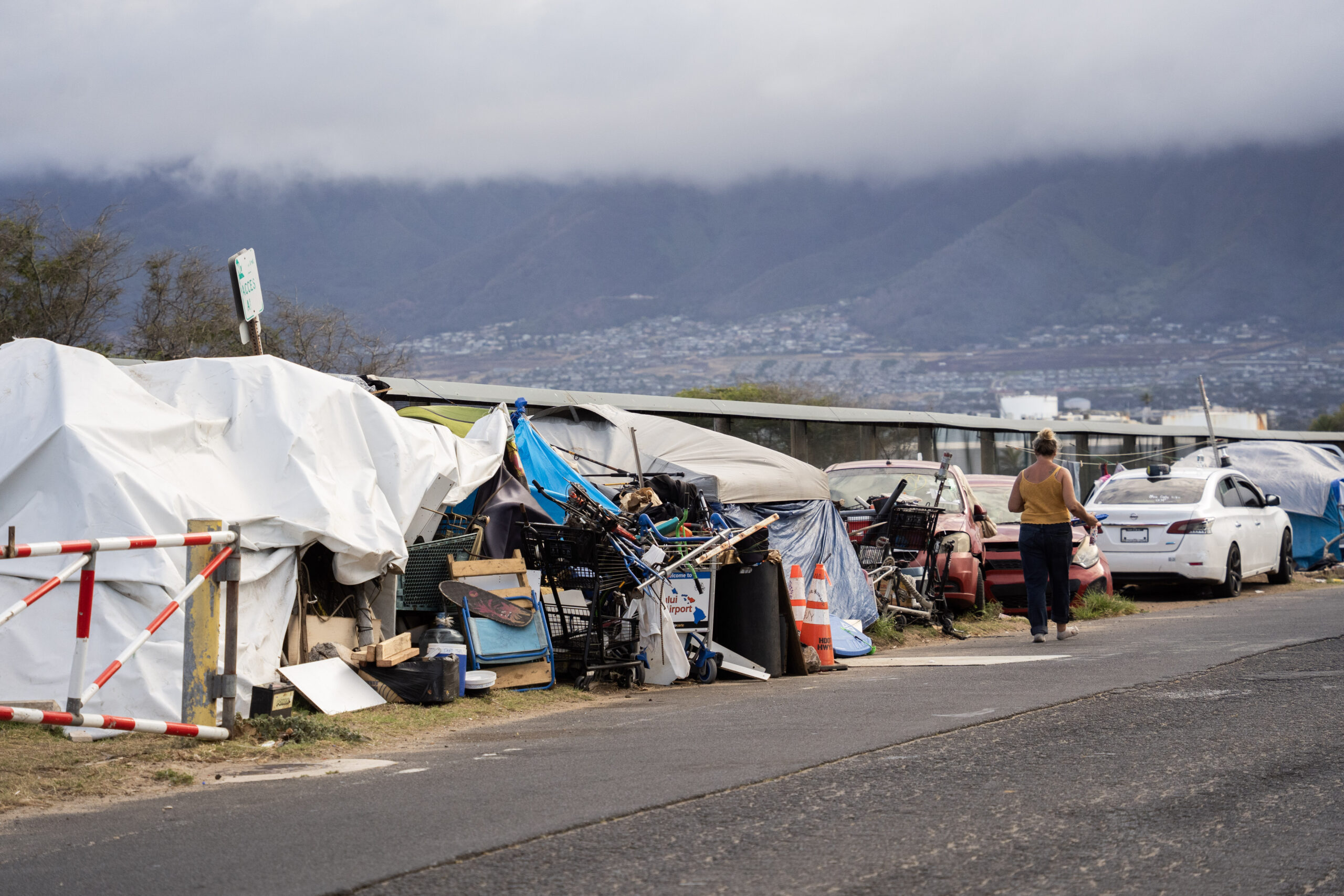
KAHULUI — Tricia Clements got a flyer on her van Tuesday telling her she had nine days to leave the homeless community on Amala Place where she’s been living for the past year.
“My heart drops to my stomach,” Clements said. “Where am I supposed to go?”
HJI Weekly Newsletter
Get more stories like these delivered straight to your inbox. Sign up for the Hawai‘i Journalism Initiative's weekly newsletter:
Clements is one of about 40 unhoused people who received notices to vacate from Maui County, nearly four years after county and state officials forced everyone to leave the area in a sweep that the courts later ruled had violated residents’ rights.
Maui County says this time is different — while they’re doing it for similar concerns over health and safety, they’re taking steps to ensure people can collect their belongings afterwards.
“At the end of the day, our crews must come and address the area,” Mahina Martin, Maui County’s director of public affairs, told the Hawai‘i Journalism Initiative on Thursday. “It is an unsafe area for folks who take up residency.”
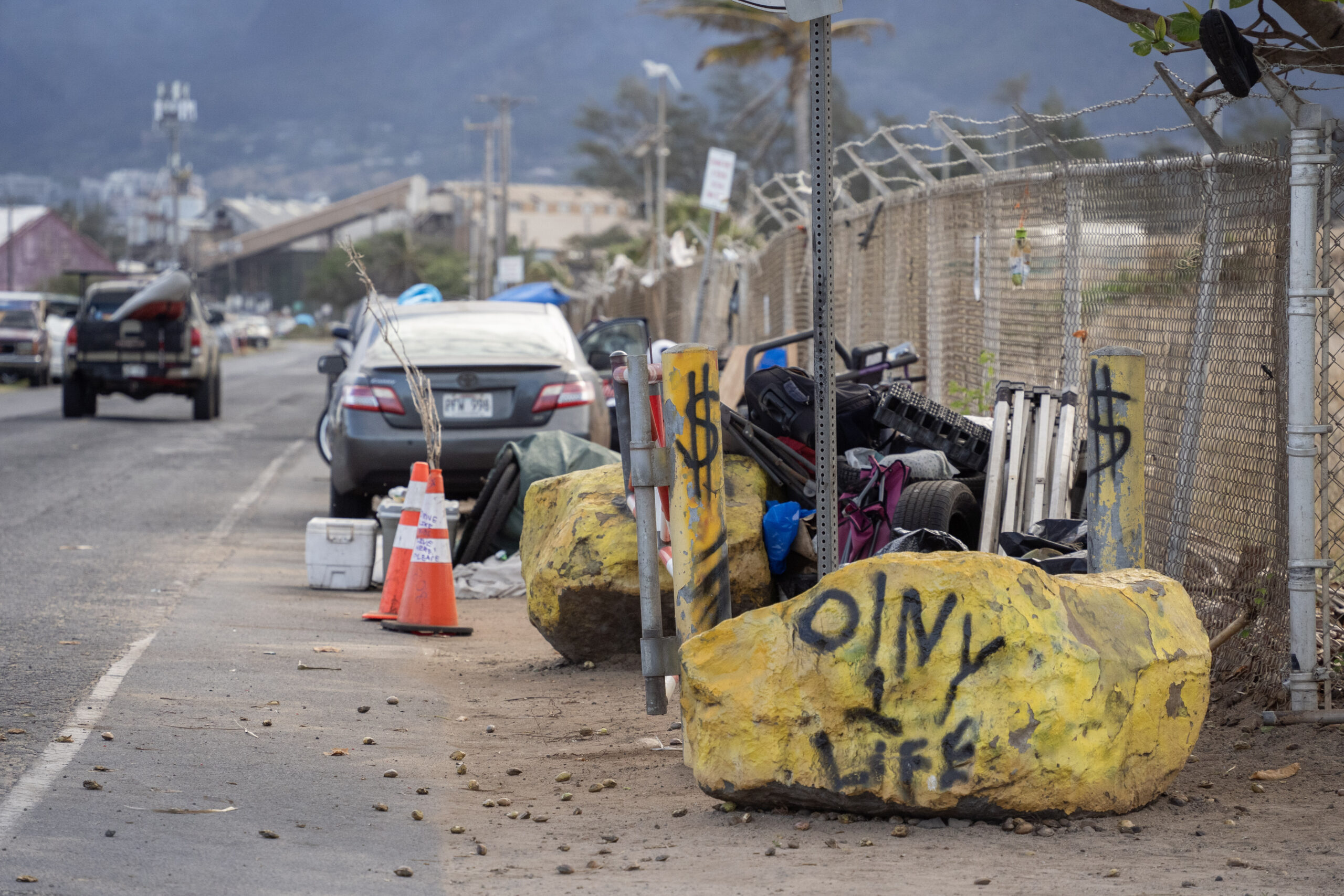
From 7 a.m. Thursday to 7 p.m. Friday, the county plans to close Amala Place and Ka‘a Street to clear out the area. According to the notice, “all campsites, personal property and vehicles must be removed” by 7 a.m. Thursday, or they will be impounded by the county and stored at a secured county facility. Residents will have the opportunity to reclaim the property within 30 days. If they don’t, the items will be sold, donated or disposed of.
“We are much better, way more clear on how we’re going to handle their belongings,” Martin told residents on Amala Place Thursday. “That is critical. We get it.”
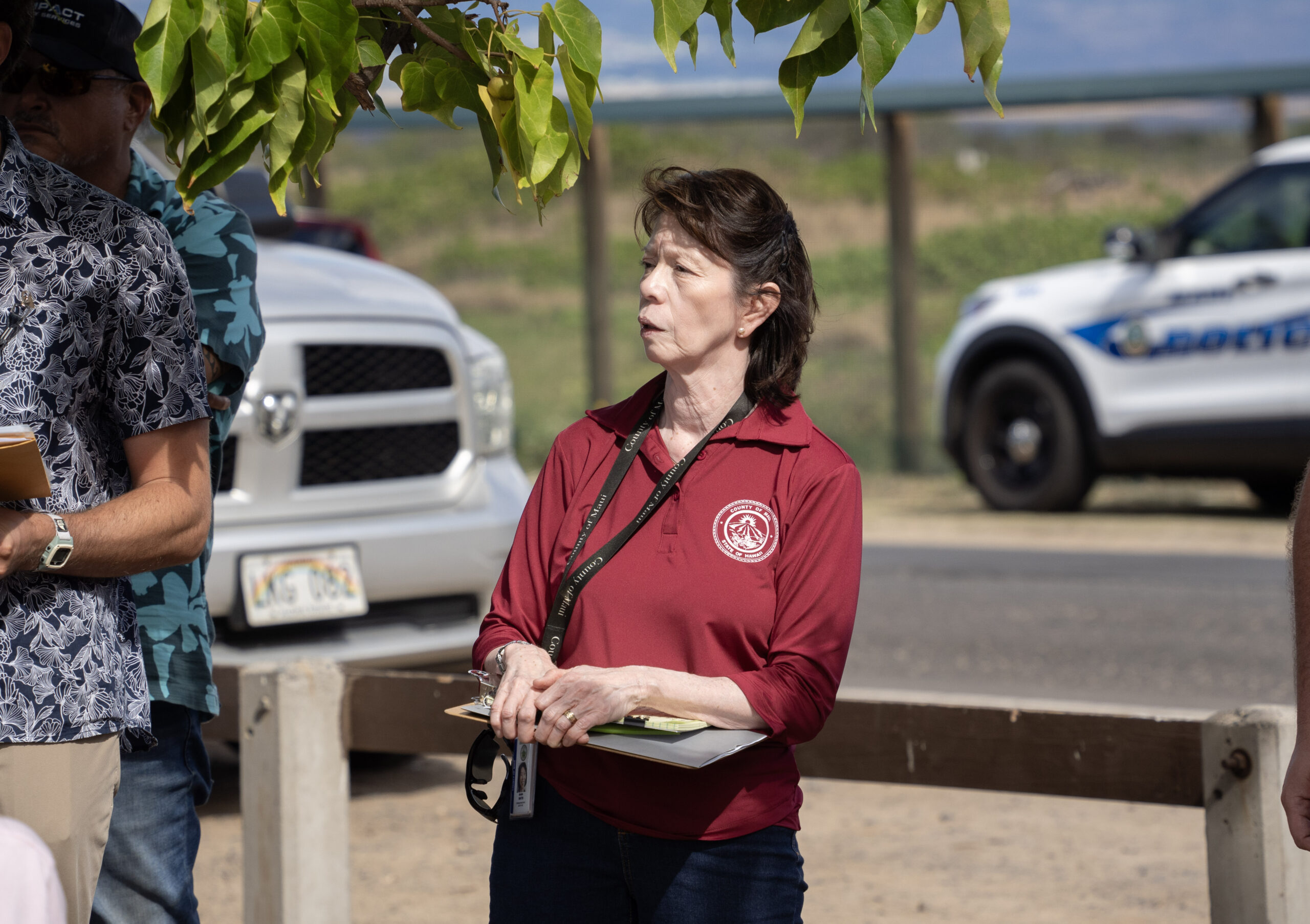
About 30 people, including a handful of Amala Place residents, community advocates, police officers, parks security and other county and state officials, gathered near Kanahā Beach Park Thursday for a meeting to talk about the county’s plans and hear people’s concerns.
Martin said residents will be asked to remove medication, important paperwork and anything of value. They will get a phone number to call a designated retrieval team on Maui who will meet the owner of the items where they are. She said while the county can’t store things like perishable food, they will err on the side of caution when deciding what is trash and what is someone’s belongings. Cars will also be stored for up to 30 days.
The county is not publicizing the location of the storage facilities, Martin said.
Anyone who remains on the premises when crews arrive on scene may be cited for trespassing under state law, according to the notice.
County officials say the situation at Amala Place has become unsafe, with the Maui Police Department receiving calls from drivers recounting near-misses of people on or near the roadways. The county says people have blocked the entrance to the wastewater treatment plant and tossed rubbish into the wildlife sanctuary.

But residents say they struggle to find shelter and housing on an island where median monthly rent is the second highest in the state.
Clements said she was houseless and living at Cut Mountain on the outskirts of Lahaina when the August 2023 wildfire displaced thousands of people on the west side. At first, the Red Cross put her and her husband at the Hyatt Regency Maui, but when her husband got into a motorcycle accident and had to be hospitalized, she moved to the Maui Seaside Hotel in Kahului. After they got into an argument and were kicked out, they ended up living at Kahului Harbor before being forced out last year. That’s when they took up residence along Amala Place.
Clements questioned how the county could kick them out when they had yet to set up the safe parking program that’s been promised for years to allow people to sleep in their cars in a safe designated area overnight.
“Why are you going to give us another damn ticket?” Clements asked at the meeting. “It’s just piling up, piling up, piling up.”
Martin said the county expects to choose a contractor for the program within a month. When asked if the county could wait until the program was up and running before it forced everyone out of Amala Place, Martin said conditions on Amala Place was unsafe and the county did not want to send the message that it was condoning the situation.
Advocates at the meeting Thursday said forcing people out of Amala Place would hurt an already vulnerable community and that the county did not provide solutions that would actually fix the problems they faced. They said residents of Amala Place “are our neighbors” but were being treated like pests to be swept away somewhere that the county wouldn’t have to deal with them.
“Giving people citations for trying to survive outside, it’s a systemic issue,” said Maya Marquez of Maui Rapid Response. “And incarcerating people is a systemic issue, and I think that’s the biggest barrier. We keep giving people tickets that we know can’t pay for them.”

In September 2021, Maui County and the state cited similar safety issues when they forced about 60 people to leave Amala Place and removed 58 tons of waste and 54 derelict vehicles from the area.
Four residents sued Maui County and then-Mayor Michael Victorino, saying they didn’t get enough notice and that their belongings were dumped with no opportunity for them to get it back.
Last year, the Hawai‘i Supreme Court ruled that the residents had constitutionally protected interests for the personal property destroyed in the sweep, and that they should have received a hearing beforehand. In January, a Second Circuit Court judge on Maui backed the decision.
When asked by Share Your Mana‘s Lisa Darcy on Thursday if what the county is now doing is legal, Maui County Deputy Corporation Counsel Caleb Rowe said that the court found that residents should have had a contested case because the county did not have other procedures in place to allow people to contest the destruction of their property and retrieve it afterwards. But, he said, the county is now providing that option.
“We are using a process now that is similar to the one that is used in the City and County of Honolulu that has been upheld as protection of people’s due process rights by the courts,” Rowe said.
The City and County of Honolulu was sued in 2016 over property lost during sweeps, leading to a settlement and guidelines on how property would be stored and retrieved in the future.
Now, Martin said, Maui County is “giving more care to how things are handled and a bit more procedural in how things are stored.”
“What we’re very mindful of is that there is a clear procedure, there is a notice, there is a retrieval process and that retrieval team is on Maui,” she said.

Maui County Department of Housing Concerns Director Lori Tsuhako said outreach has been ongoing for about six weeks leading up to the notices, but she said agencies like Family Life Center and the Salvation Army have been doing outreach even before that.
When asked why the county was kicking everyone out again when it didn’t appear to be effective the last time, Tsuhako said she disagreed.
“It did work for awhile. … Maybe that’s not the longest-term solution, but it gave them more safety than living on the side of the road,” she said.
Tsuhako said the solution to ending someone’s homelessness is to get them housed. So, in addition to “doing interventions to increase public health, environmental health, take away some of the risks to the county and to individuals of being run over and killed over here,” the county is also working to increase affordable housing so people have a place to go, she said.
“Sometimes being told that you cannot stay here anymore might be an impetus for somebody to say, ‘you know what? I’m kind of tired of doing this. … I’m ready to talk to you now,’” Tsuhako said.
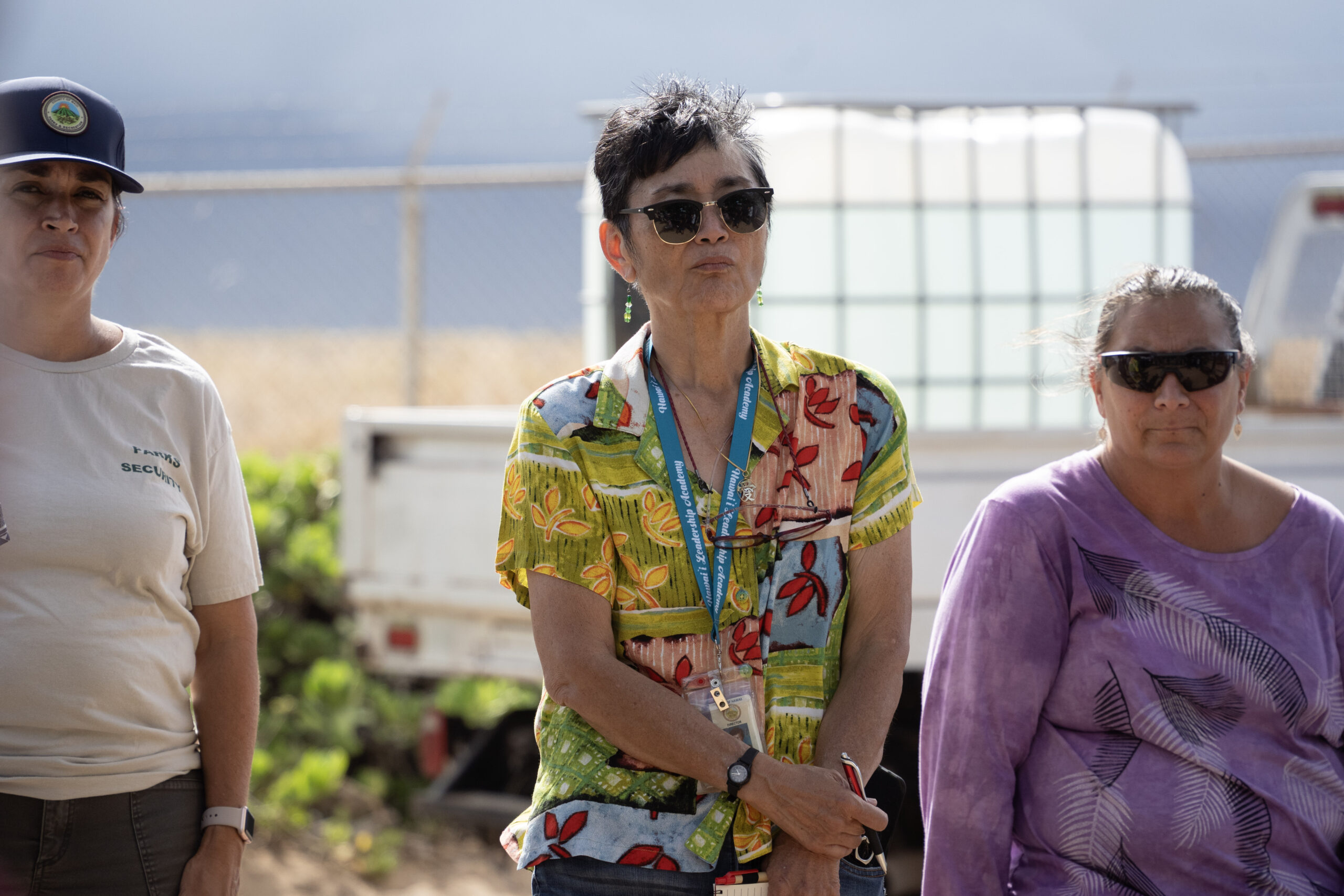
Maude Cumming, CEO of Family Life Center, said her organization has been going out to Amala Place every day for a month, pushing back against claims from the community that the nonprofit is rarely out there.
“We have the whole island to cover, a lot of other people that need services, but we’re putting some emphasis in this area because we don’t want to see anybody not having a place to be,” Cumming said.
Outreach work is all geared toward ending someone’s homelessness, Cumming said. It starts with an intake, then an assessment if they agree to it. From there they decide if a person needs additional services such as mental health resources and work with Ka Hale A Ke Ola to figure out their priority for placement in the shelter.
She said Family Life Center has been urging people to seek help ahead of time, saying that if all 40 people need shelter on the same day, it would be “chaos.” She said the center had already gotten two people into Ka Hale A Ke Ola’s shelter, and three others were interested but changed their minds because they thought the cleanup might not happen.
Cumming said about 25% of the people living there have been housed by Family Life Center before.
Family Life Center won’t be at the cleanup on Thursday, “because we are not enforcement, and we don’t want to be connected in any way to enforcement,” Cumming said. The nonprofit was there in 2021 at the request of Victorino.
Mō‘ī Kawa‘akoa of Holomua Outreach says she’ll be there that day. Her group leads cleanups and provides supplies and aid to the houseless community living on Holomua Road just beyond Pāʻia town. Kawa‘akoa said she planned to help people on Amala Place pack and move to a safe location, and potentially even provide car parts for broken-down vehicles.
“We try to just build pilina (relationship, connection) and advocate for our people and just show up,” she said.
Kawa‘akoa said the sweep — a term the county refuses to use but that residents say describes what is happening — is “retraumatizing our people over and over again.”
For Sonia Davis, one of the plaintiffs in the 2021 lawsuit, it feels like the county is doing the same thing as it did four years ago. She said she gets emotional thinking about what she went through and watching people get kicked out again.
“They just like live their life and have a safe place to stay,” she said. “They (government officials) do it backwards — they should find them one place to move them, then come clean up their stuff. … Because if not, they going come right back again. No make sense. Where else they going?”
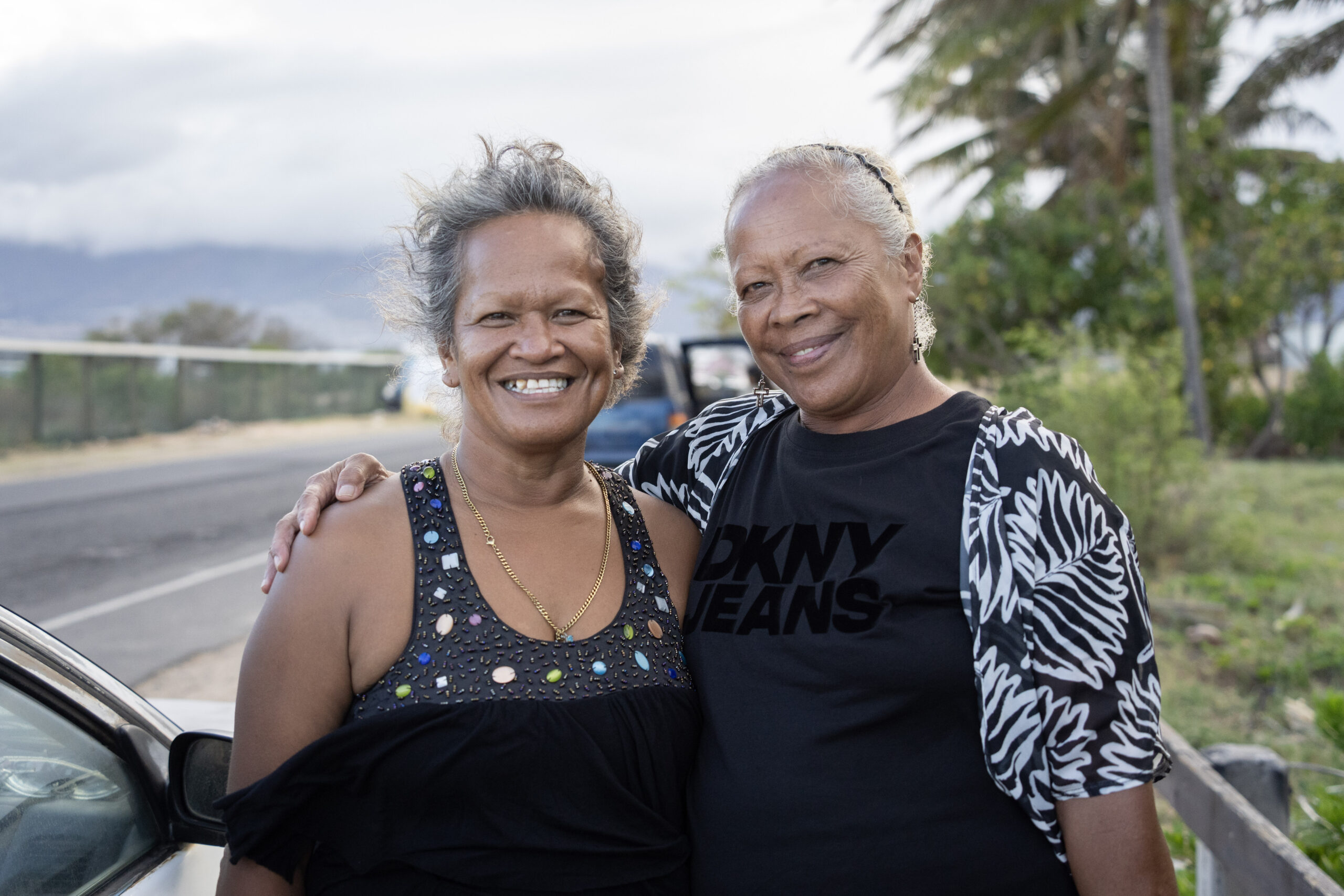
Davis lives in Harbor Lights Apartments now, but both she and fellow plaintiff Jessica Lau disagree with the notion that being kicked out of Amala Place would help direct people into housing. People just can’t afford it at the current rates, they said.
“You still haven’t solved the first problem,” Lau said. “… This is the first problem that they fail to help.”