New bipartisan bill aims to boost housing near transit in Hawai‘i and beyond
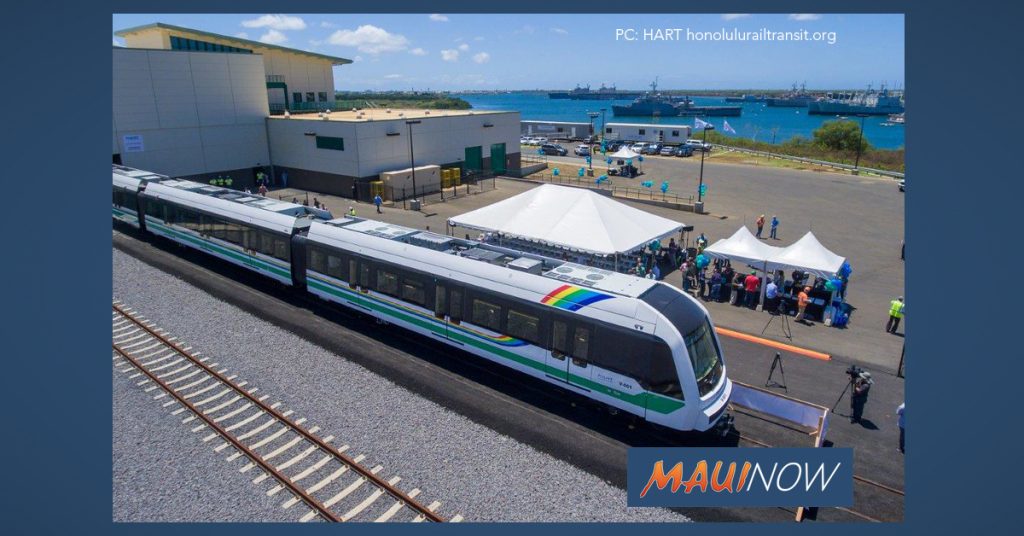
Hawai‘i US Sen. Brian Schatz, a Democrat, has teamed up with Indiana Sen. Jim Banks, a Republican, to introduce the “Build More Housing Near Transit Act.” The bipartisan legislation is designed to encourage local governments to increase housing development in urban and suburban areas well-served by public transit.
The proposed legislation builds on Schatz’s ongoing efforts to address the national housing crisis, particularly in transit-oriented communities where housing options are often scarce.
“The clearest way out of our national housing shortage is by building more housing,” Schatz said. “Our bipartisan bill incentivizes cities and towns to build housing when they expand or redevelop their public transit systems. This will help put more families in homes, grow local economies, and cut carbon pollution. It’s a win for everyone.”
Banks added: “This bill makes it easier for communities to build homes for working families by cutting red tape and giving them the freedom to create strong, family-friendly neighborhoods near public transit.”
The Build More Housing Near Transit Act would direct the Secretary of Transportation to give a “scoring boost” to competitive grant applications for public transit projects. This boost would be awarded to projects that incorporate regulatory reforms designed to facilitate new housing near transit stations. These reforms could include removing expensive parking mandates, streamlining housing approval processes, allowing for smaller housing lots, and increasing height limits, among other pro-housing policies.
The legislation comes at a time when 47% of renter households nationwide are “cost-burdened,” meaning they spend more than 30% of their income on housing. A significant factor contributing to this burden is the lack of affordable housing options in areas with good transit access. Furthermore, transportation costs are typically a household’s second-largest expenditure after housing, highlighting the potential for dual benefits by integrating housing and transit.
Proponents of the bill argue that by improving access to transit centers, the act will connect more residents with job opportunities, thereby boosting economic output. It is also expected to reduce greenhouse gas emissions by encouraging greater use of public transit. Ultimately, the legislation aims to make federal transportation projects more efficient and ensure the effective use of taxpayer dollars.
Mike Kingsella, chief executive officer of Up for Growth Action, commended the senators’ initiative.
“America is experiencing a severe housing shortage that affects every aspect of American lives and the economy,” he said. “The Build More Housing Near Transit Act addresses the critical link between transportation and housing and would create greater access to affordable commutes and abundant housing. We applaud the lead sponsors for introducing this bill, serving as an example of how the federal government can use its leverage to ensure the right types of housing are available in the places people want to live.”
Alex Armlovich, senior housing policy analyst for the Niskanen Center, highlighted a long-standing issue the bill aims to correct.
“For decades, the federal government has funded mass transit projects in cities whose growth control laws do not allow people to live near and ride on transit. The Build More Housing Near Transit Act finally corrects this,” Armlovich said. He added that the bill protects both transit riders and federal taxpayers by ensuring that transit investments are not undermined by restrictive zoning regulations that hinder housing and ridership growth.
Sponsored Content