Zero-emissions buses arrive in Hawaiʻi
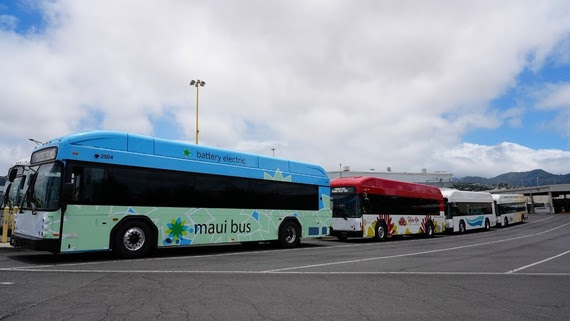
The state Department of Transportation unveiled Friday a dozen zero-emissions, battery-electric buses that will be distributed to all four counties in Hawaiʻi, including Maui County.
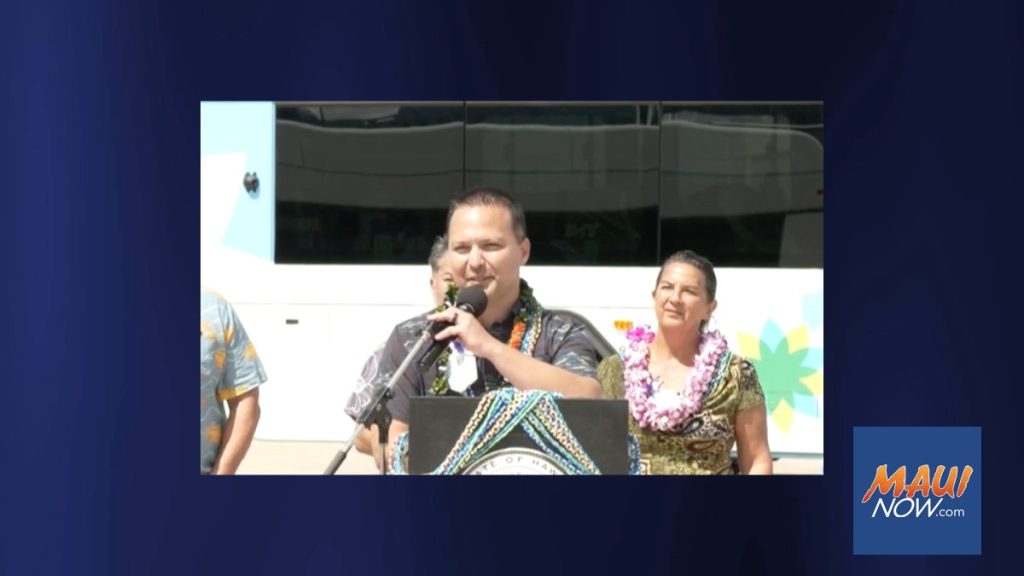
At an unveiling ceremony on Oʻahu, Maui County acting Mayor Josiah Nishita stood in for Mayor Richard Bissen, who was in New York with a Hawaiʻi delegation to submit the state of Hawai‘i’s third Voluntary Local Review to the United Nations.
Nishita thanked the Department of Transportation for the buses, three of which arrived at Kahului Harbor on Friday. Another one is on its way. Each bus costs $1,179,745, according to the department. Hawaiʻi and Kauaʻi counties also will get four buses each.
“This is about partnerships,” Nishita said. “It’s about working together. It’s about collaboration. We work to achieve sustainability goals.”
He echoed earlier remarks from Bissen that there’s no word for “sustainability” in Hawaiian “because that’s just a matter of life, and that’s just how we live.”
In a news release, Gov. Josh Green called the arrival of the zero-emissions buses a “milestone” in the “state’s continuing effort to reduce Hawai‘i’s dependence on imported fossil fuels while enhancing the Islands’ energy security. We appreciate the Federal Transit Administration’s support in providing the grant funding to secure these buses and allow the counties to invest in improvements and infrastructure upgrades needed to transition their fleet to electric buses.”
With this delivery, 12 diesel buses on Kauaʻi, Maui and Hawaiʻi Island will be replaced with battery-electric buses, according to the state transportation department. The estimated nitrogen oxides emissions reductions for each bus replaced is 1.445 tons over the lifetime of the bus, equating to a total reduction of approximately 17.34 tons of greenhouse gas emissions.
The Federal Transit Administration provided $11.2 million to the Zero Emission bus project through its “Low or No Emissions” competitive grant and “Buses and Bus Facilities” formula program, covering part of the project’s total $16.6 million cost. The Hawai‘i State Energy Office contributed $3.53 million from the Volkswagen Settlement funds, with the remaining amount covered by the counties.
All counties have set a goal to convert public bus fleets to 100% renewable fuels by 2035. Honolulu will also be purchasing new zero-emission buses in the upcoming years to add to TheBus fleet. Honolulu currently has 17 zero-emission buses that operate island-wide on Oʻahu and the city has secured funds to purchase up to 78 additional buses in the next three years.
“These battery-electric buses have been a game changer for Honolulu,” said Honolulu Mayor Rick Blangiardi. “They are quiet and efficient, with top-notch performance ensuring our riders a safe, comfortable and high-quality ride. Our riders love them. Our bus drivers love driving them. I’m proud that our city and the state, are taking steps together toward a cleaner transportation future.”
The City and County of Honolulu is constructing new and additional charging stations for electric buses at the Alapaʻi Transit Center, Kalihi Transit Center, Pearlridge Mobility Hub and the Pearl City Bus Facility.
Kaua‘i Mayor Derek S.K. Kawakami added: “Today marks an important milestone, not only for the County of Kaua’i, but for the entire State. This marks a significant step towards a cleaner, more sustainable future. The introduction of electric buses into our County’s fleet is more than a transportation upgrade; it is a clear commitment to environmental responsibility in our County and State. We understand the importance of caring for our Earth, and transitioning to electric buses helps us reduce emissions, lower long-term costs, and lead by example in the fight against climate change. These vehicles show our continued commitment to investing in technology that aligns with our values.”
Hawai‘i Island Mayor Kimo Alameda said: “These new electric buses are a significant step toward reducing our emissions and expanding sustainable transportation options for our residents,” “They are a win both for our environment and the people of Hawaiʻi. Mahalo to our federal and state partners for helping us make this forward-thinking investment possible.” The new buses will reduce emissions, improve air quality and protect public health in targeted residential, rural and school zones in Hawaiʻi susceptible to air pollutants. Diesel bus replacements reduce diesel particulate matter and greenhouse gas emissions, benefiting susceptible communities and improving Hawaiʻi’s air quality.
Sponsored Content