Ethical return: Bishop Museum sending latte stones and 10,000 artifacts back to Mariana Islands
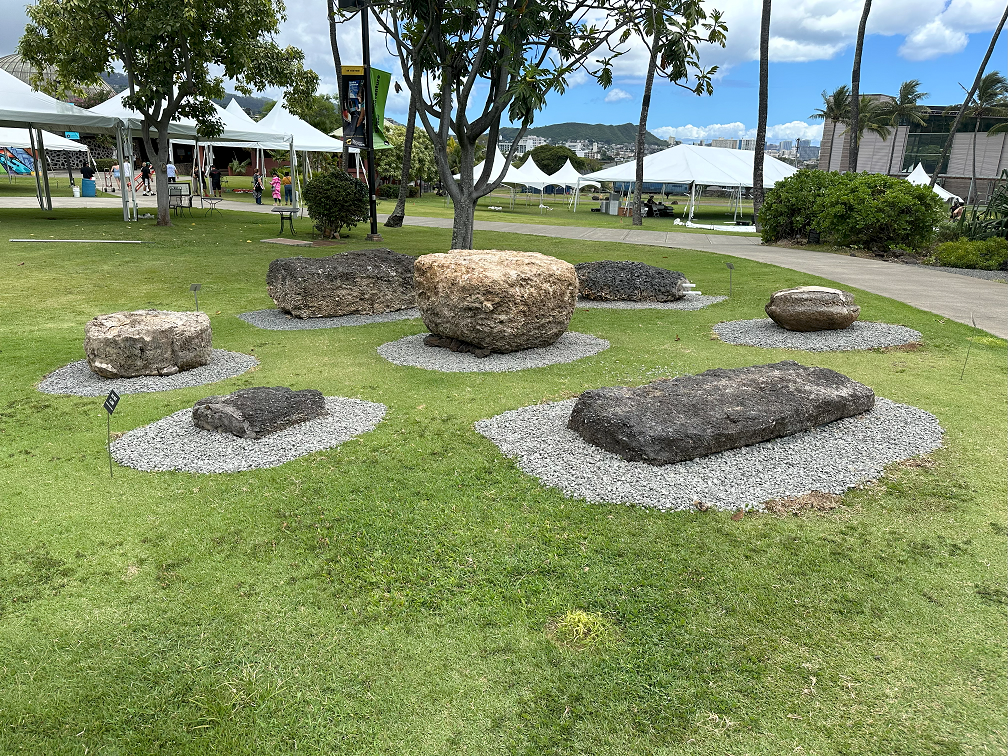
Beginning in August 2025, Bishop Museum, the State of Hawai‘i Museum of Natural and Cultural History, will initiate a phased return of more than 10,000 pieces from the Museum’s permanent collection to the Mariana Islands, including the latte stones currently on display in front of Hawaiian Hall.
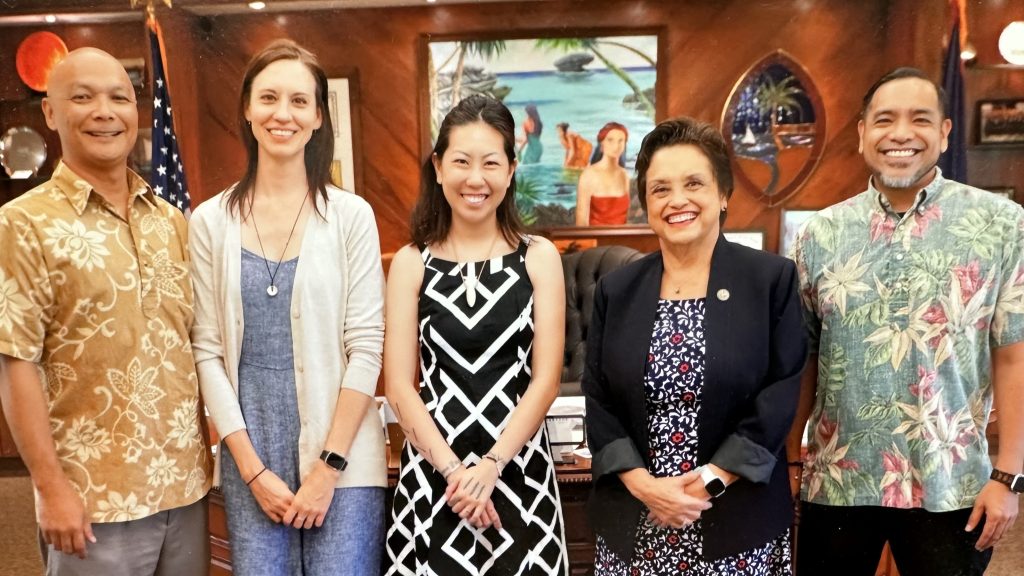
Bishop Museum’s Board of Directors have unanimously voted to deaccession pieces in the Cultural Resources collection originally acquired by Hans Hornbostel in the early 20th century. This landmark decision comes after three years of collaboration with government officials and colleagues at peer institutions including the Guam Museum, the Guam Cultural Repository, Guam State Historic Preservation Office, the Northern Mariana Islands State Historic Preservation Office and the Northern Mariana Islands Museum of History and Culture.
The decision to rematriate these pieces is in response to requests from the Guam Government dating back to the 1930s, calling for the reunification of the items with their home countries, and from Bishop Museum’s present-day consideration of ethical museum practices.
Rematriation is a movement focused on restoring Indigenous peoples’ relationships with their ancestral lands and cultures. Whereas repatriation refers to the physical return of human remains and ancestral, often-associated burial belongings, rematriation speaks to a deeper restoration and of cultural continuity.
“The return of these pieces to the Mariana Islands fortifies a multi-year partnership between Bishop Museum, Guåhan and the Northern Mariana Islands,” said Healoha Johnston, the museum’s cultural resources director. “Rematriation can be the beginning, not the end, of connecting source communities with their art and human record.”
The Hornbostel Collection includes artifacts excavated — and in some cases unethically taken — from family lands between 1920 and 1927. Latte sites, or guma’ latte, were Indigenous house structures built atop stone pillars and capitals, often over the graves of elders. They remain powerful symbols of CHamoru identity.
Guam Lt. Gov. Josh Tenorio called the return “a new chapter of friendship and collaboration,” while Guam Department of CHamoru Affairs President Melvin Won Pat-Borja said it “rights a historical injustice.”
“The return of this collection is long-awaited, and builds on generations of Chamoru research, stories and the collective memory of the Hornbostels in Guåhan and the Mariånas,” said Nicole DeLisle Dueñas, Guam Cultural Repository. “It marks a critical and much-needed paradigm shift in museums globally, including decolonizing museum practices and honoring Indigenous connections to place. We’ve been very fortunate to work with the team at Bishop Museum, including Kanaka Maoli staff, who are dedicated to true rematriation, Indigenous participation, and collaboration — their support helped make this return possible.”
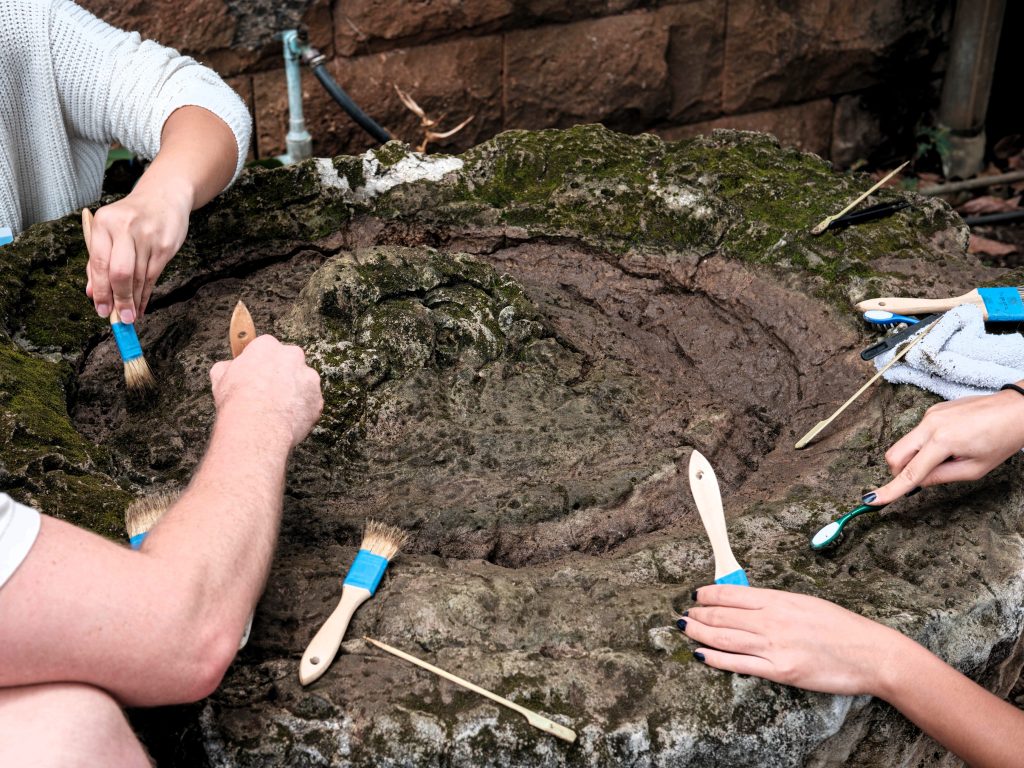
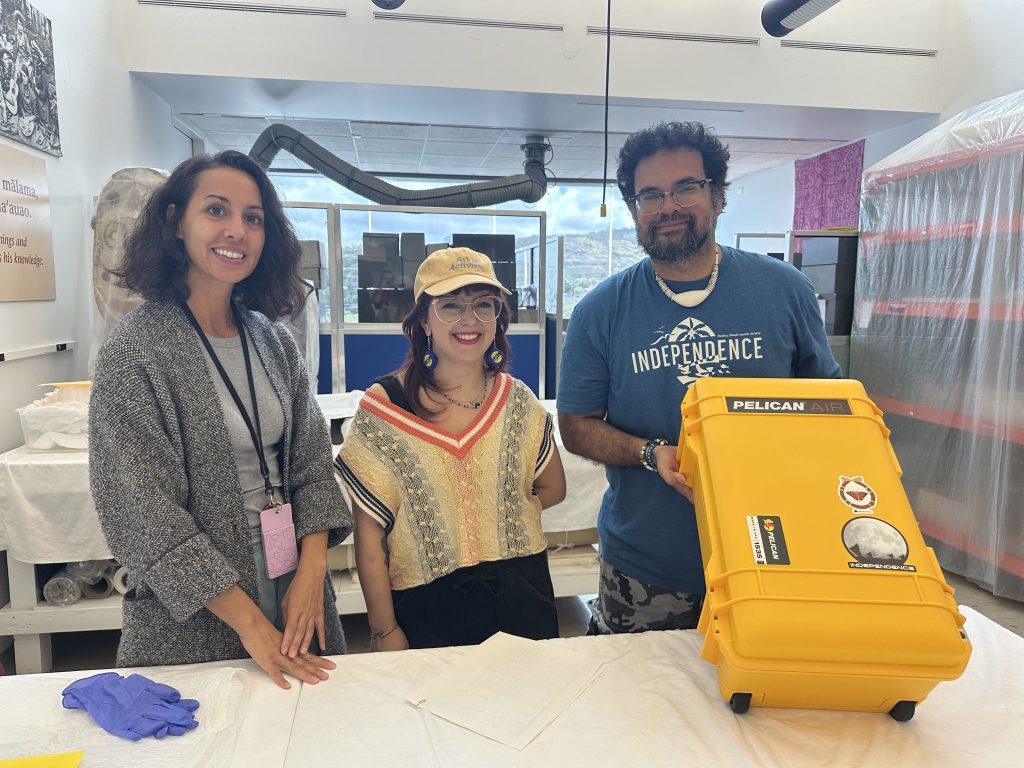
The decision for rematriation was made after three years of inter-institutional collaboration, and was supported through funding provided by the Mellon Foundation. Key efforts included listening sessions, collection care days with the community, working group sessions, collections accesses, presentations by Museum curator Sarah Kuaiwa about the collection and institutional history and, a series of consultations conducted during the Festival of Pacific Arts and Culture held at Bishop Museum in 2024.
Bishop Museum is partnering with governments, museums and universities in the Pacific and around the world through its Te Rangi Hīroa Curators and Caretakers Fellowship program to integrate Indigenous frameworks and museum best practices, with the goals of both learning from and providing training for art, archaeology, and heritage curators and collections stewards.
“Bishop Museum participates in an ecosystem of museums and nonprofits where aspirations often outmatch institutional and financial capacity,” Johnston said. “In these conditions, being a steward of the public trust means being collaborative, it means taking time to listen, and making space for truth-telling to really create an environment where research and acquisitions restore connections between people and land, and with each other.”
A public ceremony honoring the latte stones will be held 10 to 11 a.m. Aug. 9, 2025, on the Bishop Museum gallery lawns.
“The public is welcome to gather with us and to honor the latte stones as we celebrate their journey back home,” the Bishop Museum said in an announcement.
For more information on Bishop Museum’s commitment to ethical returns, visit BishopMuseum.org/NAGPRA.
Sponsored Content