Honuaʻula continues to stir controversy over South Maui’s future development
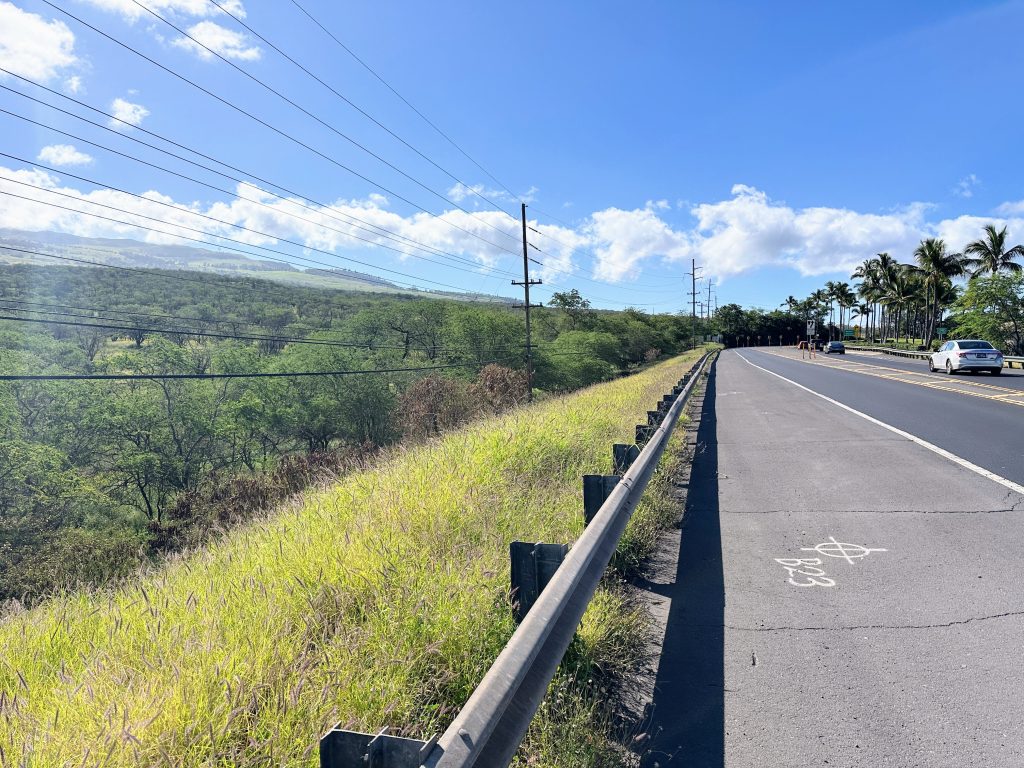
Maui County Council’s 5-4 vote to finalize amendments to the Honuaʻula master-planned community project has reignited a debate over the project’s long-term impacts on South Maui.
While project critics contend the revised plan is a significant reduction in promised affordable housing, proponents maintain it will lead to at least hundreds of workforce housing units, more jobs, a wider Pīʻilani Highway, and other community benefits.
During Wednesday’s special Council meeting, Council Member Gabe Johnson said he was conflicted about voting against the project district amendments, but ultimately he voted “no” with minority council members.
“I don’t like voting against affordable housing projects,” he said. “What are we doing here if we’re not willing to do any kind of movement? I’m not a rubber stamper, so I think that question still stands: What are we doing?”
“Sweeps, fires, tsunamis, floodings, traffic, wealthy income inequality,” Johnson said. “If this was a movie, it would be a tear-jerker. And yet no reaction.”
“I don’t think we have the best product on the table,” he said. “And I don’t agree that a bird in the hand is worth two in the bush, and just because we got some we should just be happy with what we got. That’s what gives us trouble.”
Earlier in debate, he said this type of development is “the same old thing where they get the cake and we get the crumbs.”
Addressing those concerns, Honuaʻula attorney Cal Chipchase – whom Johnson called the “10th council member” as a backhanded compliment to his influence – said that while he respects Johnson’s “advocacy and desire to obtain as much as possible for the community,” he has “seen many times, though, the effort to get more ends with the community getting less, as the heavy burdens placed on projects causes them to be delayed or to fail entirely.” He added, “We need to look for balance so projects will move forward and the community will benefit.”
Johnson asked why the developer wouldn’t consider building more affordable homes if Maui County were to financially subsidize the project as a partner.
Chipchase told Johnson that Honua’ula has “no interest in slowing down this project for further Council proceedings,” which would be required to add a county subsidy.
Secondly, “I’m not sure that everyone appreciates how extensive the subsidy would be,” he said. “It would be more than $1.5 million per unit, and so we would be looking at a subsidy in excess of $200 million. I don’t think there are those kinds of funds available in the Council budget for affordable housing.”
Chipchase responded to Council Member Keani Rawlins-Fernandez’s proposed amendment to require a minimum of 450 affordable units and that became part of a revised ordinance.
If that were to happen, and “we didn’t simply withdraw all of the amendments in response to it, then the project wouldn’t go forward,” he said. ”And so the difference you’re really advocating is for nothing. No highway, no preservation, no affordable units or a minimum of 288, with a potential for 338.”
Central issue unresolved
A central issue in the ongoing debate about the project formerly known as Wailea 670 has been the number of affordable housing units pledged by the developer and the legal obligation to fulfill it.
When the project was first approved in 2008, it was required to provide 700 affordable units out of a planned 1,400. However, in 2014, the County Council changed the law, reducing the affordable housing requirement for all new projects from 50% to 25%. This change is at the heart of the current dispute. The developer has since reduced the total number of units from 1,400 to 1,150, making the new minimum 230 affordable units. Developers have pledged to build at least 288, exceeding the legal minimum by 58.
The legal debate hinges on conflicting language in the original 2008 ordinance. While one section states that “450 affordable units shall be within the project district,” another requires the project to “comply with affordable housing requirements duly adopted by the County of Maui.” In November 2022, the Maui Planning Commission determined the 450-unit reference was “purely a locational provision” and not a mandatory number. A 2nd Circuit Judge affirmed this finding in January 2024. That case remains pending before the Intermediate Court of Appeals.
Arguments for the amendments
Supporters of the amendments, including South Maui Council Member Tom Cook, argued the changes would allow the project to move forward and provide significant community benefits.
Cook opposed an amendment proposed by Rawlins-Fernandez to restore the housing requirement of 450 units, explaining the proposed changes in the project district ordinance guarantee 288 affordable units, with a potential increase to 338 if the state completes road widening by 2030. The project, which he estimated would be built over 16 years, is also expected to create an estimated $400 million in labor for local residents, Cook said. The project would also improve fire protection in the area with new water infrastructure.
Mark Clemente of the Hawaiʻi Regional Council of Carpenters urged council members to approve the bills.
“Every time we let perfect be the enemy of progress, the enemy of the good, we get nothing,” he said. “We get no homes, no jobs, no road improvements. This project… meets and exceeds every legal requirement, preserves nearly half the land’s open space and delivers hundreds of workforce units.”
When asked for comment on the Council’s action late Wednesday, Honuaʻula attorney Chipchase said: “As the amendments were considered over the course of more than 40 hours of hearings before the Maui County Planning Commission and the County Council, we were reminded of the need to build workforce housing, widen the highway, create evacuation routes and fire suppression, generate tax revenue, create jobs and protect resources. These are our goals too.”
He said the approved project will “build more workforce housing in Wailea than the area has ever seen, widen the highway to four lanes before any market housing is built… protect more than 160 acres of land… provide a robust fire suppression system, open evacuation routes and generate local jobs and tax revenue for the county.”
Objections to the amendments
Opponents of the amendments, including Rawlins-Fernandez, expressed disappointment, arguing the changes represent a significant loss of promised community benefits.
Rawlins-Fernandez said the project’s original promise of 700 affordable units had been reduced to a “ridiculous” 288, and she said she couldn’t in good conscience support the motion to approve the amendments.
Community member Jordan Hocker said the project doesn’t seem like the developers “actually want to build housing for our local people, or they wouldn’t have hired the (most) pro-development attorney in the state.”
In her summation against the project amendments, Council Member Tamara Paltin read a poem: “You think we disappeared when the plane lifted off. Think again. Bruddah, we rooted ourselves in concrete. We carved the ʻohana into cinder blocks.”
Maui Tomorrow Executive Director Albert Perez continued his organization’s opposition to the Honua’ula development.
He noted that when the project was originally approved in 2008, the developer represented that building 700 units would be “no problem.”
“We estimate that the additional profit that you would be giving this developer is $240 million,” he told council members. “As far as I know, (that’s) the biggest giveaway in Maui County’s history.”
After the Council’s narrow approval of the bills, Perez said Maui Tomorrow would be reviewing its legal options.
Public safety concerns
Dozens of testifiers raised concerns about infrastructure shortfalls, traffic, public safety and evacuation routes in South Maui.
Testifiers Greg Rylski and Keala Kaopuiki-Santos described “bottlenecks” and “complete deadlock” during tsunami evacuations late last month. They said the traffic congestion highlighted the dangers of adding more residents without improving infrastructure, especially for escape routes in times of impending disasters.
Maui County Fire Chief Brad Ventura addressed these concerns, noting that the department has worked with developers to ensure connections to other roads. The key to a safe evacuation is “early notification and early going,” he said, and he added that many people evacuated who aren’t in the evacuation zone.
Ventura said that for “no notice events” like the Lahaina wildfire, it’s “OK to leave before anything happens.”
What’s next?
Bills 171 and 172 have already been received by the Office of the Mayor, according to spokesperson Laksmi Abraham. Late Wednesday, she said Mayor Richard Bissen will review both measures in detail before taking final action.
When asked to comment on next steps for the long undeveloped South Maui project, Chipchase said: “We have already applied for a special management area permit for the widening of the highway. That application will be reviewed by the Maui Planning Commission. We’ll also proceed with a subdivision for an intersection improvement. At the same time, we will finalize the design of the project for large lot subdivision and Phase III approval.”
Sponsored Content