

UH study: South Pacific receiving record levels of iron-rich dust
A new study from the University of Hawaiʻi at Mānoa has found that the South Pacific Ocean, long considered one of the world’s most iron-poor regions, is now receiving more iron-rich dust than at any time in the past 93 million years.
The research, published by UH Mānoa’s School of Ocean and Earth Science and Technology, sought to track how sources of iron to the South Pacific have shifted over time.
Iron is a vital nutrient for marine life and plays a significant role in regulating atmospheric carbon dioxide by influencing the growth of phytoplankton, which absorb carbon dioxide.
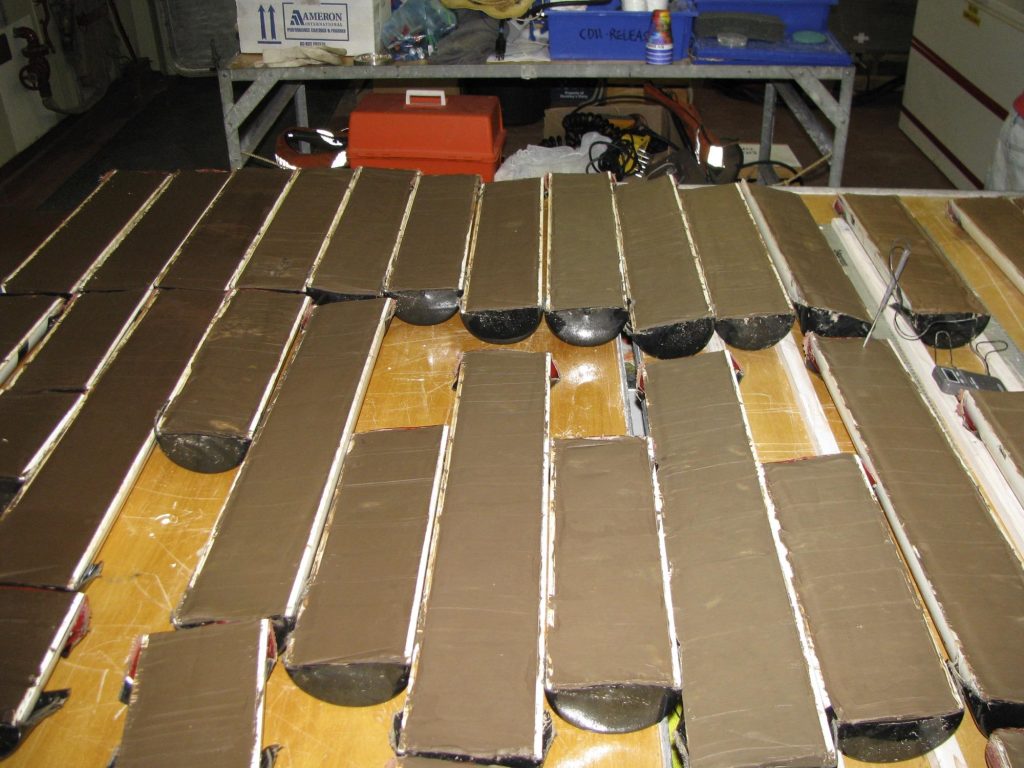
To learn about the ocean’s history of iron, researchers studied layers of mud from the deep-sea floor in the South Pacific.
“Over the past 93 million years, we found that five primary sources of iron have influenced the South Pacific Ocean: dust, iron from far off ocean sources, two distinct hydrothermal sources and a volcanic ash,” said Logan Tegler, lead author and oceanography postdoctoral researcher in the UH Mānoa School of Ocean and Earth Science and Technology. “These sources shifted over time as the sites gradually migrated away from mid-ocean ridges.”
The study showed that the ocean’s main source of iron switched from hot vents on the seafloor to dust about 30 million years ago.
Today, researchers say dust deposition in the South Pacific—although extremely low compared with other regions—is unexpectedly higher than at any point in tens of millions of years.
“Modern dust deposition in the South Pacific is extremely low,” Tegler said. “However, our findings surprisingly suggest that the South Pacific is currently receiving more dust than it has at any point in the last 90 million years.”
This study sheds light on iron cycling across the broader Pacific basin and enhances understanding of how essential nutrients like iron shape ocean ecosystems and climate over millions of years.
Scientists say understanding these long-term changes may help predict how modern human activity, such as industrial emissions and biomass burning, could alter the iron cycle and impact marine ecosystems in the future.
Sponsored Content