County, private operators take steps to bring composting back to Maui
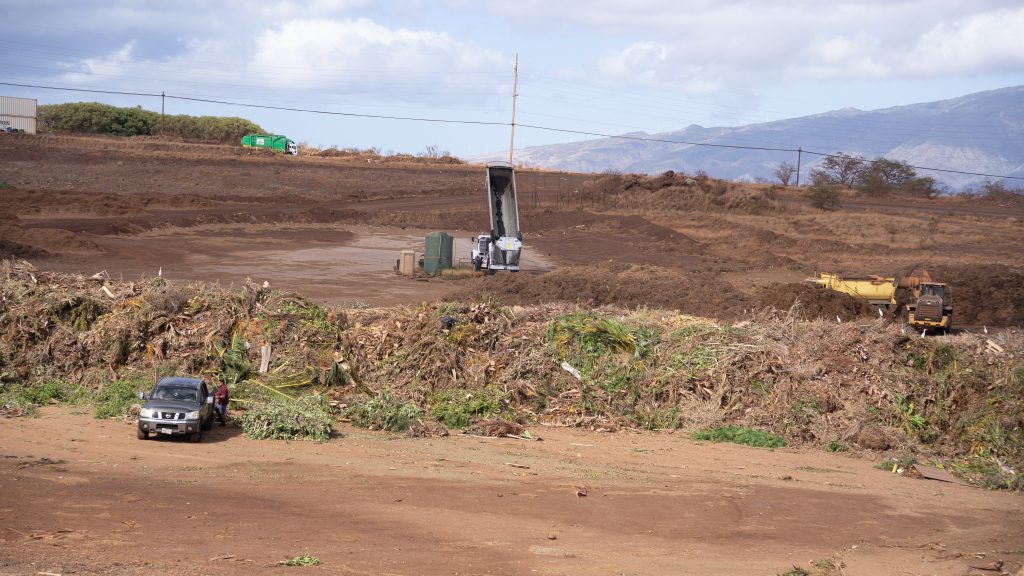
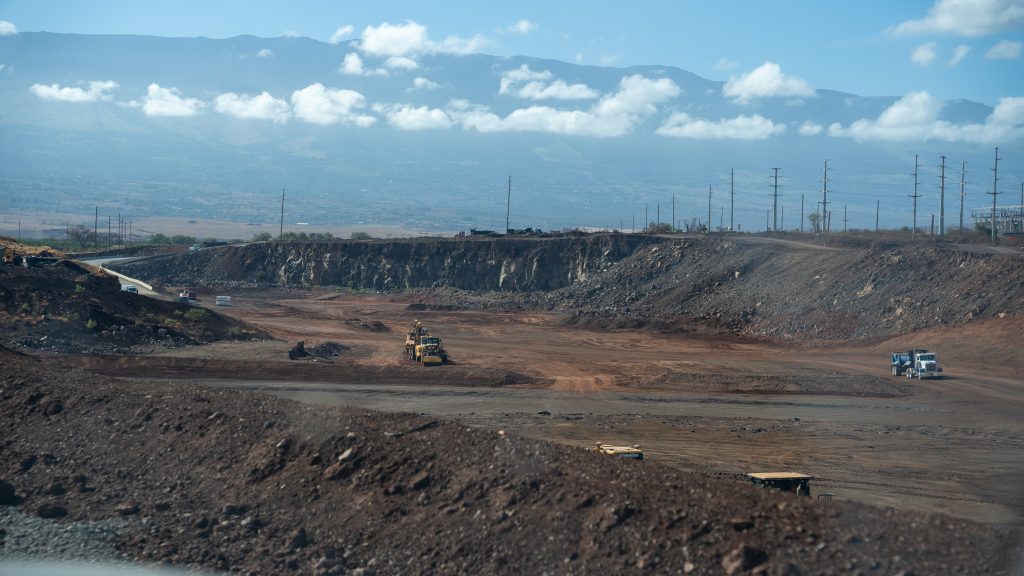
County officials say efforts are underway to bring composting back to Maui. The first phase of an Organics Processing Facility received funding this year and is already taking shape at the Central Maui Landfill.
The project involves a Greasezilla system that separates Fats, Oils and Grease (FOG), removing it from the waste stream and processing it into a biofuel. The county has built an operational pad for the project and is awaiting final Department of Health approvals, according to Cecile Powell, acting manager of the Environmental Protection & Sustainability Division within Maui County’s Department of Environmental Management.
“This is the first step in a two-phase plan to expand organics processing capacity and strengthen the County’s ability to support composting on Maui,” Powell said.
The push for new composting infrastructure follows years of changes and challenges.
For more than two decades, Maui EKO Systems, a private company contracted by the county, operated on Phase 3 of the Central Maui Landfill. The company transformed green waste and digested sewage sludge into soil products that supplied landscapers, golf courses and farms across Maui. At its peak, the facility employed more than 20 people and kept over 1 million tons of organic material out of the landfill. But land sales and landfill expansion forced the company off its original site in 2020.
According to county data from the last fiscal year, 53,000 tons—about 25% of all Maui’s landfilled waste every year—is a combination of green waste and biosolids, waste that had previously been recycled to create compost.
Compost is among the resources needed to restore soils damaged by the 2023 fires, but with tighter inspections and fumigation requirements in the inter-island compost trade—designed to stop the invasive Coconut Rhinoceros Beetle—imported compost has become more scarce and costly.
Regulatory roadblocks
Regulatory factors have also influenced composting operations. Federal and state scrutiny of per- and polyfluoroalkyl substances (PFAS)—the so-called “forever chemicals”—has led to tighter rules limiting the use of treated sewage sludge (biosolids) in compost.
Biosolids are valuable because they contain high levels of nitrogen to speed up decomposition. Without them, the composting process becomes far more water-intensive.
Today, EKO mulches green waste, grinding it for size reduction. The material is then mixed with wastewater, grease trap waste and lift station sediments, and solidified for landfill disposal. This saves the county landfill space by reducing the volume of green waste. The company still provides free mulch to farmers and sells mulch and woodchips to landscapers, but the system no longer achieves the same diversion levels, company officials said.
Local farmers and landscapers continue to seek solutions to fill the gap.
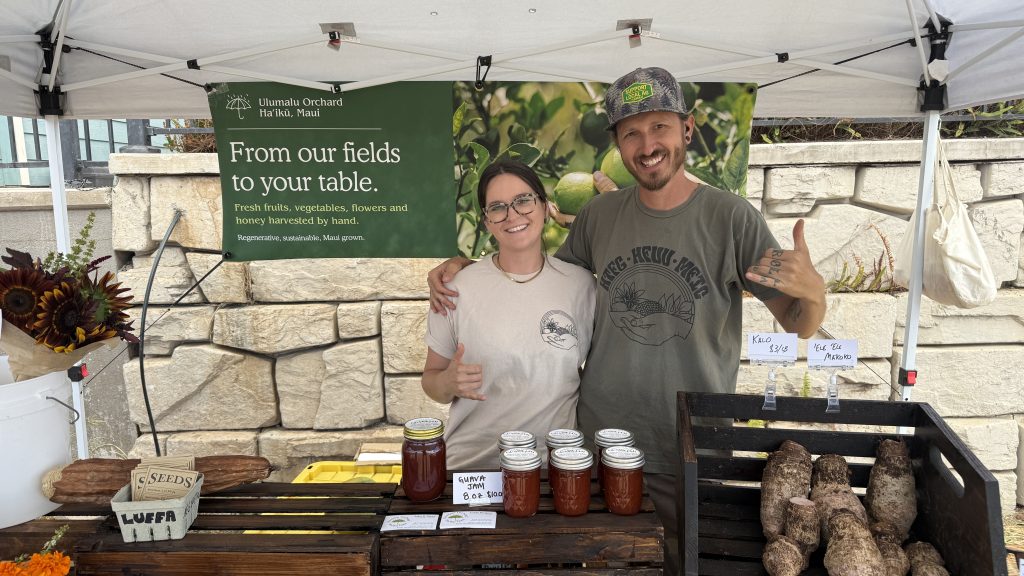
Haʻikū farmers Jake Sipes and his partner, Jamie Wegner, who run Ulumalu Orchard, say the soil on their property tends to be denuded, so composted organic matter helps improve nutrient content and water retention.
New private facility gets their piles moving
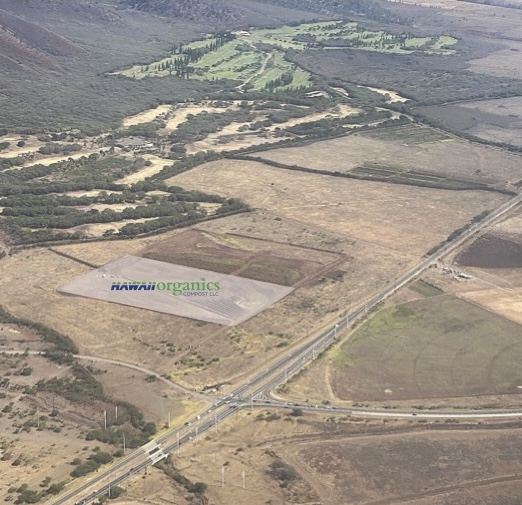
New private ventures are emerging. On Sept. 2, 2025, Hawaiʻi Organics Compost opened in Waikapū, led by Hawaiʻi Materials Recycling and PB Sullivan Construction owner Pete Sullivan.
Built on 16 acres of a 31-acre site, the facility nestled between west and central Maui touts being large enough to handle 150,000 yards of green waste at any given time, larger than any compost facility on the island. On the facility’s website, the company says it also accepts clean wood pallets but does not accept food waste or sewage sludge.
Residents can self-haul green waste from their private property to Hawaiʻi Organics Compost at no charge. And on the way out, patrons will eventually be able to pickup the finished product of compost.
“One of the best things about recycling—whether it be green waste, rock, concrete or asphalt—is truckloads full both ways,” Sullivan told Maui Now. “The landfill just drives me nuts. You dump it, it gets buried, and you leave empty.”
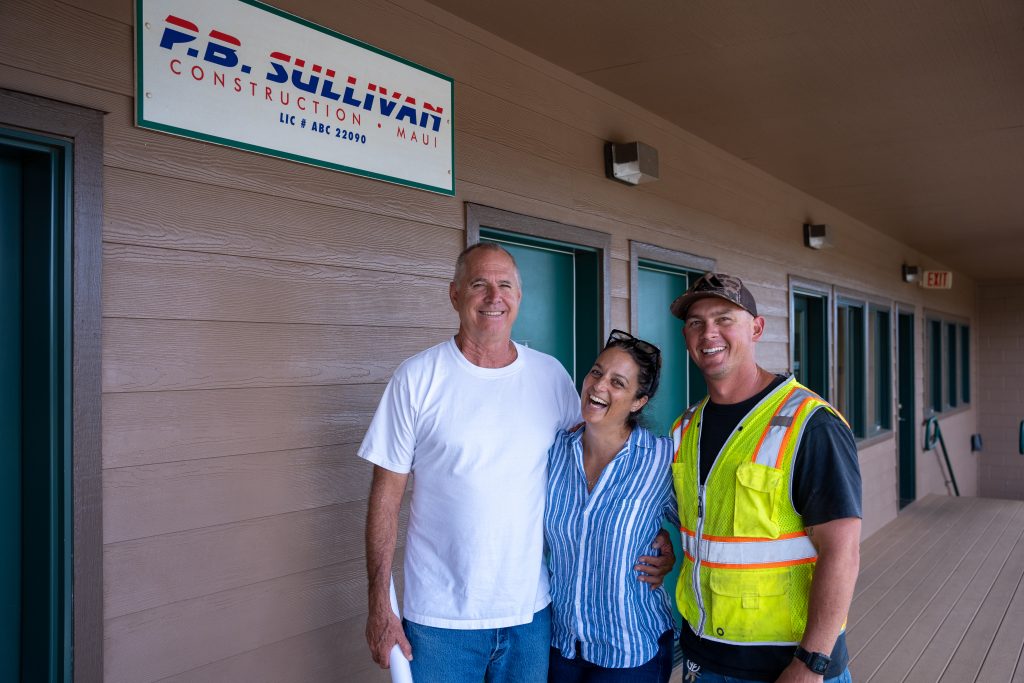
Sullivan said he hopes the facility will also curb unpermitted composting operations that have popped up across the island out of shear necessity.
He says his compost is expected to cost two to three times less than the compost imported by Honolulu Disposal Service Inc., the parent of Maui Disposal. He also said he plans to collaborate with Maui Disposal on hauling and with the University of Hawaiʻi Maui College on testing the product.
An agricultural water meter is already in place near the facility, drawing from Waiheʻe Ditch via the Wailuku Water Company. They will need an estimated 10,000 gallons of water per day, Sullivan said. The company will utilize a low-speed shredder in its composting process.
Hawaiʻi Organics Compost and his other company, Hawaiʻi Materials Recycling, both aim to contribute to landfill diversion and recycling on Maui.
The facility is located behind the tiki carving stand at the intersection of Honoapiʻilani and Kūihelani highways. More information about Hawaiʻi Organics Compost is available on the company’s website.
Dollars and landfill sense
Sullivan says that diverting green waste will impact the bottom line at the Central Maui Landfill. But understanding how much money is on the line is a challenge.
An important financial figure in landfill management, according to Sullivan and the US Securities and Exchange Commission, is the cost of airspace — the expense of creating and maintaining each cubic yard of disposal capacity. At the Central Maui Landfill, airspace costs are unknown, the Department of Environmental Management (DEM) told Maui Now recently.
Airspace costs are typically used to help set tipping fees — the charges individuals or businesses pay to dump different materials at a landfill to help offset those costs. The statistic can also be used to make decisions on landfill diversion projects.
On Maui, the tipping fee for commercial green waste is now $40 per ton, plus an $11 recycling surcharge. Fees generate about $25.50 per cubic yard of mulched material, assuming a ton of shredded green waste consumes two cubic yards of landfill space. Total revenue from fees for green waste averaged about $91,800 per month in 2025. Residential green waste is not tracked and incurs no fee.
In Fiscal Year 2024, the Central Maui Landfill handled at least 18,500 tons of commercial green waste. Last year, the total reached at least 23,158 tons.
Studies from other counties show that the cost of landfill airspace can range from just a few dollars to several dozen dollars per cubic yard, depending on closure costs, waste density and other local factors. If Maui’s landfill costs fall toward the higher end, burying or composting green waste could represent the difference between millions of dollars lost or saved every year.
When asked, DEM said it could not provide an estimated cost for creating landfill space without “significant further analysis.” Sullivan said it is a figure worth looking into.
Looking ahead
Hawaiʻi Organics Compost manager Jennifer “Jenny” Sullivan said their facility’s success will depend on coordination with local government, even though it currently operates without county funding.
She emphasized that private composting efforts can complement county initiatives and help highlight the value of preserving landfill space.
“If [the County] can see that taking the green waste is not beneficial to the island—and that there are alternatives for sludge management—then I think we can really do something good,” she said.
“We’re expanding our landfill footprint because it’s easier. But we’re an island, and somehow nobody’s talking about landfill,” she said.
Pete Sullivan, Jenny’s husband and business partner, agreed: “It’s habit. Deferring the landfill cost to later, to whoever’s in the next generation, I don’t subscribe to that at all. That’s why we’re doing this.”
Author’s note: JD Pells owns a small curbside recycling business on Maui. While this reporting covers composting and landfill practices, it is based on independent reporting, interviews with industry experts and county data. Efforts have been made to present an accurate and balanced account of the challenges and developments in Maui’s composting and green waste management.
Sponsored Content