
 Hawai'i Journalism Initiative
Maui Nui community steps up to help federal workers, SNAP recipients affected by government shutdown
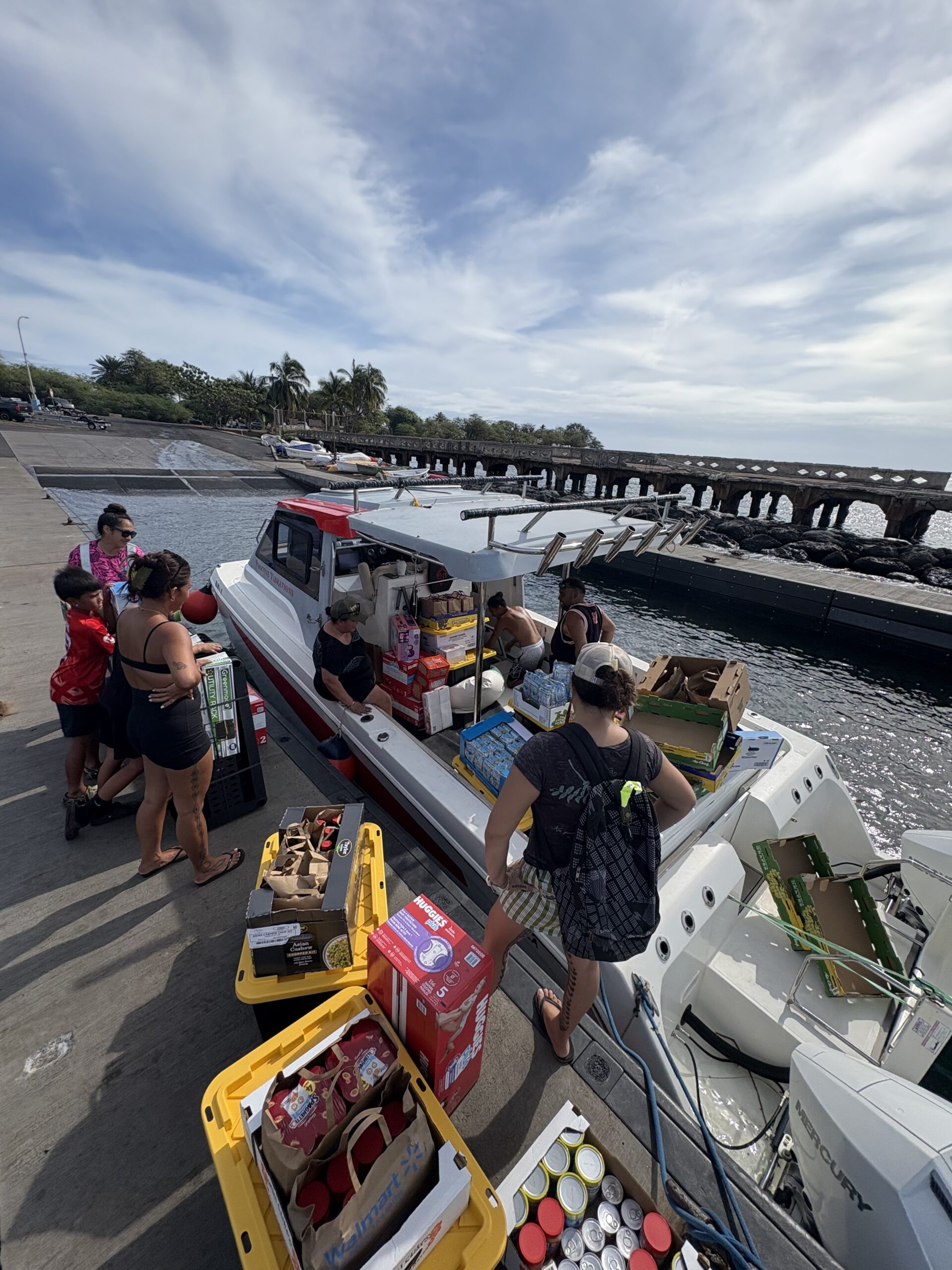
At 6:45 a.m. Monday, Kanoelani Davis hopped on a friend’s boat from Moloka‘i to Maui, stocked up on food at Costco and Walmart, and brought it back to her home island before 4 p.m.
On Tuesday, volunteers handed out those supplies in less than an hour to 115 Moloka‘i families who rely on the Supplemental Nutrition Assistance Program known as SNAP, but are only getting part of their benefits this month due to the 36-day federal government shutdown that is now the longest in U.S. history.
“The love for each other on this island is beyond words,” said Davis, executive director of the nonprofit Ho‘akā Mana on Moloka‘i.
HJI Weekly Newsletter
Get more stories like these delivered straight to your inbox. Sign up for the Hawai‘i Journalism Initiative's weekly newsletter:
Across Maui Nui, local businesses and nonprofits are stepping up to help their neighbors as the halt in federal funding impacts SNAP recipients and federal workers, including park rangers, air traffic controllers and Transportation Security Administration agents.
Two federal judges ordered President Donald Trump’s administration last week to use its emergency reserves to fund SNAP. Last year, the program helped an average of 41 million low-income Americans afford to buy food each month.
Trump’s administration has agreed to pay about half of the estimated $8 billion it will cost to fund SNAP for November, but officials said it could take “anywhere from a few weeks to up to several months” for the payments to get out.
Hawai‘i has launched an emergency relief program to help the more than 165,000 people in the state who rely on SNAP. In Maui County, 18,611 people recieve SNAP benefits totaling about $6.4 million a month, according to the state Department of Human Services.
“It unfortunately puts already vulnerable populations who have gone through now COVID and the fires in the last few years into a position where they’re having to choose between paying rent and having food,” Jeeyun Lee, interim CEO of Maui United Way, said Tuesday.
When Maui United Way caught wind of the food distribution on Moloka‘i, the nonprofit wanted to help. Davis said the effort simply started out as an idea to help the staff of Ho‘akā Mana, a nonprofit focused on the emotional and mental well-being of Native Hawaiians. As a small organization, Ho‘akā Mana can’t pay high wages, and some workers rely on SNAP to supplement their income.
Hearing her staff’s concerns, Davis at first thought about paying friends on Maui to send supplies over by plane. But then Maui United Way heard about her plan and offered funding that Davis said “made the biggest difference.”
Friends took her across the channel, lent her a cargo van and helped her scour the grocery aisles. With the funds from Maui United Way and a donation from her business PōMahina Designs, Davis loaded up shopping carts with ingredients people could use to cook full meals — pasta and spaghetti sauce, shoyu and chicken, cake mix and oil.
“I was a single mom of four daughters, so I know what it was like to not have food, not have a house,” Davis said. “So this kind of stuff is easy to do and without question.”
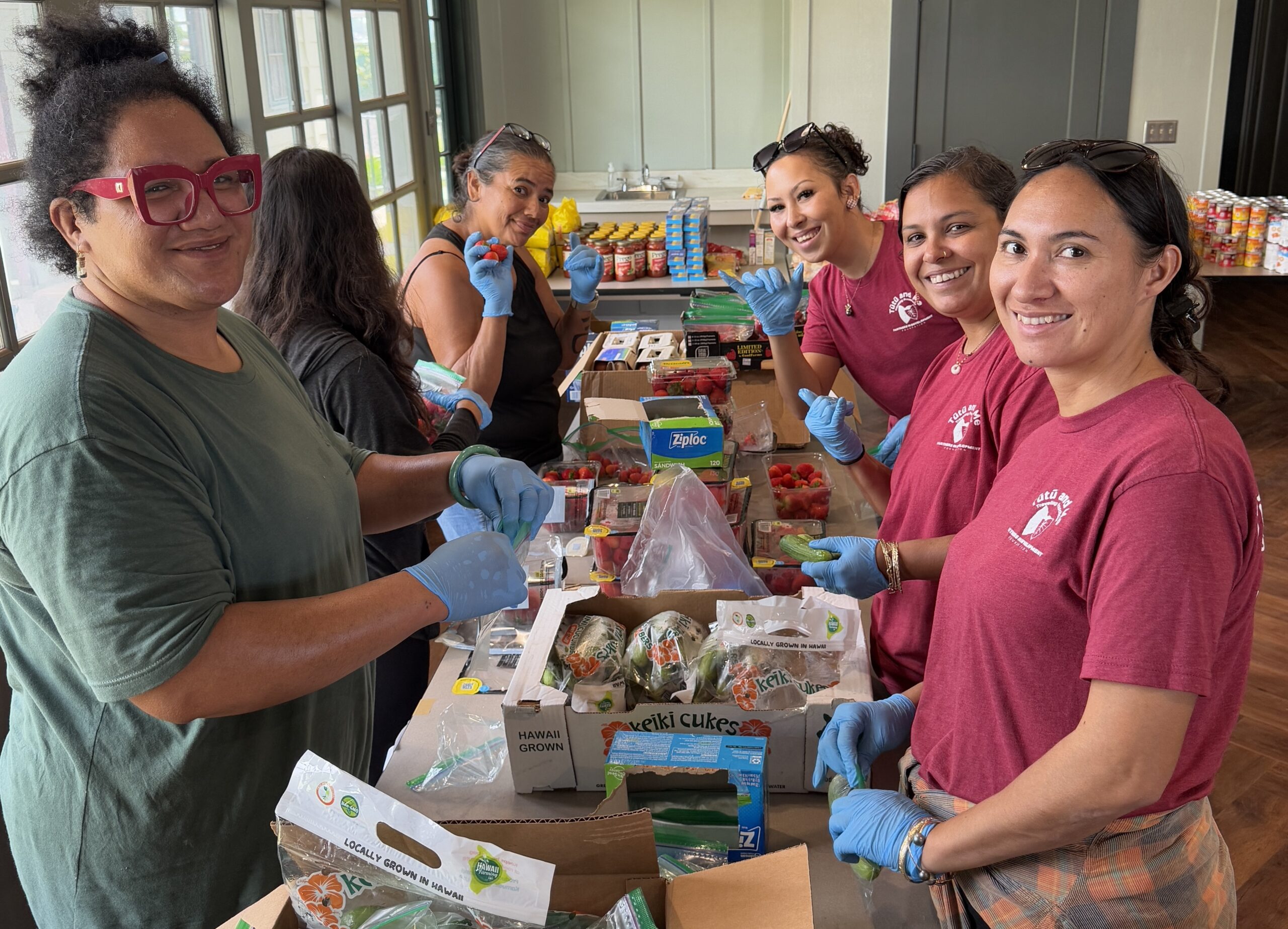
The Holo‘ai Food Hub held in Kaunakakai helped 115 families totaling about 461 people. Of those 115 families, 109 were Native Hawaiian, Davis said. Volunteers led by Ho‘akā Mana’s U‘ilani Hayes also packed boxes of vegetables, meat and eggs for 38 kūpuna.
“The SNAP delay has made it difficult for me to make my daughter’s lunch for school and meals for the rest of the family,” said Anela Montemayor, who volunteered at the food hub while her children played nearby. “With the Holo‘ai food distribution, it will help provide things to put in her lunches and food to make dinner with for a few meals.”
Davis saved half of the funds for another distribution during the week of Thanksgiving, “because we don’t know what December is going to hold.”
Lee declined to share the amount of funding Maui United Way provided, saying the nonprofit planned to do so at a later time. Maui United Way also hopes to fund a similar distribution in Hāna.
In Maui Nui, Davis said, “Moloka‘i and Lāna‘i are the last thought” when it comes to funding and support, so often the community jumps in.
“I think that’s the beauty of our island is we’re ‘ohana here,” Davis said. “We fight like ‘ohana and we love like ‘ohana. We protect our island like ‘ohana and it’s seen by our actions more than our words … and that’s unbeatable.”
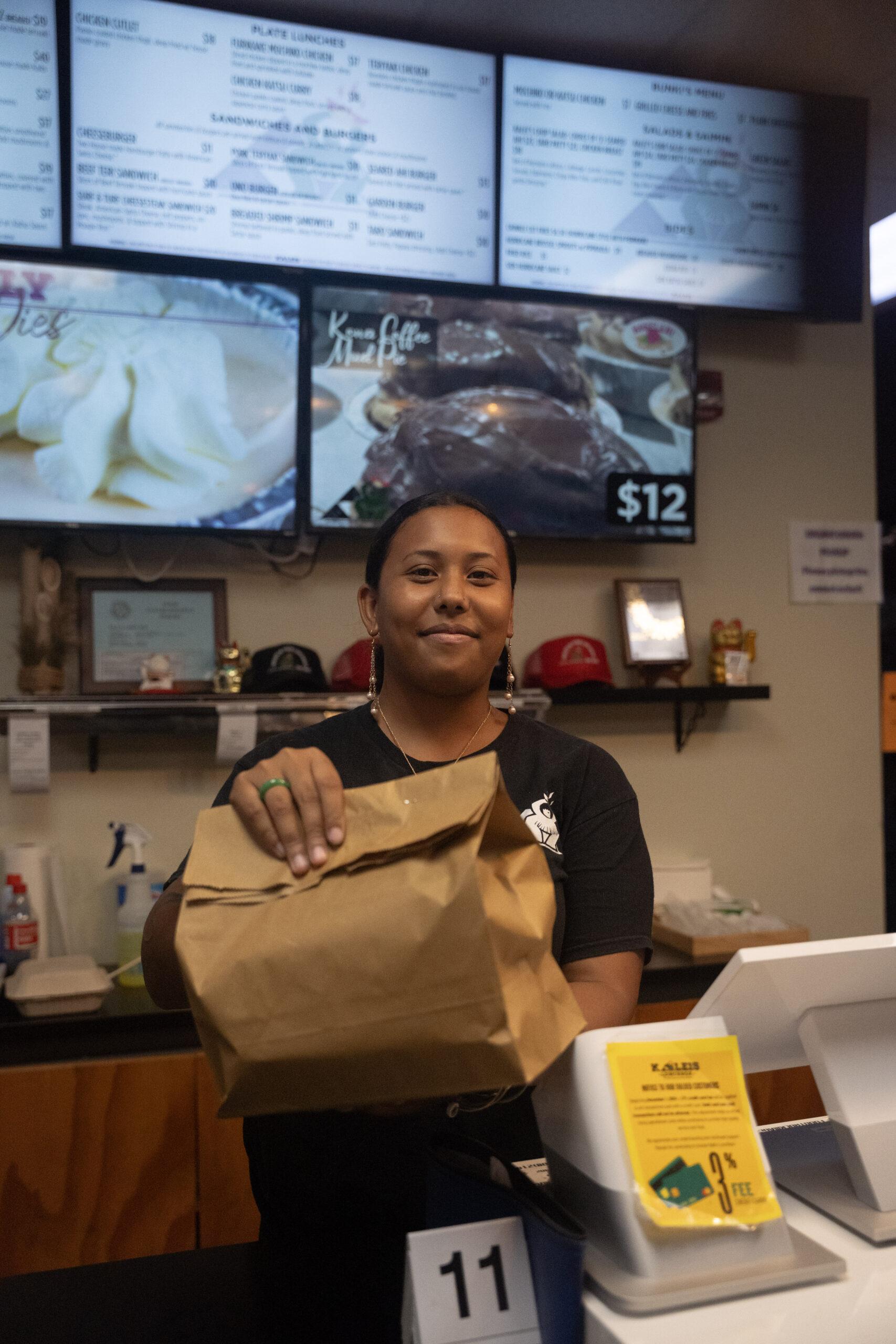
On Maui, some restaurants are giving out free or discounted meals, and nonprofits are offering federal workers a break on their mortgage payments.
Last week Kalei’s Lunchbox, which is run by Fran and Aaron Kalei Heath, started offering $3 breakfasts of eggs, Portuguese sausage and rice and $4 cheap eats of the day for federal employees.
At all three locations in Lahaina, Maui Lani and Pukalani, customers can scan a QR code and purchase a “mahalo meal” that can be redeemed by federal workers with a valid federal personal identity verification ID.
“We don’t want these people to have to worry,” said Richard Mather, the Heaths’ son-in-law and a manager at Kalei’s. “They have to work, do their job and not be paid, and they have to do it whilst worrying about paying their rent. … We wanted to see if we could reduce the stress.”
Since launching the meal special on Oct. 28, Kalei’s has been averaging 50 to 60 plates a day, with a roughly even split between federal employees and SNAP recipients.
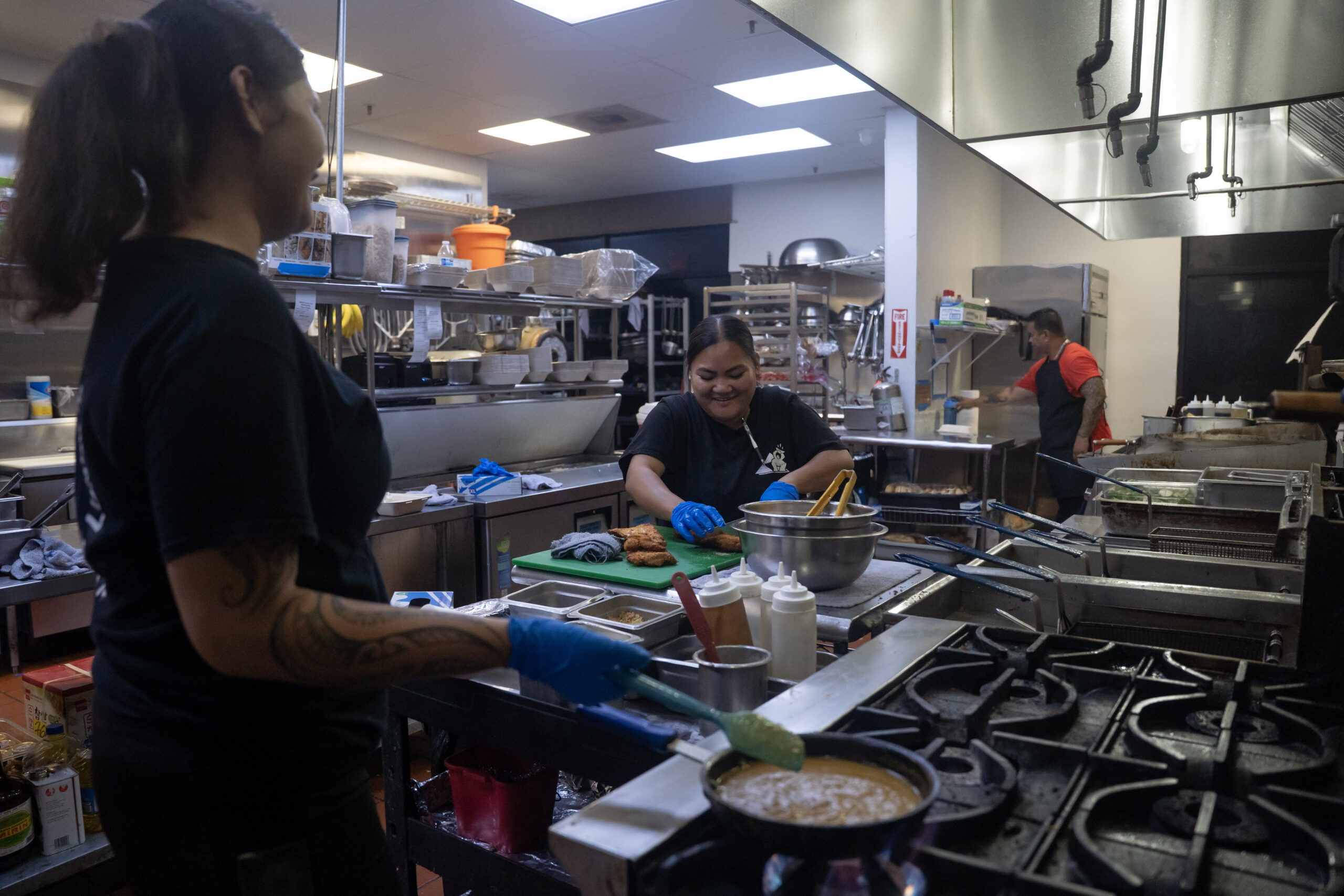
Mather said the restaurant tries to be “apolitical,” because “we’re part of our community and our community obviously has diverse viewpoints,” but they saw an opportunity to fill a need.
“It’s what you do here,” Mather said. “It’s just so intrinsic to share what you’ve got.”
Mather said nearly everyone involved in Kalei’s management has experience with hunger or homelessness, so it’s “something that’s close to heart.” He remembers what it was like when he and his wife moved from England, where they met, back to her home island of Maui. At the time, they were living paycheck to paycheck and relying on federal food aid programs to support their family of four.
Kalei’s will continue to watch the situation with the shutdown and SNAP and hopes to keep the program going as long as it’s needed, Mather said.
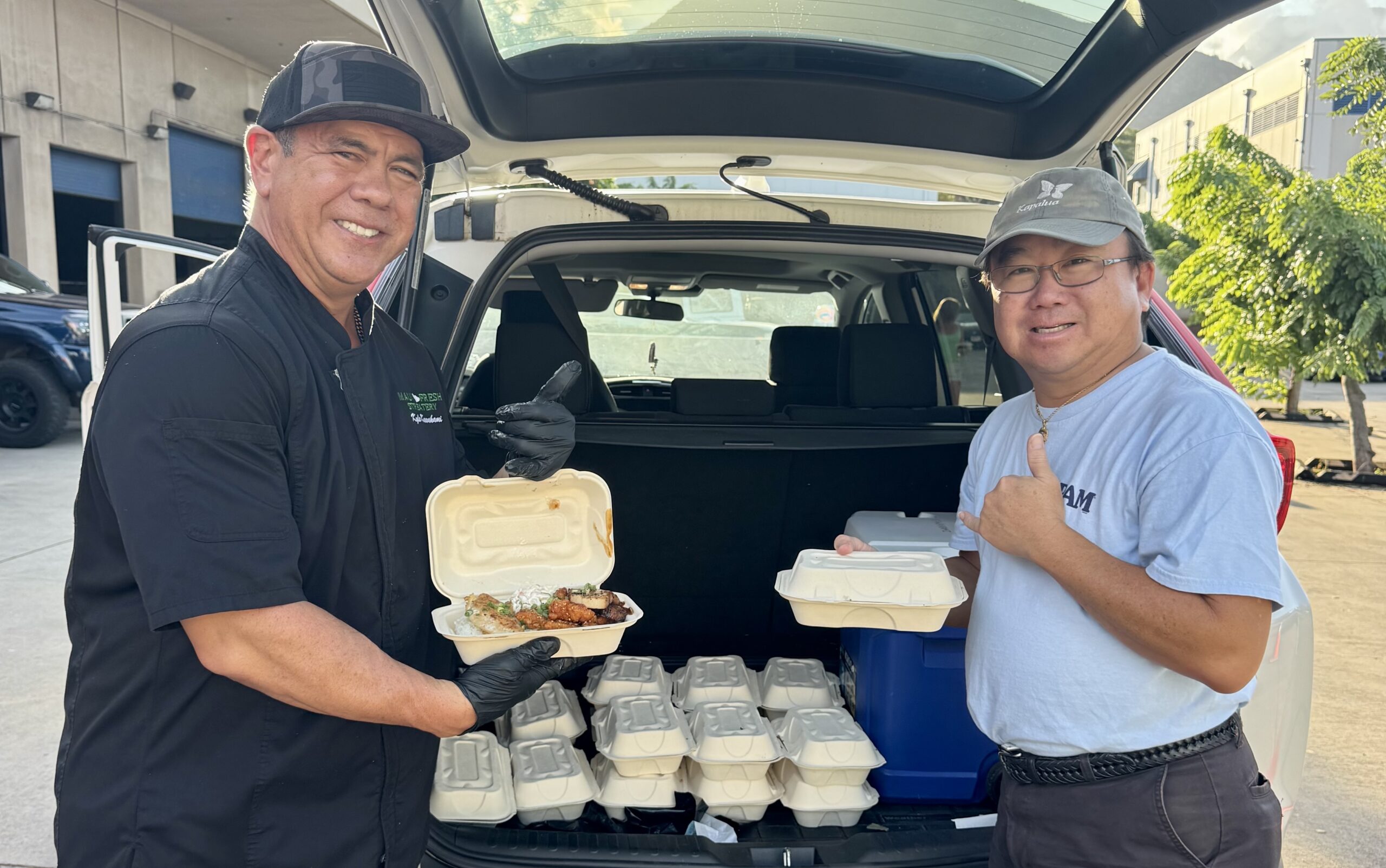
Customers can also pay it forward at Maui Fresh Streatery, the food truck run by Kyle Kawakami who uses funds from his tip jar to donate meals or money to community members in need.
Kawakami started the tip jar in 2013 to help a Maui boy battling brain cancer, and since then it’s come in handy for community causes and times of crisis like the 2018 federal shutdown. When customers donate a meal, Kawakami sticks a post-it note on his truck, and impacted residents can redeem a post-it for a meal.

Since he kickstarted a fundraiser for federal workers last month, donations of nearly $3,000 have poured in. Kawakami spends his days off delivering meals to federal employees at the Kahului Airport, where a contact lets him know how many workers are on the job that day.
The first week, he prepared Korean-style meals of pork belly, fish jun, fried chicken, banchan and rice; the second week, it was Japanese-style bentos of karaage chicken, spam, shrimp tempura, takuan and rice. This week, he’s planning “Zippy’s style” plates of Maui Cattle Co. chili and rice with fried chicken.
After this week’s delivery, he’ll have made more than 300 meals for the workers.
“Just being a single soul, one man small business owner, I can’t influence what happens in Washington, D.C., or what happens even maybe in the state level,” Kawakami said Monday. “But if I can make a small difference within our community here on Maui, that’s my biggest concern is just keeping our community fed and keeping our community safe and just letting them know that people are here to support them.”
Around the holidays, the food truck would normally start fundraising for Toys for Tots, but that’s on hold this year as “I just feel like food security might be a little bit bigger of an issue right now,” Kawakami said.
Hawai‘i is already an expensive place to live, and the dual stressors of paused paychecks and food assistance make things even more difficult, said Jeff Gilbreath, executive director of Hawai‘i Community Lending.
Earlier this month, the nonprofit mortgage lender began offering forbearances to allow federal workers to pause loan payments and ensure they don’t lose their homes during the shutdown.
The nonprofit serves about 560 borrowers, including about 60 federal employees.
Six federal workers have been approved for loan payment pauses so far. Gilbreath said that “the sense we’re getting from folks is that they’re holding out to see” if the government makes a decision to reopen. If not, the nonprofit expects an increase in requests in November.
Hawai‘i Community Lending is also partnering with the state Department of Hawaiian Home Lands on a $10 million initiative called the Ho‘amana Program, which will provide grants of up to $30,000 to eligible native Hawaiian homeowners who need help on past due mortgage, homeowners association fees, property taxes, water and other utilities.
The program will open in January, and one federal worker has already expressed interest. Gilbreath said it wasn’t created because of the shutdown, but the timing worked out.
By the end of the week, the nonprofit also will roll out a program for SNAP recipients allowing them to recast their loan and reduce their monthly payments so they have more money for food.
“This is a crisis, and I’m hoping folks respond like it’s a crisis,” Gilbreath said. “And we did that during COVID and we showed what we could do when we came together. Obviously we’re not going to have the federal resources this time around to weather this, but if Hawai‘i can come together to make sure Hawai‘i is OK, I think that’s the thing that we’re hoping for.”